Hunting a Logging Company Access Road
Finding those undisturbed pockets of wild New Hampshire where deer aren't constantly harassed can feel like an impossible task, especially when public land parking lots are overflowing. But there's a secret, or at least a less-traveled path, that many hunters overlook: logging company access roads. These often-rugged arteries cut deep into the timber, opening up vast tracts of land that would otherwise be nearly impenetrable, offering unique opportunities for a hunter willing to do a little extra homework. This guide is all about helping you understand how to responsibly and effectively hunt these often-bountiful corridors.
Navigating the World of New Hampshire Logging Roads
Logging roads, whether active or long-since abandoned, are a prominent feature of New Hampshire's working forests, particularly as you move north into areas with extensive timber harvesting. These aren't your paved state routes; they're utilitarian pathways designed for heavy machinery, often unmaintained once their primary purpose is served. For hunters, they present both opportunities and challenges, creating edges, openings, and travel routes that game animals, especially deer, turkeys, and even bears, readily utilize.
What Makes a Logging Road Unique for Hunters?
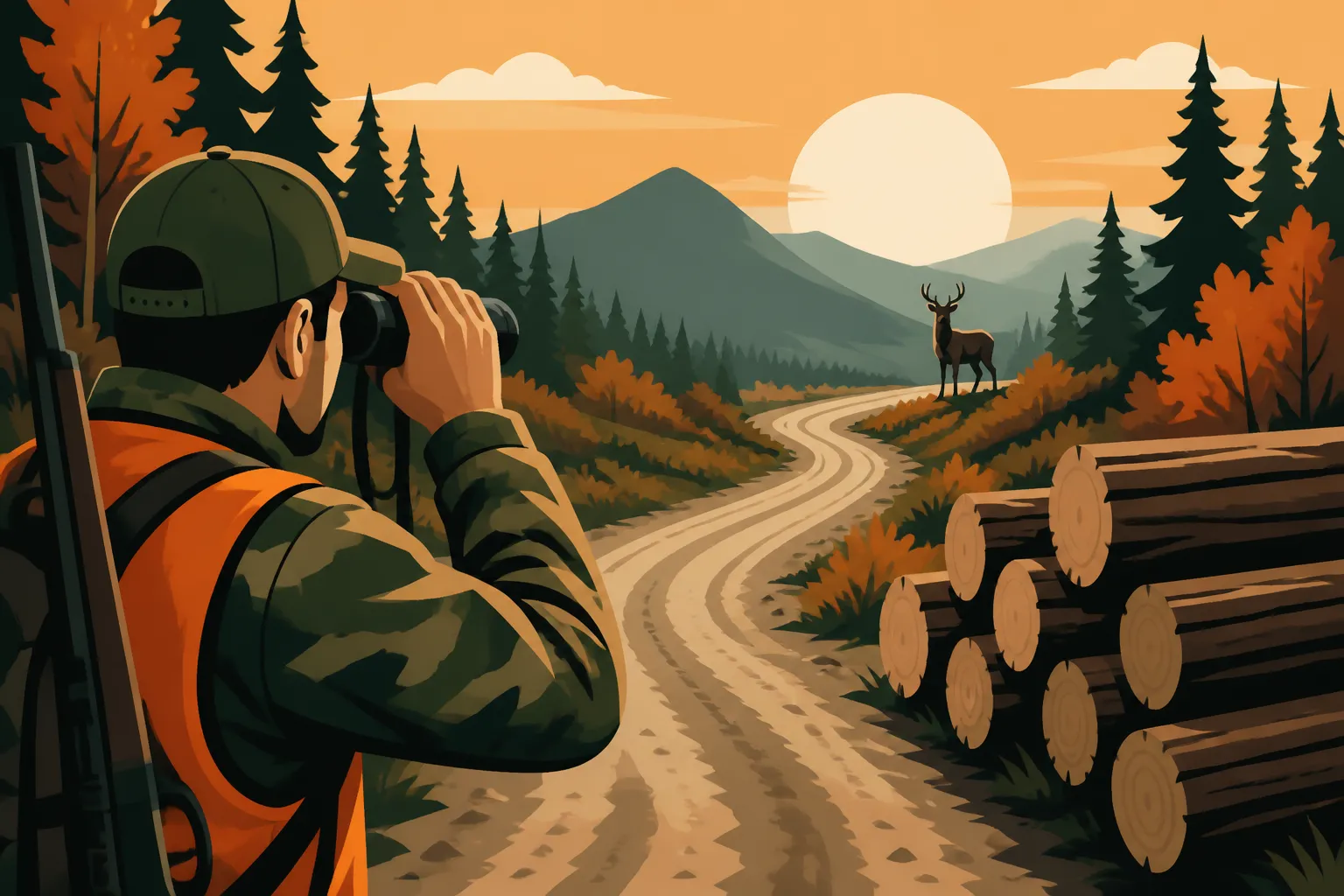
Imagine a vast, dense forest where movement is slow and visibility is limited. Now picture a ribbon cut through that, offering a clear line of sight, a firm walking surface, and often, an adjacent regenerating clearcut. That's the essence of a logging road's appeal. They create "edge habitat" where two different cover types meet – the mature forest on one side and the younger growth of a recent cut on the other. This edge is a magnet for deer, providing both browse and security cover. Furthermore, deer will use the roads themselves as travel corridors, especially during low-light hours, because it's simply easier than pushing through thick brush or deep snow. You'll often find parallel deer trails just inside the woods, a short distance from the road's edge, as deer prefer the cover but appreciate the easier travel provided by the road. These roads also create natural funnels and pinch points where deer are forced to cross, offering prime ambush locations.
When you're looking at a map, or even Reading Aerial Photos for North Country Deer, these linear features immediately stand out. They break up the monotony of continuous timber, creating lanes that funnel movement, concentrate browse, and provide thermal cover in the young regenerating growth. They can also lead to remote pockets of timber that receive far less pressure simply because they're harder to reach.
Understanding Road Status and Access Restrictions
Not all logging roads are created equal when it comes to access. This is perhaps the most critical distinction you need to make before planning any hunt. Some logging roads are on public land, like sections of the White Mountain National Forest or larger state forests. Others are on private timberland, owned by companies or individual landowners who permit public access for recreational purposes, often with certain stipulations. Then there are those on private land where access is strictly prohibited or requires explicit permission.
It’s absolutely crucial to determine the ownership and access rules for any logging road you intend to hunt. Many timber companies in New Hampshire are quite generous with public access, often understanding that responsible hunters and recreationists pose little threat and can even deter less desirable activities. However, their primary business is timber, and active logging operations always take precedence. You might encounter locked gates, signs explicitly stating no entry, or areas that are actively being logged where it's simply unsafe to be. Ignoring these signs not only puts you at risk but also jeopardizes future access for everyone. Using a mapping app like onX Hunt is invaluable here, as it can display property boundaries and often landowner information, helping you understand where you stand. Always double-check with the New Hampshire Fish and Game Department's resources or local town offices if you're unsure about specific access points.
Identifying Promising Logging Areas
Once you've wrapped your head around the access situation, the next step is to identify which logging roads hold the most promise. This often comes down to two main factors: fresh activity and cover.
Recent logging activity can be a deer magnet. When timber is cut, especially clear-cuts or heavy selective harvests, it opens up the forest floor to sunlight, which in turn stimulates the growth of new browse – tender shoots, saplings, and weeds that deer absolutely love. This fresh regeneration is a buffet for deer. Look for areas on satellite imagery that show recent disturbance, lighter green patches indicating young growth, or even areas where the tree canopy has noticeably thinned. These areas, especially if they are a few years old (allowing browse to establish but not grow too tall), can be incredibly productive.
Older, less active logging roads can also be fantastic. These roads might be overgrown with grasses and brush, providing bedding cover or additional food sources. The key is to find roads that provide a good blend of cover and food, ideally with nearby mature timber for security and bedding. Think about how deer use the landscape: they'll often bed in thick cover, feed in more open areas, and use secure travel corridors to move between the two. A logging road that connects dense softwood thickets to a regenerating clearcut or a mature hardwood ridge is a prime candidate. Don't be afraid to Scouting New Hampshire Public Land Before Season to see which roads look best.
Strategic Scouting: Before You Step Foot in the Woods
Scouting is your most powerful tool, and with logging roads, it starts long before you ever set foot on the ground. Modern technology has made remote scouting incredibly effective, but nothing beats boots on the ground to confirm what you see from above. The goal is to build a mental map of deer movement patterns along these linear features.
Digital Reconnaissance with Mapping Tools
Before you even fill your truck with gas, spend some serious time with digital mapping tools. Platforms like onX Hunt or GoHunt are goldmines for identifying logging roads and potential hot spots. Look for:
- Road Networks: Identify the main arteries and all the smaller spur roads that branch off. Often, the less-traveled spurs are where you'll find less pressure and more deer activity.
- Property Lines: Crucial for logging roads on private land. OnX Hunt, in particular, excels at showing property boundaries and landowner names. Confirming ownership allows you to seek permission if needed and ensures you don't accidentally trespass.
- Timber Cuts: Use the satellite imagery layer to identify areas of recent logging. Look for lighter green patches (young growth) or even visible logging decks and skid trails. Pay attention to the age of the cuts; very fresh cuts might not have much browse yet, while overgrown older cuts might be too dense.
- Topography: How do the roads relate to terrain features? Do they follow ridge lines, valley bottoms, or contour around hills? Deer often prefer to travel along contours or over saddles. A logging road that cuts through a saddle or parallels a significant elevation change can be a natural travel corridor. Use the topographic overlay to identify these features.
- Water Sources: Are there small streams, beaver flowages, or wet areas near the roads? Deer need water, and these areas often provide additional forage and cover. Hunting a Beaver Flowage Edge can be incredibly productive.
Create waypoints on your app for potential stand locations, rub lines, scrape areas, or any other promising sign you identify. This saves you valuable time and effort when you do your physical scouting.
Reading the Terrain and Timber Cuts from Afar
When you’re looking at those aerial photos, try to put yourself in a deer's hooves. Where would they feel safe? Where would they find food?
- Softwood vs. Hardwood: Logging roads often traverse both. Softwood thickets (pines, hemlocks, spruce) provide excellent thermal and security cover, especially in winter. Hardwood stands, particularly those with oaks, provide acorn crops. A road that borders both offers the best of both worlds.
- Funnels and Pinch Points: Look for areas where the road itself, or the terrain around it, naturally funnels deer movement. This could be where two blocks of thick cover narrow down, forcing deer to use the road, or where a ridge drops steeply to one side, pushing movement along the road.
- Regenerating Areas: As mentioned, new growth is key. Pay attention to how the logging roads interact with these clearcuts. Do they run along the edge, providing a safe transition zone? Do they cut through the middle, offering easy access to different parts of the cut? These are all important clues to deer movement. Think about where deer would cross the road to get from bedding to feeding, or vice-versa. Hunting a Clear-Cut Regrowth Edge is a prime example of utilizing these areas.
Ground Scouting for Fresh Sign and Travel Corridors
Once you’ve got your digital maps marked up, it’s time to hit the ground. Physical scouting is non-negotiable for confirming your suspicions and finding the subtle details that digital maps can't show.
- Walk the Roads: Pay attention to which sections show the most fresh deer sign – tracks in mud, droppings, browse lines on regenerating saplings. Look for where deer enter and exit the road. These "entry points" are often beaten-down trails leading into the adjacent cover.
- Check Intersections and Bends: Roads that cross or have sharp bends are often good locations, as deer tend to pause or change direction there. These are natural places to look for rubs and scrapes, especially during the rut.
- Focus on Edges: Don't just walk on the road. Walk slightly inside the timber, paralleling the road. This is where you'll often find the most consistent deer sign – parallel trails, rubs, and beds just out of sight from the open road.
- Observe Adjacent Cover: How thick is the cover? Where are the natural openings? Are there mast trees (oaks, beech) nearby? Is there dense thermal cover in the form of softwoods? What about water sources? Finding Sign in White Mountain Timber is all about noticing these details.
- Look for Old Sign: While fresh sign is best, don't discount older rubs or scrapes. They can indicate historical travel patterns that deer may still be using.
Remember, ground scouting should be done quietly and carefully, ideally outside of hunting season, to avoid disturbing the deer you hope to pursue later.
On-the-Ground Tactics for Hunting Logging Roads
Now that you've done your homework and understand the lay of the land, it's time to talk about how to actually hunt these unique environments. Hunting logging roads isn't just about walking down them; it's about understanding how deer use them and exploiting those patterns.
Still-Hunting the Edges and Intersections
Still-hunting is perhaps the most effective method for covering ground along logging roads, especially the older, less maintained ones. It’s about slow, deliberate movement, pausing frequently to observe, listen, and glass ahead. Instead of walking directly down the center of the road, which often leaves you exposed, try to walk just inside the timber, paralleling the road. This gives you cover and allows you to peek out onto the road or into openings.
- Use the Wind: Always hunt into the wind or with a crosswind. Deer will usually detect you by scent long before they see or hear you.
- Look for Details: Don't just scan for a whole deer. Look for parts: a horizontal line in a vertical forest, an ear flick, a patch of brown. Deer are masters of camouflage.
- Pause and Glass: Stop every 20-30 yards, or more frequently in thick cover, and spend several minutes studying the woods around you with your binoculars. Pay special attention to transitions, humps, and shadowy areas.
- Focus on Intersections: When you approach an intersection of logging roads, slow down even more. These are natural crossing points for deer. Approach them from downwind and take your time to thoroughly scan all directions before proceeding. Still-Hunting White Mountain National Forest Timber techniques apply perfectly here.
This method requires patience and a keen eye, but it allows you to cover a lot of ground effectively and adjust to fresh sign as you encounter it.
Setting Up for Success Near Logging Activity
If you've identified a promising area with recent logging activity or a well-used intersection, a stationary ambush might be your best bet. This could involve a treestand, a ground blind, or simply sitting against a large tree with good cover.
- Edge of Clear-cuts: If the logging road runs along a fresh clear-cut, set up on the timbered edge overlooking the clear-cut. Deer will often browse in the open then quickly duck back into the cover for security. Position yourself to catch them moving along the edge or entering/exiting the clear-cut.
- Funnels and Crossings: If a logging road creates a natural funnel or a common crossing point, set up a stand or blind to intercept deer as they pass. Look for rubs, scrapes, or well-used trails leading to and from the road. Working a Timbered Fence Line for Deer involves similar principles of finding those movement corridors.
- Old Logging Decks: Sometimes old logging decks or wide turnarounds can become small clearings, growing new forage or even apple trees if seeds were dropped. These can be excellent places to set up if deer are feeding there.
- Wind Direction is Key: No matter where you set up, always consider the prevailing wind. Position yourself so your scent is carried away from where you expect deer to approach.
- Consider the Sun: Try to set up with the sun at your back in the morning or evening. This will illuminate deer approaching you and make it harder for them to see you.
Remember to consider where you can safely take a shot and how you will recover a deer from this location. Logging roads, while providing access, can still lead to incredibly dense and challenging terrain off-road.
Adapting to Pressure and Seasonal Changes
Logging roads are a resource, and like any good resource, they might see some hunting pressure, especially if they’re easily accessible. This means you need to be adaptable.
- Hunt Early, Hunt Deep: The farther you get from the main access points or parking areas, the less pressure you'll likely encounter. If you're willing to walk a mile or two down an old logging road, you might find deer that are completely unaware of human presence. Consider going in before first light to get deep into an area before other hunters arrive.
- Look for Secondary Trails: Even on public land logging roads that see a lot of foot traffic, deer will often create their own "deer trails" or parallel runs just inside the timber, often 20-50 yards off the main road. Scouting these less obvious routes can be very effective.
- Mid-Day Movement: If logging roads are receiving morning and evening pressure, consider hunting them during the middle of the day. Deer might be bedded nearby and use the quiet mid-day hours to shift between bedding areas or grab a quick bite.
- Late Season Considerations: As the season progresses into colder weather, food sources change. Logging roads that border thick softwood stands become even more valuable as deer seek thermal cover. Look for areas where new growth on clear-cuts is still accessible through snow, or where logging has disturbed the ground, exposing roots or early spring shoots. Late-Season Food Sources for New Hampshire Whitetails are often found near these areas.
- GoHunt's Unit Data: For understanding how pressure and harvest might affect specific WMUs, a platform like GoHunt can provide insights into general trends and success rates. This can help you decide which areas might be worth focusing your efforts on or where you might need to adjust your tactics due to higher pressure.
By being flexible and willing to put in the effort, logging roads can continue to provide fantastic hunting opportunities throughout the season.
| Feature | Advantages for Hunting Logging Roads | Challenges for Hunting Logging Roads |
|---|---|---|
| Access | Opens up vast, otherwise inaccessible timber; easier walking than dense woods. | Can be gated, private property, or actively used by logging equipment. |
| Edge Habitat | Creates natural travel corridors; concentrates browse and cover. | Deer can be wary of open roads; may stick just inside the timber. |
| Visibility | Offers clear lines of sight for spotting game. | Can make you highly visible to game; requires careful movement. |
| Food & Cover | New growth in clear-cuts provides abundant browse; adjacent timber provides security. | Heavy clear-cuts can become impenetrable; food sources change seasonally. |
| Pressure | Deeper roads offer low-pressure hunting. | Easily accessible roads can see high human traffic. |
| Game Recovery | Easier to drag game out than through thick woods. | Roads can be muddy, rocky, or have deep ruts, making dragging difficult. |
Responsible Access and Ethical Hunting Practices
Hunting logging roads, especially those on private timberland, comes with a big responsibility. Our continued access to these areas depends entirely on how we behave. Being a good steward of the land and a respectful guest is paramount.
Respecting Landowner Rights and Company Operations
Many timber companies in New Hampshire are incredibly generous, allowing public access to their land for hunting and other recreation. This privilege should never be abused.
- Know Before You Go: Always confirm land ownership and access rules. If a gate is locked, don't climb over or go around it. If a sign says "No Trespassing" or "Area Closed for Logging Operations," respect it. Ignoring these warnings can lead to losing access to entire areas for all hunters. This is where tools like onX Hunt are invaluable for Finding New Hampshire Property Lines.
- Avoid Active Operations: If you encounter active logging, get out of the area immediately. Heavy machinery operates with blind spots, and falling trees are incredibly dangerous. Your hunt is not worth a serious injury or worse.
- Leave Gates as Found: If a gate is open, leave it open. If it's closed, close it behind you. Gates are there for a reason, often to control vehicle access or livestock.
- Park Responsibly: Don't block access for logging trucks or other vehicles. Park off to the side, completely clear of the travel lane.
- No Fires, No Litter: Treat the land as if it were your own backyard. Pack out everything you pack in, and then some. A single piece of trash can sour a landowner on future public access.
Maintaining a good relationship with timber companies and private landowners is vital for the future of hunting in New Hampshire.
Safety First: Sharing the Woods
Logging roads aren't just for hunters. You might encounter hikers, mountain bikers, ATV riders, or other recreationists. Always prioritize safety, especially during hunting season.
- Blaze Orange is Your Friend: Even if not strictly required in certain seasons or for certain game, wearing blaze orange or blaze pink when moving on logging roads is always a smart choice. How Much Blaze Orange New Hampshire Requires during firearms season is significant, but even in archery, it can offer an extra layer of visibility to others.
- Be Heard: If you're walking, making a little noise can alert others to your presence. A deer might bolt, but a fellow human won't be surprised.
- Confirm Your Target: This is the golden rule of firearms safety, and it's especially important in areas where others might be present. Be absolutely certain of your target and what is beyond it before taking any shot.
- Communicate: If you see other hunters or recreationists, a friendly wave or verbal greeting goes a long way. Let them know you're hunting and wish them a good day.
Leaving No Trace: Preserving Future Access
The concept of "Leave No Trace" is fundamental to responsible outdoor recreation. For hunters on logging roads, this means:
- Pack It In, Pack It Out: Every wrapper, every empty shell casing, every piece of orange ribbon you use for marking trails needs to come out with you.
- No Permanent Stands (Unless Permitted): On public land, permanent stands are often prohibited, and on private timberland, you absolutely need explicit permission to leave anything behind. Assume you must remove everything you bring in. Check the rules for Treestand Rules on New Hampshire Public Land.
- Minimize Disturbance: Try to leave the environment as undisturbed as possible. Don't break branches unnecessarily, cut down trees, or create new trails where none exist.
- Proper Game Disposal: If you field dress an animal, do it away from roads, trails, and water sources. Scatter the remains to allow nature to take its course and avoid creating an unsightly mess for others.
By following these principles, we can all help ensure that hunting logging company access roads remains a viable and enjoyable option for generations of New Hampshire hunters to come.
Disclaimer
This article is for general informational purposes only and does not constitute professional advice. Laws, prices and regulations vary by location and change over time. Consult a qualified professional for guidance on your specific situation.