Waterfowl Hunting New Hampshire’s Two Zones
If you're a waterfowl hunter in New Hampshire, you know the frustration of trying to keep track of season dates, bag limits, and even the type of birds you're targeting, especially when crossing from one part of the state to another. It feels like you need a legal degree just to plan a hunt! This guide is here to untangle the complexities of waterfowl hunting across New Hampshire's distinct zones, helping you understand where and when to pursue ducks and geese, and what strategies will make you more successful.
Understanding New Hampshire's Waterfowl Zones
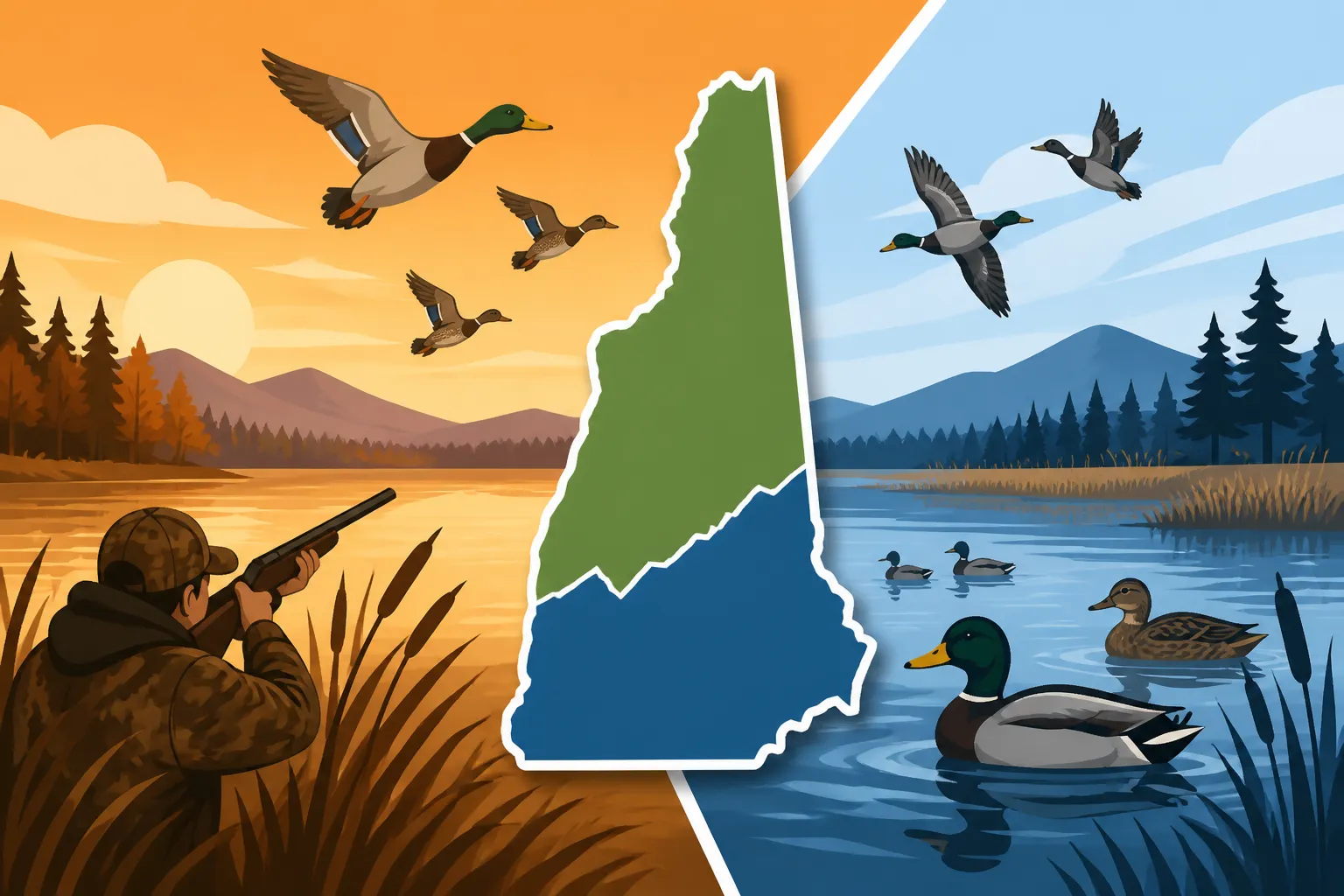
New Hampshire, while relatively small, is quite diverse geographically, and that diversity impacts where waterfowl gather and when they move. The state is cleverly divided into two distinct zones for waterfowl hunting: the Inland Zone and the Coastal/Inland Zone (often just called the Coastal Zone for simplicity, though its official name recognizes its mixed nature). Ignoring these lines can lead to missed opportunities or, worse, unintended violations, so let's break them down.
The Inland Zone: Where the Rivers Run
The vast majority of New Hampshire falls within the Inland Zone. This includes all the beautiful lakes, ponds, and river systems that crisscross the state, from the sprawling Lake Winnipesaukee to the winding Merrimack and Connecticut Rivers. Think of the quintessential New England scene: quiet beaver flows, small farm ponds, and winding rivers flanked by hardwood and softwood forests. This zone is a haven for dabbling ducks like mallards, wood ducks, and green-winged teal, especially in the early parts of the season before the really cold weather sets in and forces them further south. Birds here are often more predictable in their patterns, sticking to familiar feeding and roosting areas, making scouting a critical component of success. You'll find pockets of resident geese throughout this area, too, often taking advantage of agricultural fields and larger waterways. The season structure here is designed to capture the migration patterns of birds moving down the Atlantic Flyway, often with a split season to accommodate different waves of migrants.
The Coastal/Inland Zone: Bridging Freshwater and Salt
Then there's the Coastal/Inland Zone, a much smaller, but incredibly vibrant, sliver of the state that hugs the Atlantic Ocean. This zone encompasses the tidal waters, salt marshes, and estuaries along New Hampshire’s short but productive coastline, extending inland to capture some of the lower reaches of major rivers influenced by the tide. Places like the Great Bay Estuary and the Hampton-Seabrook Estuary are prime examples, offering a mix of freshwater and saltwater habitats. Here, you'll encounter a different suite of birds, including many sea ducks and diving ducks that thrive in brackish and saline environments, alongside puddle ducks that utilize the freshwater inflows. This zone sees a strong influence from migrating birds traveling along the coast, offering a unique hunting experience compared to the interior. The habitat is often more open, with vast marshes and tidal flats, which calls for different hunting strategies and gear, such as layout blinds and specialized decoy spreads that mimic diver flocks.
Why Zone Lines Matter for Your Hunt
Understanding these zone lines isn't just bureaucratic red tape; it's fundamental to planning a successful and legal waterfowl hunt. The boundaries dictate everything from opening and closing dates to specific regulations like shooting hours and, in some cases, even bag limits for certain species. For instance, the timing of the split seasons can vary significantly between the Inland and Coastal/Inland Zones to align with peak migration periods in each distinct habitat. A duck stamp purchased for the entire state still requires you to be aware of which zone you're actively hunting in on any given day. Misinterpreting these lines could mean hunting out of season, which is something no responsible hunter wants to do. Before you even think about setting decoys or blowing a call, make sure you know exactly which zone you're in and double-check the current New Hampshire Waterfowl Season and Zones in the official New Hampshire Fish and Game digest, or a reputable app like GoHunt, to ensure you’re compliant.
Key Species and Their Habitat Preferences
New Hampshire's diverse wetlands, from mountain bogs to coastal estuaries, attract a wide variety of waterfowl. Knowing what birds you're likely to encounter in different habitats, and what they prefer to eat or where they like to rest, is invaluable for successful scouting and decoy placement.
Puddle Ducks: Mallards, Wood Ducks, and Green-winged Teal
Puddle ducks, or dabblers, are the bread and butter of most New Hampshire waterfowl hunts. These birds feed in shallow water, often "tipping up" to reach submerged vegetation, seeds, and invertebrates. They prefer small ponds, marshes, slow-moving rivers, and flooded timber.
- Mallards: The most recognizable duck, mallards are incredibly adaptable and can be found almost anywhere there's water in New Hampshire. They love agricultural fields, corn stubble, and acorns in flooded woods. They'll often feed in fields at night and roost on larger bodies of water during the day. Setting up on a field edge with a spread of mallard decoys can be incredibly effective, especially after a cold snap pushes new birds into the area. They're strong flyers and decoy well, responding to typical quacks and feed calls.
- Wood Ducks: These stunning ducks are particularly abundant in New Hampshire, especially in the early season. They prefer wooded swamps, beaver flows, and slow-moving streams with plenty of overhead cover and nearby mast trees like oaks. Wood ducks are cavity nesters, so you'll often find them around mature forests bordering water. They respond well to wood duck whistles and typically fly in small, fast-moving groups, often right at legal shooting light. Hunting a Beaver Flowage Edge at dusk or dawn can be incredibly productive for these birds.
- Green-winged Teal: The smallest of our puddle ducks, green-wings are incredibly fast and agile flyers. They often show up in large flocks during migration, favoring shallow marshes, mud flats, and flooded fields where they can pick tiny seeds and invertebrates. Their migration timing is a bit later than wood ducks, making them a great target through much of October and into November. A high-pitched whistle can bring them circling, and they respond best to a dense spread of small decoys.
Diving Ducks: Ring-necks, Goldeneyes, and Buffleheads
Diving ducks are generally found on larger, deeper bodies of water like big lakes, wide rivers, and the coastal estuaries. Unlike puddle ducks, they dive completely underwater to find their food, which often consists of aquatic insects, mollusks, and small fish. They're built for diving, with larger feet set further back on their bodies, making them somewhat awkward on land but swift underwater.
- Ring-necked Ducks: Often mistaken for scaup, ring-necks are common on larger, freshwater lakes and ponds throughout the Inland Zone. They prefer areas with abundant submerged vegetation, which they dive to retrieve. You'll often see them in rafts, especially in late fall. Decoying these birds requires a spread on open water, often with the decoys anchored in deeper spots where they naturally feed.
- Common Goldeneyes: These striking ducks are found on large rivers and coastal areas, particularly as winter approaches. They're very hardy and will stay in New Hampshire as long as there's open water. Goldeneyes are primarily fish-eaters and often forage in areas with strong currents. They're fast, erratic flyers and can be tough to decoy, but a spread with some active diver decoys can sometimes entice them. You’ll often find them in the Connecticut River or along the seacoast.
- Buffleheads: Tiny and energetic, buffleheads are common winter visitors to New Hampshire's coastal waters and larger inland lakes. They're incredible divers, disappearing and reappearing quickly. Like goldeneyes, they're fish and invertebrate eaters and prefer deeper, open water. Their small size and rapid flight make them a challenging but rewarding target. A few bufflehead decoys mixed with other divers can sometimes attract them.
Geese: Resident and Migratory Canada Geese
Canada geese are a major component of New Hampshire's waterfowl hunting opportunities. We have a significant population of resident Canada geese that breed here, and then during the fall, we also see waves of migratory birds moving down from Canada.
- Resident Geese: These birds are often found around agricultural fields, golf courses, and larger bodies of water throughout both zones. They're accustomed to human activity and can be very wary. Finding their feeding and roosting patterns is key. Scouting is paramount – look for fresh droppings and grazed fields. Early season hunting often targets these resident birds before the major migrations begin.
- Migratory Geese: As fall progresses, large V-formations of migratory Canada geese begin to appear, signaling the arrival of colder weather. These birds are often less pressured than resident flocks initially but become wary quickly. They'll use large agricultural fields, especially corn stubble, as feeding grounds, and larger lakes or reservoirs for roosting. Layout Blind Hunting a Northern Zone Field can be incredibly effective when these birds are pouring into the state. Spreads of full-body decoys or large silhouette spreads are critical for enticing these cautious birds. Remember to always consult the regulations for New Hampshire Duck and Goose Bag Limits, as they can vary.
Navigating Season Dates and Bag Limits by Zone
One of the biggest headaches for New Hampshire waterfowl hunters is keeping track of the season dates and bag limits, which can feel like they change every year and definitely vary by zone. It's not just about knowing when you can hunt, but also when the best hunting is likely to occur based on bird migration.
Inland Zone Season Splits and Dates
The Inland Zone typically has a split season, which means there are two distinct hunting periods separated by a closure. This split is designed to coincide with different migration pushes. The first segment usually opens in late September or early October, offering excellent opportunities for wood ducks, resident mallards, and early migrating teal before many leaves have even fallen. This early period often has milder weather, making for a pleasant hunt, though mosquitos can still be a nuisance! The season then closes for a period, usually in late October, before reopening around mid-November, continuing through December.
This later segment targets the bulk of the main mallard migration, as well as black ducks, goldeneyes, and buffleheads that push south with colder weather. The later season often means colder temperatures, ice-up on smaller waters, and the need for more robust gear, but it can also offer some incredible hunting as hungry birds search for open water and food. Always verify the precise opening and closing dates with the official New Hampshire Fish and Game digest, as these dates can shift slightly year to year. Using a reliable source like the GoHunt app for current regulations is a smart move.
Coastal/Inland Zone Season Structure
The Coastal/Inland Zone, due to its unique habitat and different migration patterns, often has a later start to its season and a more continuous or differently split structure compared to the Inland Zone. It generally opens later, sometimes in mid-October or even early November, and often runs well into January, providing longer opportunities, especially for hardy diving ducks and sea ducks. The later start allows more coastal-specific species to arrive and settle into their wintering grounds.
This zone is where you'll find great opportunities for species like common eiders, scoters, and oldsquaws (long-tailed ducks) in the marine environments, alongside the freshwater ducks utilizing tidal rivers and marshes. The extended season means hunters here need to be prepared for truly cold, often windy, and wet conditions, but the rewards can be incredible. Imagine Decoying Ducks on New Hampshire's Connecticut River as it flows towards the ocean, or sitting in a blind overlooking a vast salt marsh. Again, always confirm the specific dates for the Coastal/Inland Zone in the official regulations, as even a day can make a difference.
Understanding Daily and Possession Bag Limits
Beyond the season dates, bag limits are critical. These limits dictate how many birds of each species you can harvest per day (daily bag limit) and how many you can possess in total (possession limit), which is usually three times the daily bag limit. New Hampshire's regulations follow federal guidelines but can have state-specific nuances.
Here’s a general overview, but please, always check the current year’s digest as these numbers are subject to change:
| Species Group | Daily Bag Limit (General) | Notes |
|---|---|---|
| Mallards | 4 (only 2 hens) | Most common duck; pay attention to hen vs. drake limits. |
| Black Ducks | 2 | A prized bird in New Hampshire; often found in coastal marshes and large rivers. |
| Wood Ducks | 3 | Abundant in early season, especially in wooded swamps and beaver flows. |
| Green-winged Teal | 6 | Fast-flying, small ducks, often in large flocks. |
| Canada Geese | 3-5 (Varies) | Varies by season segment and zone; often higher early season. New Hampshire Resident Canada Goose Population hunting is popular early. |
| Other Ducks | 1-3 (Varies by species) | Includes pintails, gadwall, wigeon, canvasbacks, redheads, scaup, mergansers, etc. Some species have very restrictive limits (e.g., 1 pintail, 1 canvasback, 2 redheads). |
| Coots | 15 | Often overlooked, but plentiful in some areas. |
- Mixed Bags: It's common to shoot a mixed bag of ducks. You must adhere to the individual species limits within your total bag. For example, if the total duck limit is six, but you shot three wood ducks (maxed out), you can only shoot three more ducks of other species that you haven't maxed out on.
- Possession Limits: The possession limit applies to birds that are retrieved from the field and remain in your possession, whether fresh, frozen, or processed. This prevents hunters from accumulating an excessive number of birds over multiple hunting trips without consuming or distributing them. This is especially important for those multi-day trips or when you’re combining a trip with other activities like Bear Hunting New Hampshire's Bait and Hound Season.
- Specific Regulations: Pay close attention to specifics like hen mallard limits, which are often more restrictive than drake limits to protect breeding populations. Also, know the specific species that have highly restrictive limits (like pintails or canvasbacks) so you don't accidentally overharvest. These details are clearly laid out in the official New Hampshire Fish and Game digest, which you can often find online or at license vendors.
Essential Gear for New Hampshire Waterfowl Hunters
Waterfowl hunting in New Hampshire, whether you're battling marsh mud or freezing river currents, demands specific gear. You're often dealing with wet, cold conditions, and the right equipment can mean the difference between a successful, comfortable hunt and a miserable, short one.
Decoy Spreads: Adapting to Habitat and Species
Decoys are your primary tool for luring birds into range. The type of decoys and how you set them up will vary greatly depending on the species you're targeting and the habitat you're hunting.
- Puddle Duck Spreads: For mallards, wood ducks, and teal in shallow water, a spread of a dozen to two dozen floating decoys often does the trick. You want a mix of drakes and hens, with some in active feeding positions to create a natural look. Common patterns include a "J-hook" or "U-shape," leaving an open landing zone in front of your blind. In smaller beaver flows or wooded swamps, even just 6-12 decoys might be enough. Motion decoys, like spinning wing Mojo Decoys for New Hampshire Puddle Ducks, can be incredibly effective, especially on calm days, adding realism and attracting birds from a distance.
- Diving Duck Spreads: When targeting ring-necks, goldeneyes, or buffleheads on larger, deeper waters, you'll need different strategies. Diver decoys typically have different keels and sit lower in the water. Spreads for divers are often larger and more spread out, mimicking a raft of feeding birds. A common setup is a long line of decoys extending out from your blind, with some clustered at the end to create a focal point. Sometimes, just a few dozen diver decoys can work wonders, especially if you're targeting a specific flight path on a big lake or river.
- Goose Spreads: Geese are incredibly wary, and effective goose hunting often requires a much larger spread, often 3-5 dozen or more full-body, silhouette, or shell decoys. For field hunting, a spread that mimics a feeding flock, with some sentry geese standing guard, is crucial. For water sets, larger floaters or even full-body field decoys placed on shorelines can work. Layout blind hunting a field requires careful attention to the spread to avoid giving away your position. Realistic GoHunt decoys, properly positioned, can make all the difference when Pass-Shooting Geese on a Split-Season Field.
Blinds and Concealment: Staying Hidden in Diverse Landscapes
Concealment is non-negotiable for waterfowl hunting. Birds have incredible eyesight, and even a slight glint or unnatural shape can send them flaring.
- Shoreline Blinds: Natural cover, like cattails, brush, or timber, is often your best friend. Build a makeshift blind by enhancing existing vegetation. Portable panel blinds or ghost blinds are also excellent options for blending into a variety of environments. The key is to break up your outline and ensure your movement is obscured.
- Layout Blinds: For field hunting geese or ducks, a layout blind is essential. These low-profile blinds allow you to lie down in the middle of a field, disappearing into the stubble. Brands like Avery Outdoors and Final Approach offer excellent layout blinds. Brushing in your layout blind with natural vegetation from the field is critical for success.
- Boat Blinds: If you're hunting from a boat, especially on larger rivers like the Connecticut or on coastal estuaries, a boat blind is a must. These typically attach to your boat and can be brushed in to resemble a natural clump of vegetation.
Waders, Boats, and Retrievers: Essential for Water Access
Accessing prime hunting spots and retrieving downed birds often means getting wet, sometimes very wet.
- Waders: Good quality, insulated waders are non-negotiable. Chest waders are generally preferred over hip waders in New Hampshire, as you often find yourself in deeper water than anticipated, especially when Retrieving a Deer From a Beaver Flowage or setting decoys in a marsh. Neoprene waders offer excellent insulation for cold water, while breathable waders are better for milder days or long hikes, though you might want to layer underneath. Look for brands known for durability, like LaCrosse or Sitka.
- Boats: A reliable boat opens up a world of opportunities, from accessing remote beaver flows to running decoy spreads on big rivers or coastal waters. Jon boats, canoes, kayaks, or even small inflatables can be suitable depending on the water you intend to hunt. Make sure your boat is stable, well-maintained, and equipped with all necessary safety gear. If you're planning to hunt the larger waters, consider a boat that can handle some chop.
- Retrievers: A well-trained retrieving dog is an invaluable asset for waterfowl hunting. Not only do they speed up game recovery, reducing lost birds, but they also allow you to hunt in areas where wading might be too deep or dangerous. Breeds like Labradors, Chessapeake Bay Retrievers, and Golden Retrievers are popular choices in New Hampshire. Even if you don't have a dog, a long-handled landing net or a fishing pole with a hook can sometimes help with retrievals from the edge of cover.
Scouting and Strategy for Each Zone
Waterfowl hunting success in New Hampshire isn't just about showing up; it's about understanding bird behavior and meticulously scouting your chosen area. The tactics you employ will differ significantly between the Inland and Coastal/Inland Zones.
Scouting Inland Rivers and Ponds
The Inland Zone offers a mix of small ponds, beaver flows, and winding rivers. Scouting here involves identifying prime feeding and roosting locations.
- Pre-Season Reconnaissance: Before the season opens, drive rural roads, use mapping apps like GoHunt or onX, and even walk public access points to locate water bodies. Look for signs of ducks: droppings, feathers, and actively feeding birds. Pay close attention to agricultural fields adjacent to water, especially cornfields, as ducks and geese will often commute between these areas. This early scouting is similar to finding sign in White Mountain Timber for deer.
- Reading the Water: On rivers, look for slower eddies, oxbows, and backwaters where ducks can rest out of the current. Pay attention to inflows from small creeks, as these can bring in food and create unique currents. For ponds and beaver flows, identify areas with emergent vegetation, submerged aquatic plants, or flooded timber – these are prime feeding grounds.
- Trail Cameras: While not as common for waterfowl, strategically placed trail cameras near agricultural fields or on popular flight paths can help you pattern goose movements, especially if you're dealing with a wary New Hampshire Resident Canada Goose Population.
- Jump-Shooting Opportunities: Sometimes, the best way to hunt smaller, overlooked waters is to Jump-Shooting a New Hampshire Creek. This involves stealthily approaching ponds, creeks, or river bends on foot or by canoe, surprising birds and taking them as they flush. It requires quiet movement and knowing where birds are likely to be resting or feeding.
Tackling Coastal Marshes and Estuaries
Hunting the Coastal/Inland Zone presents a unique set of challenges and rewards. The vastness of the marshes and the influence of tides demand different scouting methods.
- Tidal Influence: Tides are everything in coastal waterfowl hunting. Birds feed on exposed mudflats and in shallow channels at certain tide levels and then move to deeper water or higher ground to roost as the tide changes. You need to understand the tide charts for your chosen area and scout at different tidal stages to see where birds are concentrating.
- Glassing Large Areas: Coastal marshes are often expansive, making binoculars and spotting scopes indispensable. Find high vantage points overlooking the marsh to glass for feeding birds at dawn or dusk. Look for rafts of divers on open water or flocks of puddle ducks working the smaller channels. This is similar to Glassing a Bog for a Bull Moose, just with different birds.
- Boat Scouting: A boat is often necessary to effectively scout and hunt coastal marshes. Explore channels, identify blind locations, and note potential hazards like submerged oyster beds or shallow mudflats.
- Wind and Weather: Coastal weather can be extreme. Wind direction and strength greatly influence how ducks fly and where they seek shelter. Strong winds can make birds fly lower and use protected areas, while calm days might see them more spread out. Pay attention to the forecast, as a good storm can sometimes push new birds into the area and make for exceptional hunting.
Reading Weather Patterns and Migration Forecasts
Waterfowl are migratory, and their movements are heavily influenced by weather. Staying on top of forecasts and migration reports can be as important as scouting.
- Cold Fronts: Significant cold fronts to the north are often the trigger for large pushes of migratory ducks and geese into New Hampshire. Keep an eye on weather maps showing dropping temperatures and snow in Canada and northern New England.
- Wind Direction: A strong north or northwest wind often aids southbound migration and can put birds on the move. Conversely, a prolonged south wind can hold birds up north.
- Ice Formation: As temperatures drop, smaller ponds and shallow rivers will begin to freeze. This concentrates birds on larger, still-open bodies of water or forces them further south. Knowing Duck Migration Timing Through New Hampshire is key.
- Online Resources: Many national and regional waterfowl organizations, as well as state wildlife agencies, provide migration reports and forecasts during the season. Websites like the GoHunt platform often have updated information that can help you plan. Local forums and hunting reports can also give you a feel for what birds are in the area and where they might be found.
Public Access Opportunities and Regulations
Finding a place to hunt waterfowl in New Hampshire can feel daunting, but the state offers some fantastic public access opportunities if you know where to look and understand the rules. From state-managed areas to navigable waters, there's a lot of ground to cover.
New Hampshire Wildlife Management Areas for Waterfowl
New Hampshire Fish and Game manages numerous Wildlife Management Areas (WMAs) across the state, many of which provide excellent waterfowl hunting opportunities. These areas are specifically managed for wildlife habitat, often including wetlands, impoundments, and agricultural fields that attract ducks and geese.
- Variety of Habitats: WMAs like Great Bay WMA, Powwow River WMA, and Little River WMA offer diverse habitats ranging from salt marshes and tidal rivers to freshwater ponds and managed impoundments. Each WMA might hold different species depending on its specific features. For instance, a WMA with open water might attract more divers, while one with flooded timber will be a wood duck haven.
- Specific Rules: While WMAs are public, many have specific regulations beyond statewide rules. These might include restrictions on vehicle access, boat motor size, temporary closures for habitat work, or designated hunting zones. Always check the New Hampshire Fish and Game website or information kiosks at the WMA entrance for specific rules. Sometimes, special permits are required, especially for managed impoundments or draw hunts.
- Hunting Pressure: WMAs, being well-known public lands, can sometimes experience higher hunting pressure, especially on opening days and weekends. To find success, consider scouting during the week, hunting less accessible portions of the WMA, or trying different times of day. Remember, the earlier you get in, the better your chances of securing a prime spot. This is where understanding how to find Ground Others Walk Past comes in handy.
Hunting Navigable Waters and Shorelines
New Hampshire's public access laws allow hunting on many navigable waters, which can provide excellent opportunities for waterfowl, even if the adjacent land is private.
- Public Access Rights: In New Hampshire, generally, the public has the right to hunt on navigable waters below the mean high-water mark, even if the shoreline is privately owned. This includes many rivers, large lakes, and coastal areas. However, you must access these waters legally without trespassing on private property, and you cannot shoot over or onto private land without permission.
- Setback Rules: There are strict setback rules regarding shooting near dwellings, buildings, or occupied structures. Generally, you cannot discharge a firearm within 300 feet of an occupied dwelling without permission. This is especially critical to remember when hunting shorelines adjacent to developed areas. Always give plenty of space and be hyper-aware of your surroundings.
- Boat Launches: Public boat launches provide legal access to many of these navigable waters. These can be found at state parks, town access points, or New Hampshire Fish and Game access sites. Plan your hunt from these points, ensuring you stay on public water.
- River Hunting: The Connecticut River, for example, offers miles of navigable water. Decoying Ducks on New Hampshire's Connecticut River from a boat blind or setting up along an accessible public shoreline can be very productive. Be mindful of currents and boat traffic, especially during peak hunting times.
Understanding Setbacks and Safety Zones
Safety is paramount, and New Hampshire has clear regulations regarding where you can and cannot discharge a firearm. These rules protect property owners and other recreational users.
- No Shooting Near Dwellings: As mentioned, the 300-foot setback from occupied dwellings is a hard and fast rule. This applies whether you're on public or private land. Always be sure of your backdrop and the surrounding area before you take a shot.
- Roads and Trails: You cannot shoot from or across a public highway, road, or traveled way. Also, be aware of hiking trails or other recreational paths, especially on public lands. While not always a specific "setback," exercising common sense and avoiding shooting towards active trails is crucial.
- State Parks and Other Restrictions: While some New Hampshire State Parks allow hunting, many have specific restrictions or designated no-hunting zones. Always check the park's specific rules before planning a hunt. Similarly, some municipal lands or conservation easements might have unique regulations. A tool like GoHunt can often show these restricted areas on its mapping layers.
- Courtesy and Common Sense: Beyond the legal requirements, always extend courtesy to landowners and other outdoor enthusiasts. A friendly wave or a polite conversation can go a long way in maintaining a positive image for hunters and preserving future access. Always clean up after yourself, leaving no trace of your presence.
Advanced Tactics for Pressured Birds
As the season wears on, waterfowl in New Hampshire become incredibly wary. They've seen countless decoy spreads, heard every call, and been shot at from every conceivable angle. This is when you need to dig deep into your bag of tricks and employ some advanced tactics to stay successful.
Jump-Shooting Creeks and Small Ponds
Sometimes, the most productive hunting isn't about setting up a huge spread but about being stealthy and opportunistic. Jump-shooting is an old-school tactic that still works wonders on pressured birds, especially in the Inland Zone.
- The Element of Surprise: The key to jump-shooting is surprise. Ducks and geese on small, isolated waters often feel safe. By quietly approaching a creek bend, beaver pond, or small marsh, you can often get within shooting range before the birds are aware of your presence. Use natural cover to break up your outline as you approach.
- Wind and Sun: Always try to approach with the wind in your face (to muffle sound and carry your scent away) and with the sun at your back (to make it harder for birds to see you). Pay attention to the currents on creeks; birds often flush against the current, so position yourself to anticipate their flight path.
- Teamwork: Jump-shooting can be effective with one or two hunters. One hunter can quietly sneak up to a bend or the edge of a pond, while the other positions themselves further downwind or across the water to intercept flushing birds. Communication is key, usually with hand signals.
- Timing: Early morning or late afternoon, when birds are feeding or moving to roost, can be prime times. After a fresh snowfall, birds often concentrate in smaller, unfrozen waters, making them easier to locate. This technique is also effective for Small Game and Predator Hunting in New Hampshire, like squirrels.
Decoying Ducks on New Hampshire's Connecticut River
The Connecticut River is a major waterfowl highway, especially during migration, but hunting its expansive waters effectively requires specific strategies.
- Scouting for Feed and Roost: Ducks will use the Connecticut River for both feeding and roosting. Scout for areas with mud flats, backwater eddies, or agricultural fields adjacent to the river. Pay attention to sandbars or islands where birds might loaf during the day. How Many Ducks Winter on the Connecticut River can vary significantly by year, so up-to-date intel is valuable.
- Boat Blinds and Layout Blinds: Given the open nature of the river, a well-brushed boat blind is often essential. If hunting from a sandbar or island, a layout blind, effectively brushed in with driftwood and vegetation, can work. Concealment is paramount as birds will often approach from a distance.
- Large Decoy Spreads: On such a large body of water, you generally need a larger decoy spread to be noticed. Consider using three to five dozen decoys, mixing mallards, black ducks, and some divers if they are present. A "V" or "J" spread, or a large blob with a landing hole, can be effective. Consider adding a few GoHunt motion decoys to give life to your spread.
- Calling: Aggressive calling can work on the river, especially on windy days or when birds are high. Use a variety of calls – a loud hail call to get their attention, followed by contented feed calls and softer quacks as they get closer. Master the art of the comeback call for birds that start to swing wide.
- Wind and Current: The river's current can make setting and retrieving decoys challenging. Use heavy decoy anchors and long lines. Position your boat and decoys to take advantage of the prevailing wind, which can help bring birds into your spread. Be extremely mindful of other boat traffic.
Pass-Shooting Geese on a Split-Season Field
Field hunting for geese, particularly the wary migratory birds, requires a different approach. Pass-shooting, or intercepting birds as they fly between feeding and roosting areas, can be effective when traditional decoying isn't working or on fields where access is limited.
- Understanding Flight Paths: This tactic relies heavily on knowing where geese are flying. Scout extensively to identify the exact flight corridors they use to enter and exit a field or move between roosting water and feeding grounds. Often, these paths follow natural contours like tree lines, fencerows, or river bends.
- Concealment is Key: Unlike decoying, where you're trying to pull birds down, pass-shooting is about intercepting them in flight. You need to be completely hidden along their flight path. This means using natural cover like hedgerows, tall grass, or even a ditch line. Layout blinds are excellent here, especially when brushed in meticulously.
- Timing: The best times for pass-shooting are usually early morning and late afternoon, when geese are actively moving to and from their feeding and roosting areas. Look for the distinct patterns of movement.
- Shooting Ethics: Be mindful of your shooting range. Pass-shooting can tempt hunters to take shots at birds that are too far, leading to crippled birds. Only take ethical shots within your effective range. A 3-inch or 3.5-inch magnum shell with heavy shot (like BB or BBB steel) is often preferred for geese to ensure clean kills at longer ranges. Remember that effective range for steel shot is generally shorter than lead.
Conservation and Responsible Hunting Practices
As waterfowl hunters, we are often the staunchest conservationists. Our passion for the pursuit is intertwined with a deep commitment to protecting the habitats and populations of these incredible birds. Responsible hunting practices are not just about legality; they're about ethics, sustainability, and ensuring a vibrant future for New Hampshire hunting.
Supporting Waterfowl Conservation with Stamps and HIP
Every waterfowl hunter plays a direct role in conservation through the purchase of stamps and participation in harvest surveys.
- Federal Duck Stamp: The Federal Duck Stamp is arguably one of the most successful conservation programs in history. 98 cents of every dollar from the sale of the Federal Duck Stamp goes directly to acquire and protect wetland habitats for the National Wildlife Refuge System. These wetlands benefit countless species of birds, mammals, and fish, not just waterfowl. It is a mandatory purchase for all waterfowl hunters 16 years of age and older. Without this vital funding, many of the prime hunting and viewing areas we enjoy simply wouldn't exist. Understanding the New Hampshire Federal Duck Stamp Requirement is basic to being a waterfowl hunter.
- Harvest Information Program (HIP) Certification: The HIP certification is another mandatory requirement for all migratory bird hunters (including ducks, geese, woodcock, and snipe). When you purchase your New Hampshire hunting license, you'll be asked to register for HIP, answering a few simple questions about your previous year's hunting success. This data is crucial for the U.S. Fish and Wildlife Service to estimate harvest numbers, set future season dates, and manage migratory bird populations effectively. It's how biologists track populations and ensure sustainable hunting. So, when you get your New Hampshire HIP Certification for Bird Hunters, know that you're contributing to vital data collection.
- State Conservation Efforts: Beyond federal programs, New Hampshire Fish and Game also uses license revenue and other funding to manage local wetlands, restore habitats, and conduct research on waterfowl populations within the state. Supporting local conservation groups like Ducks Unlimited or the Ruffed Grouse Society also funnels money directly into habitat projects that benefit waterfowl and other wildlife.
Ethical Shot Placement and Game Recovery
A responsible hunter strives for clean, quick kills and minimizes game loss. This comes down to practice, knowing your limits, and having the right equipment.
- Pattern Your Shotgun: Before the season, take your shotgun to the range and pattern it with the specific ammunition you intend to use. This helps you understand your shotgun's effective range and shot spread, allowing you to make ethical decisions in the field. What may be a good pattern at 30 yards might be too sparse at 40 yards.
- Know Your Range: Steel shot, which is mandatory for waterfowl hunting, behaves differently than lead. Its lighter weight means it loses energy faster. Be disciplined and only take shots at birds within your effective range (generally 40 yards or less for most setups). A bird that's "way up there" is usually a missed shot or, worse, a wounded bird that flies off to die elsewhere.
- Focus on the Head/Neck: For ducks and geese in flight, aim for the head and neck. This is the most vulnerable area for a quick, clean kill. Avoid simply aiming for the body, as large feathers and muscle can sometimes absorb a hit.
- Mark Your Bird: When a bird goes down, immediately mark where it fell. Pick out a distinctive landmark like a specific tree, a bush, or a change in the waterline. In open water or vast marshes, it's incredibly easy to lose sight of a downed bird, especially if there are other birds flushing or if you're excited.
- Swift Recovery: Always make every effort to recover downed game quickly. This is where a good retriever truly shines. If you don't have a dog, be prepared to wade, use a boat, or employ a long retrieving pole. Losing a bird is a somber experience for any ethical hunter and should be avoided at all costs.
Respecting Landowners and Fellow Hunters
The future of hunting depends on our collective behavior and our ability to maintain a positive public image. Courtesy and respect are cornerstones of responsible hunting.
- Private Land Permission: If hunting on private land, always obtain explicit permission from the landowner before stepping foot on their property. This often means knocking on doors in New Hampshire Farm Country. Even if you have permission for deer, clarify if waterfowl hunting is also allowed. Follow any specific rules they might have regarding access, parking, or areas to avoid. A simple "thank you" goes a long way, and perhaps offering some of your harvest builds goodwill.
- Public Land Etiquette: On public lands, be respectful of other hunters and outdoor enthusiasts. Give other hunting parties plenty of space, especially when setting up a blind or decoys. Don't crowd someone's spread or walk through their hunting area. If you arrive at a spot that's already occupied, move on and find another location. This same courtesy applies when hunting moose, such as when Hunting a New Hampshire North Country Moose Bog.
- Sharing the Resource: Remember that public lands are for everyone. Be mindful of hikers, birdwatchers, and other recreational users. Educate curious non-hunters about what you're doing, and always project a positive, safe image.
- Leave No Trace: Always pack out everything you pack in. This includes spent shell casings, empty food wrappers, and any other trash. Leave your hunting area cleaner than you found it. This simple act reflects well on all hunters and helps maintain access for future generations.
Disclaimer
Please note: Hunting regulations, season dates, and bag limits are subject to change annually by the New Hampshire Fish and Game Department. Always consult the most current official New Hampshire Hunting & Trapping Digest or the New Hampshire Fish and Game website before planning your hunt to ensure compliance with all state and federal laws.