Calling Coyotes Over a Winter Feed Site
Winter in New Hampshire can be downright brutal, and when the snow gets deep and natural food sources become scarce, coyotes often become bolder, venturing closer to residential areas, farms, and even preying on deer yards. This can be a real headache for landowners and conservationists alike. Learning how to effectively call coyotes over a winter feed site isn't just a fascinating hunting challenge; it's a strategic approach to managing predator populations and understanding their survival instincts. This guide will walk you through the essential steps, from understanding winter coyote behavior to setting up your site and mastering the calls, giving you the best chance for success when you're targeting these wily canines.
Understanding Winter Coyote Behavior in New Hampshire
To consistently bring coyotes into range, you first have to think like one. Winter completely changes the landscape and the survival calculus for these intelligent predators. Their behavior is largely dictated by two overwhelming factors: hunger and the struggle to move efficiently through deep snow.
The Relentless Hunger Gap
When New Hampshire is blanketed in snow, the usual smorgasbord of mice, voles, and rabbits that coyotes rely on becomes incredibly hard to find. These small prey species are either hunkered down deep under the snowpack or are simply less active. This creates a significant "hunger gap" for coyotes, forcing them to become more opportunistic and take greater risks in their search for calories. Their lean winter bodies are constantly burning energy to stay warm and move through the snow, intensifying their need for a readily available food source.
Imagine a coyote, day after day, expending precious energy digging through crusty snow only to come up empty. When they finally stumble upon a consistent, easy meal like a feed site, their natural caution can be overridden by their desperate need for sustenance. This intense hunger makes them much more responsive to calling, as they associate sounds of distress with a potential meal or territory intrusion. They're more willing to travel further and expose themselves more openly than they might during milder seasons.
Adapting Travel Patterns in Deep Snow
Deep snow isn't just an inconvenience for coyotes; it's a major energy drain. Unlike a deer that might yard up, coyotes are still constantly on the move, but their travel patterns become far more predictable. They gravitate towards paths of least resistance: plowed roads, logging trails, snowmobile tracks, frozen rivers and streams, and well-used game trails. These corridors allow them to conserve energy by avoiding breaking fresh snow.
By scouting these travel routes, you can anticipate where coyotes are likely to approach your feed site. Look for tracks along these paths, especially around pinch points or areas of thick cover. Knowing these patterns will help you choose the best location for your feed site and, more importantly, position yourself for an effective shot. You'll often find them working edges, where dense cover meets more open areas, offering them both concealment and an observation point. Understanding these movements is key, much like learning to Reading Aerial Photos for North Country Deer can reveal deer travel routes, it can also inform your coyote strategy.
Setting Up Your Winter Feed Site for Success
The feed site is the anchor of your winter coyote calling strategy. It’s what draws them in initially and keeps them returning, making them vulnerable to your calls. But it’s not as simple as just tossing out some scraps; there's a method to it, and critically, there are rules you must follow in New Hampshire.
Choosing the Prime Location for Your Site
Location, location, location. This isn't just for real estate, it's paramount for a successful feed site. You want a spot that offers high visibility for coyotes from a distance but is also easily accessible for you (within reason) and offers concealment for your calling setup. Look for areas adjacent to known coyote travel corridors—those logging roads, field edges, or frozen river bends we just discussed. A clear-cut with regenerating growth can be excellent, providing dense cover nearby but also open patches.
Consider the prevailing wind direction. You'll almost always want to call with the wind in your face, so setting up your feed site where you can approach and call from downwind of their likely travel paths is crucial. Avoid placing a feed site too close to busy roads or active human areas, as consistent disturbance will deter wary coyotes. On public land, ensure you're well away from hiking trails or other recreational spots. Always check the property boundaries, which tools like GoHunt can make incredibly easy, ensuring you’re not inadvertently trespassing or infringing on an abutter’s space.
What Makes an Effective and Legal Feed Site
This is where New Hampshire regulations come into play, and it's vital to get this right. In New Hampshire, baiting of wildlife is generally prohibited, with specific exceptions for bear, coyote, and fox. For coyote and fox, baiting requires a permit if you're doing it on public land or within 100 yards of another person's property line. Always verify the latest regulations with the New Hampshire Fish and Game Department. Ignorance of the law is not an excuse.
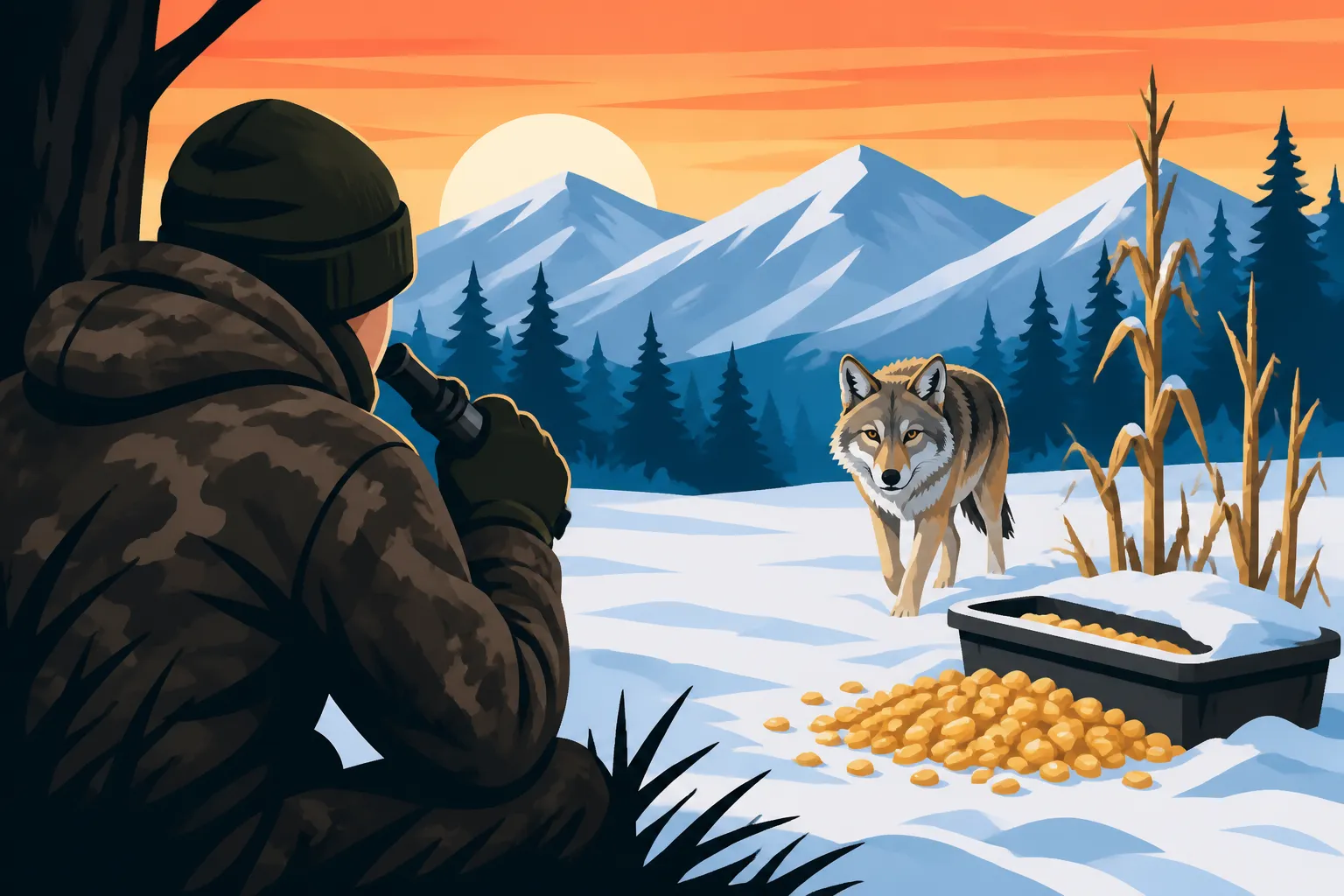
Once you have your ducks in a row with permits and location, what to use? The goal is high-calorie, long-lasting attractants. Roadkill deer, beaver carcasses, butcher scraps (especially those with fat and bone), and even old meat from your freezer can all work wonders. The scent is key, especially in cold weather where odors don't travel as far.
Crucially, secure your bait. Coyotes are strong, and they'll drag off smaller pieces. Wire carcasses to a sturdy tree or stake them down firmly. This ensures the bait stays put, creating a consistent draw over time. Replenish your site regularly, but not so frequently that your human scent builds up excessively. A few times a week, or as needed based on consumption, is usually sufficient. Think of it as a drive-through restaurant for them; they know it’s there, and they’ll check back often. This consistency trains them to associate that location with an easy meal. This kind of planning also ties into effective Coyote Calling New Hampshire Farm Country strategies, where consistent bait can attract coyotes away from livestock.
Mastering Coyote Calling Techniques Over a Feed Site
A feed site gets them in the general area, but your calling is what pulls them the final distance and convinces them to commit. It’s a delicate dance of sound, silence, and observation.
The Art of the Setup: Concealment and Wind
Your setup is paramount. You can have the best feed site and the most expensive call, but if a coyote busts you, it's game over. Wind is always king in predator hunting. You must hunt with the wind in your face or quartering into it. Coyotes will almost always circle downwind to scent-check the area before committing. If your scent cone blows towards their approach, they’ll smell you and vanish. Use a reliable wind checker often.
Concealment is equally important. Whether you’re nestled into a snowdrift, tucked against a large pine, or Using a Ground Blind on Public Land, ensure you break up your outline completely. Wear good quality camouflage that blends with the winter landscape, or even all white if there's significant snow cover. Position yourself to have a clear shooting lane to the feed site and, ideally, to potential approach routes. Be aware of your background; don't silhouette yourself against the sky. Your goal is to be invisible until the moment you need to raise your firearm.
Effective Winter Call Sequences
Coyotes respond best to sounds of distress or territorial challenges in winter. They're looking for an easy meal (distress calls) or defending their turf (howls).
- Distress Calls: Rabbit-in-distress, fawn-in-distress, or bird-in-distress calls are often highly effective. Start with soft, pleading cries, then build intensity as if the prey is struggling.
- Howls: Howls can locate coyotes or challenge a dominant male. Start with a lonely howl, listen for a response, then perhaps follow with a few challenge howls if you get a reply. Don't overdo it.
Many experienced predator hunters, using resources like the GoHunt app to scout their terrain, swear by a varied approach. Begin with a few minutes of distress, then go silent for 5-10 minutes, intently scanning. If nothing, try again, perhaps with a different distress sound or a short series of howls. Electronic calls like those from FoxPro or ICOtec can be incredibly versatile, offering a huge library of sounds and remote control, minimizing your movement. Choosing the right electronic call can make a huge difference, and platforms like GoHunt often feature reviews and comparisons of top models. Mouth calls are also effective and offer a more personal touch, but require more skill and movement.
Here’s a quick guide to common calls:
| Call Type | Purpose | When to Use |
|---|---|---|
| Rabbit Distress | Simulates a rabbit in trouble; appeals to hunger. | Most common and effective all-around; good for opening a sequence or bringing in cautious coyotes. |
| Fawn Distress | Mimics a struggling fawn; strong appeal to hunger. | Effective early winter before fawns are fully grown, or anytime coyotes are desperate for a larger meal. |
| Mouse/Vole Squeaks | Replicates small prey; subtle attraction. | For close-in work, or to coax a hang-up coyote the last few yards. |
| Coyote Howls | Locates coyotes, challenges territory, indicates presence. | To get a response, especially at dawn/dusk, or to tell distant coyotes "I'm here." |
| Kiyis (Pup Distress) | Sounds like a lost or injured pup; evokes protective instincts or curiosity. | Can bring in dominant females or other pack members, especially during breeding season. |
Reading Coyote Behavior to Adjust Your Call
Once a coyote responds or appears, the real game begins. Every movement, every twitch of an ear, tells you something. If a coyote approaches steadily, keep calling intermittently, but soften the volume. If it stops and stares, it's trying to pinpoint the source. A short, soft series of distress calls might draw it closer. If it starts to circle downwind, be ready; it’s attempting to get your scent. This is often the last move before it commits or bolts.
If a coyote is "hanging up" out of range, often looking hesitant, try a different call sound or a very subtle, soft whimpering sound. Sometimes, silence is your best call. Let curiosity (and hunger) do the work. If it's trotting confidently, it might just need a subtle reminder of the "prey." Never move abruptly, and be ready to shoot as soon as it offers a clean, ethical shot opportunity. This ability to adapt your strategy on the fly is a critical skill, similar to the precision required for Predator Calling New Hampshire's White Mountain Backcountry.
Essential Gear and Ethical Considerations for Winter Coyote Hunts
Being prepared for the harsh New Hampshire winter is just as crucial as knowing how to call. The right gear keeps you comfortable and focused, while ethical considerations ensure you’re hunting responsibly.
Winter Hunting Gear for Comfort and Performance
Sitting still in freezing temperatures, possibly for extended periods, demands specialized gear.
- Layering for Warmth: Start with moisture-wicking base layers, add insulating mid-layers like fleece or down, and top it off with a waterproof and windproof outer shell. You’ll be layering up for a Cold-Weather Sitting Strategy in the North Country, so ensure your outer layers are quiet and camouflaged for winter. Don't forget an insulated hat, gloves, and a neck gaiter.
- Insulated Footwear: Your feet will get cold quickly. Invest in high-quality, insulated, waterproof boots. Look for boots rated for extreme cold and wear wool socks. Your feet are your anchors in the snow, so keeping them warm is non-negotiable, especially when you consider the varied terrain of New Hampshire, from granite ridges to bogs, as covered in Boots for New Hampshire's Granite Terrain.
- Optics: Good binoculars (8x-10x) are essential for scanning the distant treeline and spotting subtle coyote movements against the snow. A quality rangefinder is also critical for confident shot placement. You'll be doing a lot of glassing, much like when Binoculars for Glassing a North Country Bog.
- Shooting Support: A bipod or shooting sticks will provide crucial stability, especially when you're bundled up and aiming from a seated position in the snow.
- Firearm: A flat-shooting rifle in .223 Rem, .204 Ruger, or similar calibers is ideal for coyotes. Ensure it's sighted in accurately and you're familiar with its performance in cold weather.
- Additional Gear: A warm seat cushion, hand warmers, a thermos of hot coffee or tea, and a good headlamp for pre-dawn setups or post-hunt retrieves are all highly recommended.
Ethical Hunting and Adhering to Regulations
Responsible hunting means not just following the letter of the law but upholding ethical principles.
- Positive ID: Always, always positively identify your target. Mistaking a domestic dog for a coyote is a catastrophic and avoidable error.
- Know Your Laws: New Hampshire has specific rules regarding hunting hours, weapon types, and baiting. For example, New Hampshire Coyote Hunting Season Rules detail when you can hunt them, and while night hunting for coyotes is allowed with specific restrictions, ensure you know those rules inside and out. Always confirm if your WMU has any unique regulations.
- Respect Private Property: If hunting near private land, make sure you have explicit permission. Do You Need Written Permission in New Hampshire? is a crucial question to answer before stepping onto any private parcel. Even if you're on public land, respect neighboring private property boundaries.
- Clean Kills: Only take shots you are confident in making. A wounded animal suffering is never the goal. Ensure your firearm and ammunition are appropriate for the task.
- Reporting (When Applicable): While not typically required for coyotes, always be aware of any new reporting requirements from NH Fish and Game.
- Leave No Trace: Pack out everything you pack in. Leave the land cleaner than you found it.
Always double-check the latest New Hampshire Fish & Game regulations, which can often be cross-referenced with detailed property information on mapping tools like GoHunt. For serious coyote hunters, especially those looking to optimize their gear and understand regional nuances, a GoHunt membership provides a wealth of data that can enhance your planning and execution. By combining a solid understanding of coyote behavior, a well-placed and legal feed site, precise calling techniques, and a commitment to ethical hunting, you'll be well on your way to successful winter coyote hunts in New Hampshire.
Disclaimer
Please remember that hunting regulations, seasons, and licensing requirements can change. Always consult the most current New Hampshire Fish and Game Department regulations before heading afield. This guide is for informational purposes only and does not supersede official state regulations.