Hunting Small Woodlots Near Manchester
For many hunters in New Hampshire, the idea of pursuing deer close to a bustling urban center like Manchester might seem like a pipe dream. You might feel the pressure to drive hours north to find sprawling public land, leaving you wondering if there are any opportunities closer to home. But don't despair! This comprehensive guide is here to shed light on how to successfully hunt the overlooked small woodlots nestled around Manchester, turning seemingly impossible parcels into productive hunting grounds.
Why Small Woodlots Matter and the Challenges They Present
Hunting smaller parcels of land, often bordering suburban or semi-rural areas, comes with its own unique set of dynamics. These aren't the vast, uninterrupted forests you might find up in Coos County, but they hold a surprising amount of potential for the prepared and patient hunter. The key is understanding both their allure and the distinct challenges they throw your way.
The Urban-Edge Opportunity
Believe it or not, deer thrive in these fragmented landscapes. Small woodlots near Manchester often provide excellent cover, a diverse food source from residential plantings to agricultural fields, and frequently, less hunting pressure than larger, well-known public lands. Deer quickly learn to adapt to human presence, becoming largely nocturnal and incredibly adept at using even the smallest pockets of cover for sanctuary. A 10-acre patch of timber, surrounded by houses and a busy road, might look unpromising to the casual observer, but to a seasoned whitetail, it's a secure bedding area within easy reach of abundant food. These areas can sometimes offer exceptional opportunities, especially during the rut when bucks are on the move and less cautious, pushing through areas they might normally avoid. You might be surprised at the caliber of deer that call these urban-edge habitats home.
Common Misconceptions and Realities
One of the biggest misconceptions about hunting small woodlots is that they're "picked over" or don't hold big deer. While it's true that deer density might not be as high as in some prime agricultural areas, the deer that do inhabit these spaces are often more mature and wily. They've survived encounters with cars, dogs, and yes, even other hunters. Another reality is the sheer proximity to people. Unlike a remote hunt in the White Mountains, you're constantly aware of property lines, potential noise from neighbors, and the need for absolute safety in your shot placement. This isn't a place for long-range rifle shots across open fields; it demands careful planning, precision, and often, bow or muzzleloader hunting for quieter, closer engagements. Understanding these realities upfront is crucial for success and for maintaining a good reputation as a responsible hunter in the community.
Scouting Small Woodlots for Success
Effective scouting is paramount when targeting smaller, often fragmented woodlots. You can't just wander aimlessly; every step, every observation, needs to be calculated. The limited space means deer movements are often more concentrated and predictable, but also incredibly sensitive to disturbance.
Pre-Season Digital Reconnaissance
Before you ever set foot on a potential small woodlot near Manchester, fire up your digital scouting tools. Modern mapping applications are game-changers for these situations. Use high-resolution satellite imagery to identify key features: dense thickets for bedding, potential travel corridors like fencerows or creek bottoms, pinch points between developed areas, and obvious food sources such as overgrown apple trees or adjacent agricultural fields. Look for subtle changes in topography that might create natural funnels, even on seemingly flat ground.
Tools like GoHunt, along with other popular hunting apps, allow you to layer different maps, identify property boundaries, and even check landowner information if you're considering Knocking on Doors in New Hampshire Farm Country. This digital groundwork is critical for forming your initial strategy and can save you hours of aimless wandering. Imagine finding a small, unkempt patch of woods between a suburban cul-de-sac and a powerline cut. On a map, you might see a subtle depression that funnels deer from a larger woodlot across the powerline into the thick cover. This is the kind of detail that turns a "nothing" spot into a potential hotspot. For further digital insights, learning to read Reading Aerial Photos for North Country Deer can also apply to these smaller, southern New Hampshire parcels, helping you discern habitat types and potential bedding areas.
Boots-on-the-Ground Verification
Once you've narrowed down a few promising spots on your digital map, it's time for boots-on-the-ground verification, preferably before the season starts to avoid disturbing the deer. This is where you confirm your digital observations and uncover what the satellite can't tell you. Walk the edges of the woodlot, looking for primary entry and exit points. Are there heavily used trails leading into dense cover? Look for fresh tracks, droppings, rubs, and scrapes. Focus on identifying Where New Hampshire Bucks Bed in Thick Cover within the parcel – often the densest, nastiest cover available, perhaps a small cedar swamp or a stand of tangled saplings.
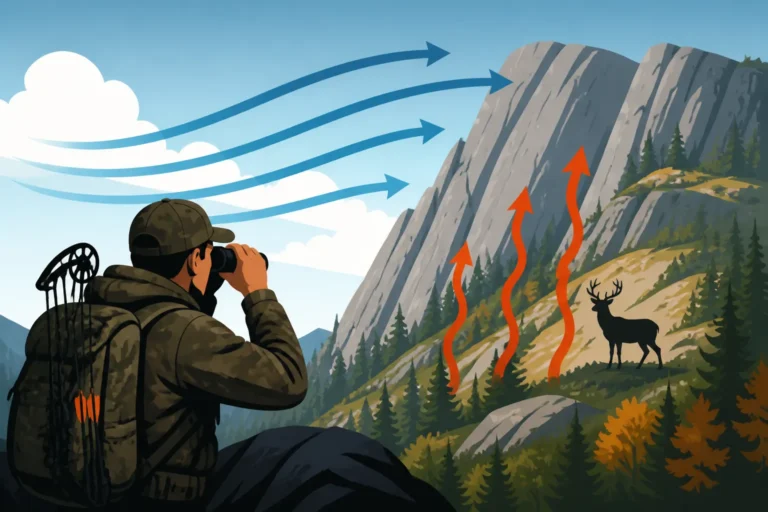
Pay close attention to wind currents and thermals in these smaller, confined areas, especially if there's varied terrain or nearby water. A gentle breeze might swirl unpredictably due to surrounding buildings or varied canopy height, which can make or break a hunt. Don't just look for deer sign; look for patterns. Where do the deer seem to spend the most time? What are they eating? Are there old apple trees producing? Are there oak trees dropping acorns? This detailed ground scouting, combined with insights from Scouting With the New Hampshire Fish and Game App, will solidify your understanding of the deer's routine and help you pinpoint the best stand locations for effective Hunting Small Private Tracts in New Hampshire.
Effective Hunting Strategies for Limited Spaces
Hunting small woodlots demands a refined approach. You can't rely on the same tactics you might use in vast wilderness areas. Success hinges on minimizing disturbance, understanding deer behavior in confined spaces, and being incredibly precise with your setup.
Stand Placement for Tight Quarters
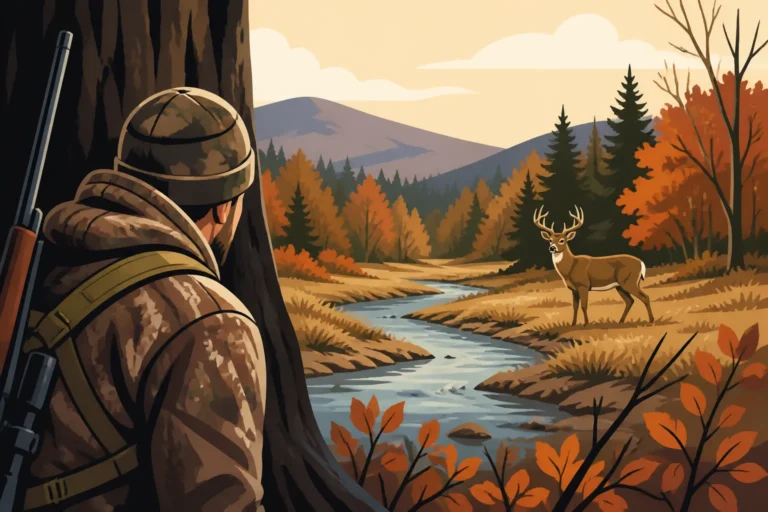
When hunting small woodlots, your stand placement isn't just about intersecting a travel corridor; it's about minimizing your footprint, managing your scent, and ensuring safe shot angles. Because space is limited, deer are often hyper-aware of their surroundings. You need to position yourself where you can see incoming deer without being seen, and where your scent cone is least likely to alarm them. This often means setting up on the downwind side of a primary trail or bedding area, leveraging natural terrain features or dense cover to break up your silhouette.
For example, if you've identified a narrow strip of hardwoods between a suburban neighborhood and a cornfield, you might find a well-worn trail running parallel to a small stream. Setting up a climbing stand or a hang-on stand in a large oak or maple slightly off this trail, facing the most likely direction of approach, might be ideal. Consider using a ground blind, especially if you have an area with good brush and need to stay mobile or concealed from multiple directions. Using a Ground Blind on Public Land can provide useful tips, even if you're on private property, as the principles of concealment remain the same. Always have an escape route in mind for your entry and exit, so you don't spook deer moving to or from their bedding. GoHunt's detailed maps can assist in identifying these precise locations and planning your quiet approach.
Still-Hunting and Mini-Drives
While sitting patiently in a stand is often the go-to strategy, small woodlots can also lend themselves to careful still-hunting or even small, controlled deer drives with a minimal number of hunters. Still-hunting, or slowly creeping through the woods, allows you to cover more ground and react to deer you might not otherwise encounter. This requires extreme stealth, pausing frequently to scan for movement, and using the wind to your advantage. Focus on areas with varied topography or dense cover where deer might feel secure.
For small woodlots, a "mini-drive" with just two or three hunters can be incredibly effective. This isn't about pushing deer hard and fast, but rather gently nudging them towards a waiting stander. One hunter might slowly still-hunt through a bedding thicket, while another is positioned downwind at a likely escape route or pinch point. The goal is a quiet, controlled movement, allowing the deer to filter out naturally, rather than bolting. This method works well in parcels where deer tend to circle back into cover. Ensure everyone involved understands the boundaries of the parcel, communicates clearly, and adheres to strict safety protocols, especially regarding shot zones. Remember, even in small woodlots, understanding deer movement during peak activity, like Hunting the Rut in Early-to-Mid November, can significantly increase your chances of success with either method.
Navigating Regulations and Neighbor Relations
Hunting small woodlots near Manchester means you're almost certainly going to be in closer proximity to residential areas and other landowners. This isn't just about ethical hunting; it's about legal compliance and maintaining the privilege of hunting in these areas for everyone.
Understanding Local Ordinances
New Hampshire has statewide hunting regulations, but towns and cities also have the authority to enact local ordinances regarding firearm discharge, hunting seasons, and even specific weapon types within their limits. Before you ever step into a small woodlot, especially one on the edge of a populated area, you must check the local town or city ordinances. A quick call to the town clerk or local police department can clarify any restrictions. For instance, some towns might have "no discharge" zones, or mandate archery-only hunting in certain areas. You need to know the state's New Hampshire Trespass and Permission Law thoroughly, and understand if Do You Need Written Permission in New Hampshire? is required for the specific property you plan to hunt.
Always be aware of setback distances from occupied dwellings. New Hampshire law requires specific distances for discharging firearms, and many local ordinances may expand upon these. Ignorance of the law is no excuse, and violating these rules can lead to fines, loss of hunting privileges, and damage to the public's perception of hunters. This due diligence is part of being a responsible hunter, ensuring you respect both the law and the safety of your neighbors.
Building Positive Neighbor Relationships
Given the close proximity to residential areas, cultivating positive relationships with adjacent landowners is not just good practice, it's essential for long-term access and community acceptance. If you're hunting private land, make sure you have explicit permission. Even if you're hunting public land, but it borders private residences, it's a good idea to introduce yourself to neighbors, let them know you'll be hunting, and reassure them of your safe practices.
Explain that you'll be using safe hunting methods, being mindful of noise, and picking up any trash. Consider offering them some venison if you're successful. If a neighbor raises a concern, listen respectfully and address it calmly. Sometimes, just having a friendly conversation can prevent potential conflicts. Always respect New Hampshire Posted Land Rules and never cross onto private property without permission. A hunter who is known, trusted, and respectful is far more likely to maintain access to valuable hunting ground, especially in areas where anti-hunting sentiment might be more prevalent. Your actions reflect on the entire hunting community, so represent us well!
| Aspect | Small Woodlots Near Manchester | Large Public Tracts (e.g., White Mountain National Forest) |
|---|---|---|
| Accessibility | Often close to home, less travel time | Can be a long drive, requires dedicated travel |
| Hunting Pressure | Can be low if overlooked, but sensitive to disturbance | Varies wildly; high in popular spots, low in remote backcountry |
| Deer Behavior | Highly nocturnal, accustomed to human presence, wary | Can be more natural, but still wary of human activity |
| Scouting Needs | Hyper-detailed, digital tools crucial, focus on micro-funnels | Broad-scale, identifying large habitat features, remote access points |
| Primary Challenges | Property lines, local ordinances, neighbor relations, safety | Terrain, weather, logistics (packing out game), navigating vast areas |
| Weapon Choices | Often archery/muzzleloader due to safety/noise, shorter shots | Rifles common, but depends on specific WMU/terrain |
| Success Rate | Can be high for patient, strategic hunters | Varies greatly by skill, knowledge, and effort |
Preparing for Success in Limited Spaces
Once you've done your scouting and understand the local regulations, the next step is to ensure you're fully prepared for the actual hunt. Small woodlots demand a specific kind of readiness, both in terms of your gear and your mindset.
Gear for Confined Hunting
When you're hunting smaller parcels close to civilization, gear selection can make a big difference. Quiet clothing is essential – think fleece or wool that won't rustle loudly when you brush against branches or shift in your stand. You'll likely be dealing with shorter shot distances, so a well-tuned bow or a reliable muzzleloader is often preferred over a high-powered rifle, which might be restricted by local ordinances or raise concerns with neighbors due to noise. Ensure your broadheads are razor-sharp for a clean, ethical kill, and practice shooting at typical woodlot ranges (20-40 yards) to build confidence.
A compact, comfortable stand that is quick to set up and take down is a huge asset. Climbing stands or lightweight hang-ons are great for flexibility, allowing you to move with changing conditions or deer patterns. A good rangefinder is always helpful, even for close shots, to confirm distances quickly and accurately. And, of course, your mapping app (like GoHunt) with downloaded offline maps is crucial for navigating property lines and tracking your position precisely, even if cell service is spotty. Don't forget a quality headlamp for those pre-dawn entries and post-dusk exits, especially when you need to be discreet.
Minimizing Disturbance and Managing Scent
Deer in small woodlots are highly sensitive to human disturbance. Your entry and exit routes should be planned to avoid spooking deer, ideally using natural features like ditches, creek beds, or dense brush for concealment. Try to approach and leave your stand during times when deer are least active, or when they are already moved out of the area. For example, if deer typically move into the woodlot from a field at dusk, approach your stand well before they arrive and leave after they've dispersed.
Scent control is absolutely paramount. Use scent-eliminating sprays, wash your hunting clothes in scent-free detergent, and store them properly. Pay attention to your breath and body odor. Even a slight human scent wafting into a bedding area can cause deer to alter their patterns or go completely nocturnal. Given the confined nature of these woodlots, deer often have fewer escape routes and are more likely to detect danger. Playing the wind perfectly is your best defense. Always check the wind direction before you hunt, and have a backup plan if it shifts unexpectedly. This level of diligence often distinguishes successful hunters from those who struggle in these challenging, yet rewarding, environments.
The Rewards and Responsibilities of Hunting Near Manchester
Successfully hunting small woodlots near Manchester isn't just about bagging a deer; it's about proving that ethical, responsible hunting can coexist with suburban life. It's about tapping into a resource that many overlook, and understanding deer behavior in a way that truly challenges your skills.
Enjoying the Local Harvest
There's a special satisfaction that comes from harvesting an animal close to home. The venison from a New Hampshire whitetail, whether from a remote wilderness or a woodlot outside Manchester, is lean, organic, and incredibly healthy. Imagine being able to fill your freezer with high-quality protein without having to travel hundreds of miles. This local harvest connects you more deeply to your immediate environment, giving you a greater appreciation for the wildlife that lives right under our noses.
Beyond the meat, the experience itself is a reward. The challenge of outsmarting a wary whitetail in its urban-edge domain hones your skills as a hunter. It forces you to be more observant, more patient, and more precise. Each successful hunt on these smaller parcels is a testament to your adaptability and dedication, proving that big opportunities can indeed come in small packages. It’s an intimate hunt, often a solitary one, where success feels incredibly personal and earned.
Being a Responsible Steward and Ambassador
Hunting these areas comes with significant responsibilities. You are not just a hunter; you are an ambassador for the sport. Every action you take, every interaction you have with a non-hunter or landowner, shapes public perception. This means:
- Absolute Safety: Always identify your target and what is beyond it. Be aware of homes, roads, and walking trails. A missed shot or a ricochet can have dire consequences.
- Ethical Practices: Practice ethical shot placement for a quick, humane kill. Take care to track and recover your deer efficiently.
- Respectful Conduct: Clean up after yourself. Leave no trace. Be courteous to anyone you encounter, whether they support hunting or not.
- Knowledge of Regulations: Stay current with all state and local laws. Knowing the rules, especially for specific regions like Hunting the Merrimack Valley or Hunting Small Woodlots Near Manchester, protects you and the future of hunting.
By embodying these principles, you not only ensure your own continued access but also contribute positively to the image of hunting as a whole. As urban and suburban areas expand, opportunities to hunt close to home become more precious. It's up to us, as hunters, to ensure these opportunities remain by demonstrating respect, responsibility, and an unwavering commitment to ethical practice.
Disclaimer
Hunting involves inherent risks, including but not limited to injury or death from falls, firearms, or interactions with wildlife. Always prioritize safety, adhere to all local, state, and federal hunting regulations, and obtain proper licenses and landowner permissions. The information provided in this guide is for informational purposes only and should not be considered legal advice. Consult with the New Hampshire Fish and Game Department and local authorities for the most current and specific regulations.