Boots for New Hampshire’s Granite Terrain
You know that feeling: you've been planning this New Hampshire hunt for months, scouting hard, checking your gear, and then a few hours into a steep climb up a granite ridge, your feet start screaming. Maybe your boots are rubbing, maybe your socks are soaked, or perhaps your ankles just aren't getting the support they need to navigate those unforgiving rocks. It’s a sure way to cut a hunt short and leave you limping back to the truck. This comprehensive guide is here to ensure that your feet are the least of your worries, diving deep into how to choose, fit, and care for the perfect hunting boots to conquer New Hampshire’s famously rugged, granite terrain.
Understanding New Hampshire's Terrain and Its Demands on Footwear
New Hampshire is a hunter's paradise, but it’s also a land of incredible diversity and challenge when it comes to terrain. From the sweeping, jagged peaks of the White Mountains to the rolling foothills and vast logging lands, your boots are truly your most critical piece of gear. This isn't flat, manicured farm country; it's a place that will test your footwear, and your feet, at every turn.
The Unforgiving Nature of Granite Outcroppings and Steep Grades
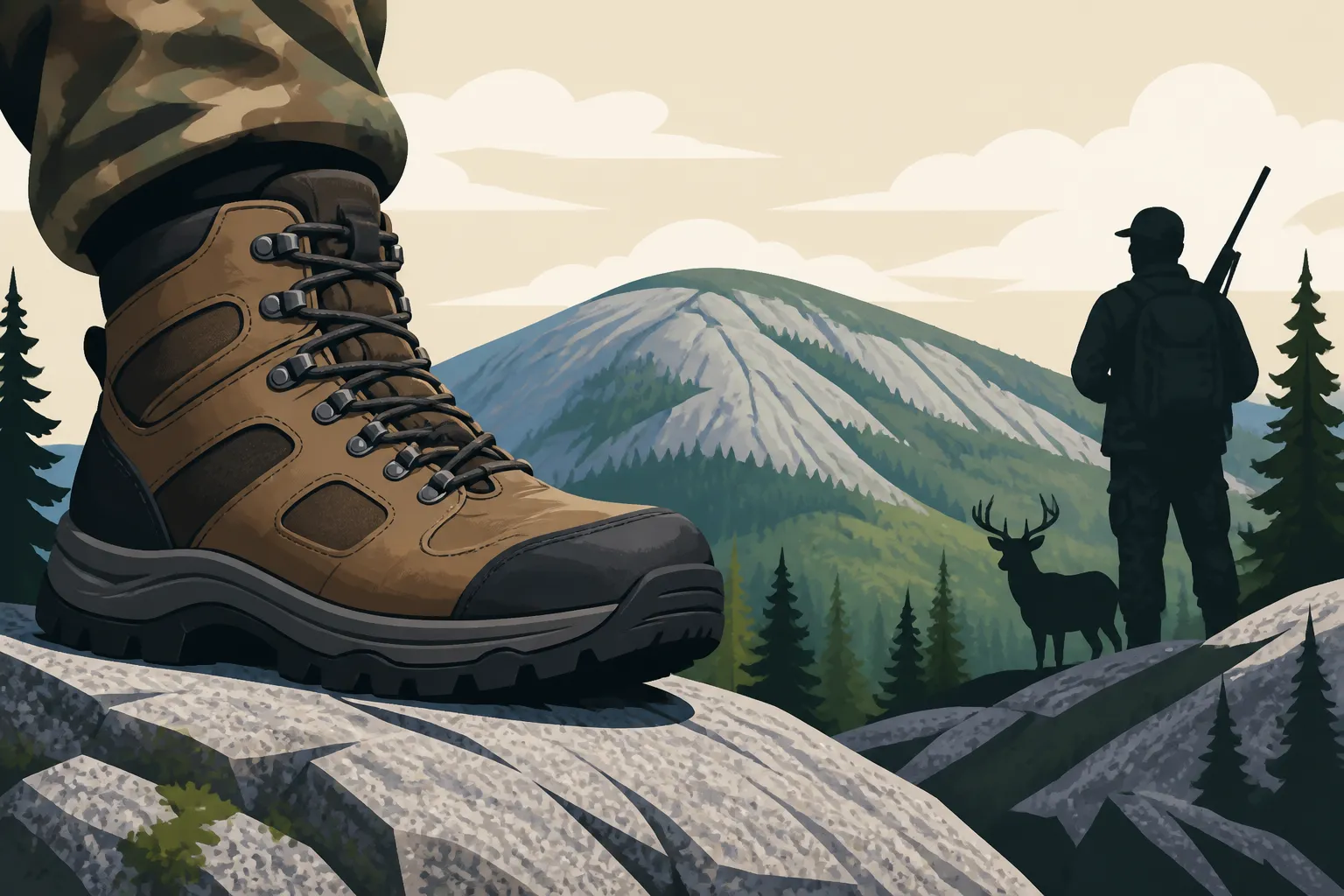
The Granite State lives up to its name, especially when you head north or into the White Mountain National Forest. Here, you'll encounter relentless granite outcroppings, slippery rock faces, and endless steep ascents and descents that demand specific boot characteristics. Imagine trying to still-hunt a buck along a razor-sharp ridge or scramble up a boulder field to get to a vantage point. Poor traction can lead to dangerous falls, and inadequate ankle support can result in a twisted ankle miles from the nearest road. The constant impact on hard surfaces also necessitates superior cushioning and shock absorption that many "general purpose" hiking boots simply can't provide over the course of a long hunting day. Your feet will thank you for investing in boots designed to handle this kind of abuse.
The uneven surfaces and frequent changes in elevation mean your boots need to be flexible enough to conform to contours but rigid enough to prevent your feet from rolling. This delicate balance is often found in boots with a stiff midsole but a flexible forefoot. When you're Still-Hunting White Mountain National Forest Timber, every step matters, both for stealth and for safety. A boot that can grip wet rock as well as dry leaves is invaluable. Many hunters make the mistake of choosing comfort over capability, only to find themselves wishing for better grip and stability when descending a particularly nasty slope with a deer on their back.
Navigating Wet Conditions: Streams, Bogs, and Early Morning Dew
Beyond the rock, New Hampshire is also incredibly wet. You'll cross countless streams, navigate beaver flowages, and encounter boggy areas, especially in the North Country. Early morning hunts mean slogging through dew-soaked grass and underbrush. A boot that isn't truly waterproof will quickly lead to cold, miserable feet, increasing your risk of blisters and hypothermia, especially during late-season hunts. There's nothing worse than the squelch of wet socks with every step, knowing your hunt is effectively over before it's even really begun.
The challenge isn't just about standing in water; it's about persistent moisture from snowmelt, rain, and marshy ground. Even if you're not planning a dedicated Hunting a Beaver Flowage Edge trip, you'll inevitably encounter saturated areas. Breathability is also key here; a waterproof boot that doesn't allow moisture vapor out will trap sweat, leading to the same damp, uncomfortable conditions as a leaky boot. The best boots strike a balance, keeping external water out while allowing internal moisture to escape.
Dealing with New Hampshire's Variable Temperatures
New Hampshire’s hunting seasons span a wide range of temperatures. Early archery season in September can see warm, humid days, while late December muzzleloader hunts can plunge into bitter single-digit temperatures. Layering for New Hampshire's Cold Hunting Season isn't just for your body; it applies to your feet too. A single pair of boots won't cut it for all seasons. Wearing heavily insulated boots in warm weather will cause your feet to sweat profusely, leading to blisters and discomfort. Conversely, uninsulated boots in freezing conditions can lead to frostbite.
Understanding the expected temperature range for your hunt is crucial. For instance, a September bow hunt might call for a lightweight, breathable boot, while a November firearms hunt or a late-season sit for deer might demand insulated, waterproof footwear to keep your feet warm during Cold-Weather Sitting Strategy in the North Country. Many hunters invest in two or even three pairs of boots to cover the different demands of the season, ensuring optimal comfort and performance no matter what Mother Nature throws their way.
Key Features to Look for in Hunting Boots for Granite Terrain
When you're sifting through all the options out there, trying to find that perfect pair of boots for hunting New Hampshire's rugged landscape, it can feel a bit overwhelming. But focusing on a few key features will really narrow down the field and help you land on something that truly performs when it matters most.
Uncompromising Ankle and Arch Support
The relentless ups and downs, the uneven footing of loose rock and roots, and the sheer unpredictability of New Hampshire’s granite terrain demand superior ankle and arch support. This isn't just about comfort; it's about injury prevention. A boot that doesn't offer robust ankle support is an open invitation for a sprain, especially when you're navigating a steep, rocky descent or carrying a heavy pack. Look for boots with a high-cut design that laces up well past the ankle bone, providing a snug, secure fit that prevents your foot from rolling laterally.
Equally important is arch support. Hours spent walking on hard, uneven surfaces can quickly lead to foot fatigue and plantar fasciitis if your arches aren't properly supported. Some boots come with excellent built-in arch support, while others might require aftermarket insoles to achieve the right level of comfort and stability. When you're Hunting a Granite Ridge Saddle, you'll be constantly shifting your weight and digging in, and strong arch support will make all the difference in enduring those long miles. Don’t underestimate the cumulative effect of proper support on your endurance and overall hunting experience.
Aggressive Traction and Outsole Design
This is where many general-purpose boots fall short. New Hampshire's granite can be notoriously slippery, especially when wet or covered in a thin layer of moss or damp leaves. You need an outsole with an aggressive lug pattern that can bite into loose soil, grip slick rock, and shed mud effectively. The depth and spacing of the lugs are critical: deep, widely spaced lugs excel in mud and soft ground, while smaller, more numerous lugs can offer better surface contact on hard rock.
Beyond the lug pattern, consider the rubber compound of the outsole. Some rubber compounds are designed for maximum stickiness on rock, while others prioritize durability. Ideally, you want a balance of both. A good boot for New Hampshire will have a multi-directional lug pattern to provide grip during both ascent and descent, with a defined heel brake to prevent slipping backward on steep inclines. A quick check of reviews, especially from hunters who frequent similar terrain, can offer valuable insight into a boot’s real-world traction performance. The last thing you want is to be sliding down a hillside when you should be moving silently.
Reliable Waterproofing and Breathable Membranes
As we've discussed, New Hampshire is wet, and dry feet are happy feet. Reliable waterproofing is non-negotiable. Look for boots that incorporate a high-quality waterproof membrane, such as Gore-Tex or similar proprietary technologies. These membranes are designed to be impermeable to external water while allowing internal moisture vapor (sweat) to escape, keeping your feet dry from both the outside and the inside. It's a fantastic technology, but remember, the waterproofing is only as good as the boot's construction.
The membrane needs to be integrated effectively, and the boot's materials and seams must also be water-resistant. Full-grain leather, when properly treated, offers excellent natural water resistance, while synthetic materials often rely heavily on the internal membrane. Don't be fooled by boots simply labeled "water-resistant"; for New Hampshire, you need "waterproof." Always check the boot's specifications and read user reviews regarding long-term waterproofing performance. A boot might feel waterproof in the store, but after a few hours of slogging through a wet marsh or enduring a persistent drizzle, its true capabilities will be revealed.
Robust Durability and Construction Quality
Hunting boots for granite terrain are an investment, and you want them to last more than a single season. Durability comes down to the quality of materials and the method of construction. Full-grain leather is often a hallmark of durability, offering excellent abrasion resistance and the ability to be reconditioned over time. Synthetics can also be very durable, especially when reinforced with materials like Cordura or Kevlar in high-wear areas. Look for boots with protective randing around the perimeter, especially at the toe and heel, to guard against cuts and scrapes from sharp rocks.
The method of sole attachment is also critical. Boots with a stitched-down or Goodyear welt construction are generally more durable and often re-soleable, meaning you can replace the worn outsole rather than the entire boot. While more expensive upfront, this can extend the life of your boots significantly. Glued constructions can be perfectly fine, but look for high-quality adhesives and careful craftsmanship to ensure the sole doesn't delaminate under strenuous use. When you’re spending money on a pair of boots, especially for the kind of abuse they’ll take in the White Mountains, you want them built like a tank.
Superior Comfort and Cushioning
Finally, comfort. All the support, traction, and waterproofing in the world won't matter if your boots are uncomfortable. Comfort is subjective, but some universal elements contribute to it. Ample cushioning in the midsole, often made from EVA or PU foam, helps absorb shock from repetitive impacts on hard ground, reducing foot fatigue. A well-designed footbed and spacious toe box are also crucial to prevent pinching and rubbing.
When trying on boots, pay close attention to how they feel with your typical hunting socks. There should be enough room for your toes to wiggle, but your heel should be locked firmly in place to prevent slippage and blisters. The boot should feel snug but not tight. Remember, your feet will swell slightly over the course of a long day, so try them on towards the end of the day or after a walk. Don’t settle for a boot that doesn’t feel right from the start; there are too many excellent options out there to suffer through an uncomfortable pair.
Boot Types for Different New Hampshire Hunting Scenarios
Just like you wouldn’t use a single caliber for all game, you won’t find one boot that perfectly suits every single hunting scenario you’ll encounter across New Hampshire. The conditions can vary wildly from early season warmth to late season snow, from dry ridgelines to mucky bogs. Having a small arsenal of footwear, or at least understanding what different boot types excel at, will greatly enhance your comfort and success.
Lightweight and Breathable for Early Archery Season
When New Hampshire's Archery Season Opens, especially in September, temperatures can still be quite warm, even hot. Your feet will sweat profusely in heavy, insulated boots, leading to blisters and discomfort. For these conditions, a lightweight, highly breathable boot is often the best choice. These boots typically feature synthetic uppers, minimal insulation, and a flexible sole that allows for quieter, more agile movement. They dry quickly if they get wet from morning dew or a shallow stream crossing.
These boots are ideal for mobile hunters who plan to cover a lot of ground in relatively dry, warmer conditions. They often feel more like a sturdy hiking shoe than a traditional hunting boot, offering good ankle support without the bulk. While they won't offer much warmth for a frosty morning, they prevent overheating during midday stalks. Think of them for those early season deer and bear hunts where stealth and comfort over distance are paramount. When researching gear, I often check platforms like GoHunt for user reviews on lightweight options that have proven their mettle in similar early season conditions across various states.
Mid-Weight All-Arounders for General Firearms Season
For most of New Hampshire’s firearms deer season in November, and even into the later parts of archery season, a mid-weight, all-around hunting boot is often the go-to. These boots strike a balance between warmth, waterproofing, support, and durability. They typically feature a robust leather or hybrid leather/synthetic upper, a waterproof membrane (like Gore-Tex), and a moderate level of insulation – perhaps 400 to 800 grams. This insulation level is usually sufficient for temperatures down to freezing, keeping your feet comfortable without causing excessive sweating during active periods.
The mid-weight category is probably the most versatile, suitable for everything from still-hunting to sitting on stand for a few hours. They offer excellent ankle support for navigating uneven terrain and a good, aggressive outsole for traction. If you’re only going to buy one pair of boots for New Hampshire hunting, a high-quality mid-weight option is your best bet for covering the broadest range of conditions you'll encounter during the critical deer hunting windows. This category excels when Hunting the Rut in Early-to-Mid November, when you could be walking miles one day and sitting motionless for hours the next.
Heavy-Duty and Insulated for Late-Season and Moose Hunting
As the mercury drops and the snow flies, particularly for Hunting the December Archery Close or when chasing larger game like moose in the North Country, you’ll need seriously insulated, heavy-duty boots. These boots feature substantial insulation (800 grams or more, sometimes up to 2000 grams), rugged waterproof uppers, and often a stiffer sole for carrying heavy loads. They are designed to keep your feet warm and dry in sub-freezing temperatures, often for prolonged periods of sitting or slow-moving hunts.
While they are heavier and less agile, the warmth and protection they offer are indispensable for extreme cold. Think about the demands of Packing Gear for a New Hampshire Nine-Day Moose Hunt—you're going to be out there for extended periods, likely in remote, cold conditions, and heavy-duty boots are non-negotiable for both warmth and the support needed to pack out a quartered moose. Some of these boots might also feature an extra rigid sole for compatibility with snowshoes, making them invaluable for tracking deer in fresh snow or navigating deep drifts.
Specialized Rubber Boots for Bogs and Waterfowl
New Hampshire has its fair share of wet, mucky areas that even the best leather boots might struggle with in terms of true submersion protection. This is where specialized rubber boots shine. Whether you're hunting ducks in a marsh, calling turkeys in a spring downpour, or navigating a particularly boggy section of forest, rubber boots offer 100% waterproof protection up to their full height. They are also excellent for scent control, as rubber doesn't absorb and hold human scent like other materials.
Modern rubber boots have come a long way from the clunky, uncomfortable versions of old. Many now offer insulation, comfortable fit, and aggressive outsoles, making them a viable option for more than just standing in water. They are particularly useful for Hunting a Beaver Flowage Edge or Decoying Ducks on New Hampshire's Connecticut River. While they don't offer the same ankle support as a traditional lace-up boot, their ability to keep your feet absolutely dry in truly saturated environments makes them indispensable for specific New Hampshire hunting adventures.
The Importance of Proper Fit and Break-In
You can buy the most expensive, highly-rated boots on the market, but if they don't fit your feet properly, they're worse than useless. A bad fit is a guaranteed ticket to blisters, pain, and a ruined hunt. Think of your boots as an extension of your feet; they need to work in harmony, not against each other.
Measuring Your Foot Correctly and Trying Boots with Hunting Socks
Before you even step into a boot, know your foot size. Many people guess, or rely on their casual shoe size, but feet can change over time, and hunting boot sizing can differ. Get your feet measured, ideally at a reputable outdoor store, paying attention to both length and width. Don't forget that one foot is often slightly larger than the other; always fit to the larger foot. More importantly, always try on hunting boots with the actual socks you plan to wear while hunting. This is crucial. Your thick merino wool socks will take up significantly more space than thin dress socks, and failing to account for this will lead to a boot that's too tight.
When trying boots, do it at the end of the day, or after you've been on your feet for a while. Your feet naturally swell throughout the day, and this will give you the most accurate representation of how the boots will feel after hours of walking. Don't rush the process. Sit, stand, walk around the store, find a ramp if they have one to simulate inclines. Pay attention to how your heel feels, if your toes have room, and if there are any immediate pressure points.
The Critical Break-In Process
No matter how comfortable a new pair of boots feels in the store, almost all high-quality hunting boots require a break-in period. This is especially true for boots with full-grain leather uppers or stiff soles, designed for maximum support and durability. Trying to go straight from the box to a multi-day backcountry hunt is asking for trouble. A proper break-in allows the boots to conform to the unique shape of your feet and for the materials to soften and become more pliable.
Start with short walks around your neighborhood or local park. Gradually increase the distance and difficulty, incorporating hills and uneven terrain similar to what you’ll find in New Hampshire. Wear them while Scouting New Hampshire Public Land Before Season. Carry a light pack to simulate hunting conditions. This process might take weeks or even months for really stiff boots, but it's an investment in comfort and performance. Always carry a small blister kit during break-in, just in case. Platforms like GoHunt often have forums where hunters discuss break-in tips for specific boot models, which can be incredibly helpful.
Addressing Common Fit Issues and Preventing Blisters
Even with a careful break-in, you might encounter some common fit issues. The most frequent culprit for discomfort and blisters is heel slip. If your heel is lifting significantly with each step, it creates friction that will quickly lead to hot spots and blisters. This can sometimes be remedied with different lacing techniques, thicker socks, or specific insoles that cup the heel. If it’s excessive, the boot might simply be too large or shaped incorrectly for your foot.
Another common issue is toe bang, where your toes hit the front of the boot on descents. This usually indicates the boot is too large or not laced tightly enough. Conversely, if your toes feel cramped or pinched, the boot is too small or too narrow. Always ensure there's about a thumb's width of space between your longest toe and the end of the boot when standing. Experiment with different lacing patterns – some boots benefit from skipping eyelets in certain areas to relieve pressure or create a more secure fit. Addressing these issues early can save your hunt and your feet.
| Boot Type | Ideal Season/Use | Insulation Level | Ankle Support | Weight | Key Advantages |
|---|---|---|---|---|---|
| Lightweight/Hiking | Early Archery, Scouting, Warm Weather | Minimal (0g) | Good | Light | Breathable, agile, quick-drying |
| Mid-Weight/All-Around | General Firearms, Late Archery, Moderate Cold | Moderate (400-800g) | Excellent | Medium | Versatile, balanced warmth/support/waterproofing |
| Heavy-Duty/Expedition | Late Season, Moose Hunts, Extreme Cold, Snow | High (1000g+) | Superior | Heavy | Maximum warmth, support for heavy loads, durable |
| Rubber/Insulated | Wet Bogs, Waterfowl, Rain, Muck, Scent Control | Varied (0g to 1600g+) | Limited | Medium-Heavy | 100% waterproof submersion, scent-free |
Materials, Construction, and Waterproofing Technologies
The materials a boot is made from, how it’s put together, and the technology it uses for waterproofing are absolutely fundamental to its performance and longevity. These aren’t just fancy buzzwords; they represent significant differences in how a boot will stand up to the rigors of New Hampshire’s granite and wet conditions.
Leather vs. Synthetics: Understanding the Pros and Cons
For decades, full-grain leather was the undisputed king of hunting boot materials, and for good reason. Full-grain leather is incredibly durable, highly abrasion-resistant, and with proper care, it offers excellent natural water resistance and molds to your foot over time for a custom fit. It's tough, can take a beating, and tends to breathe well. The downside? Leather boots are often heavier, require more break-in time, and need consistent conditioning to maintain their waterproofing and suppleness. A well-made leather boot, however, can last for many years if cared for properly.
Synthetics, such as Cordura, nylon, and various proprietary fabrics, have become increasingly popular. They are typically lighter, require little to no break-in, and often dry faster than leather. Synthetics can also be very durable, especially when reinforced, and allow manufacturers to create more flexible and comfortable designs right out of the box. However, they generally don't offer the same long-term abrasion resistance as full-grain leather, and their waterproofing relies almost entirely on an internal membrane, which can be vulnerable if the outer material is compromised. Many modern boots use a hybrid construction, combining the durability of leather in high-wear areas with the lightness and flexibility of synthetics.
Stitched vs. Glued Soles: Impact on Durability and Repairability
The way the sole is attached to the upper is a critical factor in a boot's lifespan and whether it can be repaired. Traditionally, high-quality boots featured a stitched construction, such as a Goodyear welt or stitch-down method. These methods involve physically stitching the sole to the upper, creating an incredibly strong and durable bond. A major advantage of stitched soles is that they are often re-soleable; when the outsole wears down, a cobbler can remove it and stitch on a new one, significantly extending the life of the boot. This is a huge benefit for an expensive pair of boots, especially if the upper remains in good condition after years of use on New Hampshire's abrasive terrain.
Most modern boots, however, use a cemented or glued construction. This involves bonding the sole to the upper with powerful adhesives. While manufacturing is simpler and often results in a lighter, more flexible boot, it can sometimes be less durable than a stitched construction if the adhesive fails. The biggest drawback is that glued soles are rarely re-soleable. Once the outsole wears out, the entire boot often needs to be replaced. For hunting in rugged areas like New Hampshire, where soles take a tremendous beating, understanding this distinction is key to your long-term investment. While some manufacturers use incredibly strong glues that stand up well, a stitched sole still offers peace of mind for maximum durability and repair potential.
Understanding Insulation Types and Ratings
When you’re hunting in New Hampshire’s colder seasons, insulation is paramount to foot comfort and safety. Boot insulation is typically measured in grams, referring to the weight of the insulation per square meter. A higher gram count means more warmth. For early to mid-fall hunts (say, 30-50 degrees Fahrenheit), 200-400 grams of insulation might suffice. For general late-fall hunting (20-40 degrees Fahrenheit), 600-800 grams is a common sweet spot. And for truly cold, late-season hunts or extended sits in freezing temperatures (below 20 degrees Fahrenheit), you’ll want 1000 grams or more, sometimes up to 2000 grams.
Common insulation materials include Thinsulate, Primaloft, and other synthetic fibers. These materials are designed to trap warm air, even when compressed or damp, providing warmth without excessive bulk. It's important to match the insulation level to your activity and the expected temperatures. Too much insulation in mild weather will cause your feet to sweat, leading to cold, damp feet when you stop moving. Too little, and you'll be miserable. Consider your personal circulation and tolerance for cold as well; some hunters run colder than others and may need more insulation for the same conditions. When hunting for long periods on stand or during a New Hampshire's WMU-Based Deer Season Structure that extends into colder days, appropriate insulation is non-negotiable.
Popular Waterproofing Membranes: Gore-Tex and Proprietary Options
Waterproofing membranes are revolutionary technologies that keep our feet dry while allowing them to breathe. Gore-Tex is the most well-known and widely respected membrane, setting the gold standard for waterproof/breathable performance. It consists of billions of microscopic pores that are too small for water droplets to pass through but large enough for water vapor molecules (sweat) to escape. This allows your feet to stay dry from external moisture while preventing internal moisture buildup.
Many boot manufacturers also develop their own proprietary waterproofing membranes (e.g., UltraDry, BDry, KEEN.DRY). While they may not have the same brand recognition as Gore-Tex, many of these perform exceptionally well. The key is to look for reputable brands with a proven track record. When evaluating boots, always check reviews for long-term waterproofing performance, as some membranes can degrade over time or fail if the outer boot materials are not well-maintained. A good membrane, combined with a well-constructed boot and proper care, is your best defense against New Hampshire’s often-soggy hunting conditions. For critical gear decisions, consulting research on platforms like GoHunt can provide insight into which proprietary technologies are performing best in the field.
Maintaining Your Hunting Boots for Longevity
You’ve invested good money in a pair of hunting boots designed to tackle New Hampshire’s rugged landscape. To ensure they serve you well for many seasons to come, proper maintenance is absolutely crucial. Neglecting your boots is a surefire way to cut their lifespan short and leave you with wet, uncomfortable feet when you least expect it.
Essential Cleaning and Drying Techniques
After every hunt, especially one in muddy or wet conditions, your boots need attention. Start by removing any large clumps of mud, dirt, or debris from the outside. A stiff brush and warm water (avoid harsh soaps) will usually do the trick. Pay close attention to the outsole, ensuring the lugs are clear for maximum traction on your next outing. For the inside, remove the insoles to allow for better air circulation and to clean out any grit or plant matter that might have worked its way in.
The most critical step, however, is proper drying. Never, ever dry your boots directly by a heat source like a campfire, wood stove, or radiator. Excessive heat can damage leather, melt synthetic materials, and delaminate glues, compromising the boot's integrity and waterproofing. Instead, dry them slowly and naturally in a well-ventilated area. You can stuff them with newspaper to absorb moisture and help maintain their shape, changing the paper every few hours until they are dry. Boot dryers with gentle, circulating air are an excellent investment, as they can dry boots thoroughly without damaging them. Allowing boots to dry completely is essential not only for preventing mildew and odors but also for preserving the integrity of the materials, especially the waterproof membrane.
Conditioning Leather and Re-waterproofing
If your boots are made of leather, conditioning is vital. Leather is a natural material that needs moisture to stay supple and prevent cracking. After cleaning and drying, apply a leather conditioner or treatment. This replenishes the natural oils in the leather, keeping it soft, flexible, and extending its life. There are many products available, from waxes to oils; choose one appropriate for your specific boot type (e.g., full-grain, nubuck, or suede) and always test it on an inconspicuous area first, as some conditioners can alter the color or finish of the leather.
Even with a waterproof membrane, the outer materials of your boots can lose their water repellency over time. This is known as the Durable Water Repellent (DWR) coating wearing off. When the DWR is compromised, water will saturate the outer fabric, making the boot feel heavier and colder, and potentially "wetting out" the membrane from the outside, even if it hasn't technically leaked. To restore DWR, apply a spray-on or wash-in re-waterproofing treatment designed for footwear. This will help water bead up and roll off the surface again, allowing the waterproof membrane to perform optimally. Maintaining your DWR is just as important as maintaining the leather itself, especially for wet New Hampshire hunts.
Smart Storage Tips for the Off-Season
How you store your boots during the off-season can significantly impact their longevity. First, ensure they are thoroughly cleaned and completely dry before putting them away. Any moisture trapped inside can lead to mold, mildew, and unpleasant odors. Once dry, apply any necessary leather conditioners or re-waterproofing treatments.
Store your boots in a cool, dry, well-ventilated place, away from direct sunlight or extreme temperature fluctuations. Avoid cramming them into a tight box or closet where air can't circulate, as this can encourage mildew. If you have boot trees, use them to help maintain the boot's shape. Otherwise, you can stuff them lightly with newspaper. Keeping them away from rodents or other pests is also a good idea. By taking these simple steps, your boots will be fresh, supple, and ready to hit the granite terrain as soon as hunting season rolls around again. For finding durable boots that last, hunters often rely on trusted resources and comprehensive gear comparisons, many of which can be found on platforms like GoHunt, to make smart investments that stand the test of time.
Socks and Insoles: The Unsung Heroes of Foot Comfort
You can have the best hunting boots in the world, but if you're not pairing them with the right socks and insoles, you're missing out on a huge part of foot comfort and performance. Think of socks and insoles as the crucial suspension system for your feet within the boot. They provide cushioning, manage moisture, and can even correct minor fit issues that prevent blisters and fatigue on those long days navigating New Hampshire's rugged landscape.
Merino Wool vs. Synthetics: Choosing the Right Material
When it comes to hunting socks, the debate often boils down to merino wool versus synthetics. Merino wool has become incredibly popular, and for good reason. It’s naturally breathable, wicks moisture away from your skin, regulates temperature (keeping you warm when it's cold and cool when it's warm), and perhaps its most celebrated feature: it's naturally antimicrobial, meaning it resists odor buildup even after multiple days of wear. This is a huge advantage on multi-day hunts or when Packing for a Nine-Day Moose Hunt where laundry facilities are non-existent. Merino wool socks offer excellent cushioning and come in various thicknesses to suit different temperatures.
Synthetic socks, often made from polyester, nylon, or blends, are also excellent at wicking moisture and are generally more durable than wool, drying faster if they get completely soaked. They are often less expensive than merino wool. However, they typically don't offer the same level of temperature regulation or odor resistance as wool. Many hunters find a blend of merino wool and synthetics offers the best of both worlds: the comfort and temperature regulation of wool with the added durability and quick-drying properties of synthetics. Whichever material you choose, avoid cotton at all costs for hunting socks. Cotton absorbs moisture and holds it against your skin, leading to cold, clammy feet and inevitable blisters.
The Art of Layering Socks
Sometimes, one pair of socks isn't enough, especially in colder conditions or for optimizing fit. The concept of layering socks is simple: a thin liner sock underneath a thicker outer sock. The liner sock, typically made of a thin synthetic material or fine merino wool, is designed to wick moisture directly away from your skin and reduce friction. It acts as a barrier, protecting your foot from the rubbing of the thicker outer sock. This can significantly reduce the risk of blisters, especially when covering long distances in uneven terrain.
The outer sock then provides the primary cushioning, insulation, and additional moisture-wicking capabilities. This layering system allows you to fine-tune your foot's comfort and warmth. For example, a thin merino liner with a medium-weight merino outer sock might be perfect for a cool fall day, while adding a very thick, heavily insulated outer sock could make your mid-weight boots viable for a Reading a White Mountain Deer Yard trip in deep snow. Experiment with different combinations to find what works best for your feet and the specific conditions you'll be hunting in.
Aftermarket Insoles for Enhanced Support and Cushioning
Most boots come with basic insoles that offer minimal support and cushioning. While adequate for some, many hunters find significant benefits from upgrading to aftermarket insoles. These specialized insoles can provide superior arch support, deeper heel cups for stability, and enhanced cushioning, particularly helpful for long days on hard ground or for those with specific foot issues like flat feet or plantar fasciitis.
Insoles come in various types: some focus purely on arch support, others on cushioning, and some combine both. Look for insoles that match your arch type (low, medium, or high) for optimal comfort and biomechanical alignment. They can effectively fill up any excess volume in a boot, improving the fit and reducing heel slip. Many hunting guides, and gear reviewers on platforms like GoHunt, swear by quality aftermarket insoles as one of the most impactful upgrades you can make to your foot comfort. They can absorb shock, distribute pressure evenly across your foot, and help prevent fatigue, making those grueling climbs up granite ridges feel a little less taxing. It's a relatively inexpensive upgrade that can make a monumental difference in your hunting experience.
Disclaimer
This article is for general informational purposes only and does not constitute professional advice. Laws, prices and regulations vary by location and change over time. Consult a qualified professional for guidance on your specific situation.