Calls and Decoys for New Hampshire Waterfowl
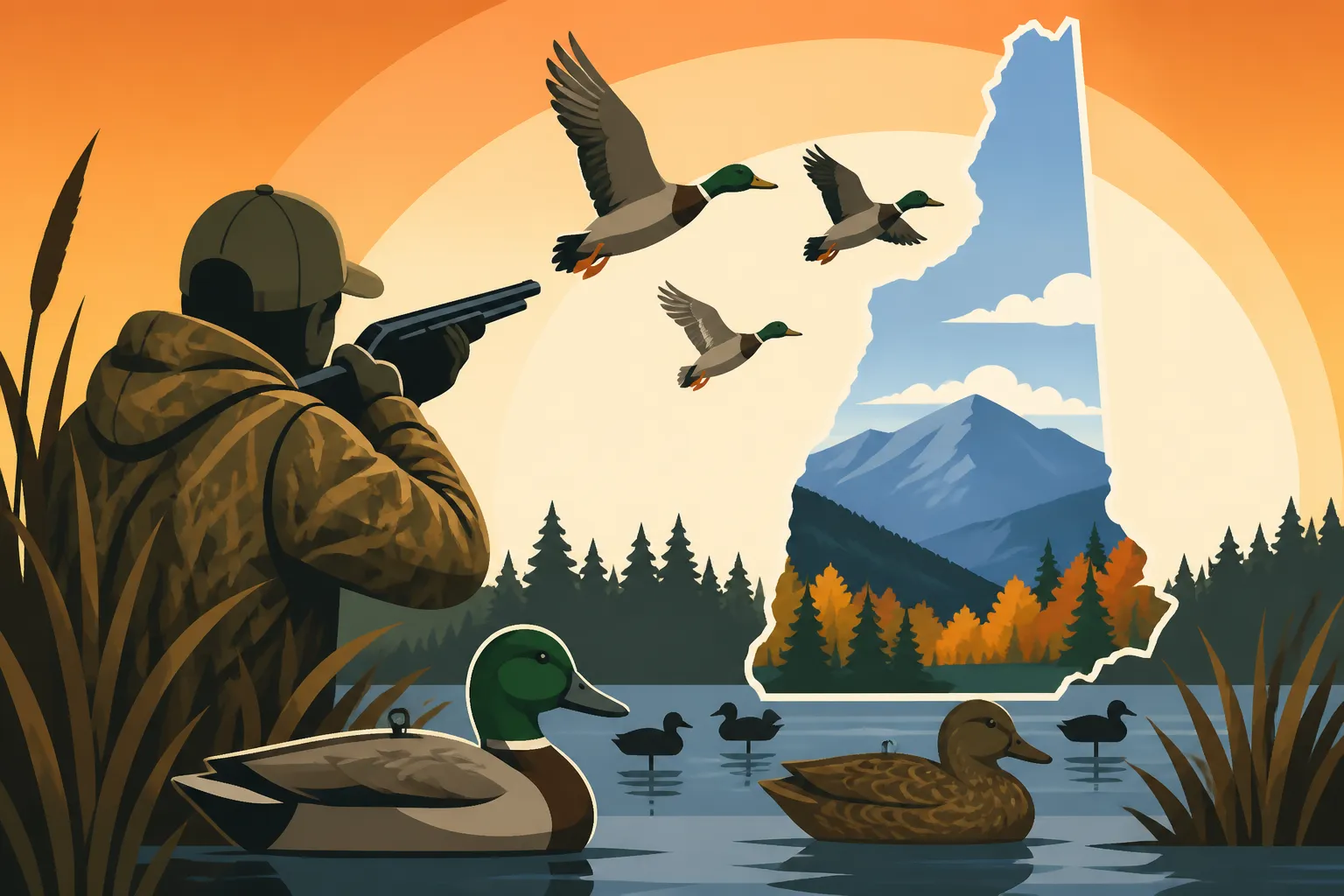
The thrill of watching a flock of ducks cup their wings or a string of geese commit to your spread is what many New Hampshire waterfowl hunters live for. But let's be honest, it doesn't always happen effortlessly. Those birds are smart, and getting them to ignore their instincts and come within shooting range can feel like trying to convince a teenager to clean their room – a monumental task! This guide is all about equipping you with the knowledge and practical strategies for calls and decoys, transforming those frustrating distant flights into heart-pounding close encounters on the Granite State's diverse waterways.
Understanding New Hampshire Waterfowl Dynamics
Before you even think about blowing a call or tossing out a decoy, you've got to understand the birds themselves and the environment they're in. New Hampshire offers some fantastic waterfowl hunting, but it's not a one-size-fits-all situation. The ducks and geese here have distinct behaviors, and our varied landscape, from the sprawling Connecticut River to secluded inland marshes, presents different challenges and opportunities. Knowing these dynamics is the foundation of any successful hunt.
Knowing Your Target Species
New Hampshire is home to a wonderful variety of waterfowl, and each species has its own quirks. You're likely to encounter dabbling ducks like mallards, black ducks, and wood ducks, especially in shallower waters and wooded swamps. Then there are the diving ducks, though less common in many areas, which prefer deeper water. And, of course, the ever-present Canada geese, both migratory and resident.
Mallards are often the bread and butter, responding well to classic "quacks" and greenhead decoys. Black ducks are warier, often flying with mallards but needing a bit more subtlety in your approach. Wood ducks, with their incredible beauty, are a favorite for many, but they're often found in flooded timber or small, secluded ponds and don't respond to calling in the same way mallards do. Knowing these differences helps you tailor your spread and calling. If you're hunting a small, woody beaver flowage, a spread of wood duck and mallard decoys, coupled with some soft mallard hen calls and a wood duck squeal, might be perfect. On a wide-open river, however, you'll need a different approach entirely. New Hampshire Duck and Goose Bag Limits outlines the species you can target.
Reading New Hampshire's Waterfowl Zones
New Hampshire wisely divides its waterfowl hunting opportunities into distinct zones: the Northern Zone and the Inland Zone. These zones often have different season dates, which means the hunting pressure, bird availability, and even migration timing can vary significantly. What works in the Northern Zone early in the season might be entirely ineffective in the Inland Zone later on.
For instance, the Northern Zone might open earlier, offering opportunities at local birds or early migrants before they've seen much pressure. This could mean more receptive birds to calling and decoying. The Inland Zone, encompassing much of the state, often sees birds later in the migration. The Connecticut River, forming a significant portion of our western border, is a major migratory corridor and falls largely within the Inland Zone. Hunting this immense waterway demands different strategies than hunting a small pond in the Lakes Region. You need to be intimately familiar with your zone's regulations and timing, which you can easily find in the New Hampshire Fish and Game digest or on their website. Understanding these zones is crucial for planning your hunts, as detailed in New Hampshire Waterfowl Season and Zones.
Migration Patterns and Local Birds
Waterfowl hunting is inherently tied to the ebb and flow of migration. Early in the season, you'll often encounter local, resident birds that were born and raised right here in New Hampshire. These birds might be a bit more predictable in their patterns, but they can also become "educated" quickly once hunting pressure begins. As the season progresses, new waves of migratory birds push down from Canada and points north. These fresh birds might be less wary initially, but they're also on a mission, often just passing through.
Weather plays a huge role here. A sudden cold snap up north can send thousands of new birds winging south, filling our marshes and rivers. Conversely, a warm spell can hold birds further north, making for slower hunting days here. Paying attention to weather forecasts, not just locally but also in areas north of us, can give you a critical edge. Understanding these movements, and whether you're dealing with a local flock that knows every hunter's trick or a new group passing through, dictates how aggressive or subtle you need to be with your calls and decoys. Remember, even local birds move, and sometimes you need to find where they've shifted their feeding or loafing areas. New Hampshire Duck Migration Timing Through New Hampshire is a great resource for this.
The Art of Duck Calling
Duck calling isn't just about making noise; it's about mimicking the language of ducks in a convincing way that draws them closer. It's a skill that takes practice, patience, and a keen ear for what the birds are actually doing. Many hunters get discouraged, thinking they can't "sound like a duck," but with the right approach, anyone can learn to effectively communicate with these birds.
Essential Duck Calls and Their Sounds
When you first dive into duck calling, it can feel overwhelming with the sheer number of calls available. However, most hunters start with a mallard call, as mallards are common and very responsive. The basic sounds you'll want to master include:
- The Greeting Call: A series of five to seven short, excited quacks that says, "Hey, over here! Come join us!" This is often your opener when birds are distant.
- The Comeback Call: A longer, louder, more insistent series of quacks (like a descending cadence) that grabs the attention of birds flying away or passing by, telling them, "Don't leave, come back!"
- The Feed Call: A rapid, guttural "dit-dit-dit" or "tik-a-tik-a-tik" sound that mimics ducks happily feeding. This is a confidence call, telling approaching birds that all is well.
- The Hail Call: A very loud, long series of quacks used to get the attention of high-flying or distant birds. It's your "shout across the field" call.
Beyond mallard calls, specialized calls like pintail whistles, wigeon whistles, and wood duck squeals can add realism to your spread and attract those specific species. For mallard calls, you'll find single-reed and double-reed options. Single-reeds typically offer a wider range of tones and are often favored by experienced callers for their versatility, but they can be harder to master. Double-reeds are generally more forgiving, making them a great choice for beginners as they are easier to blow and produce a consistent ducky sound. Experiment with both to see what feels comfortable and sounds best to you.
Learning Basic Calling Techniques
Learning to call a duck effectively begins with understanding proper breath control and hand placement. It’s not about blowing as hard as you can; it’s about controlling the air pressure and using your diaphragm, much like a singer.
- Breath Control: Think of pushing air from your diaphragm, not just your lungs. This gives your call power and realism. A short, sharp burst of air makes a quack, while a sustained flow creates a trill.
- Hand Placement: Your hands act as a soundboard, directing and muffling the sound. Cup your hands around the end of the call, forming a resonating chamber. Opening and closing your hands can change the volume and tone, adding realism. For example, a sharp "quack" will be made with your hands mostly open, while a "feed" call might involve rapidly opening and closing them to create the choppy sound.
- Practice, Practice, Practice: The best way to learn is to listen to real ducks and then practice mimicking those sounds. There are countless instructional videos online, and many call manufacturers offer tutorials. A common mistake is over-calling or blowing too loudly when birds are close. Start with basic quacks, then combine them into greeting and comeback calls. Record yourself and play it back; you'll be surprised what you hear! Don't be afraid to sound terrible at first – every great caller started there.
Advanced Calling Scenarios
Once you've got the basics down, the real art of duck calling comes into play by reading the birds and adapting your technique. Every flock is different, and every situation calls for a nuanced approach.
- Reading Bird Reactions: Watch the birds carefully. Are they turning towards your calls? Do they seem interested, or are they flaring? If they're turning and dropping altitude, your calls are working. If they're just flying by, or worse, flaring, it's time to change tactics. Sometimes, a subtle chuckle is all it takes; other times, a more aggressive comeback call is necessary. Don't be afraid to stop calling entirely if they're coming straight in – let the decoys do the final work.
- Aggressive vs. Subtle: Early in the season, or with unpressured birds, you might be able to get away with more aggressive, louder calling. As the season progresses and birds become "educated" by constant hunting pressure, a more subtle approach is often key. Soft clucks, quiet feed calls, and single quacks can be more effective than a blaring hail call. It's like whispering to someone when they're close versus shouting across a stadium.
- Combining Calls for Realism: Real duck flocks aren't just making one sound. They're a symphony of quacks, chuckles, and whistles. A truly realistic calling sequence might involve one person making a greeting call, another doing a feed chuckle, and a third adding a pintail whistle. Even if you're hunting solo, you can alternate between different calls to create the illusion of a larger, more active flock. The goal is to paint a sonic picture that says, "This is a safe, inviting place with lots of happy ducks."
Mastering Goose Calling
Geese, particularly Canada geese, are intelligent and notoriously wary. Convincing a flock of high-flying Canadas to commit to your spread requires a combination of realistic calling, strategic decoying, and an understanding of their social dynamics. Like duck calling, it's a skill that develops with practice and time in the field.
Types of Goose Calls and Fundamental Sounds
Goose calls typically fall into two main categories: short-reed calls and flute calls.
- Short-Reed Calls: These are compact calls that require more air and precise hand control but offer a wide range of realistic sounds, from deep honks to sharp clucks and spit notes. They're often favored by experienced goose hunters for their versatility and ability to produce aggressive, realistic sequences.
- Flute Calls: These are longer, simpler calls that are generally easier to blow, producing a deeper, more resonant honk. They excel at attracting distant birds with their carrying power and are often a good starting point for beginners before moving to short-reed calls.
Regardless of the type, mastering a few fundamental goose sounds is essential:
- The Honk: The quintessential goose sound. Used as a greeting, a locator, or a general communication. It's often a single, resonant note.
- The Cluck: A short, sharp burst of air, often described as a "tuk" or "hut." Clucks signify contentment and are used to draw in birds, especially when they're closer.
- The Moan: A longer, lower, drawn-out sound, often used when birds are feeding or just loafing. It's a confidence call.
- The Spit Note: A rapid, choked-off cluck that can be used to add realism and urgency to your calling sequence, often indicating excitement.
Knowing when to use each call type is critical. A loud flute call might be perfect for reaching high-flying birds, while a series of soft clucks and moans on a short-reed call is more appropriate for birds circling your spread.
Developing Your Goose Calling Skills
Goose calling is less about speed and more about rhythm, cadence, and control. Geese are communal birds, and their calling reflects their social interactions.
- Volume Control and Tone: Unlike ducks, geese often use a broader range of volumes. You need to be able to hit those loud, resonant honks for distant birds, then drop to soft, subtle clucks and moans as they get closer. Tone is also important; practice making your call sound like multiple geese rather than a single, monotonous blast.
- Rhythm and Cadence: Listen to real geese. They don't just honk randomly. There's a conversational rhythm to their calls. Practice sequences that mimic a small group chatting or a flock excitedly communicating. A common sequence might be a few honks, followed by some clucks and a moan. Don't be afraid to experiment.
- Practicing in Different Environments: Practice isn't just for inside. Take your call outside and try it in open fields or near water. The sound will carry differently than in your living room. A good way to improve is to watch flocks of geese and try to mimic their calls in real-time. This helps you understand what sounds they make in different situations and how they react to each other. Don't be discouraged if it sounds bad at first; consistency is key.
Field Strategies for Wary Geese
Geese are survivors, and they learn quickly. Successfully calling them in often means adapting your strategy to their wariness.
- Calling to Singles vs. Flocks: A lone goose is often easier to call in. It's looking for companionship and will readily respond to a simple series of honks and clucks. Large flocks, however, can be more challenging. They have more eyes, more ears, and are less inclined to deviate from their path unless your spread and calling are incredibly convincing. Sometimes, a more subdued approach for large flocks, letting your decoys do most of the work, is best.
- Aggressive vs. Passive Calling: Early in the season, or in areas with low pressure, you might be able to get away with aggressive, loud calling to grab attention. However, as the season progresses, or if you're hunting pressured birds on agricultural fields in the Merrimack Valley, a more passive, subtle approach is often more effective. Soft honks and clucks, mimicking a contented flock, can build confidence without alarming them.
- Shutting Up When They're Close: This is one of the hardest lessons for new goose callers. Once geese commit and are within about 100-150 yards, often the best thing you can do is stop calling. Let your decoys and the illusion of safety draw them the rest of the way. Over-calling at this stage can often make them nervous and cause them to flare. It’s all about creating the right illusion at the right time.
Decoy Strategies for Ducks
Decoys are your visual communication with ducks. They provide the illusion of safety, food, and companionship, all of which are powerful motivators for a weary duck. A well-placed spread can make the difference between ducks passing by and ducks dropping into your lap.
Building a Realistic Duck Spread
The goal of any decoy spread is realism. You want to make your little plastic flock look as natural and inviting as possible. This involves considering numbers, species composition, and adding motion.
- Numbers: The size of your spread often depends on the type of water you're hunting and the number of birds in the area. For a small, secluded beaver flowage in the North Country, a dozen mallards and a few wood ducks might be plenty. On the vast expanse of the Connecticut River, you might need several dozen, or even hundreds, to create a visible, enticing spread. Generally, more decoys are better on larger bodies of water, but don't overdo it in small, intimate spots where it can look unnatural.
- Species Composition: Most duck spreads are primarily mallards, as they are common and often serve as a "confidence" decoy for other species. However, adding a few black ducks, pintails, or wigeon can make your spread look more natural and attract those specific birds. On a wooded stream, a few wood ducks mixed in are essential. The mix should reflect what birds are using the area naturally.
- Motion Decoys: Motion is a game-changer. Nothing attracts a duck's eye like movement on the water. Spinning-wing decoys, like those from Mojo Decoys, are incredibly effective, especially on calm days. Jerk strings, which allow you to manually create ripples and movement with a line attached to a decoy, are also fantastic. Even a simple decoy with a keel that catches the breeze can add a subtle, lifelike bob. Just be mindful of areas where spinning-wing decoys might be prohibited or where wary birds are completely turned off by them later in the season. Decoying Ducks on New Hampshire's Connecticut River offers specific advice for that major waterway.
Common Duck Decoy Patterns
While there's no single "perfect" spread, several common patterns are effective and provide a good starting point. The key is to create an open landing zone where ducks feel comfortable dropping in.
- The J-Hook/U-Shape: This is a classic. Decoys are arranged in a J or U shape, with the bend of the hook or the open part of the U facing downwind. This creates a natural landing zone in the "hook" where ducks will want to touch down, typically 15-25 yards from your blind. The wind helps them slow down as they approach the opening.
- The Loose Flock: Sometimes, less structure is more. A scattered, loose arrangement of decoys can mimic ducks feeding and loafing naturally. This works well in smaller areas or when ducks are very wary.
- The X-Pattern: This is a variation of the J-hook, creating two landing zones. Decoys are set up with a central open area, drawing ducks to either side.
- Considering Wind and Current: Always set your spread so that ducks will approach and land into the wind, just as they would naturally. If there's a strong current, like on the Connecticut River, account for it. Ducks will naturally orient themselves against the current, so your decoys should reflect that. Your blind should generally be downwind of your landing zone, so the birds are flying towards you.
Situational Decoying for Ducks
The best decoy spread is one that adapts to the specific hunting situation. A spread that works on a quiet pond might fail spectacularly on a wide river.
- Timber Holes, Open Water, River Currents: In flooded timber, a handful of wood duck and mallard decoys strategically placed in small openings can be deadly. On open water, like a large lake or reservoir, you'll need more visibility – bigger spreads, more motion. River currents require heavier decoy weights and longer lines to keep your spread from drifting away, and a realistic current-facing orientation is vital.
- Hunting Pressured Birds vs. Fresh Birds: Pressured birds are decoy-shy. They've seen every trick in the book. For these ducks, a smaller, more realistic spread with fewer, higher-quality decoys and minimal motion might be more effective. A few feeding decoys and a sleeper or two can project confidence. Freshly migrated birds, however, might respond to larger, more aggressive spreads with lots of motion.
- Using Natural Cover: Integrate your blind and decoys with natural cover whenever possible. Hide your blind effectively in cattails, brush, or timber. Place decoys near natural features like stumps, logs, or weed lines, which can provide ducks with visual cues for safety. This helps to break up the silhouette of your spread and blind, making it all seem part of the natural landscape.
Decoy Strategies for Geese
Geese, with their keen eyesight and inherent wariness, require a different approach to decoying than ducks. A convincing goose spread needs to look like a safe, active feeding or resting area that a passing flock would naturally want to join. This often means more decoys, specific types, and meticulous setup.
The Importance of Numbers and Realism in Goose Spreads
When it comes to goose decoys, numbers often matter, especially in open fields or large water bodies where visibility is key.
- Full Bodies, Shells, Silhouettes, Rags:
- Full-body decoys are the most realistic, offering 3D detail and lifelike poses. They are excellent for close-range work but can be bulky and expensive.
- Shell decoys are lightweight and stackable, offering a good compromise between realism and portability. They create a convincing profile.
- Silhouette decoys are flat, 2D cutouts that create the illusion of large numbers at a distance and are very portable. They are highly effective when used in large quantities.
- Rag decoys are the most economical and portable, essentially black and white fabric bags that wave in the wind. While less realistic up close, they create incredible motion and numbers from afar.
The best spread often incorporates a mix of these types, with full bodies closer to the blind and silhouettes or rags extending further out to create depth and mass.
- Quantity Needed for Different Scenarios: For field hunting, especially for large Canada geese in agricultural areas in the southern part of the state, you might need several dozen, or even hundreds, of decoys to truly look like a committed flock. On a small pond or river, a dozen or two might suffice. The general rule is: the larger and more open the hunting area, the more decoys you'll need to create a visible, appealing spread. This is where sites like GoHunt can be invaluable for researching different decoy types and brands to fit your budget and hunting style.
- Building Confidence for Approaching Birds: A realistic spread isn't just about numbers; it's about making those decoys look like live birds. Varying the poses – feeders, sentries, resters – adds to the realism. Ensure they are clean and free of unnatural glare. Geese have incredible eyesight, and anything that looks out of place can cause them to flare.
Effective Goose Decoy Patterns
Like ducks, geese prefer to land into the wind, and your spread should guide them to a safe landing zone within shooting range.
- Family Groups: Geese are social and often travel in family units. Replicating this within your spread is effective. Place small clusters of 3-5 decoys (a mix of feeders and a sentry or two) with open spaces between them.
- Feeding Lines: In fields, setting decoys in loose "feeding lines" or "strips" can mimic geese moving across a field as they graze. This creates a natural appearance and helps guide birds.
- Landing Zones: Always create a clear, open landing zone (ideally 20-30 yards from your blind, downwind). Geese want plenty of space to set their wings and settle in without hitting other birds. Avoid placing decoys directly in front of your blind; keep the landing zone free of obstacles.
- Dealing with Wind and Sun: Always position your decoys so that incoming geese will be facing into the wind when they land, and your blind is positioned so they are flying towards you. Consider the sun's position – ideally, the sun should be at your back, shining on your decoys, making them appear more natural and making it harder for incoming birds to see into your blind.
Adapting Spreads for Field and Water
Goose hunting often involves two very different environments: open agricultural fields and bodies of water. Your decoy strategy needs to adapt accordingly.
- Layout Blind Hunting in Cornfields: When hunting geese in harvested cornfields or other agricultural settings, layout blinds are essential for concealment. Position your blinds in the middle of your decoy spread, often nestled into a group of feeding decoys or along a natural contour line in the field. Surround your blinds with full-body or shell decoys to break up your outline. The decoys should be dense enough around the blinds to make them disappear, but with clear shooting lanes. Layout Blind Hunting a Northern Zone Field goes into depth on this technique.
- Open Water Loafing Spreads: For geese loafing on large bodies of water, you'll want a spread that mimics a contented flock resting. Floating full-body decoys or heavy keel shells are ideal. Scatter them in natural-looking groups, leaving plenty of open water for landing. Avoid tight, unnatural clusters. Sometimes, a few active "swimmer" decoys or even a single full-body mounted on a sturdy pole that bobs in the wind can add crucial motion.
- Moving Decoys Throughout the Day: Geese are constantly moving, feeding, and shifting positions. Don't be afraid to adjust your spread during the hunt. If birds are consistently landing short, move your "kill hole" closer. If they're flaring from a certain part of the spread, investigate and make changes. Even minor adjustments, like turning a few decoys or adding a new cluster, can make a big difference as the day progresses and the light or wind changes.
Advanced Calling and Decoy Tactics
Once you've mastered the fundamentals, it's time to think about how to integrate your calls and decoys into a seamless, highly effective hunting strategy. This means understanding the interplay between sight and sound, adapting to conditions, and recognizing that no amount of gear can replace good scouting.
Combining Calls and Decoys for Maximum Effect
The true magic happens when your calling and decoying work in harmony, creating a complete illusion for the birds.
- Calling to the Decoys: Don't just call "at" the birds; sometimes, you need to call "to" your decoys. Mimic the sounds of happy ducks and geese on the water or in the field. This can convince incoming birds that your spread is alive and active. A soft chuckle or feeding call directed at your closest decoys can be very reassuring to a wary flock.
- Timing Calls with Bird Approach: The timing of your calls is critical. When birds are distant, a loud hail call might be appropriate. As they get closer, transition to softer greeting calls and comeback calls. Once they're turning and committing, switch to confidence calls like feed chuckles for ducks or soft clucks and moans for geese. When they're in range and setting their wings, often the best call is no call at all. Learning to read their body language will help you time your calls perfectly.
- Using Confidence Decoys: Sometimes, a few decoys of a different species can add confidence to your spread. For example, a few full-body Canada goose decoys can make a duck spread more appealing, suggesting that even these wary birds feel safe here. Conversely, a few white swan or even sandhill crane decoys (where legal and appropriate, always check regulations!) can act as powerful confidence boosters for goose spreads, suggesting a highly secure resting or feeding area.
Adjusting to Weather and Pressure
New Hampshire weather is notoriously unpredictable, and hunting pressure changes throughout the season. Being able to adapt to these variables is a hallmark of an experienced waterfowler.
- High Winds, Fog, Bright Sun:
- High winds can be a blessing and a curse. They make ducks commit quickly, but calls can be hard to hear, and decoys can get tangled. Use heavier weights and adjust your spread to account for the wind's direction and strength. Consider how the wind affects bird flight patterns.
- Fog can make visibility tough, but it can also bring birds down low. Focus on calling loudly and consistently to guide birds in. You might need to place decoys closer to your blind.
- Bright sun can create glare on decoys, making them look unnatural. Position your blinds with the sun at your back, if possible, and ensure your decoys are clean and non-reflective.
- Hunting Educated Birds (Lighter Calling, Smaller Spreads): As the season wears on, local birds become very smart. They've heard every call and seen every decoy spread. For these birds, less is often more. Use smaller, more realistic spreads with minimal motion, higher quality decoys, and very subtle, confident calling. A few soft quacks or clucks can be far more effective than an aggressive hail call.
- Post-Front Strategies: After a cold front passes, new birds often arrive, but they might be skittish from the journey. They might also be looking for easy food and shelter. Pay attention to how the birds are moving and adjust your tactics. Sometimes, they'll be more receptive to aggressive calling if they're hungry; other times, a more laid-back approach will reassure them.
Scouting and Location: The Ultimate Decoy
This cannot be stressed enough: no call, no matter how perfectly blown, and no decoy spread, no matter how realistic, can overcome poor location. The best decoy is scouting, and finding the "X" – the exact spot where birds want to be – is paramount.
- No Calls or Decoys Beat Good Scouting: You can have the most expensive calls and the most elaborate spread, but if you're not where the birds want to be, you're just calling to empty skies. Spending time before the season, and even during the season, watching birds, locating their feeding areas, resting spots, and flight paths is crucial. This is where applications like GoHunt can provide invaluable mapping tools to identify potential hotspots, access points, and property lines.
- Finding the X: The "X" is the literal spot where birds are consistently landing. It might be a particular bend in the Connecticut River, a specific corner of a cornfield, or a hidden pocket in a marsh. Finding this spot, even if it means getting up extra early to observe or using a game camera, will exponentially increase your success.
- Understanding Daily Routines: Waterfowl often have predictable routines. They'll fly from a roosting area to a feeding area in the morning, then to a loafing area mid-day, and back to the roost in the evening. Understanding these daily movements allows you to position yourself in the right place at the right time. For example, Reading a Marsh for a Morning Flight can help you determine the best approach.
Gear Up: Essential Calls and Decoys
Now that you understand the strategies, let's talk about the tools of the trade. Choosing the right calls and decoys, and then taking care of them, is crucial for consistent success. You don't need to break the bank to get started, but investing in quality pays off in the long run.
Choosing Your Core Calls
Your calls are an extension of your voice, so choosing ones that feel right and sound good is important.
- Durable Materials: Waterfowl hunting is tough on gear. Look for calls made from durable materials like acrylic, polycarbonate, or even wood. They'll withstand the elements and accidental drops better than cheaper plastic options. Acrylic calls, though often more expensive, offer superior sound quality and durability.
- Ease of Use: For beginners, an easier-to-blow call is generally better. You want to focus on learning the sounds, not fighting the call itself. Many manufacturers offer beginner-friendly calls. As you gain experience, you might branch out to calls that offer more versatility and tone.
- Sound Quality: Ultimately, the call needs to sound like a duck or a goose. Listen to various calls online or in person before buying. Every call has a unique voice, and you'll find some you prefer over others. Don't be afraid to ask experienced hunters for recommendations. Online resources, including reviews on platforms like GoHunt, can provide insights into what other hunters are using and recommending for New Hampshire's conditions.
Investing in Quality Decoys
Decoys are an investment, and choosing wisely will save you money and headaches in the long run.
- Durability: Just like calls, decoys take a beating. Look for decoys made from tough plastics that can withstand impacts, extreme temperatures, and UV exposure without fading or cracking. Durable paint jobs are also key; nothing looks worse than chipped, peeling decoys.
- Realism: Modern decoys are incredibly lifelike, with detailed feather patterns, realistic paint schemes, and anatomically correct postures. While budget decoys can work, investing in a few high-quality, ultra-realistic decoys for your landing zone can make a big difference, especially for wary birds.
- Portability: Consider how you'll transport your decoys. If you're hiking into a remote marsh, lightweight, stackable shells or foldable silhouettes might be better than bulky full-body decoys. Decoy bags are essential for protecting your investment and making transport easier.
- Decoy Weights and Lines: Don't skimp on these. Heavy-duty lines (like tarred line or braided nylon) and adequate weights (at least 6-8 ounces, more in strong currents) are crucial for keeping your decoys where you put them. Nothing is more frustrating than having your spread drift away or tangle. A good general rule for weights is to have at least twice as much weight as you think you need.
Maintenance and Storage
Proper maintenance extends the life of your gear and ensures it performs when you need it most.
- Cleaning Calls: After each hunt, disassemble your calls and clean them to remove moisture, spit, and debris. A little warm, soapy water and a pipe cleaner can do wonders. Make sure they are completely dry before reassembling. A well-maintained call performs better and lasts longer.
- Repairing Decoys: Decoys will inevitably get shot, cracked, or lose their weights. Keep a repair kit handy with epoxy, touch-up paint, and extra lines and weights. Repairing small issues quickly prevents them from becoming bigger problems.
- Proper Storage: Store your calls in a protective case to prevent damage. Decoys should be stored in bags, away from direct sunlight and extreme temperatures, to prevent fading and cracking. Hanging them can help maintain their shape. A little TLC goes a long way in ensuring your gear is ready for next season.
Ethical Considerations and Best Practices
As hunters, we have a responsibility to act ethically and safely, not just for ourselves but for the future of the sport and the wildlife we pursue. Waterfowl hunting, often done in groups and in challenging environments, requires particular attention to these principles.
Respecting the Birds and Fellow Hunters
Ethical conduct is the cornerstone of responsible hunting.
- Over-calling, Sky-busting: Avoid over-calling, especially when birds are close. It can sound unnatural and turn birds away. Equally important, resist the urge to "sky-bust" – shooting at birds that are out of range. It wastes shells, educates birds, and rarely results in a clean kill. Wait for birds to commit to your decoys and be well within ethical shooting distance. This practice also respects the birds by ensuring a quick, clean harvest.
- Giving Others Space: New Hampshire public lands can be popular. Always give other hunters ample space. Setting up too close can ruin everyone's hunt and create unsafe conditions. A good rule of thumb is to set up far enough away that your decoys and calls don't interfere with another party's setup. If someone is already in a spot, find another.
- Following Legal Limits and Regulations: Always know and follow state and federal bag limits, season dates, and shooting hours. This is non-negotiable. Ignorance of the law is not an excuse. Familiarize yourself with all the regulations found in the New Hampshire Fish and Game digest, including New Hampshire Federal Duck Stamp Requirement and New Hampshire HIP Certification for Bird Hunters.
Safety on the Water and in the Field
Waterfowl hunting often takes place near or on the water, adding layers of safety considerations.
- Boat Safety, Waders, PFDs: If hunting from a boat, always have appropriate safety gear, including personal flotation devices (PFDs) for everyone on board, even if you're a strong swimmer. Boating safety courses are highly recommended. If wading, always know the depth of the water and wear appropriate waders. Never wade into water that's too deep or has strong currents. Cold water immersion is a serious danger.
- Blind Placement, Shooting Lanes: Position your blind safely, ensuring clear shooting lanes and a safe backdrop. Be aware of where other hunters are (if applicable) and always know your target and what is beyond it. Avoid shooting over another hunter's head or towards houses, roads, or other unsafe areas.
- Knowing Your Zone and Boundaries: Double-check property boundaries, especially if hunting near private land. Use mapping apps like GoHunt to confirm you are on public land or have permission to hunt private parcels. It's also crucial to understand your WMU boundaries, as some regulations might vary by area.
Contributing to Conservation
Hunters are the original conservationists. Our participation is vital for the continued health of waterfowl populations and their habitats.
- Federal Duck Stamp, HIP Certification: Always purchase your Federal Duck Stamp and get your Harvest Information Program (HIP) certification. The funds generated from duck stamp sales go directly to wetland conservation, which benefits countless species, not just waterfowl. HIP data helps biologists monitor harvest trends and manage populations effectively.
- Clean Up After Yourself: Leave no trace. Pack out all your shells, garbage, and anything else you brought into the field. Retrieving lost decoys or wads is also part of being a responsible steward of the land.
- Participating in Surveys: If asked to participate in hunter surveys or to provide bird bands, please do so. This data is invaluable to wildlife managers in making informed decisions about season lengths and bag limits, ensuring sustainable hunting opportunities for future generations.
Disclaimer
This article is for general informational purposes only and does not constitute professional advice. Laws, prices and regulations vary by location and change over time. Consult a qualified professional for guidance on your specific situation.