Best Headlamp Battery Life for Long Sits
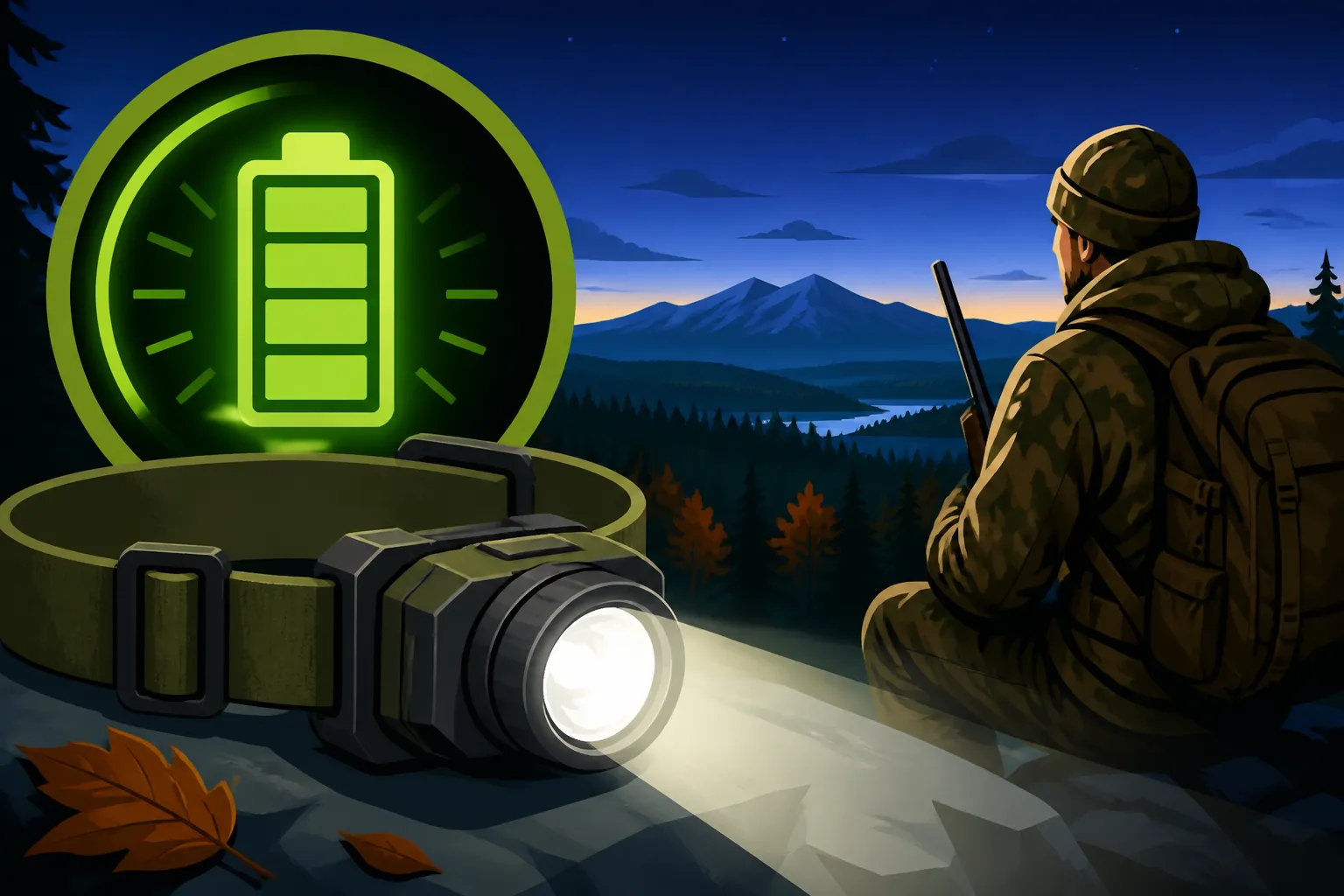
There's nothing quite like the feeling of the woods going absolutely silent as the last sliver of sun dips below the New Hampshire horizon. You’ve been on stand since before first light, and now, with the world turning to shades of deep indigo and black, you realize you need to make your way out. But what if, when you click on your trusty headlamp, you get nothing but a pathetic flicker, or worse, just a click? That gut-wrenching feeling of being plunged into true darkness, miles from your truck, is a hunter’s nightmare. This guide is all about preventing that panic, helping you understand what makes a headlamp reliable, and ensuring you've got enough juice to get you home safely after even the longest, most productive (or frustrating!) sit in the New Hampshire woods.
Why Battery Life is a Non-Negotiable for New Hampshire Hunters
In the Granite State, hunting often means long hours in challenging conditions. Whether you're chasing a wily whitetail during the New Hampshire's November Firearms Deer Season or quietly still-hunting White Mountain National Forest Timber, your day usually starts and ends in the dark. A headlamp isn't just a convenience; it's a critical piece of safety gear, and its battery life can literally be a lifesaver.
The Unexpected Long Sit: From Dawn to Dusk (and Beyond)
Think about those crisp October mornings when you're settling into your stand an hour before legal shooting light. You use your headlamp to navigate the trail, climb into your perch, and organize your gear. Then, the day unfolds. Maybe you get lucky and make a shot right at last light, and now you're faced with field dressing and tracking in the pitch black. Or perhaps you're on a multi-day hunt, pushing deep into the North Country, and the trail back to camp is longer and rougher than you remembered.
A "long sit" isn't just about the hours you spend motionless; it’s about the total duration your headlamp needs to perform reliably throughout your entire hunting experience. This could involve multiple pre-dawn hikes, tracking a wounded animal through dense cover, or even an unexpected overnight stay if things go sideways. Running out of light in these scenarios isn't just annoying; it can be genuinely dangerous, leading to falls, disorientation, or prolonged exposure. You might find yourself needing to Blood Trailing After Dark in New Hampshire, and without reliable illumination, that becomes an impossible task, risking lost game.
Safety First: Navigating Challenging Terrain in the Dark
New Hampshire's terrain is beautiful but unforgiving, especially when daylight fades. We’re talking about rocky granite trails, slippery beaver flowage edges, dense softwood thickets, and old logging roads riddled with roots and ruts. Trying to navigate this kind of ground in the dark, especially while carrying a pack or dragging a deer, is a recipe for disaster if you don’t have a strong, consistent beam of light.
Imagine the risk of twisting an ankle or taking a bad fall far from any cell service, simply because your headlamp died prematurely. This isn't an exaggeration; it's a real and present danger for anyone hunting in our rugged landscape. Having a headlamp with excellent battery life, coupled with a backup light source, is paramount for personal safety. It allows you to focus on your footing, spot hazards, and maintain your bearings, giving you the confidence to move deliberately and safely through the challenging, low-visibility conditions that are common during the early and late hours of our hunting seasons.
Understanding Headlamp Power: Lumens, Run Time, and Battery Types
When you're sifting through the vast array of headlamps out there, it's easy to get caught up in the "more lumens is better" trap. While brightness is important, it's only one piece of the puzzle. For a New Hampshire hunter, understanding the relationship between lumens, run time, and battery type is crucial for making an informed decision that prioritizes longevity in the field.
Decoding Lumens and Their Impact on Battery Drain
Lumens are a measure of light output—essentially, how bright your headlamp can get. Many modern headlamps boast incredible lumen counts, sometimes upwards of 1000 or even 2000 lumens on their "boost" or "turbo" settings. This burst of light can be incredibly useful for scanning a distant field edge or confirming a blood trail in tough conditions. However, here's the catch: these ultra-bright settings are massive power hogs. Running a headlamp at its maximum lumen output will drain its battery remarkably quickly, often in just a couple of hours or even less.
Most headlamps offer multiple settings:
- High: Good for active movement, tracking, or identifying distant objects. Drains battery fastest.
- Medium: A balanced option for navigating trails, setting up camp, or general tasks. Offers decent brightness and improved battery life.
- Low: Ideal for close-up tasks like reading a map, organizing your pack inside a ground blind, or moving slowly when you want to preserve your night vision and battery. This is often the setting you'll use most for truly "long sits."
- Red Light: An absolute godsend for hunters. Red light preserves your natural night vision, is less disruptive to wildlife (and fellow hunters), and uses very little power. It's perfect for those pre-dawn walks to your stand or quiet movements on a late-season sit when you need just enough light to see your immediate surroundings without blowing out your vision or your battery.
The key is to understand that you don't always need maximum brightness. In fact, most of your headlamp use will likely be on lower settings. A headlamp that provides a reliable, consistent beam on a medium or low setting for many hours is often more valuable than one that can blast out 1500 lumens for a mere 30 minutes.
The Lifespan Equation: Factors Affecting Headlamp Runtime
A headlamp's advertised "run time" is typically measured under ideal conditions, often using a standardized test on a lower-to-medium setting. In the real world of New Hampshire hunting, several factors can significantly impact how long your batteries actually last.
One of the biggest culprits for reduced battery life is cold weather. As temperatures drop, especially into the freezing range common during our deer and moose seasons, batteries become less efficient. Chemical reactions slow down, and their capacity diminishes. This means a battery that might last 10 hours at room temperature could only give you 6 or 7 hours when the mercury dips below freezing. This is crucial to consider when you're hunting in the North Country in late November or December, where cold-weather sitting strategy is paramount.
The age and quality of the batteries also play a huge role. Old batteries, even if unused, can lose some of their charge or capacity over time. Cheap, generic batteries might not deliver the same performance or longevity as reputable brands. Finally, the modes you use—as discussed with lumens—directly dictate battery drain. Constantly switching to high power will decimate your run time compared to disciplined use of lower settings.
Let's look at a quick comparison of common battery types and their real-world implications for hunters:
| Battery Type | Pros for Hunters | Cons for Hunters | Best Use Case |
|---|---|---|---|
| Alkaline (AA/AAA) | Widely available, inexpensive, good initial power. | Poor cold-weather performance, drains quickly on high, prone to leakage. | Backup batteries, mild weather, low-power use. |
| Lithium (AA/AAA) | Excellent cold-weather performance, lightweight, long shelf life. | More expensive than alkaline, single-use. | Primary power for cold-weather hunts, long-term storage. |
| Rechargeable (Li-ion) | Environmentally friendly, cost-effective over time, consistent power. | Battery degradation over charge cycles, requires charging infrastructure, can struggle in extreme cold (unless integrated with insulation). | Frequent use, warmer conditions, reliable power if managed properly. |
For those of us facing brutal cold during New Hampshire's Muzzleloader-Only Ten Days, especially in the deep woods, lithium disposable batteries often reign supreme for their reliability in low temperatures.
Battery Types: Disposable vs. Rechargeable in the Field
The choice between disposable and rechargeable batteries often comes down to convenience, cost over time, and environmental considerations. Both have their place in a New Hampshire hunter’s kit.
Disposable Batteries:
Alkaline batteries (AA, AAA) are the most common and cheapest. They’re great for general use and are readily available in any gas station or hardware store. However, their performance drops significantly in cold weather, and they tend to leak as they discharge, potentially damaging your headlamp. Lithium disposable batteries, on the other hand, are fantastic for cold weather and have a much longer shelf life, making them perfect for emergency kits or as primary power during bitter cold hunts. They are more expensive but offer unparalleled reliability in freezing temperatures. The downside is they are single-use, creating more waste and requiring you to constantly purchase new ones.
Rechargeable Batteries:
Many modern headlamps come with integrated or removable rechargeable lithium-ion battery packs. These are often more powerful and provide consistent light output throughout their discharge cycle. Over time, they are much more cost-effective and environmentally friendly than constantly buying disposables. However, they require charging, which means you need access to power outlets or portable charging solutions (like power banks) during longer trips. Their performance can also be affected by extreme cold, though many high-quality rechargeable headlamps are designed to mitigate this with insulated battery compartments.
For most New Hampshire hunters, a combination approach is often best: a high-quality rechargeable headlamp for daily use, paired with a set of fresh lithium disposable batteries in your pack as a crucial backup. This ensures you're ready for anything the woods throw at you.
Practical Strategies for Maximizing Headlamp Endurance
Having the best headlamp with fantastic battery life means nothing if you don't manage its power properly. Even the most robust unit can die prematurely if not used strategically. These practices will become second nature as you spend more time in the New Hampshire wilds, ensuring you always have light when you need it most.
Pre-Hunt Preparation: Charging, Testing, and Packing Spares
The success of a long sit, or any hunt for that matter, often boils down to meticulous preparation. Your headlamp's battery life is no exception. Before you even step foot in the woods, a thorough check is in order.
First, fully charge all rechargeable batteries you plan to use. Don't rely on "mostly charged" or "I think it's full." Top them off completely. If your headlamp uses disposable batteries, insert fresh ones, even if the old ones "might have some life left." Those last few hours of power are critical and not worth gambling with.
Next, test your headlamp thoroughly at home. Turn it on all settings, including high, low, and red light. Check for any flickering or dimming. Get a feel for how long it takes to cycle through modes and ensure all functions are working. You don't want to discover a faulty switch or a weak beam when you're navigating a dark trail near Hunting a Beaver Flowage Edge.
Always, and I mean always, pack spare batteries. For headlamps using disposable AA or AAA batteries, carry a full set of fresh lithium batteries. For rechargeable units, carry a fully charged spare battery pack if your model allows for quick swaps. Additionally, a small, fully charged power bank capable of recharging your headlamp (or at least your phone) is an invaluable piece of gear. Think about a brand like GoHunt when researching reliable gear; their community often discusses battery longevity and effective field charging solutions. Storing these spare batteries in a waterproof bag and keeping them close to your body heat during cold weather can significantly extend their emergency life.
In-the-Field Management: Conserving Power When It Matters Most
Once you're out in the field, smart power management becomes paramount. It’s all about disciplined usage and knowing when to dial it back.
The golden rule is to use the lowest effective setting. If you're just walking a familiar trail to your stand before dawn, a low beam or even the red light might be all you need. Only crank up the lumens when absolutely necessary, such as when you’re Tracking a Deer in Fresh White Mountain Snow or field dressing your harvest. Resist the urge to use your headlamp as a floodlight for casual tasks. Every unnecessary burst of high power shaves precious minutes off your total run time.
Be mindful of short bursts versus continuous light. Sometimes a quick flash of high beam is enough to identify something in the distance, rather than leaving it on for extended periods. When you stop moving, if you don't absolutely need light, turn it off. Sounds simple, but it's amazing how often we leave them on while rummaging in our packs or taking a break. Furthermore, utilizing your headlamp's red light setting whenever possible is a massive power saver and great for maintaining your night vision. It's often enough light for reading a map or checking your gear without signaling your presence to every animal in the county or draining your battery unnecessarily.
Cold Weather Considerations: Keeping Your Power Source Warm
New Hampshire winters can be brutal, and cold is the arch-nemesis of battery life. Ignoring this fact can leave you literally in the dark.
For disposable batteries, especially alkaline, cold temperatures drastically reduce their usable capacity. A fresh alkaline battery might only deliver half its normal run time when temperatures are near freezing. Lithium disposables perform much better in the cold, making them the preferred choice for primary or backup power in late-season hunts.
For all battery types, a key strategy is to keep them warm. This means storing spare batteries in an inner pocket of your hunting coat, close to your body heat. The warmth from your body will help maintain their chemical efficiency. Some hunters even carry their primary headlamp in an inside pocket during transit, only putting it on their head when light is immediately needed. When sitting on stand for hours, try to tuck the battery pack (if it’s detachable or on the back of your headlamp strap) under your hat or against a warmer layer. These small actions can significantly extend the useful life of your headlamp when the mercury plummets, ensuring you’re never caught unprepared during a chilly Cold-Weather Sitting Strategy in the North Country hunt.
Choosing the Right Headlamp for Your New Hampshire Adventures
With so many options out there, selecting the perfect headlamp can feel a bit overwhelming. But by focusing on features that directly address the specific challenges of New Hampshire hunting, you can narrow down the choices and find a reliable partner for your early morning starts and late-night exits.
Features to Look For: From IPX Ratings to Lock Modes
Beyond lumen output and battery type, several other features are essential for a hunting headlamp in New Hampshire:
- Water Resistance (IPX Rating): Our weather can be notoriously unpredictable. A light drizzle can quickly turn into a soaking rain, or you might find yourself in freezing fog. An IPX4 rating means it can withstand splashes, while IPX7 means it can be submerged for a short period. Aim for at least IPX4, but higher is always better for peace of mind, especially if you're Hunting a Beaver Flowage Edge or out during a downpour.
- Durability: Your headlamp is going to get bumped, dropped, and exposed to the elements. Look for models with robust construction, often made from durable plastics or aluminum, that can withstand the rigors of the field.
- Ease of Use with Gloves: In cold weather, you'll likely be wearing gloves or mittens. Ensure the buttons are large enough and easy to manipulate without having to remove your hand protection. This seems minor, but fumbling with tiny buttons in the dark with freezing fingers is incredibly frustrating.
- Lock Mode: This feature prevents your headlamp from accidentally turning on in your pack, draining the battery without you knowing. Most good headlamps have a simple button sequence to engage a lock mode, saving you from a dead battery surprise.
- Comfort and Fit: You'll be wearing this on your head for potentially hours. An adjustable, comfortable strap that doesn't slip, even over a hat, is crucial. Lightweight designs are also a plus, reducing neck strain over time.
- Red Light Option: As discussed, this is a non-negotiable for hunters. Not all headlamps have it, so make sure your chosen model does.
- Beam Pattern Adjustment: Some headlamps allow you to switch between a wide floodlight and a focused spot beam. This versatility can be very handy in different hunting scenarios, from close-up work to spotting something further away.
Taking these features into account will guide you toward a headlamp that is not just bright, but truly functional and resilient in our New Hampshire environment.
Balancing Performance and Practicality for the Granite State Hunter
Ultimately, the "best" headlamp is the one that best suits your specific hunting style and the conditions you face. There's no one-size-fits-all answer, but you can strike a balance between high-end performance and practical needs.
If you’re primarily a treestand hunter who doesn’t stray far from established trails, a headlamp with good low-light duration and a reliable red light, even if its maximum lumens aren’t astronomical, might be perfectly adequate. For someone who regularly ventures into the deep backcountry, maybe for a Packing Out a New Hampshire Moose hunt, an ultra-reliable, powerful headlamp with a long-lasting lithium or high-capacity rechargeable battery (plus plenty of spares) is essential. These hunters might value extreme cold-weather performance and a bombproof construction above all else.
Consider your budget, but view a headlamp as an investment in safety. Spending a little more on a quality unit with excellent battery management features and robust construction will save you headaches (and potentially cold, dark nights) in the long run. When researching, check out gear reviews from sources like GoHunt, as they often provide insights into real-world performance under tough conditions, which can be incredibly helpful for making an informed decision for your next New Hampshire hunting adventure.
Disclaimer
This article is for general informational purposes only and does not constitute professional advice. Laws, prices and regulations vary by location and change over time. Consult a qualified professional for guidance on your specific situation.