Best Backpack Frame for a Quartered Moose
Okay, let's talk about moose. You've drawn that coveted tag, put in the time scouting in the vast New Hampshire North Country, and now the moment of truth has arrived. You've successfully harvested your moose – a truly monumental achievement! But then, the real work begins: getting all that precious meat out of the woods, often from remote, unforgiving terrain. This isn't just a heavy lift; it's a physically grueling, potentially dangerous endeavor if you don't have the right equipment. This guide is all about helping you understand why a top-tier backpack frame is absolutely essential for a quartered moose, and what features you need to look for to ensure a successful, and safe, extraction.
Why a Dedicated Frame Pack is Non-Negotiable for Moose
Hunting a moose in New Hampshire is an incredible experience, but the sheer scale of the animal means you can't just throw a rope over your shoulder and drag it out. We're talking about an animal that can weigh well over a thousand pounds on the hoof. Even after field dressing and quartering, you're looking at hundreds of pounds of meat, bone, and hide that needs to be moved. This isn't your average deer hunt where a boned-out whitetail might fit in a daypack if you're ambitious.
The Sheer Weight and Volume of Moose Meat
Let's put this into perspective: a mature New Hampshire bull moose can easily yield 400-600 pounds of boned-out meat, and often more if you include the hide and skull. When you quarter a moose, you're looking at four massive pieces, plus the backstraps, tenderloins, neck, ribs, and sometimes even the brisket. Each hindquarter alone can weigh 100-150 pounds, a front shoulder often 80-100 pounds. This isn't just weight; it's awkward, bulky volume that resists being packed neatly.
Imagine trying to stuff a refrigerator-sized object into a standard hiking backpack. It's simply not going to work. Traditional internal frame backpacks, while great for camping gear, are designed for relatively evenly distributed loads that conform to the pack's shape. They buckle and sag under the concentrated, shifting weight of a fresh moose quarter. A dedicated external frame pack, or a hybrid with a robust load shelf, is engineered specifically to handle these extreme, unwieldy payloads, distributing the stress across a rigid structure that won't fail when you're miles deep in the wilderness. The last thing you want is a blown seam or a broken frame when you're working on Packing Out a New Hampshire Moose.
Protecting Your Body on Rugged New Hampshire Terrain
New Hampshire's North Country, where many moose are harvested, is incredibly beautiful but also incredibly rugged. You'll encounter steep inclines, slick granite ledges, dense stands of spruce and fir that create thick blowdowns, and boggy, uneven terrain that can swallow your boots whole. Trying to navigate this kind of ground with hundreds of pounds on your back, poorly distributed, is a recipe for disaster.
A proper frame pack is designed to transfer the majority of the load's weight directly to your hips and legs, which are far better equipped to handle heavy lifting than your shoulders and back. This weight transfer is critical for preventing severe muscle strain, pinched nerves, and even falls. When your shoulders are overloaded, your balance is compromised, and every step becomes a precarious ordeal. On a steep, rocky trail, or trying to pick your way through a beaver flowage, maintaining your center of gravity is paramount. The right pack allows you to move more deliberately, more safely, and with less energy expended, helping you avoid injury and fatigue when you're far from help. This is especially true when navigating through areas like Hunting a North Country Moose Bog where the ground is consistently unstable.
Key Features to Look for in a Moose Pack Frame
When you're talking about hauling a quartered moose, you're not just looking for "a good backpack." You're looking for a specialized piece of equipment, an investment that will literally carry the weight of your success. There are specific features that elevate a pack from merely adequate to truly exceptional for this kind of demanding task.
Frame Material and Construction
The frame is the backbone of your pack, especially when it comes to immense loads. For moose hunting, you'll generally be looking at external frame packs or high-end internal/hybrid frames that incorporate a very rigid structure and a dedicated load shelf.
- External Frames: These have a visible, rigid frame (often aluminum or sometimes carbon fiber) to which the bag and load shelf are attached. They excel at carrying very heavy, bulky, and irregular loads, keeping the weight away from your back for better ventilation. They are often preferred for moose as they offer maximum load-carrying capacity and ease of lashing external items.
- Internal/Hybrid Frames: Some modern internal frame packs have evolved to include extremely stiff frames and external load-carrying capabilities. These often use carbon fiber stays that are incredibly strong yet lightweight. They hug the body more closely, which can be an advantage in dense brush, but ensure the frame is robust enough for moose.
Materials:
- Aluminum: This is a classic choice for external frames. It's durable, relatively affordable, and can often be bent back into shape if it gets tweaked in a fall. While heavier than carbon fiber, it offers proven reliability under stress.
- Carbon Fiber: The cutting edge in frame technology. Carbon fiber is incredibly strong and remarkably lightweight. This weight saving is a huge advantage when you're already carrying hundreds of pounds of meat. However, it is typically more expensive and, while strong, can sometimes be more prone to catastrophic failure (e.g., shattering) under specific types of impact, though this is rare with quality hunting frames.
Regardless of material, look for a frame that is unyielding. It should not flex or twist significantly when you apply pressure. The entire point is to create a stable platform for your load. A good moose pack frame should ideally be rated for loads in excess of 100-150 pounds, giving you a strong safety margin even if you only carry 80-pound quarters.
Suspension System and Comfort
A super-strong frame is useless if the suspension system doesn't translate that strength into comfortable, efficient carrying. This is where ergonomic design truly shines.
- Hip Belt: This is perhaps the single most important component for heavy hauling. It needs to be wide, thick, and stiff enough to effectively transfer the load to your hips and legs. Look for ample padding that doesn't compress completely under weight. It should securely wrap around your hip bones, not ride up on your waist.
- Shoulder Straps: While the hip belt takes the brunt of the weight, the shoulder straps keep the pack snug against your back and prevent it from falling backwards. They should be wide, well-padded, and comfortable, but not carry the primary load.
- Adjustability: This is non-negotiable. You need a pack that can be precisely adjusted to your torso length. Load lifter straps (the straps that go from the top of the shoulder straps to the top of the frame) are critical. When tightened, they pull the top of the pack forward, bringing the weight closer to your back and preventing the pack from pulling you backward. A pack that is not properly fitted or adjusted will cause discomfort, fatigue, and can even lead to injury. Even small adjustments can make a huge difference over miles of tough terrain. Many premium hunting pack brands, often discussed on platforms like GoHunt, prioritize highly adjustable and robust suspension systems designed specifically for extreme loads.
Load Shelf and Lashing Capabilities
This is where hunting-specific frame packs truly differentiate themselves from traditional backpacking packs.
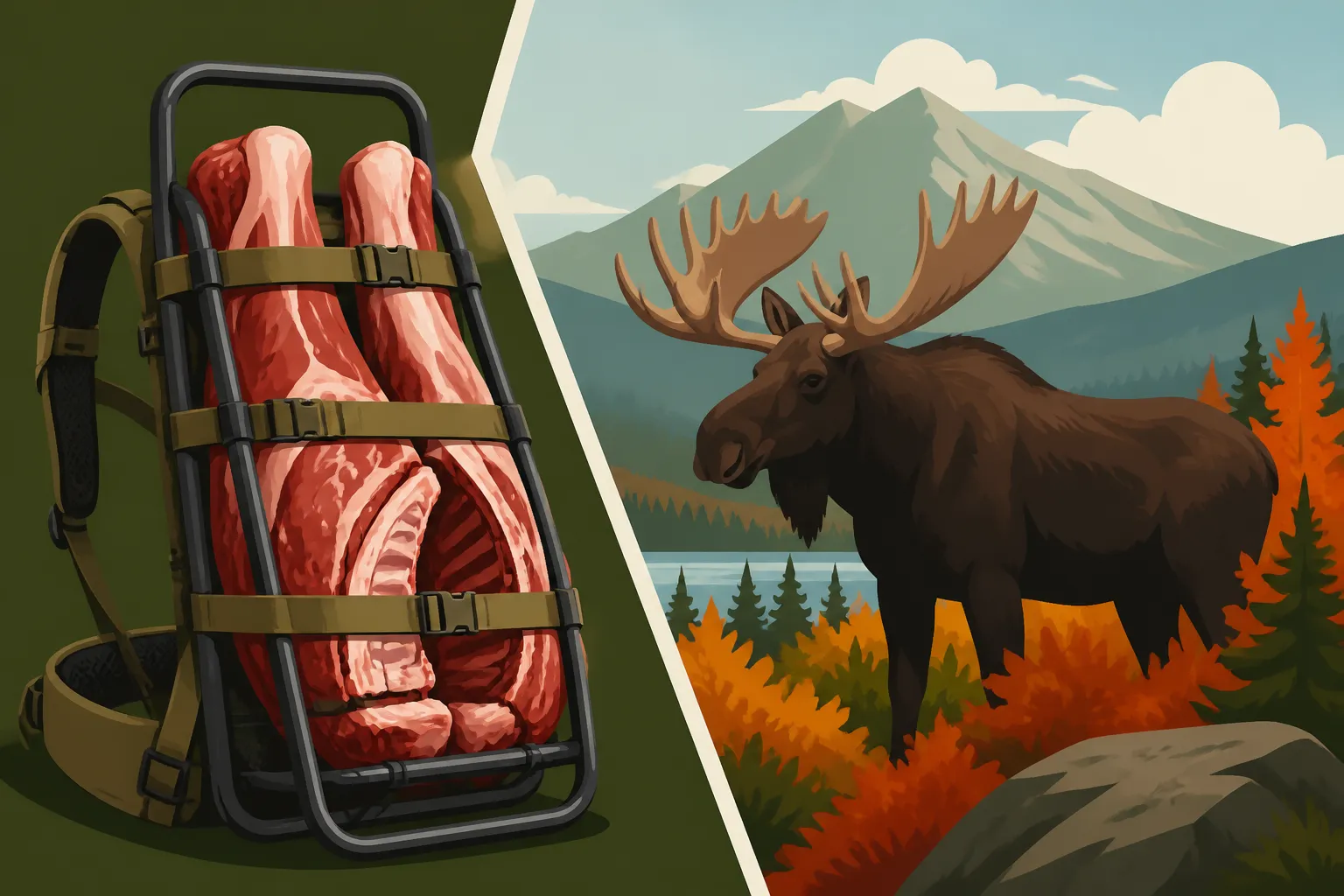
- Load Shelf: This is an external platform, often integrated into the frame, designed to hold bulky, heavy items – like a moose quarter – between the frame and the main pack bag. It's brilliant for moose because it keeps blood and mess away from your other gear, makes cleaning easier, and allows you to lash oddly shaped items securely. Look for a large, sturdy load shelf that can truly support the weight without flexing.
- Lashing Straps and Compression: You'll need an abundance of strong, easily adjustable compression straps. These straps are used to cinch the moose quarter tightly to the load shelf and frame, preventing it from shifting, swaying, or bouncing as you move. A load that shifts can throw you off balance and quickly exhaust you. Look for heavy-duty buckles and wide webbing that won't stretch or slip under extreme tension. Many packs will have a series of horizontal and vertical straps designed to fully encapsulate and stabilize the load.
Other Essential Considerations for Your Moose Pack
Beyond the core components, several other features can significantly impact your experience when hauling a moose out of the backcountry. Don't overlook these details, as they can make a challenging task a little bit easier and more efficient.
Water Resistance and Durability
New Hampshire weather is notoriously unpredictable. You might start your day under a clear, crisp sky only to find yourself in a downpour or an early-season snowstorm by afternoon, especially when you're deep in the wilderness trying to Field Dressing a Moose in the North Country. Your pack needs to withstand these conditions and the general abuse of backcountry travel.
Look for packs made from highly durable, abrasion-resistant fabrics like high-denier Cordura or similar rugged nylons. These materials will stand up to scraping against rocks, rubbing through dense brush, and being set down on wet, muddy ground. Water resistance is also key. While you'll likely put your moose quarters in game bags, the pack itself will be exposed to moisture. Many hunting packs use DWR (durable water repellent) coatings, and some even incorporate fully waterproof fabrics. Consider whether the pack includes an integrated rain cover or if you'll need to purchase one separately. Robust zippers and reinforced stitching at all stress points are also indicators of a pack built to last through seasons of heavy use.
Accessory Pockets and Organization
While the primary function of a moose pack is brute-force hauling, you still need to carry essential gear for safety, navigation, and comfort. Thoughtfully designed pockets and attachment points can make a world of difference.
- Quick-Access Pockets: Pockets on the hip belt are perfect for small, frequently used items like a GPS device, rangefinder, knife, or snacks. A top lid pocket is also great for headlamps, a map, or a first-aid kit.
- Water Bottle Pockets: Side pockets that can securely hold large water bottles are crucial for staying hydrated on strenuous hauls.
- Main Compartment: Even with a load shelf for meat, you'll still have a main bag for your survival gear, extra layers, and food. Ensure it's accessible and offers some internal organization, even if just a few sleeve pockets.
- External Attachment Points: Webbing loops, daisy chains, or MOLLE-compatible systems allow you to attach additional pouches, a rifle scabbard, or trekking poles.
- Detachable Day Pack/Lid: Some larger frame packs feature a removable lid that converts into a small daypack. This is incredibly useful for lighter scouting trips from base camp or for the final stalk if you're not carrying a heavy load at that moment. Many hunters rely on apps like GoHunt for their mapping and navigation needs, and having a secure, easily accessible pocket for your phone is a huge plus.
Proper Fit and Adjustment
This cannot be stressed enough: a pack, no matter how expensive or feature-rich, is only as good as its fit. One size does not fit all, especially when you're asking it to carry hundreds of pounds.
- Torso Length: Accurately measure your torso length and choose a pack that matches. Many high-end packs offer adjustable torso lengths, allowing you to fine-tune the fit.
- How to Fit Your Pack:
- Loosen everything: Before putting on the pack, loosen all hip belt, shoulder strap, and load lifter straps.
- Load it up: Put some weight in the pack, ideally simulating a moose quarter (e.g., sandbags or water jugs totaling 50-80 lbs).
- Hip belt first: Fasten the hip belt so its top edge sits directly over your hip bones. Cinch it tightly. This is where 70-80% of the weight should rest.
- Shoulder straps: Tighten the shoulder straps just enough so the pack doesn't fall backward. They should contour to your shoulders but not bear significant weight.
- Load lifters: These straps typically run from the top of the shoulder straps to the top of the pack frame. Tighten them to pull the top of the pack inward, closer to your back. This reduces sway and helps distribute the load more efficiently. Don't over-tighten them to the point of lifting the hip belt off your hips.
- Sternum strap: Fasten the sternum strap across your chest. This helps stabilize the shoulder straps and keeps them from sliding off.
- Test and Refine: Walk around with the loaded pack, paying attention to pressure points, swaying, and comfort. Make micro-adjustments until it feels stable and comfortable. A properly fitted pack will feel like an extension of your body, even under heavy loads.
Field-Testing Your Pack Before the Hunt
Buying a top-tier pack frame for moose hunting is a significant investment, both in gear and in your physical well-being. But simply owning it isn't enough; you absolutely need to put it through its paces before your moose season arrives. This preparation is as vital as sighting in your rifle or practicing your calling techniques.
Training with Weight
Think of your pack frame as a critical piece of athletic equipment – because it is. You wouldn't run a marathon without training, and you shouldn't expect to haul a moose out of the wilderness without preparing your body and familiarizing yourself with your pack.
- Start Light, Build Up: Begin by loading your pack with a manageable weight, perhaps 40-50 pounds of sandbags, water bottles, or even bags of concrete mix. Hike with this load on terrain similar to what you expect to encounter in New Hampshire. As your strength and endurance improve, gradually increase the weight. Aim to comfortably carry a load that simulates a single moose quarter (80-100+ pounds) for at least a mile or two.
- Vary the Terrain: Don't just walk on flat ground. Seek out hills, rocky paths, and uneven surfaces. Practice stepping over logs and through brush. Pay attention to how the pack feels on ascents and descents. Does it shift? Are there any hot spots or pinch points? This training helps condition your muscles, ligaments, and joints for the specific stresses of heavy packing. It also allows you to identify any fit issues with your pack before the hunt.
- Duration Matters: Try to simulate the time you might spend on an actual pack-out. Even if you're only walking a couple of miles, practice carrying the heavy load for an hour or more. This builds mental and physical toughness. Being physically ready to get Getting a Moose Out on a Logging Road will make all the difference.
Mastering Loading and Unloading
A big part of efficient game recovery is how quickly and securely you can get the meat on your pack. This isn't just about strength; it's about technique.
- Practice with Bulk: If you have access to a large, bulky object (like a bale of hay, a large bag of dog food, or even a heavy cooler), practice securing it to your load shelf. Experiment with different lashing patterns and strap tensions. The goal is a load that is tight, stable, and doesn't sway or bounce.
- Simulate Conditions: Try practicing in less-than-ideal conditions, perhaps when it's cool or in low light. You'll likely be dealing with these factors during a real recovery.
- Game Bags are Key: Always plan to use quality game bags. These not only protect the meat from dirt, flies, and debris, but they also give you a cleaner, more manageable package to lash to your pack frame. Practice stuffing the bags and then securing them.
- Develop a System: When dealing with multiple quarters, you'll need a system. Which quarter goes first? How do you balance the load? Will you carry the head and antlers in one trip, or save them for a dedicated run? Having a plan and practicing it will save precious time and energy when every minute counts. This pre-hunt practice on loading will be invaluable when you're actually executing Packing a Nine-Day Moose Hunt and need to move your trophy efficiently.
| Feature | Aluminum External Frame | Carbon Fiber Internal/Hybrid Frame | Considerations for Moose Hunting |
|---|---|---|---|
| Weight Capacity | Excellent (100-150+ lbs) | Excellent (100-150+ lbs) | Both can handle extreme loads, ensuring the specific model's rating is high is crucial. |
| Frame Rigidity | Very rigid, less flex under extreme weight | Extremely rigid, minimal flex | Paramount for preventing pack sag and maintaining stability with heavy, irregular quarters. |
| Load Shelf | Often integrated and highly functional | Often integrated, sometimes requires accessory | Essential for separating messy meat from personal gear and managing awkward shapes. |
| Comfort | Can be excellent with proper harness/padding | Generally excellent due to contouring | Heavily relies on a well-designed suspension system and meticulous personal fitting. |
| Durability | Very durable, can often be repaired/bent back | Extremely durable, but can shatter under specific, rare, direct impacts | Must resist punctures, tears, and abrasion from rough New Hampshire terrain. |
| Weight of Frame | Generally heavier than carbon fiber | Lighter weight is a significant advantage | Lighter frames reduce your overall burden, but absolute strength remains the top priority. |
| Cost | Mid-range to high-end | Generally higher-end | View it as an investment; a cheap pack can fail disastrously in the field. |
| Versatility | Excellent for very heavy, bulky loads; can feel large when empty | Good for heavy loads, often more adaptable for day pack mode with main bag attached | While versatility is a bonus, prioritize a dedicated heavy hauler for moose. |
Investing in the right backpack frame for a quartered moose is not just about having the gear; it's about ensuring you can safely and effectively retrieve your hard-earned harvest from the challenging New Hampshire backcountry. Do your research, understand the critical features, and most importantly, train with your chosen pack. Your back (and your freezer) will thank you for it.
Disclaimer
This article is for general informational purposes only and does not constitute professional advice. Laws, prices and regulations vary by location and change over time. Consult a qualified professional for guidance on your specific situation.