Getting a Moose Out on a Logging Road
You’ve done it. After weeks, maybe even years, of dreaming and countless hours of scouting the vast North Country, you’ve finally put your tag on a New Hampshire moose. But the adrenaline-fueled triumph quickly gives way to a daunting reality: getting that absolute behemoth out of the woods. It's an immense undertaking that can make even the most seasoned hunter feel a knot in their stomach. This guide is dedicated to easing that burden, providing practical, real-world strategies for efficiently extracting your moose from the kill site to a waiting logging road, ensuring your hard-earned meat is cared for properly.
Initial Field Care and Quartering at the Kill Site
Harvesting a moose is a significant accomplishment, but the real work, and arguably the most crucial, begins immediately after the shot. How you handle the animal in the first few hours will directly impact the quality of the meat and the ease of extraction. The sheer size of a moose means you can't just drag it out whole, especially if you're alone or even with a small party. Efficient and precise field care is your first line of defense against spoilage and unnecessary labor.
Rapid Field Dressing and Gutting
The moment that moose hits the ground, the clock starts ticking, especially in warmer early season conditions. Your absolute priority is to cool the animal down to prevent bacterial growth and spoilage. This means getting the hide off and the internal organs out as quickly and cleanly as possible. Don't be shy; get in there and make it happen. The internal heat of such a large animal can ruin a lot of meat if you delay.
Begin by carefully opening the body cavity from the brisket to the pelvis. Be mindful of puncturing the stomach or intestines, as this can contaminate the meat. Once open, you'll need to reach deep and sever the esophagus and trachea up by the diaphragm, then work your way back, carefully detaching all organs. Many hunters find it easiest to roll the moose onto its side, or even on its back if the ground allows, to help the internal organs spill out with gravity. This is also where a good, sharp knife and maybe a compact bone saw can be invaluable. Getting the guts out immediately vents a tremendous amount of heat. If you're really in a bind and solo, even just spilling the gut pile out will help, though a full clean-out is always better.
Strategic Quartering for Transport
Once field dressed, the reality of moving several hundred pounds of muscle and bone sets in. For a moose, quartering is not just recommended; it's practically mandatory for most hunters unless you have heavy machinery or a very short, downhill drag. Quartering involves breaking the animal down into manageable pieces right there at the kill site. The standard approach is to remove the four legs, the backstraps, and the tenderloins, then possibly split the carcass down the spine if you're taking the rib sections.
Start with the front legs. These are attached by muscle, not bone, so you can cut them free relatively easily by pulling the leg away from the body and cutting the muscle and tissue. Next, tackle the hindquarters. These are attached at the hip joint. You'll need to cut through the surrounding muscle and then disarticulate the joint. Some hunters prefer to separate the lower legs at the knee joint and remove the feet to reduce weight and bulk. Don't forget those coveted backstraps running along the spine and the tenderloins deep inside the cavity, along the spine under the kidney fat. Skinning as much of the hide as possible off these sections before transport will also aid in cooling and reduce weight. Always pack your game bags – like those from Caribou Gear or TAG bags – to protect the meat from flies, dirt, and debris during transport. A large moose can yield over 500 pounds of boned-out meat, so you'll have plenty to deal with.
Preparing for the Haul to the Logging Road
The decision to harvest a moose is just the start; the journey from the kill site to a navigable logging road can be arduous. Proper planning and having the right equipment on hand are non-negotiable for a successful and less exhausting extraction. This isn't the time to wish you had packed that one extra item.
The Right Gear Makes All the Difference
You've got your moose quartered; now, how do you move those massive pieces? This is where your gear strategy comes into play. For many New Hampshire moose hunters, especially those drawn for a tag in the remote areas often covered during the Moose Hunting New Hampshire's North Country season, a sturdy frame pack is invaluable. Think a solid external frame pack designed for heavy loads. Brands like Kifaru, Mystery Ranch, or Stone Glacier are often preferred for their ability to comfortably carry 100+ pound loads. You'll want to bone out as much as possible to reduce weight, but even boned quarters are incredibly heavy.
Don't underestimate the utility of a good game cart if the terrain allows, though many parts of New Hampshire's moose country are far too rugged for wheels. Still, if you're working a more forgiving logging road system, a heavy-duty game cart can be a lifesaver for those final stretches to the truck. Rope, sturdy tarps (which can double as sleds in snow or mud, or simply to protect the meat), and a high-quality headlamp for unexpected late-night work are also essential. Remember that when Packing Out a New Hampshire Moose, every ounce of prep reduces strain later.
| Hauling Method | Pros | Cons | Ideal Scenario |
|---|---|---|---|
| Pack Frame | Maneuverable in rough terrain, keeps meat cool | Physically demanding, requires multiple trips | Deep in the backcountry, steep or rocky terrain |
| Game Cart | Reduces physical strain, moves large volume | Limited by terrain (needs relatively flat ground) | Accessible logging roads, gentler slopes, minimal obstacles |
| Dragging (on Tarp) | Simple, requires minimal specialized gear | Very physically demanding, can damage meat/hide, slow | Short distance to road, soft ground or snow |
| Sled (in Snow) | Glides easily, reduces friction | Only viable with sufficient snow, can be tippy | Winter conditions, deep snowpack |
Utilizing Natural Terrain and Resources
While the right gear is paramount, don't overlook what Mother Nature might offer to assist your efforts. Scout your egress routes carefully before the hunt, if possible. Look for natural downhill slopes that can aid in dragging or pulling. A slight decline can make an incredible difference when you're moving hundreds of pounds of meat. Also, consider water sources. While you don't want to get your meat wet, knowing the location of streams or boggy areas (common in the North Country, especially if you're Hunting a New Hampshire North Country Moose Bog) can help you plan routes around them, or use them as reference points.
A robust branch or log can be fashioned into a makeshift lever to get heavy quarters onto a pack frame or game cart. Sometimes, a fallen tree can be used as a ramp to load a quarter onto a vehicle, saving your back from a dead lift. Before you start pulling, take a few minutes to clear a path of any major obstacles like sharp sticks or rocks that could damage your game bags or snag your equipment. Planning your route, even if it adds a few extra minutes, can save hours of backbreaking labor and frustration.
Executing the Haul: Techniques and Teamwork
This is where the rubber meets the road, or more accurately, where the meat meets the trail. Moving a moose, even in quarters, is a supreme test of physical endurance, mental fortitude, and teamwork. Having a clear strategy and communicating effectively with your hunting partners is crucial for success and safety.
Effective Dragging and Carrying Strategies
Even with the animal quartered, you're still looking at individual pieces that can weigh well over 100 pounds. For a pack-out, load the heaviest pieces (typically the hindquarters) into your pack frame first. Distribute the weight evenly and secure it tightly to prevent shifting. This is a situation where an advanced mapping app like onX or even the New Hampshire Fish and Game App can really shine, allowing you to mark your kill site and your vehicle's location and choose the most efficient, albeit sometimes circuitous, route back to the logging road. Sometimes the longest distance by map is actually the easiest route on the ground.
If you're dragging, especially with multiple people, using sturdy rope attached to a tarp or a specialized game sled can help distribute the load and reduce friction. If it's just one person, a "moose buggy" or heavy-duty deer drag harness can allow you to use your entire body weight, not just your arms. Take frequent breaks. Don't try to be a hero and push yourself to exhaustion. Hydrate, catch your breath, and re-evaluate the next section of trail. Remember, the goal is to get the meat out safely and efficiently, not to win a race. If you're struggling, it might be time to think about Packing Out a New Hampshire Moose over multiple trips, especially if the weather is cool.
Vehicle Rendezvous and Loading Challenges
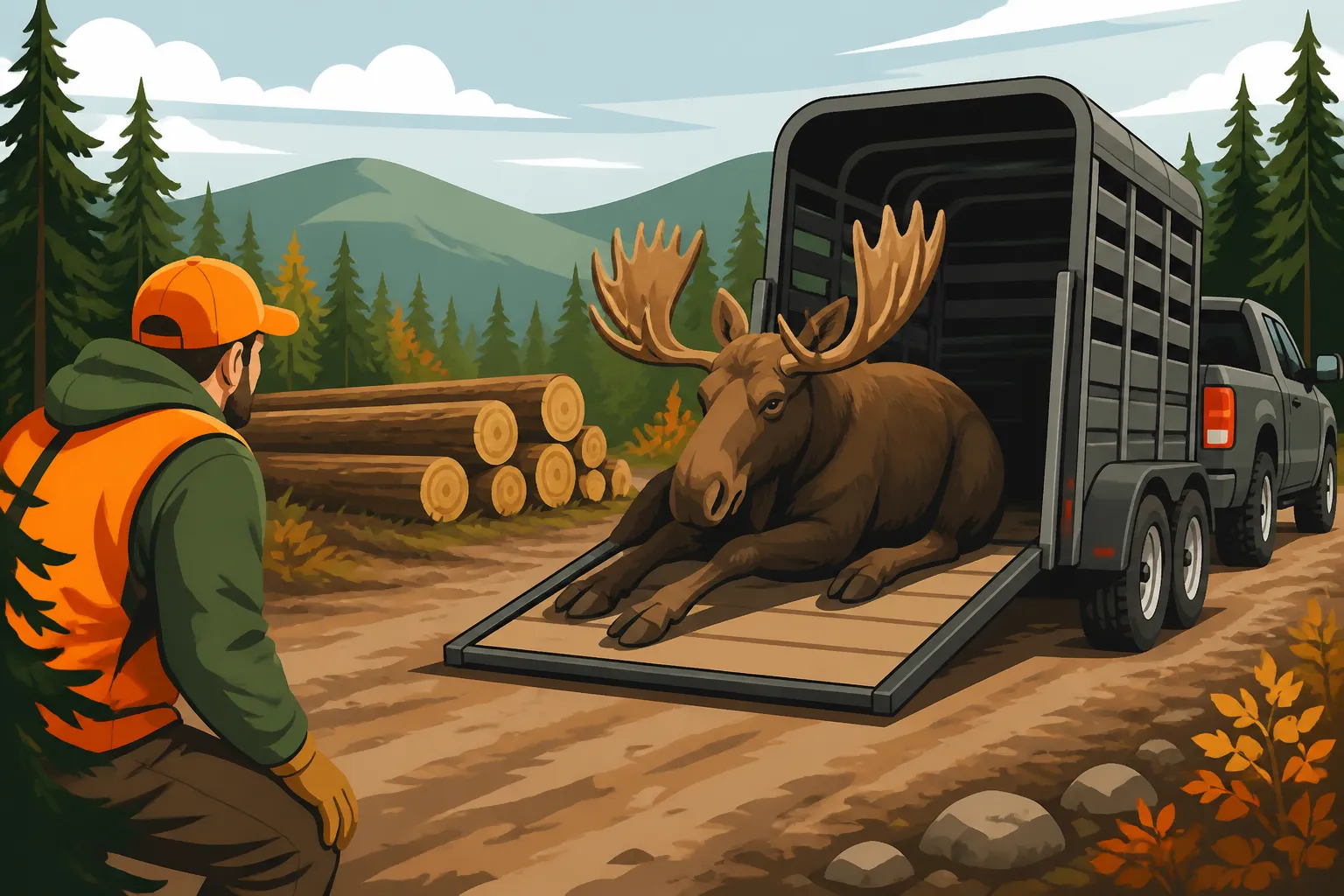
Once you finally break out onto that logging road, the sense of relief is immense. But the job isn't quite done. Getting those heavy quarters into the back of a truck or onto a trailer can present its own set of challenges. If possible, park your vehicle as close to the egress point as safely and legally allowed. Backing a truck with a flatbed or an open tailgate right up to where you emerge from the woods can eliminate unnecessary lifting.
When loading, always use proper lifting techniques – lift with your legs, not your back. If you have multiple people, coordinate your efforts. A small, portable ramp can be a game-changer here, allowing you to slide the quarters up rather than lifting them straight over the tailgate. If you're alone, you might need to get creative: use a sturdy log as a ramp, or even partially fill your truck bed with dirt or rocks to reduce the lifting height. Once loaded, secure the meat carefully. You don't want quarters shifting around on bumpy logging roads, risking damage or, worse, falling out. Use ratchet straps or heavy-duty rope to tie everything down.
Logging Road Logistics and Further Processing
Reaching the logging road is a huge milestone, but it's not the end of the line. You've successfully navigated the rugged terrain; now you need to focus on getting that valuable meat home in pristine condition. This often involves some intermediate steps right there at the roadside.
Setting Up a Temporary Processing Station
Depending on the distance to your final processing destination and the ambient temperature, you might need to set up a temporary processing station right on the logging road. This is especially true if you've done a minimal field quarter and need to do more boning out or closer trimming. A large, clean tarp spread on the ground or, even better, over a sturdy folding table if you brought one, provides a sanitary workspace.
Here, you can trim off any remaining fat or bloodshot meat, further bone out the quarters to reduce weight for easier transport, and ensure all meat is placed into breathable game bags. This is also a good opportunity to double-check that every piece of meat is free from hair, dirt, and debris. If you're fortunate enough to hunt with a New Hampshire Moose Permit Cost If Drawn and secured a tag, you know how valuable every ounce of that animal is. Cooling is still critical. If it’s not cold outside, try to get the bags off the ground or into shade. Some hunters even carry large coolers with ice to immediately get the most valuable cuts chilling, particularly in warmer early September or late October during the New Hampshire Moose Season Dates.
Planning for the Trip Home
The journey home with your moose meat requires just as much thought as the extraction itself. Once the meat is secured in your vehicle, your primary concern is maintaining its temperature. If it's cold outside, you might be fine for a few hours, but if temperatures are mild or warm, you'll need a robust cooling strategy. Large coolers, ideally pre-chilled, are essential. Pack them with ice, but ensure the ice isn't directly touching the meat unless the meat is sealed in waterproof bags, to avoid waterlogging. Consider blocks of ice over cubes for longer-lasting cooling.
Think about your route home. Can you make it directly to a processor or your home processing setup? Or will you need an overnight stop? If so, ensure you have access to a large cooler or a walk-in refrigerator. Some hunters even plan their Packing for a Nine-Day Moose Hunt with an extra large freezer chest in the back of their truck, powered by a generator or inverter, ready for immediate use. Before you leave, make sure your license and tag are properly affixed to the carcass or the largest piece of meat, as required by New Hampshire Fish and Game regulations. Having your paperwork in order for Registering a New Hampshire Deer Online (or moose, in this case) ensures a smooth process from field to freezer.
Disclaimer
Please remember that hunting regulations, seasons, and licensing requirements can change. Always consult the most current New Hampshire Fish and Game Department regulations before heading afield. Safety should always be your top priority when hunting and handling game.