Strafford County Public Land for Deer
Finding decent public land to chase whitetails in Strafford County can feel like searching for a needle in a haystack. With its mix of suburban sprawl, historic towns, and working landscapes, many hunters get discouraged, thinking all the good spots are locked up behind private land signs. But don't despair – while it requires a bit more legwork and a different approach than the vast tracts up north, there are definitely opportunities to punch your deer tag right here in Strafford. This guide will walk you through what to expect and how to maximize your chances on public ground in this often-overlooked region.
The Reality of Hunting Public Land for Deer in Strafford County
Let's be honest, Strafford County isn't the vast wilderness of the North Country. You're not going to find tens of thousands of acres of unbroken public timber like you might in Coos County. Instead, public hunting lands here tend to be smaller, more fragmented parcels, often surrounded by private property, residential areas, or busy roads. This reality can be a huge source of frustration for hunters used to more expansive, contiguous tracts. It means you'll deal with different types of hunting pressure, tighter access points, and a greater need for meticulous scouting and boundary awareness.
Navigating Fragmented Landscapes
One of the biggest challenges in Strafford County is the patchwork nature of public and private ownership. A promising looking woodlot on a map might turn out to be a small state forest block, butting right up against a housing development or a busy road. This isn't necessarily a dealbreaker, but it means you can't just wander aimlessly. You need to be incredibly precise about where you are and where the boundaries lie. It also means deer movement patterns can be highly influenced by human activity, agricultural fields, and suburban cover, rather than just purely natural features.
For instance, a deer might bed down in a small public woodlot during the day, only to move out onto private fields at night to feed, crossing busy roads or backyards in the process. Understanding these patterns requires more than just knowing where the public land is; it demands an intimate knowledge of the surrounding landscape. You'll often find yourself hunting edges – the interface between different habitat types and, crucially, between public and private ground. These transition zones, while often pressured, can be incredibly productive if you understand how deer use them.
Understanding Hunting Pressure Dynamics
Because public land is often limited and accessible, it tends to see higher hunting pressure, especially during popular seasons like the firearms opener. This isn't just pressure from other deer hunters; it can also come from hikers, dog walkers, and other outdoor enthusiasts. During the short New Hampshire's November Firearms Deer Season, for example, you might find popular spots bustling with activity. Deer quickly learn to adapt to this pressure, becoming more nocturnal or seeking refuge in the thickest, nastiest cover available, often close to human development where hunters might be hesitant to venture.
This pressure can be both a challenge and an opportunity. While it might push deer out of easy-to-access areas, it can also funnel them into less disturbed pockets within the public land, or force them to travel through specific corridors that are less exposed. The key is to avoid the most obvious entry points and well-worn trails that every hunter uses. Instead, look for harder-to-reach corners, dense swamps, or steep hillsides within the public tract. These often become de-facto sanctuaries where deer feel safe, even amidst a flurry of human activity. Sometimes, the frustration of finding solitude forces you to become a better hunter, focusing on overlooked details and terrain features.
Identifying Key Public Hunting Properties in Strafford County
While Strafford County doesn't boast the sprawling national forest lands of the White Mountains, it does offer a variety of public land types where deer hunting is permitted. Knowing what these are and how to find them is your first step. These include state forests, wildlife management areas (WMAs), and even some town-owned conservation lands. Each type of land comes with its own characteristics, access challenges, and potential for deer.
State Forests and Wildlife Management Areas
New Hampshire Fish and Game manages several Wildlife Management Areas (WMAs) and the Department of Natural and Cultural Resources oversees State Forests, many of which allow hunting. These areas are typically managed for wildlife habitat and public recreation, making them prime candidates for deer hunting. However, in Strafford County, these might not be massive tracts.
For example, you might find smaller state forest parcels tucked away in towns like Barrington or Rochester. These often consist of mature hardwoods and softwoods, with some wetlands or old logging cuts that provide excellent cover and browse. Access might be limited to a small parking area off a rural road, or even just roadside parking, requiring a hike in. WMAs, while designed for wildlife, can also be quite varied. Some might be primarily wetland habitat, great for waterfowl, but with upland fringes that hold deer. Others might be old farm fields reverting to forest, offering a mix of open and wooded areas. It’s crucial to delve into specific maps and understand the lay of the land for each individual property. Using a mapping application like onX Hunt can be invaluable for identifying these smaller, often overlooked state-managed parcels and seeing exactly where their boundaries lie in relation to private land.
Town Forests and Conservation Lands
Beyond state-managed properties, many towns in Strafford County have their own town forests or conservation lands. These can be absolute hidden gems, but they require diligent research as hunting regulations can vary significantly from town to town, or even parcel to parcel. Some town forests might explicitly allow hunting, while others prohibit it, or restrict it to certain weapons or seasons. You'll need to check with the individual town clerk or conservation commission for their specific rules and regulations. This extra step is often enough to deter less dedicated hunters, which can sometimes lead to less pressured deer.
These town-owned parcels are often relatively small – perhaps a few hundred acres – but they can serve as critical travel corridors or bedding areas for deer moving between larger private tracts. They might contain old orchards, neglected stone walls, or mature oak stands, all of which are magnets for deer. Hunting these areas requires an even greater degree of situational awareness due to their proximity to residential areas. You'll need to be absolutely certain of your backdrop and follow all safety regulations, including New Hampshire Firearms Discharge Setback Rules, to the letter. This is where a detailed mapping tool comes in handy, allowing you to visualize property lines and potential safety zones before you even step foot in the woods.
Here’s a general comparison of public land types you might encounter:
| Public Land Type | Typical Size (Strafford County) | Primary Management Focus | Common Access | Hunting Pressure (Likely) | Key Consideration |
|---|---|---|---|---|---|
| State Forest | Small to Medium (100-500+ acres) | Timber, Recreation, Wildlife | Designated lots, roadside | Moderate to High | Standard statewide hunting regs apply. |
| Wildlife Management Area | Small to Medium (50-300+ acres) | Wildlife Habitat, Public Use | Designated lots, sometimes gated | Moderate to High | Managed for specific species; check WMA-specific rules. |
| Town Forest / Conservation | Small (20-200 acres) | Recreation, Conservation | Varied; sometimes limited | Low to Moderate | MUST check local town ordinances for hunting permission and rules. |
Tactics for Deer Hunting Success on Strafford County Public Ground
Hunting these smaller, more pressured public lands in Strafford County demands a shift in strategy. You can't just walk in and expect deer to be everywhere. It requires more precise scouting, a deeper understanding of deer behavior in fragmented habitats, and a willingness to work harder than the next hunter. It's about finding those overlooked pockets and capitalizing on quick opportunities.
Micro-Scouting and Understanding Local Deer Movement
Given the often-fragmented nature of public land here, your scouting needs to be hyper-focused. Think "micro-scouting." Instead of looking for vast patterns across miles, focus on how deer use individual cover types, small draws, and subtle terrain features within a specific parcel, as well as how they move between that parcel and adjacent private land. This means spending time on the ground, both before and during the season, looking for fresh sign like rubs, scrapes, and tracks. Pay close attention to pinch points, funnels, and natural barriers – even a small creek or a thick cedar swamp can create a defined travel corridor.
Deer in Strafford County are often accustomed to human presence, so don't expect them to be entirely "wild." They might be bedding incredibly close to roads or houses, slipping into these secure zones during daylight hours. Look for areas that are difficult for other hunters to access, such as steep ravines, dense briar thickets, or wet, boggy sections. These "ugly" spots are often overlooked but can hold mature deer. Consider how deer might use terrain to avoid human scent and sight, using small rises or dense cover to conceal their movements. Apps like onX Hunt can help you visualize elevation changes and cover density from home, allowing you to prioritize your in-person scouting efforts. Reading New Hampshire Mud for Fresh Deer Movement can tell you a lot about recent activity.
Adapting to Pressure and Short Opportunities
With higher hunting pressure, deer on Strafford County public land are often on high alert. This means traditional all-day sits in a prime location might be less productive. Instead, focus on capitalizing on those crucial transition times – first light and last light – when deer are most likely to move. Get into your spot well before dawn and stay until true dark. Consider a "run-and-gun" approach during the middle of the day, particularly during archery season, where you slowly still-hunt through dense cover, pausing frequently to listen and scan. This works especially well if you know there are deer bedded in a particular thicket.
Furthermore, consider hunting during less popular times. A rainy weekday, a day with light snow, or even the last hour of legal shooting on a Sunday evening can offer lower pressure and increased deer movement. Deer tend to move more actively when human activity is at its lowest. Don't overlook the late season; even after the firearms season, deer are still moving and feeding, often concentrating around remaining food sources. Late-Season Food Sources for New Hampshire Whitetails are critical to find during the late archery or muzzleloader seasons. Persistence and flexibility are your best friends in Strafford County.
Essential Tools and Regulations for Strafford County Hunters
Successful hunting in Strafford County isn't just about understanding deer behavior; it's also about being properly equipped and well-versed in the specific rules that govern hunting in these unique, often semi-urban, environments. From mapping tools to understanding local ordinances, being prepared can make all the difference.
Mapping Technologies for Precision
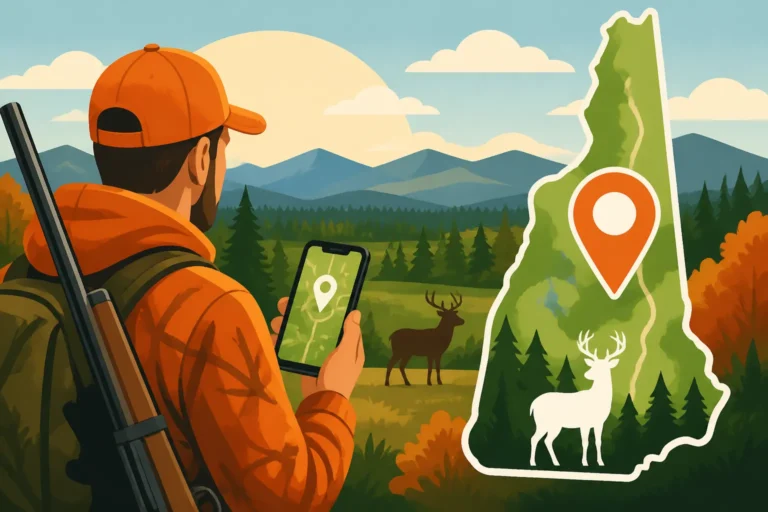
In a county with fragmented public land and a high density of private property, precise mapping tools are not just helpful – they're essential. Forget generic paper maps; you need something that shows you property boundaries down to the foot. This is where tools like onX Hunt truly shine. You can download maps to your phone and use GPS to see exactly where you are in relation to public land lines, private parcels, safety zones, and even landowner names. This allows you to confidently hunt right up to a boundary without fear of trespassing, which is critical in an area where property lines can be subtle and easily overlooked.
Having this level of detail prevents accidental trespassing, which can quickly lead to negative interactions with landowners and enforcement officials. It also allows you to identify small, isolated public parcels that might be overlooked by other hunters who aren't using such precise tools. For example, you might find a sliver of town forest wedged between two larger private holdings that acts as a natural deer highway. While not strictly a brand for land navigation, GoHunt can be a valuable resource for broader hunting planning and strategy, especially if you also hunt other regions or species. However, for pinpointing specific property boundaries in New Hampshire, onX Hunt is particularly well-suited. Scouting With the New Hampshire Fish and Game App is also a useful tool for general information, but for boundaries, a dedicated mapping app is superior.
Understanding Local Ordinances and State Regulations
While New Hampshire Fish and Game sets statewide hunting regulations, local town ordinances can add additional layers of complexity, especially on town forests or conservation lands. Always, and I mean always, check with the specific town where you plan to hunt to confirm their rules regarding hunting, firearm discharge setbacks, and parking. Some towns might have specific prohibitions on hunting, or restrict certain weapon types during certain seasons. For instance, a town might allow archery hunting on a conservation parcel but prohibit firearms.
Beyond local rules, you must adhere to all state regulations. This includes having the correct New Hampshire Hunting Licenses and What They Cost, understanding the New Hampshire Deer Reporting Requirements, and adhering to blaze orange mandates. The density of homes in Strafford County makes understanding firearm discharge setbacks particularly important. You need to know how far you must be from an occupied dwelling when discharging a firearm, and always ensure you have a safe backdrop. This due diligence ensures you're hunting legally, safely, and respectfully in a more populated area, protecting both yourself and the future of hunting access.
Disclaimer
This article is for general informational purposes only and does not constitute professional advice. Laws, prices and regulations vary by location and change over time. Consult a qualified professional for guidance on your specific situation.