Hunting the WMU A High Country
If you’ve ever cast a line or chased a buck in New Hampshire, you know our landscapes are as varied as they are beautiful. But when it comes to hunting the high country of Wildlife Management Unit A (WMU A), you're talking about a whole different beast. This isn't your leisurely stroll through southern woodlots; it’s a rugged, demanding pursuit that tests your mettle, your gear, and your patience. Many hunters feel overwhelmed by the sheer scale and difficulty, frustrated by the low deer densities and unpredictable weather. This guide is here to walk you through exactly what it takes to tackle WMU A, from understanding its unique challenges to putting proven high-country tactics into practice, helping you navigate these formidable peaks and valleys with confidence.
Understanding WMU A's Unique Terrain and Challenges
WMU A, nestled deeply within the White Mountain National Forest, presents some of the most formidable hunting conditions in New Hampshire. It's a land of towering granite peaks, steep ravines, and vast, unbroken timber. Unlike the more forgiving rolling hills and agricultural lands found further south, this region demands a special kind of preparation and respect. Hunters venturing into WMU A often find themselves physically and mentally pushed to their limits, facing unpredictable weather, sparse game, and challenging navigation. It's an environment where every successful hunt feels earned, truly a testament to skill and perseverance.
Topography and Habitat
The landscape of WMU A is dominated by its impressive topography. We're talking about elevations that can climb from valley floors to over 6,000 feet, creating a dizzying array of microclimates and habitat types. You'll encounter dense spruce and fir stands in the higher elevations, often giving way to mixed hardwoods lower down. Huge granite outcroppings, boulder fields, and talus slopes are common, making travel slow and noisy. Water sources might be rushing mountain streams, remote beaver flowages, or tiny, hidden spring seeps.
Deer in this terrain are masters of adaptation. They use the natural features to their advantage, often bedding on steep benches or in dense, almost impenetrable spruce thickets where they have excellent visibility and protection from the elements. Food sources are varied but often scattered; browse might be sparse in the highest reaches, while lower elevations and old clear-cuts can offer more sustenance. Identifying these pockets of viable habitat, especially those that offer shelter from the prevailing winds and deep snow, is paramount. Remember that elevation gain and loss dramatically affect a deer's energy expenditure, so understanding how they navigate these vertical challenges is key to predicting their movements.
Weather Extremes
Hunting in WMU A means being prepared for anything Mother Nature throws your way, and she tends to throw a lot. The weather in the high country can change in a heartbeat. A crisp, clear morning can quickly turn into a bone-chilling, wind-driven rain or even an unexpected early season snowfall. Temperatures can plummet rapidly, especially as you gain elevation, and the wind can rip through mountain passes with an intensity that will make your teeth ache.
This extreme variability impacts everything. Rain can make steep slopes treacherous and turn forest floors into slippery, noisy obstacles. Snowfall, even a few inches, can complicate tracking but also reveal fresh sign. Severe cold demands meticulous attention to layering and staying dry to prevent hypothermia. You also need to consider how these weather patterns influence deer behavior. On bitter, windy days, deer will seek shelter in dense conifers or deep ravines. After a heavy snow, they might concentrate in traditional wintering yards, making those areas high-value spots if you can find them. Always check the forecast, but more importantly, pack for the worst and be ready to adapt on the fly.
Deer Density and Behavior
Let's be realistic: WMU A is not known for its teeming deer herds. The population density here is significantly lower than in many other parts of New Hampshire, particularly the more agricultural southern WMUs. This lower density means you're going to work harder for fewer opportunities. But don't let that discourage you; the deer that call this rugged country home are often mature, robust animals that have survived countless challenges.
These high-country deer are incredibly elusive and wary. They are masters of using the terrain to their advantage, moving silently through dense cover and often showing up in unexpected places. Their home ranges can be vast, and their patterns are heavily influenced by mast crops, snowfall, and hunting pressure. You'll find that these deer are less tolerant of human presence than their suburban counterparts. They move cautiously, spend more time in thick cover, and react quickly to perceived threats. Understanding this difference is crucial. You won't be seeing dozens of deer; instead, you'll be patiently searching for one or two ghosts of the forest. This is where patience, keen observation, and a thorough knowledge of their habits in such an unforgiving environment truly pay off. For more on how deer differ here, check out North Country Versus Southern New Hampshire Deer.
Essential Gear and Preparation for High Country Hunting
Hunting the WMU A high country isn't a casual affair; it demands meticulous preparation and the right gear to ensure both success and safety. The unforgiving terrain and rapidly changing weather mean that being ill-equipped can quickly turn a challenging hunt into a dangerous situation. Think of your gear as your lifeline in this wild environment – every item needs to be reliable, functional, and suited to the unique demands of the White Mountains.
Physical Conditioning
Before you even think about packing your rifle, you need to pack your body with conditioning. WMU A involves serious elevation changes. You'll be climbing steep grades, navigating rocky terrain, and potentially dragging a deer out of a ravine. This isn't just about walking; it's about sustained physical exertion at altitude, often with a heavy pack. If you're not in shape, you'll burn out quickly, increasing your risk of injury and decreasing your effectiveness as a hunter.
Start a comprehensive workout routine months before the season. Focus on cardiovascular endurance through activities like hiking with a loaded pack, trail running, or stair climbing. Incorporate strength training, particularly for your legs, core, and back, to handle heavy loads and uneven footing. Don't forget flexibility and balance exercises to navigate tricky terrain safely. Remember, the stronger you are, the more ground you can cover efficiently, the clearer you can think when fatigued, and the better prepared you'll be for the monumental task of field dressing and packing out a deer in tough conditions.
Navigation and Communication
Getting lost in WMU A is a real concern, and cell service is often nonexistent. This means you cannot rely on your phone alone. A robust navigation system is absolutely non-negotiable. Your primary tool should be a dedicated GPS unit, pre-loaded with detailed topographic maps of the area. Learn how to use it proficiently, marking waypoints for your vehicle, camp, and any sign you find.
Back it up with a physical map and a compass, and know how to use them together. Batteries die, electronics fail, and paper never does. For an extra layer of safety, consider a satellite communication device like a Garmin inReach or a Zoleo. These allow you to send SOS messages, check in with family, and receive weather updates even when off-grid. When planning your routes, mapping applications like onX Hunt or GoHunt are incredibly valuable. They allow you to overlay private and public land boundaries, identify potential access points, and pinpoint terrain features like saddles and benches from the comfort of your home. GPS and Mapping Apps for New Hampshire Public Land can provide more detail on these essential tools.
Clothing and Footwear
The rule of layering is not just a suggestion in WMU A; it's gospel. Temperatures can swing wildly, and staying dry is as important as staying warm. Start with a moisture-wicking base layer to pull sweat away from your skin. Add insulating mid-layers, like fleece or synthetic puff jackets, that you can shed or add as needed. Your outer layer should be completely waterproof and windproof – a good quality rain shell and pants are invaluable, even on days without rain, for protection against wind and dew. Avoid cotton entirely; once wet, it loses all insulating properties. For more advice on this, look at Layering for New Hampshire's Cold Hunting Season.
Footwear is equally critical. You need sturdy, waterproof hiking boots with excellent ankle support and aggressive tread for gripping slippery rocks and steep slopes. Break them in well before your hunt to avoid painful blisters. Consider a pair with good insulation for colder late-season hunts. Gaiters can be a lifesaver, keeping snow, mud, and debris out of your boots and keeping your pants dry. For specific recommendations, check out Boots for New Hampshire's White Mountain Granite Terrain.
Backpack and Emergency Supplies
Your backpack is your mobile basecamp. It needs to be comfortable, durable, and large enough to carry all your essentials without being cumbersome. A pack with a good frame and hip belt is crucial for weight distribution, especially if you're lucky enough to be packing out meat.
Inside, you'll need more than just snacks and water. Carry a compact emergency kit that includes a first-aid kit, fire-starting materials (waterproof matches, lighter, fire starter), a headlamp with extra batteries, an emergency shelter (space blanket or lightweight tarp), a whistle, and a signaling mirror. Bring enough food and water for at least 24-48 hours longer than you anticipate being out, just in case. A water filter or purification tablets are also smart additions. Don't forget a sharp knife, game bags for quartering meat if successful, and rope for dragging or hanging. Even if you're only planning a day hunt, WMU A can humble the unprepared, so always overpack on safety items.
| Item Type | Essential Gear for WMU A High Country | Why It's Crucial |
|---|---|---|
| Navigation | GPS unit with topo maps, physical map, compass, onX Hunt/GoHunt app, satellite communicator | No cell service, vast and complex terrain; safety and location tracking. |
| Clothing | Moisture-wicking base layers (no cotton), insulating mid-layers, waterproof/windproof outer shell, gaiters | Rapid weather changes, staying dry is critical for warmth, preventing hypothermia. |
| Footwear | Sturdy, waterproof, broken-in hiking boots with excellent ankle support | Steep, rocky, often wet terrain; prevents injury, ensures traction and comfort. |
| Emergency | First-aid kit, fire-starting kit, headlamp + extra batteries, emergency shelter, whistle, water filter | Self-sufficiency in remote areas; unexpected overnights or injuries. |
| Hunting Specific | Sharp knife, game bags, rope, binoculars, rangefinder | Field dressing, meat packing, glassing vast areas, accurate shot placement. |
| Physical Prep | Consistent cardio, strength training (legs/core), flexibility exercises | Handles steep climbs, long hauls, heavy pack loads, reduces fatigue and injury risk. |
Scouting Strategies for WMU A's Remote Areas
Hunting success in WMU A often hinges on the quality of your scouting, which in this remote and rugged landscape, requires a blend of digital savvy and serious boots-on-the-ground effort. Because deer densities are lower, finding where deer are and understanding how they use the terrain becomes even more critical. You can't just wander aimlessly and expect to stumble upon game; every step needs to be informed and purposeful.
Pre-Season Digital Scouting
Before you ever lace up your boots, start your hunt from your armchair. Digital scouting tools are invaluable for WMU A's vastness. Applications like onX Hunt and GoHunt allow you to pore over satellite imagery, topographical maps, and public/private land overlays. Look for key terrain features that act as deer highways or bedding areas:
- Saddles: These are natural low points along a ridge, often serving as travel corridors for deer moving between drainages or feeding areas.
- Benches: Flat spots or breaks in steep terrain can be ideal bedding areas, offering deer a place to rest with good visibility.
- Water Sources: Remote ponds, beaver flowages, and spring seeps will attract deer, especially in drier periods. Look for trails leading to and from these spots.
- Logging Roads and Old Clear-cuts: These areas, even if overgrown, can provide browse and easier travel, creating natural funnels or feeding zones.
- Conifer Thickets: Dense spruce and fir stands offer thermal cover during cold weather and security cover year-round. Deer will often bed deep inside them.
Pay close attention to elevation changes and potential pinch points. Use the mapping tools to visualize how deer might travel through the landscape. Identify potential access routes to minimize your hiking time and noise on hunt days. Mark these potential hot spots and access points on your digital map to guide your physical scouting trips. This strategic planning can save you countless hours of unproductive hiking.
Boots-on-the-Ground Reconnaissance
Digital scouting provides the roadmap, but physical scouting is where you verify your theories and find the real-time sign. This needs to happen well before the season, ideally in late summer or early fall when deer are still in their summer patterns but before hunting pressure builds. Focus on the areas you identified during your digital scouting.
When you're out there, look for:
- Tracks: Fresh tracks in mud, soft soil, or snow can tell you how recently a deer passed through. Look for consistent travel lanes.
- Scrapes and Rubs: While perhaps less common than in agricultural zones, rubs on saplings and scrapes on the ground indicate buck activity, especially as the rut approaches.
- Droppings: Fresh deer droppings are a clear indicator of recent presence. Pay attention to their size and freshness.
- Bedding Areas: Look for flattened areas in dense cover, particularly on leeward slopes or benches offering good views. Often, you'll find hair or fresh droppings.
- Browse Lines: In areas with higher deer density, you might see evidence of deer feeding on preferred vegetation.
Walk slowly, quietly, and observe everything. Pay attention to prevailing winds and thermals, noting how they might affect scent dispersal at different times of day. This boots-on-the-ground work helps you confirm or adjust your digital assumptions, giving you a true picture of how deer are using these specific high-country areas. Don't just look for deer; look for why deer are there.
Identifying Key Habitat Features
Successful high-country hunting in WMU A means understanding the specific needs of deer in this challenging environment. They aren't just looking for food, water, and cover – they're looking for these elements in a way that minimizes energy expenditure and maximizes security against predators and harsh weather.
Focus your scouting on areas that combine these elements:
- Thermal Cover: Dense stands of conifers, especially spruce and fir, provide crucial protection from cold winds and deep snow. These are often where deer will bed down during inclement weather.
- Food Sources: While browse can be sparse, look for areas with beech nuts, acorns (if it's a mast year), or preferred vegetation like hobblebush. Old apple trees in forgotten homesteads or clear-cuts that are regrowing can be goldmines.
- Water Access: Deer need water, and while streams are plentiful, more secluded or easily accessible sources will be preferred.
- Escape Routes: Deer in the high country will always have a quick way to disappear. Look for steep ravines, thick stands of timber, or boulder fields that offer immediate sanctuary.
Understanding how these features connect across the vast landscape is key. Deer will move between these areas, often utilizing natural funnels created by terrain features. For example, a saddle between two peaks that also has access to water and dense bedding cover is a prime location. Recognizing these patterns and the subtle sign deer leave behind is an art developed through experience and meticulous scouting. Keep an eye out for Reading a White Mountain Deer Yard to help pinpoint winter concentration areas.
Hunting Tactics for Success in WMU A
Once you've done your homework and understand the unique challenges and opportunities of WMU A, it's time to put a plan into action. Hunting this high country requires a different mindset and a more deliberate approach than hunting in less demanding environments. Forget fast-paced drives or sitting on a well-worn trail all day; success here comes to those who are patient, observant, and physically capable of covering ground effectively.
Still-Hunting and Glassing
In WMU A, still-hunting is often your most effective strategy. This isn't about sitting in one spot; it's about moving incredibly slowly and deliberately, pausing frequently to observe your surroundings. Take five to ten steps, then stop and glass, using your binoculars to pick apart every shadow and piece of cover. Scan from foreground to background, looking for horizontal lines, patches of contrasting color, or the subtle flick of an ear. Deer in this country are masters of camouflage, and they will often stand motionless, relying on their hide to blend in. Your movement should be dictated by the terrain and cover; use natural features to break up your silhouette.
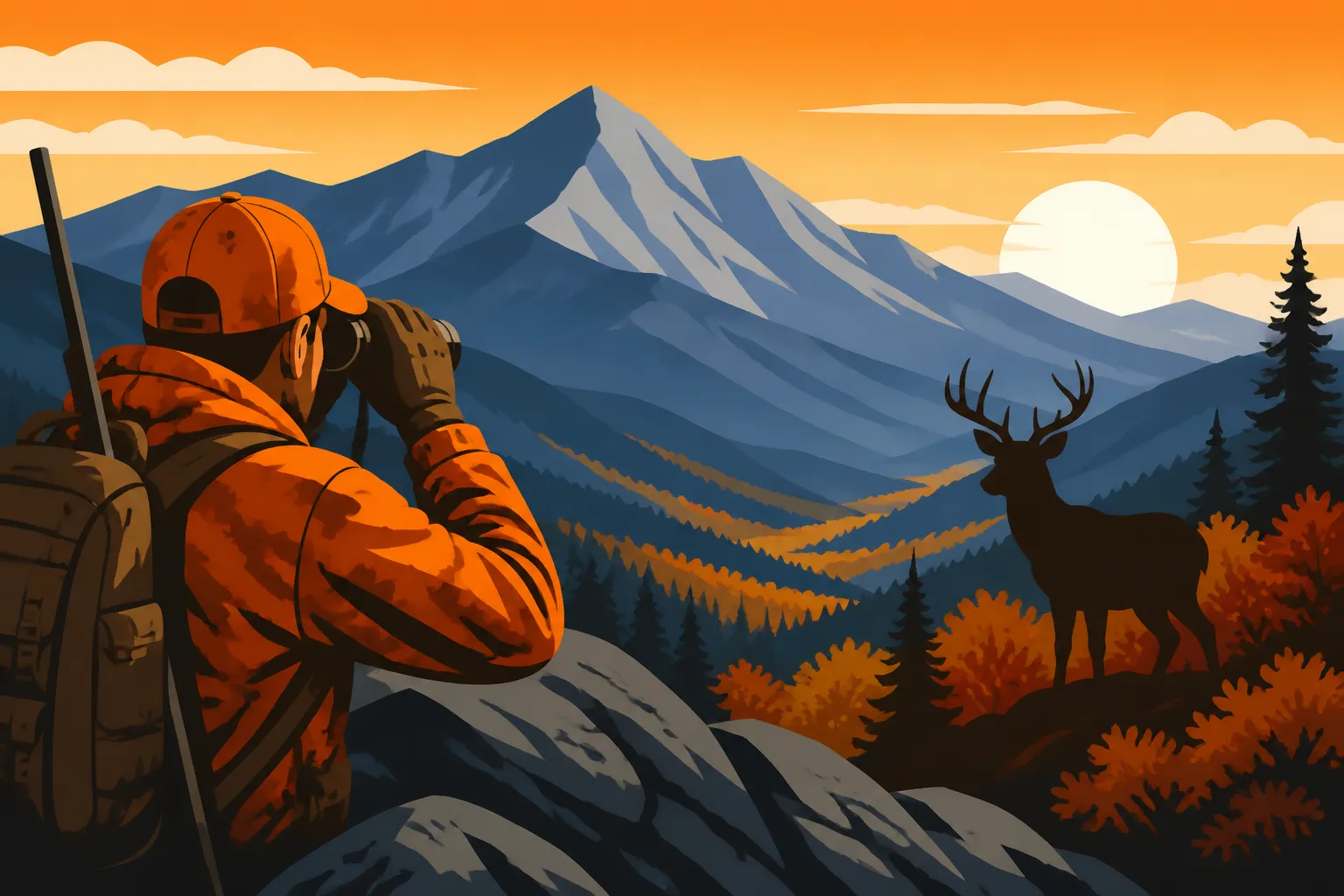
Combine still-hunting with strategic glassing from elevated positions. Find a spot on a ridge or an overlook that offers a commanding view of a basin, a clear-cut, or a distant slope. Settle in and spend a significant amount of time picking apart the area with high-quality optics. Dawn and dusk are prime times for deer movement, so being positioned to glass during these windows can be incredibly productive. Focus on areas that offer food sources in the mornings and evenings, and dense bedding cover during the mid-day. This approach, often detailed in resources like Still-Hunting White Mountain National Forest Timber, allows you to cover vast amounts of ground with your eyes, minimizing your own scent and noise.
Strategic Stand Placement
While still-hunting and glassing are primary methods, strategic stand placement can still be effective, especially in specific, high-traffic areas you've identified through scouting. In WMU A, this usually means targeting natural funnels or pinch points that concentrate deer movement. Think about saddles, benches, or narrow strips of timber between two larger clearings or thickets. These are places where deer are forced to travel through a smaller area.
When choosing a stand site, always consider the wind and thermals. In steep terrain, thermals will typically rise in the morning as the sun warms the ground and fall in the evening as the air cools. This means your scent will be carried uphill in the morning and downhill in the evening. Position your stand to take advantage of these patterns, always keeping your scent out of the anticipated travel lanes of deer. A strategically placed stand on a Hunting a Granite Ridge Saddle or overlooking a beaver flowage edge can intercept deer moving between bedding and feeding areas. Remember, you might not get many opportunities, so making the most of a well-chosen location is crucial.
Patience and Persistence
Hunting WMU A is a marathon, not a sprint. The lower deer densities mean you might go hours, even days, without seeing a single deer. This can be mentally taxing, and it's where patience and persistence truly shine. Don't get discouraged if you're not seeing immediate results. Every mile walked, every hour spent glassing, is part of the process. The reward isn't just a deer; it's the experience of hunting in some of New Hampshire's most wild and beautiful country.
Focus on the process: move quietly, observe keenly, and trust your scouting. Be prepared to put in long hours from first light to last, knowing that a brief window of opportunity can arise at any moment. Remember that the deer here are survivors, and you need to outsmart them on their home turf. A single, well-executed encounter can make the entire trip worthwhile. Don't give up on a good area too soon; deer might be moving through at different times or reacting to subtle changes in weather or pressure.
Recovery Challenges
Should you be fortunate enough to harvest a deer in WMU A, be prepared for one of the most physically demanding parts of the hunt: recovery. Deer often fall in steep, remote, and difficult-to-access areas. Before you even take the shot, visualize the recovery. Can you get to the animal? What's the terrain like? How will you get it out?
Having a plan for field dressing and packing out is essential. Quartering the animal and using a sturdy frame pack or game cart (if the terrain allows) is often the most practical approach. This is where your physical conditioning truly pays off. Ensure you have game bags to protect the meat and rope to aid in dragging or securing quarters. In particularly rugged or remote spots, you might need to make multiple trips. It’s also important to be proficient in Blood Trailing After Dark in New Hampshire as recovering a deer can often extend beyond daylight hours. The satisfaction of overcoming these recovery challenges, much like the hunt itself, is immense, but it requires preparation and realistic expectations.
Disclaimer
This article is for general informational purposes only and does not constitute professional advice. Laws, prices and regulations vary by location and change over time. Consult a qualified professional for guidance on your specific situation.