What New Hampshire Trespass Law Requires
There's a unique anxiety that can creep into a hunter's mind when they're out in the woods, especially in a state like New Hampshire with its patchwork of public and private lands: "Am I allowed to be here?" The fear of accidentally crossing a property line, upsetting a landowner, or worse, facing legal repercussions, is a legitimate concern for many of us. This comprehensive guide will break down exactly what New Hampshire trespass law requires of hunters, helping you navigate the Granite State's diverse terrain with confidence and respect for private property.
Understanding New Hampshire's Basic Trespass Law for Hunters
Navigating the rules of private property access for hunting can feel like deciphering an old, weathered map. In New Hampshire, the law aims for clarity, but it still puts the onus on us, the hunters, to know where we stand. At its heart, trespass law is about respecting property boundaries and the rights of landowners. For hunters, this translates directly into understanding when and how you can enter private land.
What "Posted" Land Really Means
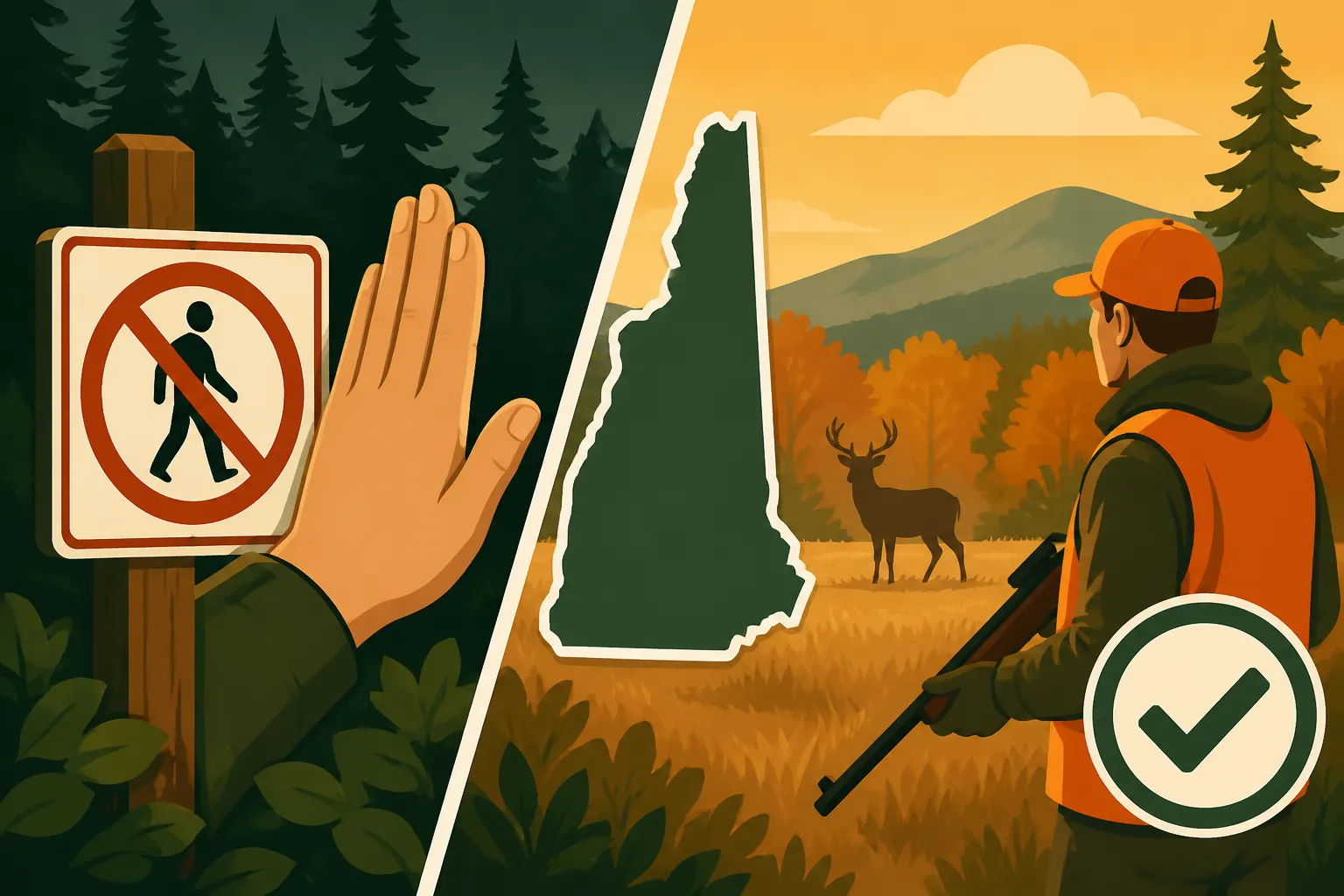
When you see "No Trespassing" signs, purple paint marks, or other clear indicators, you're looking at what the law considers "posted" land. These signs aren't just suggestions; they are a clear, legal declaration from the landowner that unauthorized entry is forbidden. For hunters, this is paramount: you absolutely, unequivocally need express permission to hunt on posted land. There's no gray area here. If a property is posted, walking onto it with your hunting gear without a specific invitation from the owner is trespassing, plain and simple.
Think of it like this: Posted signs are the landowner's way of putting up a fence, even if there isn't a physical one. It’s their formal declaration of exclusivity. It's often where the biggest misunderstandings happen, and why seeing those signs should immediately prompt you to either seek permission or turn around and find other ground. Many landowners are friendly and willing to grant access, especially if approached respectfully, but you must initiate that conversation.
The Nuance of "Unposted" Land
Here's where New Hampshire's law can sometimes cause a bit of head-scratching for those used to different regulations in other states. Unlike some places where all private land is considered off-limits unless specifically invited, New Hampshire has a slightly different approach for unposted property. Generally, if land is not posted with "No Trespassing" signs or purple paint, you may enter it for recreational purposes, unless the owner has personally communicated that you are not allowed.
However, and this is a big "however" for hunters, it's always, always best practice to seek permission, even on unposted land. While the letter of the law might seem to permit entry, the spirit of responsible hunting dictates respect for the landowner. Imagine a scenario: you're still-hunting a beautiful stand of hardwoods, following a deer track, and you cross onto unposted private land. An unsuspecting landowner sees you, a stranger with a rifle, and is naturally alarmed. Even if you're technically within the recreational use guidelines, you've created a negative interaction. This is why Do You Need Written Permission in New Hampshire? is a crucial topic to consider, even if not always legally required. Building trust and a good reputation as a hunter means being proactive and considerate, not just legally compliant.
The Critical Importance of Permission
Beyond the legalities, securing permission to hunt private land in New Hampshire is a cornerstone of ethical hunting and often unlocks some of the best opportunities. It's not just about avoiding trouble; it's about building relationships and expanding your hunting horizons.
Why You Must Obtain Permission
The most obvious reason to obtain permission is to avoid legal ramifications. Trespassing charges are real, and they can come with fines, loss of hunting privileges, and even confiscation of your equipment. Nobody wants that. But let's look beyond the stick: gaining permission opens doors. New Hampshire has a lot of private land, and much of it is excellent habitat that receives far less hunting pressure than public areas. A friendly conversation can turn into access to prime deer country or hidden turkey roosts.
Moreover, obtaining permission fosters goodwill between hunters and landowners. Too often, landowners feel invaded or disrespected by hunters who don't ask. By taking the time to introduce yourself, explain your intentions, and request permission, you're acting as an ambassador for all hunters. This positive interaction can help counter negative stereotypes and ensure future access for everyone. It also means the landowner might alert you to deer movements, where a big buck has been seen, or even offer advice on the property's terrain. It’s a reciprocal relationship built on mutual respect.
How to Respectfully Ask for Access
Approaching a landowner can be intimidating, but a respectful, well-prepared approach goes a long way. Here are some steps:
- Do Your Homework: Before knocking on a door, use tools like onX Hunt or GoHunt to identify property owners. Knowing their name and a little about their property shows you're serious and respectful. See where their boundaries are, understand the surrounding landscape, and formulate a plan.
- Timing is Everything: Don't show up with your truck loaded with gear on opening day. Approach landowners well before the season starts, perhaps in late summer or early fall. This gives them time to consider your request and for you to discuss expectations. Avoid peak busy times like dinner hours.
- Be Presentable and Polite: Dress neatly, not in camo, and be polite and articulate. Introduce yourself, state your purpose clearly, and explain why you're interested in hunting their land. A simple "Hello, my name is [Your Name], and I was wondering if you ever allow hunting on your property?" is a great start.
- Listen More Than You Talk: The landowner might have concerns, specific areas they want off-limits, or advice to offer. Listen carefully and be prepared to accommodate their wishes. They might have livestock, pets, or family members using parts of the property. Respect their requests, even if they seem minor.
- Offer Something in Return: While not always expected, offering to help with chores, mend fences, or share some venison can build a strong relationship. It shows you value their property and their generosity.
- Clarify Expectations: Discuss specifics: what game you're after, where you plan to park, specific areas you'll avoid, and when you'll be there. Ask if there are any specific days they prefer you not hunt. Be ready to commit to leaving gates as you found them, not littering, and reporting anything unusual you observe.
- Get it in Writing: While not always legally required for unposted land, having written permission is always a good idea. A simple note stating your name, the dates you're allowed, and the landowner's signature can prevent misunderstandings. This is particularly relevant if you're exploring Hunting Small Private Tracts in New Hampshire where boundaries can be less clear.
Navigating Land Boundaries and Avoiding Accidental Trespass
Even with the best intentions, it's surprisingly easy to accidentally cross a property line in the heat of the moment, especially in New Hampshire's rugged, often poorly marked terrain. Thankfully, technology has given us powerful tools to prevent these costly mistakes.
The Power of Mapping Apps
Modern hunting requires modern tools. Forget relying solely on worn-out paper maps or trying to eyeball property lines in the thick woods. Apps like onX Hunt are invaluable for identifying land ownership and boundaries in real-time. These apps overlay property lines, landowner names, and land-use designations (like public vs. private) directly onto satellite imagery or topographic maps on your phone.
Before you even leave the house, you can scout potential hunting areas, identify adjacent landowners, and plan your approach. Once in the field, you can track your location and see exactly where you are in relation to property boundaries. This is especially useful when hunting the edges of New Hampshire's White Mountain National Forest or New Hampshire Wildlife Management Areas where private parcels can abut public land unexpectedly. Imagine you're tracking a buck that's just crossed a small brook – a quick glance at your phone can confirm if that brook is still on public land or if you're about to step onto a private parcel. This proactive approach is key to safe, legal, and respectful hunting.
Traditional Methods and Due Diligence
While digital tools are fantastic, they're not a replacement for traditional due diligence and common sense. Here's a table comparing methods and their best uses:
| Method | Description | Best Use Case |
|---|---|---|
| Mapping Apps (e.g., onX Hunt) | Digital maps showing property lines, landowner names, public/private land, and your real-time GPS location. | Pre-season scouting, real-time boundary confirmation in the field, planning access points. |
| Town Plat Maps/Deeds | Official maps and legal documents held by town or county clerks detailing property lines. | Confirming exact legal boundaries, researching historical access, resolving disputes. |
| Physical Posted Signs | "No Trespassing," "Private Property," or "No Hunting" signs placed by landowners. Purple paint on trees or posts. | Clear visual indicator of posted land; absolutely requires permission to enter for hunting. |
| Personal Communication | Direct conversations with landowners to establish boundaries and rules. | Gaining permission, clarifying specific rules, building relationships, understanding local nuances. |
| Scouting Field Marks | Identifying fence lines, stone walls, logging roads, or distinct natural features that landowners have indicated as boundaries. | On-the-ground confirmation of property edges, particularly useful where official markers might be sparse. |
Always remember that electronics can fail. A dead battery, lost signal, or a dropped phone could leave you without your digital map. Always carry a compass and a paper map of the area as a backup, and spend time scouting the physical land so you can recognize key landmarks. Understanding Reading Aerial Photos for North Country Deer can help you scout from home but nothing replaces boots on the ground. When GoHunt or similar platforms provide general land data, always cross-reference with more precise tools if you're getting close to boundaries.
Respecting Adjacent Landowners
Even if you have permission to hunt a parcel, you have a responsibility to be a good neighbor to adjacent landowners. This means understanding where your permitted land ends and where someone else's property begins. Never assume that just because you're allowed on one property, you can follow game onto the next. That requires a whole new conversation and a new grant of permission.
Retrieving a downed animal from adjacent private property without permission is also a form of trespass. While most reasonable landowners will grant permission for a quick recovery, it's still crucial to ask first. This demonstrates respect and can prevent a stressful situation from escalating. Being aware of Retrieving Game From Private Land in New Hampshire is not just good manners, it's the law.
Consequences of Trespassing While Hunting
Thinking about the potential fallout of a trespass incident is a strong motivator to always ensure you're on the right side of the law. The consequences for trespassing while hunting in New Hampshire can range from a slap on the wrist to serious legal trouble, impacting your wallet, your hunting privileges, and your reputation.
Legal Penalties and Fines
Trespass in New Hampshire, particularly for hunting purposes, can be classified as a misdemeanor. This means it's not just a minor infraction; it's a criminal offense that can carry significant penalties. Fines can vary widely, but they are often substantial enough to make you think twice. Beyond the initial fine, you could also be liable for court costs and other administrative fees.
But it's more than just money out of your pocket. A misdemeanor conviction goes on your record, which can have implications beyond hunting, potentially affecting employment or other aspects of your life. It's a stain that's difficult to remove, all for the sake of not taking the time to ask for permission or confirm a boundary. This is why understanding New Hampshire Wildlife Violation Penalties is so important.
Loss of Hunting Privileges
Perhaps one of the most devastating consequences for any passionate hunter is the loss of hunting privileges. New Hampshire Fish and Game, in conjunction with the court system, can suspend or revoke your hunting license for a period of time following a trespass conviction. This isn't just a temporary inconvenience; it means you could be sitting out prime hunting seasons, watching from the sidelines while others are enjoying the pursuit you love.
Consider the effort and expense you put into hunting: the gear, the scouting, the time off work. To have all of that taken away because you didn't respect a property line is a bitter pill to swallow. A license suspension often means you can't even accompany others, let alone participate yourself. For non-residents, a trespass conviction in New Hampshire could also impact your hunting privileges in your home state through interstate agreements.
Damaged Reputation and Relationships
Beyond the legal and administrative penalties, there's the less tangible but equally damaging impact on your reputation and the broader hunting community. Trespass incidents create animosity between landowners and hunters. When one hunter trespasses, it makes it harder for every other hunter to gain permission in that area. Landowners become wary, property gets posted more aggressively, and the overall access for legal, ethical hunters diminishes.
If you're known in the local community as someone who disregards property rights, your opportunities for permission will dry up quickly. Word travels fast, especially in rural New Hampshire. Conversely, being known as a respectful, ethical hunter who always asks and follows the rules can open many doors and earn you lifelong hunting opportunities. Every time you approach a landowner or check your boundaries with a tool like onX Hunt, you're either upholding or damaging the collective image of hunters. We all have a responsibility to act as ambassadors for our sport.
Disclaimer
This article is for general informational purposes only and does not constitute professional advice. Laws, prices and regulations vary by location and change over time. Consult a qualified professional for guidance on your specific situation.