Finding Access Near Portsmouth
Trying to find good hunting spots when you're living near a bustling hub like Portsmouth, New Hampshire, can feel like you're constantly hitting brick walls. You know the woods are out there, but the sheer density of homes, businesses, and "No Trespassing" signs makes it seem impossible to find a place to pursue your passion. This guide is here to cut through that frustration, offering practical advice and strategies for locating accessible hunting grounds, whether they be overlooked public parcels or hard-won private land permissions, specifically within the challenging Seacoast region.
Understanding the Unique Challenges of Hunting Near Portsmouth
Let's be real, the Seacoast isn't the North Country. When you're looking for hunting land around Portsmouth, you're not going to find vast, untouched wilderness stretching for miles. This part of New Hampshire has a distinct character, and with that comes a specific set of hurdles for hunters. It's easy to get discouraged when every turn seems to lead to more houses or developed land, but understanding these challenges is the first step toward overcoming them.
The Suburban Sprawl and Its Impact
The area around Portsmouth has seen considerable growth over the years, and that expansion inevitably encroaches on what once might have been prime wildlife habitat. Development means more roads, more homes, more noise, and more human activity, all of which can push wildlife into smaller, more fragmented pockets. This isn't just about land disappearing; it's about the quality and continuity of the remaining habitat being diminished. Deer, turkey, and other game animals are still present, but they learn to adapt to living closer to people, often becoming more nocturnal or finding refuge in thick, overlooked cover.
This constant human presence also increases the likelihood of encountering non-hunters while you're afield, which brings its own set of responsibilities. Ensuring safety, respecting property lines, and projecting a positive image of hunting become even more critical in these fringe areas. It's a different kind of hunting than stalking timber in Pittsburg or Dixville Notch, requiring more finesse and awareness of your surroundings.
Limited Public Land Footprint
Compared to the expansive White Mountain National Forest or the sprawling Wildlife Management Areas found elsewhere in the state, the public land available for hunting directly around Portsmouth is often smaller and more fragmented. You won't find thousands of contiguous acres to wander freely. Instead, you'll be looking for scattered town forests, smaller state-owned parcels, or conservation easements that might only be a few hundred acres, or even less. These smaller tracts can be gems, but they require diligent research and a clear understanding of their specific rules and boundaries.
Because these parcels are smaller, they can also experience higher hunting pressure, especially on opening day or during peak season weekends. This means you might need to hunt smarter, scout more thoroughly, and be willing to walk a little further to find undisturbed areas, even within these limited public spaces. It's not impossible to find success; it just requires a different mindset and a lot more homework than hunting the vastness of New Hampshire's North Country.
Navigating Permission on Private Tracts
With public land being limited, gaining permission to hunt on private property becomes a much more significant part of the hunting equation near Portsmouth. This can be intimidating, especially if you're new to asking for access. Many landowners are hesitant, whether due to liability concerns, past negative experiences with hunters, or simply not wanting anyone on their land. The challenge is compounded by the fact that many properties near Portsmouth are smaller residential lots, not large farm fields or expansive woodlots.
However, there are still opportunities. Farms, larger undeveloped tracts that act as buffers between developments, or even carefully managed timberland might be available if you approach landowners respectfully and build trust. This isn't a quick process; it's about building relationships, demonstrating responsibility, and understanding that a "no" isn't a personal rejection, but a chance to learn and refine your approach for the next time. Hunting Small Private Tracts in New Hampshire often means focusing on neglected corners or woodlots that might not look like much to the casual observer but can hold game.
Leveraging Public Lands in the Seacoast Region
Even with the challenges of development, the Seacoast region does offer some public hunting opportunities. You just need to know where to look and, perhaps more importantly, how to interpret the rules and access points for these often smaller and more diverse parcels. It requires a bit more legwork and map study than simply pulling off a logging road in the mountains, but the rewards can be well worth the effort.
State Forests and Wildlife Management Areas
While not as numerous or extensive as in other parts of the state, New Hampshire Fish and Game does manage several Wildlife Management Areas (WMAs) and there are various State Forests within a reasonable drive of Portsmouth that permit hunting. These areas are specifically managed for wildlife habitat and public recreation, making them excellent targets for hunters. They often feature diverse habitat, from wetlands to mature hardwoods, which can hold deer, turkey, small game, and even provide good waterfowl hunting opportunities.
The key to success in these areas is often detailed mapping and scouting. Utilize resources from the New Hampshire Fish and Game Department website to identify WMAs or State Forests, then delve into satellite imagery on platforms like onX Hunt. This digital tool can help you identify parking areas, trails, habitat features like beaver flowages, and potential access points, helping you to find Hunting a Beaver Flowage Edge or Hunting a Funnel Between Two Woodlots. Remember that even on state land, specific rules might apply regarding vehicle access, stand placement, or designated use areas. Always check the Fish and Game digest for the specific regulations for each location.
Town Forests and Conservation Lands
Beyond state-managed lands, many towns in the Seacoast area maintain their own "town forests" or have acquired land for conservation purposes. These parcels can vary greatly in size, from small woodlots to larger tracts of several hundred acres. Access and hunting regulations on these lands are determined by the individual town, and this is where it gets a little trickier. Some town forests are open to hunting, some are not, and some have very specific restrictions on weapon types or hunting seasons.
Your best bet is to check with the town clerk's office or the town's conservation commission for the most accurate information. Don't be shy about making a phone call or sending an email. They are usually happy to provide details, and sometimes you might even uncover an overlooked gem where hunting pressure is relatively low. These local parcels can be fantastic for a quick morning hunt for squirrels or a mid-week sit for a deer that has learned to avoid the more obvious spots. Being a good steward of these lands is crucial; pack out all your trash, respect boundaries, and leave no trace. This helps ensure future access for everyone. Hunting a Town Forest Parcel can be incredibly rewarding.
Rules and Regulations Specific to Public Access
Hunting on any public land, especially in more populated areas, means adhering strictly to all regulations. New Hampshire has statewide rules, but individual WMAs, State Forests, and town lands can have additional restrictions. This might include specific setback distances from roads or buildings, limitations on baiting, rules about leaving treestands overnight, or even designated "safety zones" where hunting is prohibited. You also need to be acutely aware of New Hampshire Blaze Orange Requirements, ensuring you're visible and safe.
A common pitfall is assuming that because it's public land, anything goes. This is rarely the case. Before you even set foot in an area, make sure you've thoroughly reviewed the latest New Hampshire Fish and Game digest and, if applicable, any local town ordinances or posted signs at the property's entrance. Failure to do so could result in fines, loss of hunting privileges, or worse, a dangerous situation. It's always better to be over-informed than under-informed when it comes to public land access. Using a mapping app like onX Hunt or GoHunt with its public/private land layers can be incredibly helpful for visualizing these boundaries and regulations in the field, helping you avoid accidental trespass or entering a restricted zone. Reading New Hampshire Public Land Boundary Signs is paramount.
| Public Land Type | Typical Size (approx.) | Management Authority | Common Game Species | Access Considerations |
|---|---|---|---|---|
| State Forests/WMAs | 100s to 1,000s acres | NH Fish & Game / State Parks | Deer, Turkey, Small Game, Waterfowl | General hunting permitted, check specific WMA rules. |
| Town Forests | 10s to 100s acres | Local Town / Conservation Commission | Deer, Turkey, Small Game, Waterfowl | Rules vary significantly by town; contact clerk. |
| Conservation Easements | Varied | Land Trusts / Private Owners | Deer, Turkey, Small Game | Public access may be limited or conditional; research. |
| National Forest (distant) | 1,000s of acres | US Forest Service | Deer, Moose, Bear, Small Game | Rules consistent; often requires longer travel. |
The Art of Gaining Private Land Access
When public land options are scarce, or you're seeking less pressured game, securing private land permission becomes your most powerful tool. This isn't a quick fix, and it requires a different kind of effort than simply locating a public parcel on a map. It's about personal interaction, building rapport, and proving yourself to be a trustworthy and responsible individual.
Knocking on Doors: Building Relationships
The old-fashioned method of knocking on doors and politely asking for permission remains one of the most effective strategies. For hunting near Portsmouth, where properties might be smaller, this direct approach can yield surprising results. The key is respect and preparedness. Don't just show up in full camo, rifle in hand. Dress presentably, have a clear, concise request, and be ready to answer questions. Explain who you are, what you're hoping to hunt, and what your hunting ethics entail. Offer to help with chores, share some of your harvest, or assist with nuisance animal control if that's a concern for them.
This isn't a one-time transaction; it's about building a relationship. A "no" today might become a "yes" next year if you've continued to be friendly, respectful, and maybe even helped them out in other ways. Remember, you're not just asking for permission to hunt; you're asking to use their private property, a significant privilege. Many landowners simply want to know who is on their land and that they can trust them. Patience and persistence, coupled with genuine good manners, will get you further than anything else. Asking a New Hampshire Landowner for Permission details the importance of this personal connection.
Understanding New Hampshire's Posted Land Laws
It's absolutely critical to understand New Hampshire's posted land laws. A sign that says "No Trespassing" means exactly that, and ignoring it is not only illegal but also damages the reputation of all hunters. New Hampshire law states that if land is marked with "No Trespassing" signs or purple paint on trees, you must have written permission to enter for any purpose, including hunting. If the land is not posted, verbal permission is technically sufficient, but always seek explicit permission. Even if land isn't posted, it's still private property, and you can't assume access.
When you're trying to identify landowners, especially for larger tracts of unposted land that might otherwise look like fair game, tools like onX Hunt or GoHunt are invaluable. These mapping applications allow you to see property boundaries and instantly identify landowner names, and sometimes even contact information, right on your phone. This makes it far easier to know whose door to knock on (or who to call) and ensures you're not inadvertently trespassing. Knowing exactly where the lines are drawn is essential, particularly in areas where property lines can be intricate or unclear due to fragmented ownership.
Utilizing Digital Mapping Tools for Private Land
Modern technology has revolutionized the process of finding and securing private land access. Gone are the days of relying solely on paper tax maps at the town hall. Digital mapping apps like onX Hunt have layers that display property lines, landowner names, and often even parcel sizes. This allows you to quickly identify potential properties, understand their boundaries, and research the owner before making contact.
Imagine you're driving through a promising area near Candia or Nottingham, and you see a nice woodlot that looks like ideal deer habitat. Instead of guessing, you can pull up onX Hunt, identify the owner, and then plan your respectful approach. This saves an immense amount of time and helps you focus your efforts on landowners who might actually have huntable property. GoHunt offers similar robust mapping features, allowing hunters to explore satellite imagery, topographical maps, and public/private land ownership data, making the scouting process more efficient and accurate when pursuing permissions near the Seacoast or even for broader New Hampshire hunting strategies.
Strategic Scouting and Habitat Considerations Near the Seacoast
Hunting near Portsmouth means your scouting strategy needs to be a bit different from hunting vast wilderness areas. You're often looking for smaller pockets, overlooked edges, and areas where game has adapted to human presence. The animals are there, but they might be using the landscape in ways that are less obvious to the casual observer.
Targeting Edge Habitat and Smaller Woodlots
In developed areas, edges are your best friends. Deer, turkey, and other small game thrive in the transition zones between different habitat types – where woods meet fields, where thick cover borders a residential area, or along creek bottoms and hedgerows. These "edges" provide food, cover, and travel corridors, often concentrating game into smaller, more predictable areas. A 20-acre woodlot tucked behind a neighborhood or a thick brushy section along a powerline can be a goldmine, even if it doesn't look like much on a larger map.
Don't dismiss these smaller, fragmented woodlots. While they may not hold a large herd, they often provide sanctuary for individual deer, particularly mature bucks, that learn to navigate the suburban landscape. Scouting these areas means looking for subtle signs: faint trails crossing small gaps, rubs on trees, or fresh droppings near a thicket. The game in these areas is often more sensitive to pressure, so a quiet approach and careful stand placement are paramount.
Food Sources and Waterways in a Developed Landscape
Food and water are still the primary drivers of animal movement, even in a developed setting. Near Portsmouth, this can mean a mix of natural food sources like acorns, wild apples, and browse, combined with agricultural crops like corn or hay fields, and even suburban gardens or fruit trees. Identifying these food sources and understanding how game moves between them and their bedding areas is key. Waterways, even small streams or drainage ditches, act as natural travel corridors and provide essential hydration.
Pay close attention to abandoned apple orchards or neglected fields that might still produce food. Even a small patch of untouched hardwoods with a good acorn crop can draw deer from surrounding areas. In a landscape of houses, powerlines, and roads, these natural food oases become even more critical focal points for wildlife. Learning to read the subtle movements of game around these resources will dramatically increase your chances of success.
Adjusting Tactics for Pressured Game
Game animals in the Seacoast region, particularly deer and turkey, are often more heavily pressured and habituated to human activity than their counterparts in more remote areas. This means they are more wary, more nocturnal, and will quickly learn to avoid areas with heavy human scent or repeated disturbance. Your hunting tactics need to reflect this. Consider hunting during the week when pressure is lower, or focusing on very early morning and late evening hunts when animals feel safer.
Using ground blinds that blend into the surroundings can be effective, allowing you to get close without being silhouetted. Consider quiet entry and exit routes that minimize disturbance. Calling techniques for turkey or deer might need to be more subtle, as loud, aggressive calling can spook wary animals. Ultimately, success here comes down to patience, stealth, and a deep understanding of how these animals interact with a human-dominated landscape. Sometimes Run-and-Gun Turkey Tactics on Public Land can work if you're quick and stealthy, but more often, patience is key.
Specific Opportunities and What to Expect
Hunting near Portsmouth might not offer the "big woods" experience, but it certainly offers rewarding opportunities for a variety of game. Managing your expectations and focusing on what is realistically available will make your hunting much more enjoyable and successful.
Small Game and Waterfowl Potential
The Seacoast region, with its diverse blend of wetlands, agricultural fields, and fragmented woodlands, can be excellent for small game and waterfowl. Squirrels and rabbits thrive in the smaller woodlots and brushy areas that are common around developed zones. These hunts can be a great way to introduce new hunters to the sport or simply enjoy a relaxing day afield without the intensity of big game hunting. Finding access for small game is often easier, as landowners may be more amenable to allowing squirrel or rabbit hunting than deer hunting.
For waterfowl, the proximity to the coast, coupled with rivers like the Lamprey and the Great Bay Estuary, creates prime habitat for ducks and geese. While specific access points for waterfowling might require more research and potentially specialized gear like a kayak or boat, the opportunities are certainly there. Look for fields near water bodies where geese might feed, or small ponds and marshes for puddle ducks. Don't forget to check New Hampshire Waterfowl Season and Zones to ensure you're hunting legally and ethically. Decoying Ducks on New Hampshire's Connecticut River (while a bit west, the tactics apply to the Seacoast's rivers) and Layout Blind Hunting a Northern Zone Field offer insights into effective waterfowl strategies that can be adapted to this region.
Deer Hunting in the Seacoast Fringe
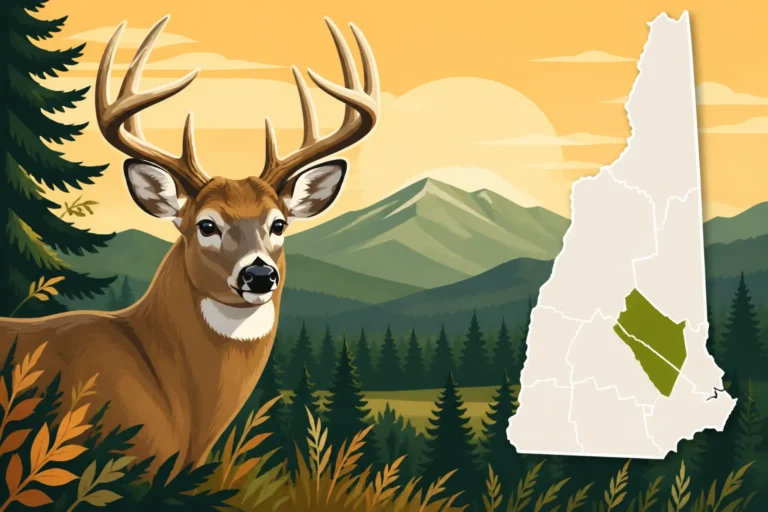
Deer hunting near Portsmouth, particularly in WMU I2 (which includes parts of the Seacoast and stretches inland), can be challenging but rewarding. The deer population is healthy, but the animals are often pressured and highly adept at using available cover. You're less likely to see large herds, and more likely to encounter individual deer or small family groups. Success often hinges on finding those overlooked pockets of thick cover – cedar swamps, dense brush tangles, or secluded woodlots – where deer feel safe and can escape human activity.
Focus on pinch points, funnels between woodlots, and natural travel corridors that lead to food sources. Hunting the early archery season can be particularly effective, as leaves are still on the trees, providing cover for both you and the deer. Even during the firearms season, strategic still-hunting or sitting on a well-scouted travel route can yield results. Remember that deer in this area are used to human scent and noise, so being extra quiet and scent-conscious can make a big difference. New Hampshire's WMU I2 Reaches Into the Suburban Fringe provides more specific information on hunting in this unique zone.
Permit Hunts and Special Programs
Occasionally, the New Hampshire Fish and Game Department or local conservation groups might offer special permit hunts or controlled hunts in specific areas, sometimes even within state parks or town lands that are normally closed to hunting. These programs are often designed to manage deer populations in areas with high human density or specific ecological concerns. Such opportunities are usually highly sought after and require an application process, sometimes with a lottery draw.
Keep an eye on the New Hampshire Fish and Game website and local news outlets for announcements about these special hunts. While not a guaranteed source of access, they can provide unique hunting experiences in areas you might not otherwise be able to access. It's another avenue to explore when trying to find hunting opportunities close to home in the Seacoast. These programs often come with very specific rules and requirements, so pay close attention to the details of any permits you might secure.
Disclaimer
This article is for general informational purposes only and does not constitute professional advice. Laws, prices and regulations vary by location and change over time. Consult a qualified professional for guidance on your specific situation.