Hunting the Presidential Range Foothills
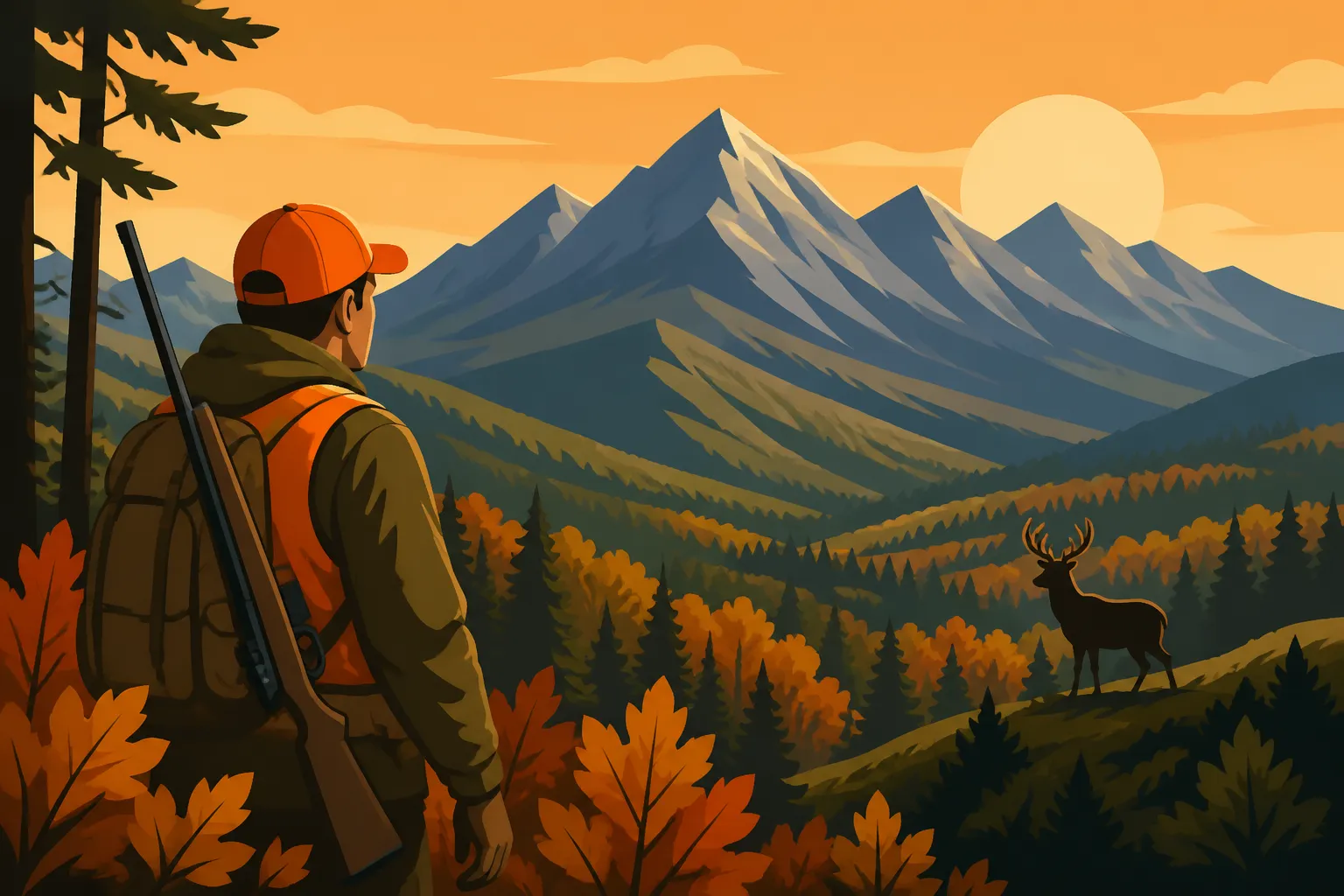
The majestic Presidential Range Foothills can be an incredibly daunting place to hunt, with steep climbs, unforgiving terrain, and weather that changes in a heartbeat. Many hunters feel overwhelmed just thinking about where to start, worried they'll hike all day only to find no sign or, worse, get turned around. This guide aims to equip you with the knowledge and strategies needed to confidently and effectively hunt this challenging, yet profoundly rewarding, region of New Hampshire.
Understanding the Unique Terrain of the Presidential Range Foothills
Hunting the Presidential Range Foothills isn't like hunting flat farmlands or gently rolling hills. This is rugged, beautiful country that demands respect and thorough preparation. The very landscape acts as a filter, keeping many casual hunters out, which means those willing to put in the effort often find less pressured game. It's a double-edged sword: difficult access but potentially bigger rewards.
The Landscape and Its Challenges for Hunters
When we talk about the Presidential Range Foothills, we're picturing areas where the mountains start their dramatic ascent, but before you hit the truly exposed alpine zones. This transition zone is characterized by significant elevation changes – you're constantly climbing, descending, or traversing steep sidehills. The ground underfoot is often a mosaic of granite outcrops, loose scree, and tangled roots, making every step a deliberate act. It's easy to roll an ankle or lose your footing if you're not paying attention.
Thick timber is a dominant feature here, primarily dense softwood stands like spruce and fir in the lower elevations and hemlock groves, interspersed with pockets of mature hardwoods as you gain a bit of elevation. This heavy cover limits visibility, making long-range glassing a rarity and requiring close-quarters hunting tactics. You're often hunting within spitting distance of potential game, which means every sound, every movement, has to be incredibly precise. Water features, from babbling brooks to larger mountain streams, cut through the landscape, creating natural barriers but also funnels and travel corridors for wildlife. Navigating these can be tricky, especially during wet weather or after heavy rains when water levels rise. The microclimates are another huge factor; you might start your day in a cool valley, only to be hit by a stiff, cold wind on a ridge half an hour later, or encounter unexpected fog that rolls in suddenly, turning a clear morning into a disorienting whiteout. The frustration of planning for one type of weather only to face another can be immense, but adapting is key to survival and success.
Key Habitat Features for Deer and Moose
Despite the challenging terrain, the Presidential Range Foothills are rich in habitat that draws both deer and, in the higher reaches, moose. Understanding where these animals find food, cover, and safety is paramount. Deer here are often more compact and hardier than their southern counterparts, built for navigating this demanding environment. They seek out areas that offer both concealment and sustenance.
Food sources are varied but often concentrated. In the hardwood sections, especially during the fall, you'll find acorn-producing oaks which can be hotspots after a good mast crop year. Patches of beech trees, particularly those still clinging to their nuts late into the season, are also invaluable. Throughout the year, deer will browse on young saplings, shrubs, and herbaceous plants that grow in clear-cuts, old logging roads, or along the edges of thicker stands. These younger growth areas, often created by past timber operations or natural disturbances, provide vital protein and energy. Bedding areas are typically found in the densest cover imaginable – thick stands of young conifers on steep, south-facing slopes, where the sun can cut through just enough to offer warmth, and the tangled branches provide an almost impenetrable fortress against predators and hunters alike. Deer will also use natural benches or slight depressions on a ridge line, especially if they offer a good vantage point downwind. For moose, higher elevations and wetter areas, like swampy pockets or the edges of beaver flowages, are more attractive, as they feast on aquatic vegetation and browse on woody shrubs like willow and aspen. Where New Hampshire Bucks Bed in Thick Cover will dive deeper into finding those hidden sanctuaries. Understanding these patterns, and how they shift with the seasons, is crucial. Hunters often get frustrated searching for deer in open woods, when the deer are really just a few hundred yards away, tucked into the thickest nastiest stuff on the mountain.
Scouting and Strategy for Foothill Success
Success in the Presidential Range Foothills is rarely accidental. It's built on a foundation of diligent scouting and a flexible, adaptive hunting strategy. You can't just show up and expect to stumble upon game; you need a plan, and then you need to be ready to change that plan when the mountain throws a curveball.
Pre-Season Scouting – More Than Just a Walk in the Woods
Pre-season scouting in the foothills is less about casual walks and more about meticulous investigation. It truly begins long before you ever step foot in the woods, starting with a deep dive into maps and aerial imagery. Tools like onX Hunt or GoHunt are absolute game-changers for this kind of terrain. You can spend hours poring over contour lines, identifying potential funnels where terrain pinches deer movement, or spotting subtle saddles on a ridge that serve as natural travel corridors. Look for benches – flatter sections on steep hillsides – as these are often preferred travel routes or bedding areas, providing a respite from the constant incline. Identifying these features remotely can save you countless hours of aimless wandering in the field.
Once you have some promising areas highlighted, it's time for boots on the ground. This is where you verify what the maps suggest. Look for historical sign: old rubs, scrape lines, well-worn game trails, and bedding areas. Pay attention to how deer move through the landscape – do they follow the easiest path of resistance, or do they hug the thickest cover? How do they navigate water crossings or rock ledges? Even if you don't find fresh sign, understanding these movement patterns based on terrain features is invaluable. Don't forget to mark potential stand trees or ground blind locations. Scouting New Hampshire Public Land Before Season offers broader tips, but in the foothills, the micro-terrain features are critical. Using your mapping app to drop pins for every piece of sign you find helps you build a comprehensive picture over time. You might even consider placing a few trail cameras in strategic pinch points or near identified food sources, paying close attention to Where to Hang a Camera on a Logging Road or game trails that cut through dense thickets.
In-Season Tactics for Challenging Terrain
When the season finally arrives, your in-season tactics need to be tailored to the demanding foothill environment. This isn't a place for sitting still all day on a well-known field edge. Often, success comes from a more active approach, blending slow, deliberate movement with strategic sits. Still-hunting is incredibly effective here, but it requires patience and discipline. Think of it as hunting inch by inch, stopping frequently to scan, listen, and glass every nook and cranny. You're not just walking; you're actively hunting with every step, using the terrain to your advantage, moving slowly enough that you don't spook deer before you see them. The dense cover means shots will often be close, so practice quick target acquisition.
Understanding thermals is absolutely critical in mountainous terrain. As the sun rises, warm air begins to rise, carrying scent uphill. In the evening, as the air cools, it sinks, carrying scent downhill. Positioning yourself to have the wind (or thermal) in your favor is non-negotiable. Often, this means starting your ascent early, getting above where you expect deer to be, and hunting down into them as the day warms, or setting up low in the evening to catch descending thermals. Wind and Thermals in Steep Granite Terrain offers a deeper dive into this vital subject. Stand placement is equally important. Climbing stands can be highly versatile for adapting to different tree types and accessing those hard-to-reach pockets, but safety is paramount on steep slopes. Ground blinds, especially natural ones brushed in with local vegetation, can also be effective when set up in thick cover overlooking a travel corridor or bedding area. Remember, movement is often a giveaway in dense woods, so making your move during adverse weather, like a light rain or strong wind, can mask your approach.
Gear and Preparation for Mountain Hunting
Hunting the Presidential Range Foothills is a demanding endeavor, both physically and mentally. The right gear and thorough preparation aren't just about comfort; they're about safety and increasing your chances of success. Cutting corners here can lead to a miserable, or even dangerous, experience.
Essential Gear for Presidential Foothills Hunting
Your gear choices can make or break a hunt in this challenging landscape. Let's start with your feet: boots are perhaps the most critical piece of equipment. You need high-quality, waterproof boots with excellent ankle support and a stiff sole to navigate the rocky, uneven terrain. Blisters or a twisted ankle can end your hunt quickly, miles from the nearest road. Boots for New Hampshire's White Mountain Granite Terrain elaborates on choosing the right footwear. Next, your layering system for clothing is paramount. The weather here is notoriously fickle, and you can go from cold to warm, wet to dry, all within a few hours. A good base layer to wick moisture, an insulating mid-layer for warmth, and a waterproof/windproof outer shell will allow you to adapt to changing conditions. Forget cotton; think synthetics and wool. Layering for a Wet White Mountain Day provides excellent guidance for staying dry and warm.
Navigation tools are not optional. While a smartphone with a mapping app like onX Hunt is incredibly useful, don't rely solely on electronics. Always carry a physical map and compass and know how to use them. Batteries die, signals vanish. A reliable GPS unit like those from Garmin, or your phone with downloaded offline maps (which onX Hunt and GoHunt both excel at), can be a lifesaver in dense woods or when fog rolls in. Headlamps are also non-negotiable for pre-dawn hikes in and post-sunset hikes out, especially on rugged trails. Always pack a compact first-aid kit with essentials like bandages, pain relievers, blister treatment, and any personal medications. A small emergency shelter, like a lightweight tarp or bivy sack, and a fire starter (waterproof matches, lighter, ferro rod) can also provide crucial protection if you're unexpectedly forced to spend a night in the woods.
Here’s a quick summary of key gear considerations:
| Gear Category | Key Considerations for Foothills |
|---|---|
| Footwear | Waterproof, high ankle support, stiff sole, durable outsole for grip on rock and varied terrain. |
| Layering System | Moisture-wicking base, insulating mid-layers (fleece/puffy), waterproof/windproof outer shell. Avoid cotton. |
| Navigation | GPS device or smartphone with offline maps (e.g., onX Hunt), physical map, compass, power bank. |
| Safety/Emergency | First-aid kit, headlamp, fire starter, emergency shelter, whistle, small repair kit, bright flagging tape. |
| Optics | Binoculars (8x-10x) for spotting movement in dense timber, rangefinder. |
| Pack | Comfortable, appropriately sized pack for carrying essentials, potential game meat, and water. |
Physical Conditioning and Safety Considerations
Hunting the Presidential Range Foothills is a serious physical challenge. Ignoring this aspect is a recipe for exhaustion, injury, and a miserable hunt. You need to be in decent cardiovascular shape and have strong legs to handle the constant elevation changes and uneven footing. Start training months before the season. Hike with a loaded pack, climb stairs, and incorporate exercises that strengthen your core, ankles, and knees. The more prepared you are physically, the safer and more enjoyable your hunt will be.
Safety must always be your top priority. Never hunt alone in remote, rugged terrain if you can help it. If you do, make sure someone knows your exact hunting plan, including your intended route, where you'll be parking, and when you expect to return. Consider carrying a satellite communicator like a Garmin inReach or a Zoleo device, which allows you to send emergency messages even without cell service – a common occurrence in the deep valleys and high ridges of the White Mountains. Always check the weather forecast before heading out, but be prepared for unexpected changes. Mountain weather is notoriously unpredictable. Remember to bring plenty of water, high-energy snacks, and extra layers. Know your limits, and don't push yourself into a dangerous situation, especially when navigating difficult terrain or recovering game. Dragging a deer out of a granite ravine, for example, is a monumental task that often requires multiple people and careful planning, as discussed in Recovering a Deer From a Beaver Flowage which shares similar challenges. Always ensure you've completed your New Hampshire Hunter Education Requirements and understand all relevant safety protocols.
Hunting the Presidential Range Foothills is not for the faint of heart, but for those willing to embrace the challenge, it offers an incredibly immersive and rewarding experience. The satisfaction of earning a hard-won harvest in such wild country is truly unparalleled.
Disclaimer
This article is for general informational purposes only and does not constitute professional advice. Laws, prices and regulations vary by location and change over time. Consult a qualified professional for guidance on your specific situation.