Public Ground Near Rochester
For hunters eager to hit the woods around Rochester, New Hampshire, finding accessible public ground can feel like a real puzzle. It’s easy to get frustrated staring at maps that show mostly private parcels, leaving you wondering if there’s even enough room to stretch your legs, let alone pursue game. This guide is here to cut through that confusion, helping you understand the unique landscape of hunting opportunities near Rochester and equip you with the knowledge to find success on public lands.
The Reality of Hunting Near Population Centers Like Rochester
Let's be honest, hunting near a city like Rochester isn't like heading into the vast wilderness of the North Country. You're dealing with a mix of suburban sprawl, smaller private woodlots, and a scattering of public land that often requires a bit more savvy to locate and utilize effectively. It's a different game, but one that can absolutely pay off if you approach it with the right mindset and tools.
Understanding WMU J2 and its Characteristics
Rochester sits primarily within Wildlife Management Unit (WMU) J2, which is part of New Hampshire's coastal plain and southeastern tier. This region is characterized by a higher human population density compared to other parts of the state, meaning more development, more roads, and less contiguous forest. The terrain here is generally flatter than the White Mountains, often featuring mixed hardwoods and softwoods, agricultural fields, and a good number of wetlands and small drainages. These features create excellent habitat for deer, turkeys, and small game, but the challenge often lies in accessing it.
Deer in WMU J2 tend to be well-fed, thanks to suburban browse and agricultural opportunities, and can grow to impressive sizes. However, they're also highly pressured and adept at using pockets of cover to their advantage. Turkeys thrive in the mosaic of fields and woodlots. Understanding these characteristics is crucial. You're not looking for vast wilderness areas, but rather smaller, often fragmented parcels of public land that act as green islands amidst developed areas. The animals here are street-smart, so your tactics need to adapt. Hunting the Coastal Plain Sits Inside WMU J2 offers a deeper dive into this specific WMU.
The Challenge of Limited Public Access
The biggest hurdle for many hunters near Rochester is the perception, and often the reality, of limited public access. Unlike the immense tracts of White Mountain National Forest land further north, you won't find tens of thousands of acres of unbroken public forest right outside city limits. Instead, public land is often found in smaller, sometimes isolated parcels, managed by the state, towns, or conservation organizations. These can be easily overlooked if you're not specifically looking for them.
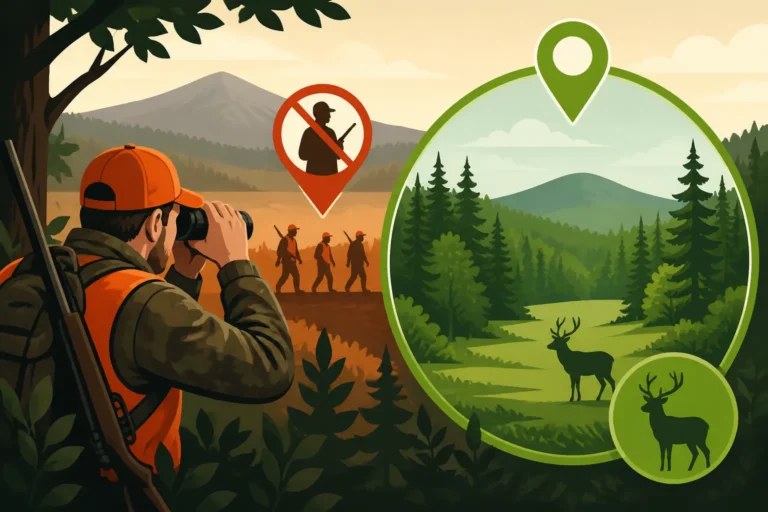
This fragmented nature means hunters often have to work harder, scouting more thoroughly and being prepared to move between different small parcels. It also means you'll likely encounter more hunter density on easily accessible public spots, especially during the peak of firearms season. This isn't to discourage you, but rather to set realistic expectations. Success in this area often comes down to dedication, meticulous scouting, and sometimes, simply being willing to walk a bit further than others, or explore a spot that looks less "ideal" on a map. Don't be fooled by the lack of grandeur; a thick swampy parcel no one wants to trudge through might hold the biggest buck in the county.
Identifying and Accessing Public Hunting Opportunities
Despite the challenges, public hunting opportunities absolutely exist near Rochester. You just need to know where to look and what type of land to focus on. It's about being resourceful and thinking outside the box of traditional "big woods" hunting.
State Forests and Wildlife Management Areas (WMAs) in the Vicinity
New Hampshire's Fish and Game Department manages several Wildlife Management Areas (WMAs) throughout the state, and some can be found within a reasonable drive of Rochester. These areas are specifically managed for wildlife habitat and public recreation, including hunting. While they might not be right in Rochester's backyard, they are often the best bet for larger, dedicated public hunting land. Similarly, the New Hampshire Division of Forests and Lands oversees numerous State Forests and Reservations, many of which are open to hunting.
When looking at these, don't just search for "Rochester WMA." Expand your search to surrounding towns and counties. For instance, areas like Bellamy River WMA in Dover, though small, can offer excellent waterfowl and small game opportunities, and sometimes a passing deer. Other state lands a bit further afield, but still within a reasonable drive, might offer larger tracts. Always check the specific regulations for each WMA or State Forest, as some may have unique rules regarding methods, seasons, or access points. The New Hampshire Fish and Game website is your best friend here, providing maps and detailed information. New Hampshire Wildlife Management Areas and New Hampshire State Forests and Reservations offer more general information, but the principle applies locally.
Town Forests and Conservation Lands
This is where a lot of the "hidden gem" public hunting opportunities lie near Rochester. Many towns in New Hampshire own parcels of land designated as "Town Forests" or have acquired properties through conservation efforts, often with hunting allowed. These parcels can range from a few dozen to several hundred acres and often fly under the radar of hunters who only look at state-managed lands. They might be smaller, but they can be incredibly productive, especially if they border larger private tracts of undeveloped land.
Finding these requires a bit more legwork. You'll want to check town websites for conservation commission information, maps of town-owned properties, or even call the town hall to inquire about hunting policies on municipal land. Conservation easements held by land trusts can also sometimes allow public access for hunting, but always confirm the rules directly with the land trust. The key is local knowledge and proactive research. A 50-acre town forest that sees little pressure can hold a resident buck year-round, especially if it offers thick cover or a natural food source that others overlook. Think about parcels that might be awkward to access, or those surrounded by less appealing terrain; these are often the places animals feel safest. For more on these types of areas, you might find Hunting a Town Forest Parcel helpful.
Tools and Tactics for Scouting Public Ground Near Rochester
Finding public land near Rochester is just the first step. The real work begins with scouting, both digitally and on the ground, to understand the lay of the land and where the game might be.
Utilizing Mapping Apps for Property Lines and Topography
In an area with fragmented land ownership, digital mapping applications are absolutely invaluable. Tools like onX Hunt and GoHunt are essential for clearly identifying public versus private land boundaries, especially when those boundaries might be subtle on the ground. These apps often feature color-coded property ownership layers that show state land, federal land (though less common directly around Rochester), town property, and private parcels, making it easy to see where you can legally hunt.
Beyond property lines, these apps offer detailed topographic maps, aerial imagery, and even layers showing things like historical timber cuts, water sources, and access roads. You can use these to identify potential travel corridors, pinch points, bedding areas, and feeding locations before you even set foot in the woods. Look for areas where public land creates a funnel between private parcels, or where a thicket on public ground borders a farm field on private land – these are often prime spots. You can mark waypoints for potential stand sites, rubs, scrapes, or areas of heavy sign, creating a digital scouting plan. Having these maps downloaded for offline use is also critical, as cell service can be spotty even in the suburban fringe. onX Layers for New Hampshire Land Status delves deeper into using these advanced mapping features.
| Mapping App Feature | Benefit for Rochester Hunters |
|---|---|
| Color-coded Land Ownership | Instantly identifies legal public hunting ground and adjacent private parcels. |
| Detailed Topography | Reveals subtle terrain features like draws, ridges, and saddles for predicting deer movement. |
| High-Res Satellite Imagery | Helps locate thick cover, open fields, and water sources for pre-season scouting. |
| Offline Map Capability | Ensures navigation and property line awareness even without cell service. |
| Waypoint & Track Marking | Allows marking sign, stand locations, and entry routes for efficient hunting. |
On-the-Ground Scouting for Sign and Pressure
While mapping apps are powerful, nothing beats putting boots on the ground. Once you've identified promising public parcels near Rochester using your digital tools, it's time to hit the woods. Early season scouting, before the foliage gets too thick, or late winter scouting, after snow reveals tracks and deer yards, are ideal times. Look for deer trails, rub lines, scrapes, bedding areas, and natural food sources like acorns, apples, or browse. These are the clues that tell you where deer are spending their time.
Pay close attention to human pressure. If a public parking lot is consistently full, that particular parcel might see a lot of hunters. Don't be afraid to explore deeper, away from easy access points, or focus on terrain features that might deter others, like wet areas or steep, short hills. Remember, deer in pressured areas become very wary. They will often move at night or use the thickest, nastiest cover available during daylight hours. Finding their daytime hideouts is key to success. Combine your observations with what your mapping app shows you. A heavily used trail might lead to a bedding area that's tucked just out of sight on a satellite image, or a pinch point identified digitally might reveal fresh rubs in person. Scouting New Hampshire Public Land Before Season provides comprehensive advice on how to approach this critical phase.
Respecting Private Land Boundaries and Regulations
Hunting near Rochester, with its mix of land ownership, absolutely demands an ironclad commitment to knowing and respecting boundaries and regulations. Failure to do so can lead to legal trouble, loss of hunting privileges, and gives all hunters a bad name.
Navigating Posted Lands and Retrieval Laws
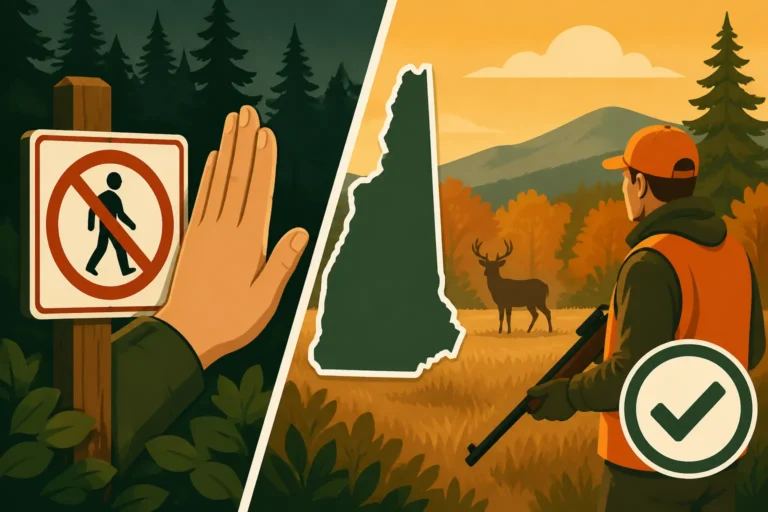
New Hampshire has very clear laws regarding hunting on private land. You must have written permission from the landowner to hunt on any posted property. Even if land isn't posted, it's always best practice to seek permission to avoid any misunderstanding. Around Rochester, you'll encounter a lot of posted land, often small parcels with houses. Never assume that just because you don't see a "No Trespassing" sign, it's open season. A quick knock on a door can sometimes open up new opportunities, but always be respectful if denied.
Another common concern, especially with smaller parcels, is game retrieval. What happens if you shoot a deer on public land and it runs onto private, posted property? In New Hampshire, you generally have the right to retrieve game from private land, even if it's posted, but you must do so unarmed and without a dog. It's always a good idea to attempt to contact the landowner first, out of courtesy. Carrying a copy of the regulations on your phone (downloaded beforehand, of course) or printed out can be helpful if you encounter a landowner. Always be prepared to identify yourself and explain your situation calmly and respectfully. New Hampshire Posted Land Rules and Do You Need Written Permission in New Hampshire? are excellent resources to review these important legal aspects.
Understanding WMU J2's Regulations and Deer Management
Each Wildlife Management Unit in New Hampshire has specific regulations that can affect season dates, bag limits, and even legal methods. WMU J2, being in a more populated area, might have particular considerations. For example, some WMUs have specific rules regarding antlerless deer permits, or even special archery-only zones that differ from general statewide regulations. It is absolutely critical to consult the most current New Hampshire Hunting Digest before heading out.
The New Hampshire Fish and Game Department actively manages deer populations within WMU J2, often through antlerless permit allocations, to keep herd numbers healthy and in balance with human populations and habitat. Understanding these management goals helps you understand why certain rules are in place. For instance, if the department is trying to reduce the deer population in an area to mitigate deer-vehicle collisions or agricultural damage, antlerless permits might be more readily available. Always check the specific WMU J2 regulations for deer, turkey, and any other game you plan to pursue. This diligent review ensures you're hunting legally and ethically, contributing to responsible wildlife management in a unique part of the state.
Disclaimer
This article is for general informational purposes only and does not constitute professional advice. Laws, prices and regulations vary by location and change over time. Consult a qualified professional for guidance on your specific situation.