Habitat Work on New Hampshire Wildlife Management Areas
It's a common frustration for hunters in New Hampshire: you pull up to a public land parking area, walk into the woods, and it feels… lifeless. Sometimes it's hard to find good cover, consistent food sources, or any real sign of active game. This guide is here to shed some light on a crucial, often unseen, effort happening across our state: the dedicated habitat work on New Hampshire's Wildlife Management Areas (WMAs), and how understanding these efforts can dramatically improve your hunting success.
What Are New Hampshire Wildlife Management Areas Anyway?
Let's start with the basics. When we talk about public land in New Hampshire, it's easy to lump it all together. You've got vast stretches of the White Mountain National Forest, smaller state forests, town lands, and then there are our Wildlife Management Areas, or WMAs. These aren't just tracts of land open to the public; they are specifically acquired and managed by the New Hampshire Fish and Game Department with a primary goal: to conserve and enhance wildlife populations and their habitats. This isn't just a passive designation; it means active, deliberate work is happening on these parcels to make them better for deer, moose, bear, turkey, waterfowl, and a host of smaller game.
For many of us who grew up hunting, public land was often a "take it as it is" proposition. You found the cover, the food, the water, or you moved on. But WMAs are different. They're living laboratories where science-backed management strategies are put into practice. The biologists and land managers aren't just sitting back; they're assessing, planning, and executing projects to create the diverse habitats necessary for various species to thrive. This active stewardship directly benefits hunters by providing more robust game populations and better places to pursue them. If you've ever felt like you're just wandering aimlessly on public land, knowing the purpose and management of a WMA can give you a real edge. You'll stop seeing just trees and start seeing managed cover, created browse, and strategic water sources. If you want to explore where these managed lands are, checking out New Hampshire Wildlife Management Areas is a great first step.
The Purpose Behind the Management
The core purpose of New Hampshire's WMAs is conservation through active management. It's not enough to just set land aside; without intervention, many habitats can degrade or become less productive for certain species. Think about it: a dense, mature forest might be great for some species, but it offers little in the way of browse or thick cover for young deer. A wetland might become overgrown with invasive species, or its water levels might fluctuate wildly, making it unsuitable for nesting waterfowl.
This is where the dedicated work of the New Hampshire Fish and Game Department comes in. Their teams, often supported by federal grants and hunter license dollars, are constantly evaluating the ecological health of these areas. They look at everything from forest age structure and soil composition to water quality and the presence of invasive plants. Their goal isn't necessarily to make every square inch perfect for all wildlife, but rather to create a mosaic of habitats that supports a wide diversity of species, including those most sought after by hunters. This means making strategic decisions about what type of habitat is needed, where it's needed most, and how to create it sustainably. It’s an ongoing process, and the landscape on your favorite WMA might look different from year to year, which can be confusing at first glance, but it’s usually for a very good reason.
Funding and Hunter Contributions
It's important to remember that these extensive habitat projects don't happen for free. The funding for WMA acquisition, maintenance, and habitat work primarily comes from sportsmen and women, through hunting and fishing license sales, and through federal excise taxes on hunting and fishing equipment via the Pittman-Robertson Act. This means every time you buy a license or a new piece of gear, you're directly contributing to the very habitat improvements that benefit your hunting.
This connection is crucial. It means hunters aren't just users of these lands; they are fundamental funders and stakeholders in their ongoing health. Without these contributions, much of the habitat work simply wouldn't be possible. So, when you're out there seeing evidence of a recent timber cut, a new food plot, or a wetland restoration, you're seeing your dollars, and the dollars of countless other hunters, hard at work. It's a powerful reminder of the conservation ethic ingrained in our hunting heritage, and why hunters are often the most dedicated conservationists. It also gives us a sense of ownership and responsibility for these precious resources, encouraging us to learn more about the management goals for specific areas we hunt.
The Science and Sweat Behind WMA Habitat Work
When you walk through a WMA, you might notice things that look a little "messy" or perhaps even disruptive to the natural flow of the forest. You might see areas of recent logging, brush piles, or even controlled burns. These aren't random acts; they're all part of carefully planned habitat management techniques. The beauty of these areas for a hunter is that they are actively managed to be productive for game, which often means creating habitat conditions that nature might take decades to achieve on its own, or that simply wouldn't exist in a static forest.
One of the biggest misconceptions is that "natural" is always "best" for all wildlife. In reality, many game species, especially deer, turkey, grouse, and hare, thrive in early successional habitats—the young, regenerating forests that pop up after a disturbance like a timber harvest or a fire. These areas provide abundant browse, thick cover for bedding and escape, and diverse insect life for turkey poults. Without active management, much of New Hampshire's forest tends towards maturity, which, while great for some species, can limit others. This habitat work is all about creating that diversity. Using tools like onX Hunt, you can often see older clear-cuts or changes in vegetation density that signal these actively managed zones, giving you a serious advantage when Scouting New Hampshire Public Land Before Season.
Timber Stand Improvements and Forest Management
Forestry is one of the most powerful tools in a habitat manager's arsenal. You might encounter several types of timber stand improvements (TSIs) on a WMA, each designed to achieve specific habitat goals:
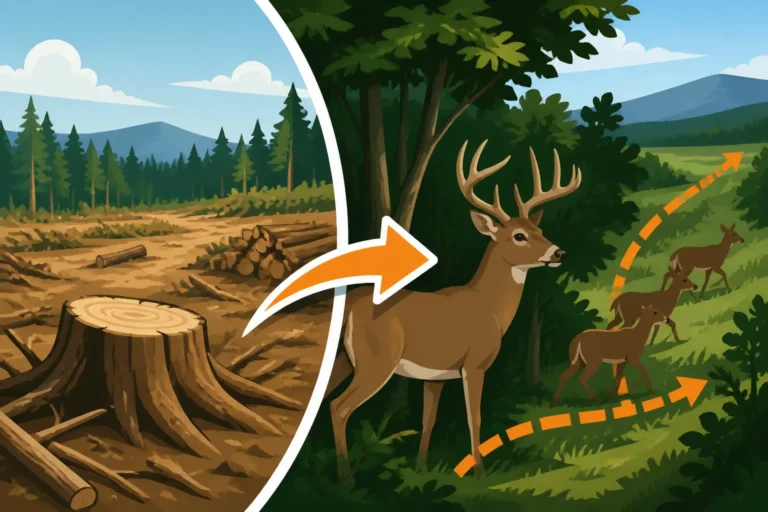
- Clear-cutting: This is often the most visually striking and sometimes controversial technique. But don't let the initial appearance fool you. A well-planned clear-cut is a wildlife magnet in the making. By removing all trees in an area, it allows sunlight to hit the forest floor, promoting an explosion of shrubs, saplings, and herbaceous plants. This young, regenerating forest, sometimes called "early successional habitat," is absolutely vital for deer, which feast on the abundant new browse. It's also prime habitat for snowshoe hare and ruffed grouse, providing dense cover and food. While it looks stark immediately after, give it a few years, and you'll find incredible hunting opportunities along the edges and within the regenerating growth. Hunting a clear-cut regrowth edge can be extremely productive once that new growth really starts to take hold.
- Selective Harvesting/Thinning: This involves removing only a portion of the trees in a stand. It can be done to promote the growth of desired tree species (like oaks that produce acorns for deer and turkey) or to open up the canopy just enough to allow some sunlight in for understory growth, while still maintaining some mature forest characteristics. This creates a more diverse vertical structure, providing different layers of cover and food.
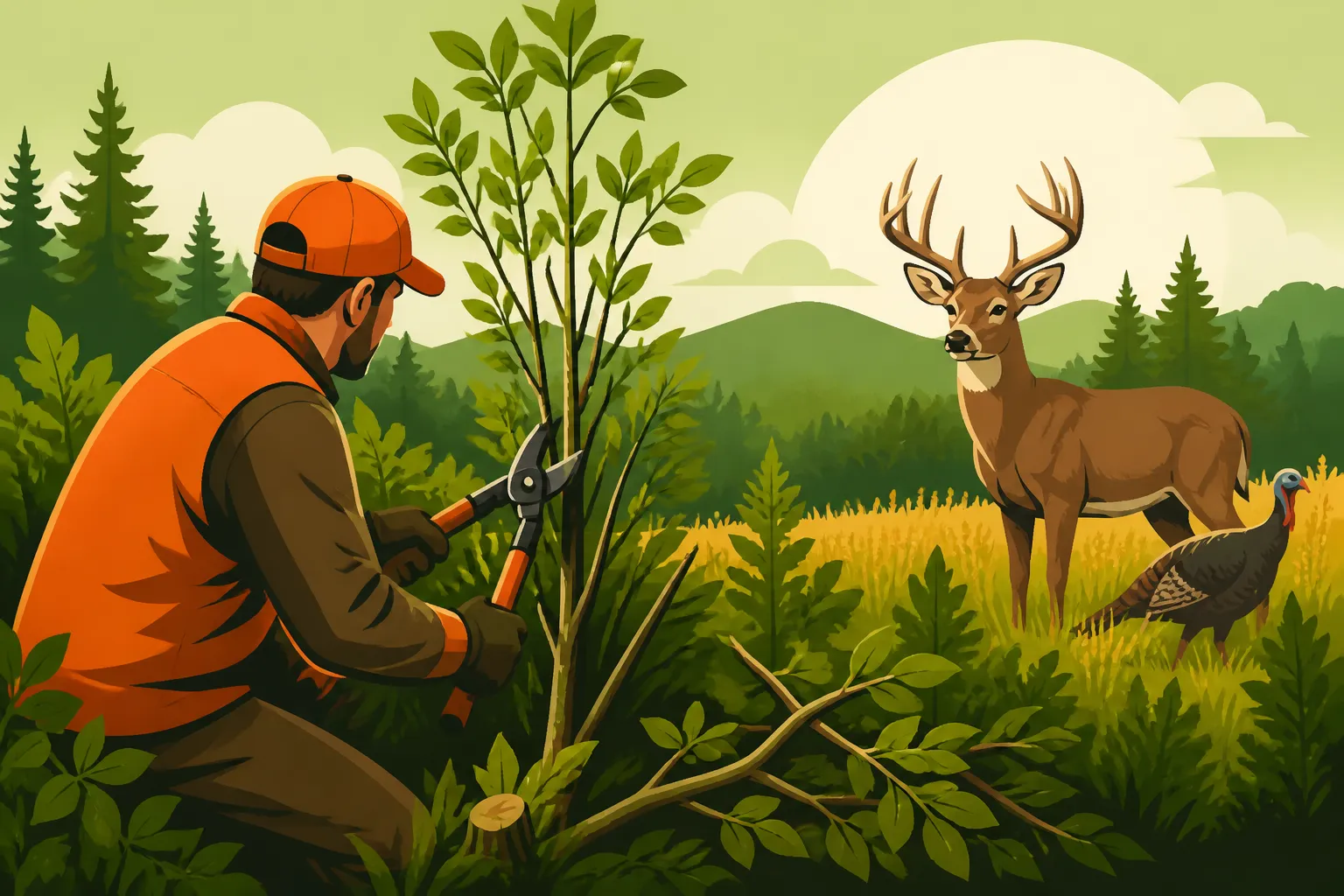
- Hinge Cutting: Often seen in smaller, more localized projects, hinge cutting involves partially cutting a tree so it falls over but remains alive, still connected to its stump. The tree continues to grow, providing low-level browse and creating dense, impenetrable cover for bedding deer, especially in areas lacking natural thickets. This is a very targeted technique to create immediate, dense cover.
Understanding these different types of cuts and their intended outcomes helps you interpret the landscape. An older clear-cut that's grown back into a dense tangle of saplings is likely a bedding area or a travel corridor between food sources. A selectively thinned hardwood stand might be a great place to find deer browsing on acorns.
Creating Openings, Food Plots, and Wetlands
Beyond forest management, WMAs employ other vital techniques to enhance habitat:
- Food Plots and Agricultural Openings: These are specific areas planted with crops like clover, brassicas, oats, or corn to provide supplementary forage for wildlife. They can be particularly important during periods of natural food scarcity, like late fall or early spring. While not every WMA will have traditional row crops, you might find plots of perennial clover or small grain fields. These act as magnets for deer and turkey and are fantastic spots for hunters to key in on. Knowing that these food sources are actively maintained gives you a predictable starting point when planning a hunt. Hunting a green field planted for deer can be a fantastic strategy. These areas often draw game in from surrounding cover, especially during prime feeding times.
- Wetland Management: For waterfowl hunters, WMAs with managed wetlands are goldmines. This can involve controlling water levels through dikes and impoundments, planting specific aquatic vegetation for food, or creating nesting islands. These efforts ensure consistent water, food, and cover for ducks, geese, and other wetland-dependent species. The goal is to create ideal conditions for breeding, resting, and feeding migratory birds, making them key stopovers along the flyway. If you're passionate about New Hampshire Waterfowl on the Atlantic Flyway, these managed wetlands are places you'll want to get to know.
- Brush Piles and Snags: While they might look like discarded logging debris, strategically placed brush piles provide immediate cover and denning sites for small game like rabbits, hares, and various furbearers. Standing dead trees, known as snags, offer nesting cavities for birds and bats, and provide perching spots for raptors. These small-scale habitat features are important components of a diverse ecosystem within WMAs.
These diverse management strategies combine to create a much more productive and resilient landscape for wildlife. It's a dynamic system, constantly being evaluated and adjusted, which means WMAs are continuously evolving, always aiming to provide prime habitat.
How Hunters Can Leverage WMA Habitat Efforts
Knowing that habitat work is actively happening on WMAs is one thing; understanding how to use that knowledge to your advantage as a hunter is another. This isn't just academic information; it's practical intelligence that can drastically improve your odds of finding and harvesting game. The key is to think like a land manager and then interpret the results through a hunter's lens.
Imagine you're scouting a WMA. Instead of just looking for tracks, you're looking for patterns created by management. Did they just thin a stand of pines? That might mean new browse growth is about to explode, drawing deer in. Was there a clear-cut a few years back? That dense regeneration is likely a prime bedding area, and deer will move along its edges or through subtle funnels within it. This informed perspective changes your entire scouting approach, turning you into a more effective and efficient hunter. It's about connecting the dots between visible landscape features and the likely behavior of the game animals that rely on them.
Scouting with a Purpose on Managed Lands
The first step in leveraging WMA habitat efforts is to scout smart. Don't just wander; go in with a map and an understanding of potential habitat types.
- Identify Managed Areas: Look for tell-tale signs of management: clear-cut boundaries, different age classes of forest, mowed strips, or even subtle changes in vegetation color on aerial maps. Tools like GoHunt or onX Hunt can be invaluable here. Their satellite imagery layers often highlight areas of recent timber harvest or different forest densities. You can also use their property line overlays to ensure you're within the WMA boundaries. Reading Aerial Photos for North Country Deer is a skill that becomes particularly valuable when trying to understand managed landscapes.
- Connect Habitat to Game Needs: Once you identify a managed area, think about what game species it benefits and why. A dense clear-cut? Good for deer bedding and grouse. A managed wetland? Great for waterfowl. A food plot? Deer, turkey, and sometimes bear will be regulars. By understanding the "why" behind the habitat work, you can predict what game you're likely to find there.
- Focus on Edges and Transitions: Wildlife, especially deer, thrive on edges—the transition zones between different habitat types. A clear-cut meets a mature forest; a food plot meets thick cover; a managed wetland meets upland woods. These edges offer both food and security, creating natural travel corridors and feeding areas. Habitat work often creates these edges intentionally, so identifying them on your map and on the ground is critical. Hunting a Funnel Between Two Woodlots becomes a much more targeted effort when you understand how management might have created or enhanced those funnels.
Always remember that habitat work is seasonal in its benefits too. Early successional growth from a clear-cut is excellent browse in spring and summer, providing energy for antler growth and fawn rearing. Mature mast trees, left standing in a selective cut, become critical Late-Season Food Sources for New Hampshire Whitetails when acorns and beechnuts drop. Your scouting efforts should always be tied to the time of year you plan to hunt.
Utilizing Mapping Technology
In today's hunting world, mapping apps are no longer a luxury; they're an essential tool, especially on actively managed lands. onX Hunt is a prime example of an application that can give you a significant advantage.
- Identifying Land Ownership and Boundaries: Before anything else, onX Hunt allows you to instantly see property lines, including the precise boundaries of WMAs. This prevents accidental trespass and helps you plan your access points.
- Analyzing Aerial and Topographic Maps: The various map layers within onX Hunt are incredibly powerful for WMA scouting. You can toggle between satellite imagery (to see recent cuts, differing timber densities, and open fields) and topographic maps (to identify subtle elevation changes, ridges, and drainages). Look for differences in vegetation color or texture that suggest varying forest ages or types of management.
- Locating Access Points and Trails: Managed areas often have designated parking lots, logging roads, or maintenance trails. Using your mapping app, you can identify these and plan your entry and exit strategies, allowing you to access areas that might otherwise seem impenetrable.
- Dropping Waypoints and Tracking: As you scout, drop waypoints for any sign of game, interesting habitat features (like a brush pile, a hinge-cut area, or a natural funnel), or potential stand locations. You can also track your path, helping you navigate confidently and learn the layout of the WMA over time.
Think of your mapping app not just as a navigation tool, but as a living record of the habitat work you're observing. Combine what you see on the ground with what the map tells you about land management, and you'll develop a much deeper understanding of how the animals are using that space. This is a crucial skill for adapting to the ever-changing landscape of actively managed public lands.
Success Stories and Challenges of WMA Management
New Hampshire's WMAs represent some of our state's most valuable conservation assets, providing critical habitat for a vast array of wildlife. The habitat work carried out on these lands has tangible benefits for both wildlife populations and the hunting community. However, managing these dynamic ecosystems is not without its challenges.
The success stories often revolve around species that depend on specific habitat types that are increasingly rare in a largely mature forest landscape. For instance, many WMAs have seen significant boosts in populations of species like ruffed grouse and snowshoe hare in areas where early successional habitat has been created through strategic timber harvests. Similarly, waterfowl populations thrive in WMAs where wetlands are actively managed for optimal water levels and food sources, providing vital stopovers during migration. The overall New Hampshire Deer Herd Size also benefits significantly from the diverse food and cover options created by WMA management across the state.
Witnessing Wildlife Recovery and Abundance
One of the most rewarding aspects of WMA habitat work is seeing the direct impact on wildlife. When land managers meticulously plan a series of small clear-cuts or selective thinnings, the aim isn't just to cut timber; it's to provide immediate browse for deer and moose, and dense escape cover for smaller game. Over time, these areas transform from seemingly barren patches into vibrant nurseries for wildlife.
Consider the resurgence of wild turkeys in New Hampshire. While stocking efforts were crucial, the availability of diverse habitats—including managed forest openings and agricultural fields—has been key to their continued expansion. On WMAs where openings are maintained or food plots are planted, you'll often find thriving turkey populations that rely on these food sources, especially during the lean months. For those interested in New Hampshire Ruffed Grouse and Woodcock, the creation and maintenance of young forest habitat on WMAs has been a deliberate effort to support these birds, whose populations often decline in areas of continuous mature forest. It creates the dense understory they need for nesting, brooding, and escaping predators. These are real, tangible results that benefit every hunter who steps foot on these managed lands. You're not just hunting in the woods; you're hunting in a carefully curated environment designed to maximize wildlife potential.
Navigating Challenges and Future Outlook
Despite the clear successes, managing New Hampshire's WMAs faces ongoing challenges. Funding is always a concern, as the costs associated with land acquisition, active management, and infrastructure maintenance are substantial. Balancing the needs of various wildlife species, some of which require vastly different habitats, can also be complex. For example, creating early successional habitat for deer and grouse might alter the landscape for species that prefer mature, unbroken forest.
Public perception can also be a hurdle. Timber harvesting, in particular, can be misunderstood by those who aren't aware of its ecological benefits for certain species. Educating the public about the importance of active forest management for wildlife conservation is an ongoing effort. Furthermore, invasive species, climate change, and increasing recreational pressure from various user groups all add layers of complexity to WMA management.
Looking ahead, the future of New Hampshire's WMAs will rely on continued support from hunters, sound scientific management, and adaptive strategies to address new environmental challenges. The commitment to active habitat work means these lands will remain vital havens for wildlife and invaluable resources for hunters. By understanding and appreciating the immense effort that goes into these areas, we can all be better stewards and more successful hunters, ensuring that the wild traditions of New Hampshire continue to thrive for generations to come. The work never truly stops, and that ongoing dedication is what makes WMAs such a special part of our hunting landscape.
Disclaimer
This article is for general informational purposes only and does not constitute professional advice. Laws, prices and regulations vary by location and change over time. Consult a qualified professional for guidance on your specific situation.