Timber Cuts and Where Deer Move After
For those of us who spend our autumns navigating the granite ridges and deep woods of New Hampshire, few things can change the hunting landscape quite as dramatically as a timber cut. You arrive at your favorite hunting spot, only to find the familiar woods transformed into a chaotic tangle of stumps, slash, and exposed ground. It’s enough to make you throw your hands up and wonder where all the deer have gone. But here’s the secret: they haven’t vanished; they’ve simply shifted, and understanding these shifts is key to continuing your success. This guide will help you decipher the impact of timber cuts on deer movement and equip you with the strategies to find those elusive whitetails in their newly altered world.
Understanding the Impact of Timber Cuts on Deer Habitat
Timber cuts, whether they're massive clear-cuts or more subtle selective thinnings, drastically alter the forest environment. What might seem like destruction to the untrained eye is often a renewal process for wildlife habitat, though it creates a challenging adjustment period for both deer and hunters. The immediate aftermath of a logging operation can be jarring, but it's the subsequent regrowth that truly makes these areas magnets for deer.
The Immediate Aftermath: Disruption and Change
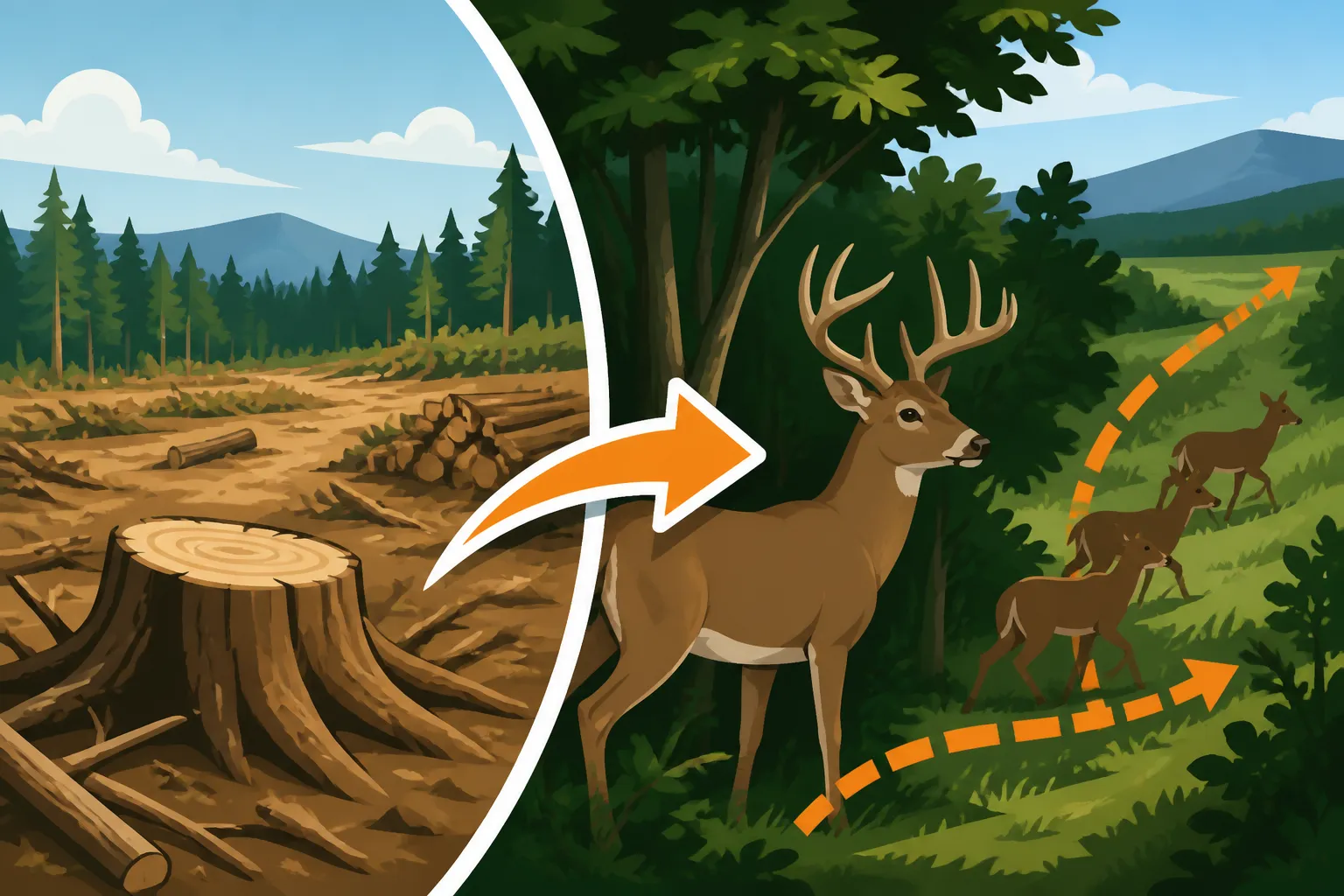
When a timber crew moves through a tract of woods, it’s like a bulldozer coming through your kitchen. Everything is rearranged, some things are destroyed, and the familiar pathways are gone. Deer, being creatures of habit and security, don't much care for this sudden chaos. Initially, you'll often see deer scatter from the immediate area of the cut. They seek out established, familiar cover nearby, often just beyond the freshly disturbed perimeter. This initial displacement isn't permanent, but it's a critical phase to understand. During active logging, the noise, human presence, and heavy machinery will drive deer far away. Once the activity ceases, however, the area begins its transformation into a new kind of deer haven.
Different types of cuts have varying impacts. A clear-cut, where most or all trees are removed from a large area, creates the most significant immediate disruption. Selective logging, where only specific trees are harvested, is less jarring, leaving more mature timber and cover intact. Thinning operations, designed to improve the health of the remaining trees, might open up the canopy slightly, but the overall structure remains. Each type of cut will influence how quickly deer return and how they utilize the new habitat.
Long-Term Benefits: Food, Cover, and Edge Habitat
While the initial phase is disruptive, the long-term effects of timber cuts are overwhelmingly positive for deer. When sunlight finally reaches the forest floor, it sparks an explosion of new growth. Young saplings, shrubs, and herbaceous plants, which deer absolutely adore for browse, begin to flourish. This new, nutrient-rich food source is incredibly attractive. Imagine a grocery store opening up where there used to be a dense, shaded parking lot – that's what a cut-over looks like to a deer.
Beyond food, these regenerating areas also provide dense, secure thermal and bedding cover. Young conifer stands or thickets of aspen and birch regrowth can become impenetrable sanctuaries where deer feel safe from predators and sheltered from harsh weather. The creation of new "edge" habitat – the transition zone between the mature forest and the regenerating cut – is also incredibly valuable. Deer love edges because they offer quick access to food in the cut and immediate security in the mature timber. These edges become primary travel corridors and feeding zones. Hunting a Clear-Cut Regrowth Edge is often a highly productive strategy once the new growth is established.
Identifying Key Deer Movement Patterns Post-Logging
Understanding why deer react to timber cuts is one thing, but knowing how they actually move through and utilize these new environments is what puts venison in the freezer. It’s not always intuitive, and often requires a fresh perspective on what constitutes prime deer habitat.
The New Travel Corridors
The old deer trails you knew might be completely obliterated by logging equipment. Deer are adaptable, though, and they will establish new travel routes. These new corridors often follow the edges of the cut, where the young regrowth meets the remaining mature timber. They'll also navigate through any uncut "islands" of timber left within the clear-cut, or along old skidder trails that have grown in enough to offer some concealment. These linear features, even if they're just subtle depressions from machinery, can become superhighways for deer moving between bedding and feeding areas.
Additionally, deer will often exploit natural funnels that are highlighted or created by the cut. A narrow strip of timber connecting two larger woodlots, for instance, might become an even more crucial pinch point. Similarly, areas where the cut pushes deer toward a creek bottom or a specific ridge saddle can create predictable movement. Hunting a Funnel Between Two Woodlots becomes even more effective when one or both of those woodlots have been recently cut. Using modern mapping tools like onX Hunt can be incredibly helpful here, as you can layer aerial photos to see the extent of recent cuts and then identify these new pinch points and travel corridors.
Bedding and Feeding Adaptations
Deer need both food and secure bedding cover, and timber cuts provide both in abundance once regeneration begins. In the early stages of regrowth, deer might bed just inside the mature timber adjacent to the cut, venturing out into the regenerating area to browse. As the regrowth thickens, however, the interior of the cut itself can become prime bedding cover. These dense thickets offer unparalleled security, especially for mature bucks looking to avoid pressure. Where New Hampshire Bucks Bed in Thick Cover often includes these regenerating clear-cuts.
Feeding patterns are perhaps the most noticeable change. Deer will abandon shaded forest floors for the explosion of new browse in the cut-over. They’ll target young hardwoods like maple, birch, and aspen, as well as various shrubs and briars. During the late season, when other food sources are scarce, the persistent browse in these regenerating cuts can be a life-saver for deer and a hot spot for hunters. It's not uncommon to find multiple deer feeding actively in these areas during the twilight hours.
Scouting and Hunting Strategies for Timber Cut Areas
You can’t just walk into a cut-over and expect to stumble upon deer. It requires diligent scouting, an understanding of the new terrain, and a willingness to adapt your hunting style. Hunting timber cuts is physically demanding but can be incredibly rewarding.
Pre-Season Scouting: Mapping and Boots on the Ground
Your scouting needs to start long before opening day. The very first step is often digital. Utilize satellite imagery, especially recent imagery, to identify cut areas. Tools like GoHunt or onX Hunt allow you to zoom in and see the extent of logging operations. Look for the distinct patterns of clear-cuts, the lighter canopy of thinned areas, and the tell-tale signs of logging roads or skidder trails. Pay attention to the age of the cut; a cut from two or three years ago will offer different habitat than a fresh cut or one from five to ten years ago. A three-year-old cut might be a browse buffet, while a ten-year-old cut could be an impenetrable cedar swamp.
Once you’ve identified potential areas on a map, it’s time for boots on the ground. This is where you confirm what you see on the satellite images and find the fresh sign. Look for deer tracks in muddy skidder trails, fresh droppings in areas of new growth, and browse lines on young saplings. Concentrate your efforts on the edges where the cut meets mature timber, and any uncut islands within the cut. Scouting New Hampshire Public Land Before Season is crucial, and even more so when hunting these dynamic areas. Don't be afraid to push into the thick stuff; that's often where the deer are hiding.
Effective Hunting Techniques for New Terrain
Hunting timber cuts demands patience and adaptability. Your traditional stand locations might be gone, or simply no longer effective. Still-hunting becomes an incredibly potent tactic in these environments. Move slowly, literally taking one step at a time, pausing frequently to scan for movement or the flick of an ear. The broken visibility of dense regrowth can hide a deer just yards away, so keen observation is paramount. Use the noise of the environment – wind, falling leaves – to mask your movements.
When considering stand placement, focus on those newly formed edges, bottlenecks, or convergence points of multiple trails. Often, deer will use the denser parts of the cut for bedding and then filter out to the less dense edges or adjacent timber to feed or travel. Consider ground blinds, especially if the new growth is thick enough to offer concealment. Brushing in a pop-up blind along a new edge or a promising travel corridor can give you an excellent vantage point without requiring a suitable tree. Remember, too, that deer will often use those old logging roads for travel once they’ve grown in a bit, so Hunting a Logging Company Access Road can be a surprisingly effective approach.
Adapting to the Landscape's Challenges
Timber cuts present unique challenges. The footing can be treacherous, with downed logs, stumps, and tangled slash making silent movement nearly impossible. This is where careful planning and appropriate gear come into play. Good, sturdy boots are essential. You also need to adjust your mindset. Accept that you won't be able to cover ground quickly, and that a "quiet" approach might mean moving a little slower than usual.
Visibility can be a double-edged sword. While the open canopy might allow you to see farther in some spots, the dense regrowth can also conceal deer incredibly well. Patience is key. Spend more time looking than moving, letting your eyes pick apart the thick cover. Using binoculars, even in dense woods, can help you identify a deer’s leg or ear that might otherwise blend into the background. Be mindful of scent and wind; deer will still be using their noses to detect danger, and the altered landscape might create unpredictable thermals, especially in hilly terrain.
Navigating the Practicalities of Hunting Cut Areas
Successfully hunting timber cuts isn't just about tactics; it's also about understanding the practical implications of these altered landscapes, from access to game recovery.
Access and Public Land Considerations
Access into and around timber cuts can be tricky. Old logging roads might be gated, washed out, or simply overgrown. If you're on public land like the White Mountain National Forest or a New Hampshire Wildlife Management Area, research road closures and access points before you go. Reading Aerial Photos for North Country Deer can help identify these potential access issues. Sometimes, the best way in is on foot, simply walking in from a legal parking area and bushwhacking to your spot. Don't assume an old road will be passable by vehicle.
For private timberland, always ensure you have permission to hunt. Many large timber companies are open to recreational use, but it's vital to confirm their policies. Some might require specific permits or only allow access during certain times of the year. Respecting posted signs and property boundaries is paramount. Tools like onX Hunt are invaluable here, providing parcel boundaries and landowner information to ensure you're always hunting legally.
Game Recovery in Tough Terrain
Recovering a deer in a timber cut can be one of the most challenging aspects of hunting these areas. The dense cover and tangled slash that make it great bedding habitat also make trailing a wounded animal incredibly difficult. Blood trailing can be a slow, painstaking process. Mark your last known blood sign frequently, and use flagging tape to mark your path as you go. Having a good, bright headlamp is non-negotiable, as you might find yourself trailing into the dark.
Consider bringing a partner if possible, especially when hunting larger cuts. An extra set of eyes on the trail, and an extra set of hands for dragging, can make a huge difference. Even a small deer can feel like a moose when you're trying to drag it over downed logs and through thick brush. Sometimes, quartering the animal in the field is the most practical solution for getting it out, especially if you're deep in a large clear-cut.
The Dynamic Nature of Cut-Overs
Finally, remember that timber cuts are not static. They are constantly changing. A cut that was prime two years ago might be too thick to hunt effectively now, or one that was too open last season might have just enough regrowth to draw deer in. This means your scouting efforts need to be ongoing. Keep an eye on new logging activity, and revisit old cuts periodically to see how the habitat is evolving. This dynamic nature is what makes hunting these areas both challenging and incredibly rewarding.
Here's a quick overview of how different stages of a timber cut might influence deer behavior and hunting strategies:
| Cut Age | Primary Impact on Deer | Hunter Strategy |
|---|---|---|
| Active/Fresh | High disruption, deer avoid immediate area. Seek nearby established cover. | Avoid active areas. Focus on adjacent mature timber edges and escape routes. |
| 1-3 Years Old | Initial burst of new browse; limited cover for large deer. Bucks might use edges. | Scout for heavy browsing. Hunt edges, especially where new growth meets old growth. |
| 3-10 Years Old | Excellent browse and dense security cover. Can be impenetrable, ideal bedding. | Still-hunt slowly. Focus on funnels/travel corridors within or adjacent to the thicket. |
| 10-20 Years Old | Growth becomes taller, less dense browse. Still provides good cover but food diminishes. | Hunt transition zones where this growth meets newer cuts or mature timber. |
Disclaimer
This article is for general informational purposes only and does not constitute professional advice. Laws, prices and regulations vary by location and change over time. Consult a qualified professional for guidance on your specific situation.