National Forest Camping Near Your Stand
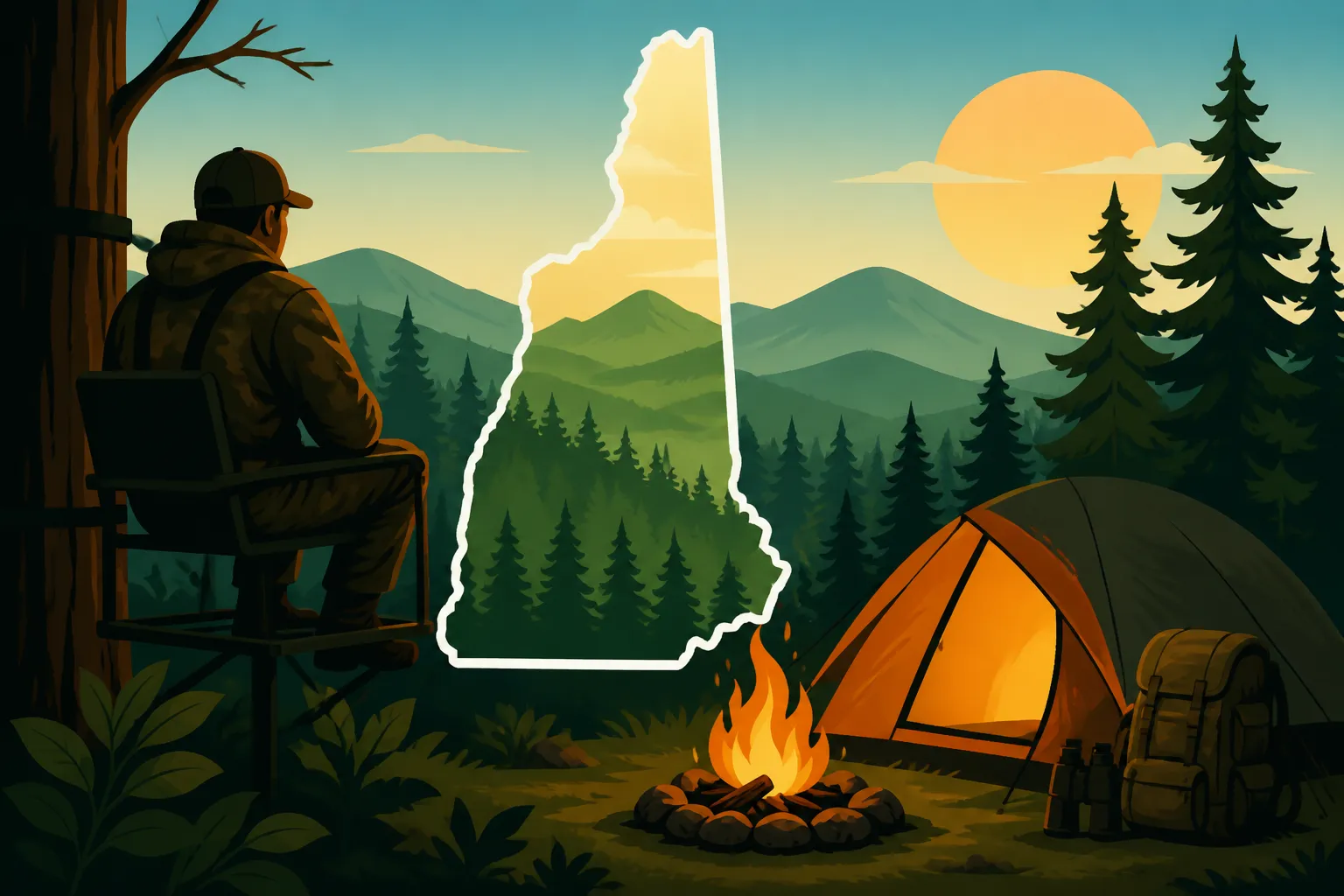
It's an age-old dilemma for many New Hampshire hunters venturing into vast public lands like the White Mountain National Forest: how do you get close to where the action is without breaking camp every morning? Setting up a temporary camp near your hunting stand can be a game-changer, letting you maximize your time in the woods and minimize travel, but there are crucial rules and practical considerations to navigate. This guide will walk you through everything you need to know about national forest camping specifically near your hunting stand, ensuring you stay legal, comfortable, and, most importantly, effective in your pursuit of game.
Understanding White Mountain National Forest Camping Regulations
Venturing into the White Mountain National Forest (WMNF) for an extended hunt offers an incredible experience, but it’s vital to understand the rules governing where and how you can set up camp, especially when you plan to be near your hunting spot. Many hunters dream of waking up moments from their stand, but the regulations are in place to protect the forest and its visitors. Ignoring these can lead to fines, or worse, impacting your hunting season.
Dispersed Camping Guidelines
The WMNF generally allows what's called "dispersed camping" – essentially, camping outside of designated campgrounds. This is where most hunters will find themselves when trying to get close to their stands. However, it's not a free-for-all. There are specific guidelines to ensure minimal impact on the environment. For instance, you typically need to be at least 200 feet from roads, trails, and water sources. This rule is particularly important because it impacts how close you can truly be to a commonly accessed hunting area or a stream where deer might be feeding or watering. Many a hunter has found a perfect ridge or saddle only to realize a small brook or old logging road cuts too close for legal camping. Always double-check your distance with a mapping app like onX Layers for New Hampshire Land Status to avoid inadvertently setting up too close.
Beyond the distance rules, the WMNF encourages low-impact camping. This means keeping your group size small, ideally under ten people, and not staying in one spot for more than 14 consecutive days. For most hunting trips, this isn't an issue, but if you're planning an extended backcountry hunt, perhaps for a moose in the North Country or a multi-day deer expedition, it's something to keep in mind. You also need to pack out everything you pack in, including all trash and food scraps. This isn't just a courtesy; it's a critical part of maintaining the pristine nature of the forest and preventing wildlife from becoming habituated to human food, which can create dangerous situations for both animals and people.
Restrictions Around Hunting Stands and Roads
Now, let's talk about the tricky part: how close can you actually get to your stand or an access road? The 200-foot setback rule from roads and trails is usually the biggest hurdle for hunters wanting to set up a "stand camp." If your hunting stand is near a well-used hiking trail or a forest service road that sees traffic, you'll need to respect that boundary for your camp. This means while your stand might be in a prime location, your tent might have to be a little further afield than you initially hoped. It can be frustrating to know your deer are just over that rise, but your camp has to be further back due to a small trail.
Furthermore, there are rules regarding the placement of hunting stands themselves, and while not directly camping regulations, they can influence your camp placement. For instance, some areas might have restrictions on cutting branches for shooting lanes, which could affect how you choose a stand location that works in conjunction with a discreet campsite. It's always best to consult the current New Hampshire Fish and Game digest, as well as the WMNF specific regulations, which can sometimes have unique rules beyond general state hunting laws. For example, some areas might have specific rules about Camping Rules on White Mountain National Forest Land or limitations on open fires, which are crucial for staying warm during a late-season hunt. You'll often find that the most convenient camping spots are also the most visible, meaning you have to weigh stealth for your hunt against comfort for your camp.
Strategic Camp Placement for Maximizing Your Hunt
Okay, so you understand the rules. Now, how do you pick a spot that actually helps, rather than hinders, your hunting efforts? This isn't just about throwing up a tent; it's about making your camp an asset to your hunt, a silent partner in your pursuit of game.
Balancing Proximity and Stealth
The ideal scenario is to have your camp close enough to your stand to minimize travel time in the dark, but far enough away that your presence doesn't spook game. This is a delicate balance. Imagine heading out for Hunting the Rut in Early-to-Mid November; you want to be in your stand well before daylight, but a noisy camp setup too close could send a big buck packing. The general rule of thumb for many experienced woodsmen is to aim for a distance that puts you out of the immediate "strike zone" of where game might be moving, typically a few hundred yards. This allows you to walk to your stand in the pre-dawn darkness without alarming any deer that might be feeding or bedding nearby.
When scouting for a campsite, think about what kinds of sounds you'll make. Zipping a tent, starting a small stove, or just walking around can carry further than you'd think in still, cold air. Try to place your camp in a location that minimizes noise travel towards your primary hunting area. A low spot, behind a small rise, or on the opposite side of a drainage can all help muffle sounds. It’s also wise to consider scent. While most hunters are meticulous about scent control for their actual hunt, camp smells – cooking food, campfire smoke, even human odor from sleeping bags – can still be detected by wary game. Positioning your camp downwind of your hunting stand, relative to prevailing winds, is paramount. This might mean walking a bit further each morning, but it's a small price to pay for not blowing your hunting spot.
Utilizing Terrain for Concealment
The White Mountain National Forest offers an incredible variety of terrain, and smart hunters learn to use it to their advantage for camp placement. Think beyond just "flat ground." Look for natural features that provide concealment from both human and animal eyes. A small depression, a dense stand of young conifers, or the backside of a rocky outcrop can all provide excellent cover. The goal is for your camp to blend in, to be invisible unless someone is actively looking for it. This isn't just about hiding from game, but also about maintaining privacy on public land.
When you're scouting with a mapping tool like onX Hunt, pay close attention to contour lines and vegetation layers. You can identify potential flat spots or natural benches that are out of sight from main trails or prominent ridges. A small knoll can hide your tent from a valley below, while a thick grove of hemlocks can shield you from an open hardwood ridge. Consider how the light will hit your camp at different times of day. A tent that's hidden in deep shadows at noon might be brightly lit by the morning sun, making it stand out. For example, if you're Still-Hunting White Mountain National Forest Timber, you understand how subtle shifts in terrain and cover can dictate animal movement. Apply that same eye for detail to your camp. Look for natural clearings that are just big enough for your tent, rather than having to clear a spot, further reducing your impact.
Here's a quick comparison of camp placement considerations:
| Factor | Good Practice | Bad Practice | Impact on Hunt |
|---|---|---|---|
| Proximity | 300-500 yards from stand | Less than 100 yards from stand | Minimizes disturbance vs. Spooks game |
| Concealment | Behind a ridge, in dense cover, in a depression | On a prominent knoll, in an open clearing | Blends in vs. Highly visible |
| Wind Direction | Downwind of primary hunting area | Upwind of primary hunting area | Minimizes scent alarm vs. Alerts game |
| Water Source | 200 feet away, accessible but not on direct path | Directly beside a stream or game trail | Regulatory compliance, minimizes contamination |
| Noise Muffling | Natural barriers (hills, thick woods) | Open, flat ground that carries sound | Reduces noise transmission vs. Amplifies sound |
Access and Retrieval Considerations
While a stealthy camp is great, you also need to think about practical logistics. How easy is it to get to your camp with your gear? And perhaps more importantly, how easy will it be to retrieve a harvested animal from your hunting area back to your camp, and then out of the woods? Many hunters focus solely on the initial hike in, forgetting that the hike out with a deer or moose can be exponentially harder.
When scouting for camp, consider the routes. Is there a relatively clear path, even if it's a bushwhack, that allows you to quietly access your stand each morning without crossing prime feeding areas or bedding sites? Will this path be manageable in the dark? Think about potential hazards like steep drops, dense blowdowns, or beaver flowages that could turn a simple walk into a dangerous trek. When you're planning for something like Packing Out a New Hampshire Moose, the logistics become even more critical. A camp that's too deep in rugged terrain, while offering great solitude, might make the retrieval of a large animal almost impossible without specialized gear or a much larger party.
Many seasoned hunters will establish their camp near a secondary, less-traveled logging road or old skidder trail, even if it means a slightly longer walk to their stand. This trade-off often proves invaluable for getting a deer or bear out. Remember, you can't just drive anywhere in the National Forest; vehicle access is strictly regulated. Having a camp that's on a walkable, if not drivable, route will make your life much easier when it comes time to pack out your hard-earned harvest. Utilizing apps like GoHunt can provide detailed topographical maps and satellite imagery, helping you identify these crucial access points and potential routes to and from your stand and camp. It's about thinking several steps ahead – not just the shot, but the recovery too.
Essential Gear for Your Backcountry Hunting Camp
Alright, you've scouted your spot, you know the rules, now what do you actually need to make this backcountry camp work? This isn't just a casual car camping trip; you're often facing unpredictable New Hampshire weather, aiming for stealth, and needing to be self-sufficient.
Shelter and Sleep Systems
Your shelter is your home away from home, and in New Hampshire's varied climate, it needs to be robust. For a hunting camp, especially if you're going deep, a lightweight, durable tent is key. Look for a three or four-season tent that can handle wind, rain, and potentially early season snow. A tent with a good vestibule is a game-changer, offering a place to shed muddy boots, wet gear, or even store a pack out of the elements without bringing it into your sleeping area. I can't tell you how many times a decent vestibule has saved my sanity on a wet morning hunt.
Inside, your sleep system is paramount for recovery after long days on the move. A quality sleeping bag rated for temperatures at least 10-15 degrees colder than what you expect is a wise investment, especially if you're considering Cold-Weather Sitting Strategy in the North Country or hunting late into the season. Pairing that with an insulated sleeping pad – not just for comfort, but for crucial thermal protection from the cold ground – will make a world of difference. Many hunters also swear by a small, inflatable pillow; while not essential, it adds a surprising amount of comfort for minimal weight. Remember, a good night's sleep directly impacts your focus and endurance for the next day's hunt.
Cooking and Water Management
Eating well in the backcountry keeps your energy up and morale high. A compact, reliable backpacking stove is a must. Propane or iso-butane canister stoves are popular for their ease of use and quick boil times. Think about meals that are lightweight, calorie-dense, and don't require extensive cooking. Dehydrated meals are popular, but you can also bring simple things like oatmeal, instant coffee, ramen, and high-energy bars. Don't forget a small pot, a mug, and a spork. It's easy to overlook these basics until you're trying to eat soup with your fingers!
Water management is equally critical. You can't carry enough water for an entire multi-day hunt, so you'll need a reliable filtration or purification system. Portable filters, purification tablets, or a UV purifier are all excellent options. Always know your water sources beforehand using your map – look for perennial streams or natural springs. Collecting water away from stagnant pools or obvious animal crossings is a good practice. Having a collapsible water reservoir or a few Nalgene bottles will make collecting and storing water at camp much easier, ensuring you have enough for cooking, drinking, and rehydrating after a long day of still-hunting or sitting on stand.
Navigation and Communication
Even with a perfect camp setup, getting lost in the White Mountain National Forest is a real possibility, especially in unfamiliar terrain or during low light conditions. A reliable GPS device or a robust mapping app on your smartphone (like onX Hunt, which allows you to download maps for offline use) is non-negotiable. Mark your camp, your stand, and any key landmarks or trails. Don't rely solely on your phone; a physical compass and paper map of the area are essential backups, and knowing how to use them can literally save your life. You might use these to confirm your approach when Hunting a Funnel Between Two Woodlots or find your way back to camp after dark.
Communication in the backcountry can be spotty. Cell service is notoriously unreliable in many parts of the WMNF, particularly in deep valleys or remote sections of the North Country. Consider carrying a satellite communicator (like those offered by Garmin or Zoleo) for emergency situations. These devices allow you to send texts and SOS messages even when out of cell range. A fully charged power bank is also crucial for keeping your electronic devices alive. Before you head out, make sure someone knows your general hunting area and your expected return time. Safety in numbers is always a good idea, especially if you're going after something substantial like a bear or a moose where Getting a Moose Out on a Logging Road requires significant effort and potentially multiple trips.
Responsible Practices and Safety in the Woods
Having a hunting camp near your stand is a fantastic way to enhance your experience, but with that privilege comes a significant responsibility. We share these wild spaces with other users and, of course, with the wildlife we pursue. Practicing ethical and safe behaviors ensures these opportunities remain available for everyone.
Leave No Trace Principles
The Leave No Trace principles are the bedrock of responsible backcountry use. When camping in the WMNF, it's absolutely vital to minimize your impact. This means packing out everything you pack in, and I mean everything. That includes food wrappers, spent shell casings, broken gear, and even biodegradable items like apple cores (which can take a long time to decompose and can attract unwanted wildlife). Don't dig trenches around your tent, don't leave cairns or markers you haven't approved, and try to leave your campsite looking as if you were never there.
When it comes to human waste, burying it appropriately is key. Dig a small "cathole" 6-8 inches deep and at least 200 feet from water sources, trails, and campsites. Toilet paper should either be packed out or buried very deeply and discreetly. This might seem like a small detail, but collectively, improper waste disposal can pollute water sources and ruin the aesthetic of popular areas. Fires, if allowed and when conditions permit, should always be in established fire rings or a small, self-contained fire pan. Ensure your fire is completely out and cold to the touch before leaving, even for a short time. Forest fires are a serious threat, especially in dry conditions. Understanding and following these principles helps maintain the integrity of our public lands for future generations to enjoy.
Wildlife Encounters and Food Storage
Camping in the White Mountain National Forest means you are sharing space with wildlife, including black bears, moose, and various predators like coyotes. Proper food storage isn't just a suggestion; it's a necessity for your safety and for the well-being of the animals. Never store food inside your tent. Scent-proof bags and bear-resistant containers are highly recommended. The best practice is to hang your food and scented items (like toothpaste, deodorant, and cooking gear) from a tree limb using a bear bag system, at least 10-12 feet off the ground and 6 feet from the trunk. You might find similar advice for Baiting New Hampshire Bears Legally by WMU, where proper food handling is paramount.
Encountering wildlife, especially a bear, while at camp can be startling. Remain calm, make noise, and make yourself look as large as possible. If a bear approaches your camp, try to scare it away. Never feed wildlife, intentionally or unintentionally. Habituated animals quickly become nuisance animals, which often leads to unfortunate outcomes for them. If you've harvested an animal, process it away from your camp if possible, and store the meat securely. Disposing of gut piles some distance from your camp and away from trails is also good practice, again to avoid attracting predators to your immediate area. Your camp should be a safe haven, not a dinner bell for curious creatures.
Emergency Preparedness
Even the most experienced hunters can face unexpected situations in the backcountry. Being prepared for emergencies is critical. Always carry a well-stocked first-aid kit that includes bandages, antiseptic wipes, pain relievers, and any personal medications. Knowing basic first aid is also invaluable. Beyond physical injuries, weather can turn quickly in the White Mountains. Hypothermia is a real threat, even in milder temperatures if you get wet. Pack extra layers of clothing, including rain gear, and always have a fire-starting kit with you (waterproof matches, lighter, fire starter). A small emergency shelter, like a lightweight tarp or bivy sack, can also be a lifesaver if you get stranded.
Before leaving home, share your detailed itinerary with a trusted person, including your expected route, specific camping areas, and when you anticipate checking in. If you have a satellite communication device, know how to use its SOS function. Understand that rescue in remote areas can take a long time, so being able to self-sustain for at least 24-48 hours is wise. Knowing things like Wind and Thermals in Steep Granite Terrain can give you an edge in predicting weather changes. The goal is to be self-reliant and to minimize risks, allowing you to focus on the hunt and truly enjoy your time in New Hampshire's incredible wild spaces.
Disclaimer
This article is for general informational purposes only and does not constitute professional advice. Laws, prices and regulations vary by location and change over time. Consult a qualified professional for guidance on your specific situation.