Southwest Hill Country Sits Inside WMU G
Hunting in New Hampshire's Southwest Hill Country, specifically within Wildlife Management Unit G, presents a unique set of challenges and rewards. Many hunters find themselves scratching their heads, wondering where to even begin in this diverse landscape that blends rolling hills, dense timber, and scattered agricultural fields. This guide is here to demystify WMU G, offering practical advice and insights to help you navigate its terrain, understand its game, and ultimately, increase your chances of a successful hunt.
Understanding WMU G: Geographic Scope and Terrain
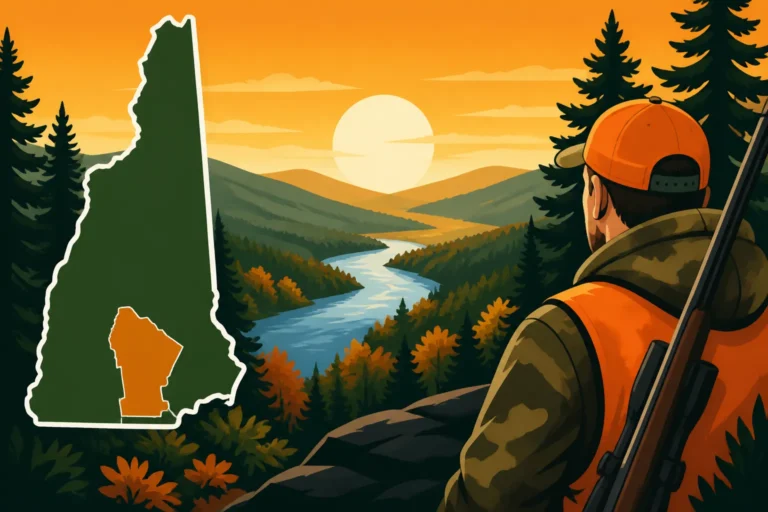
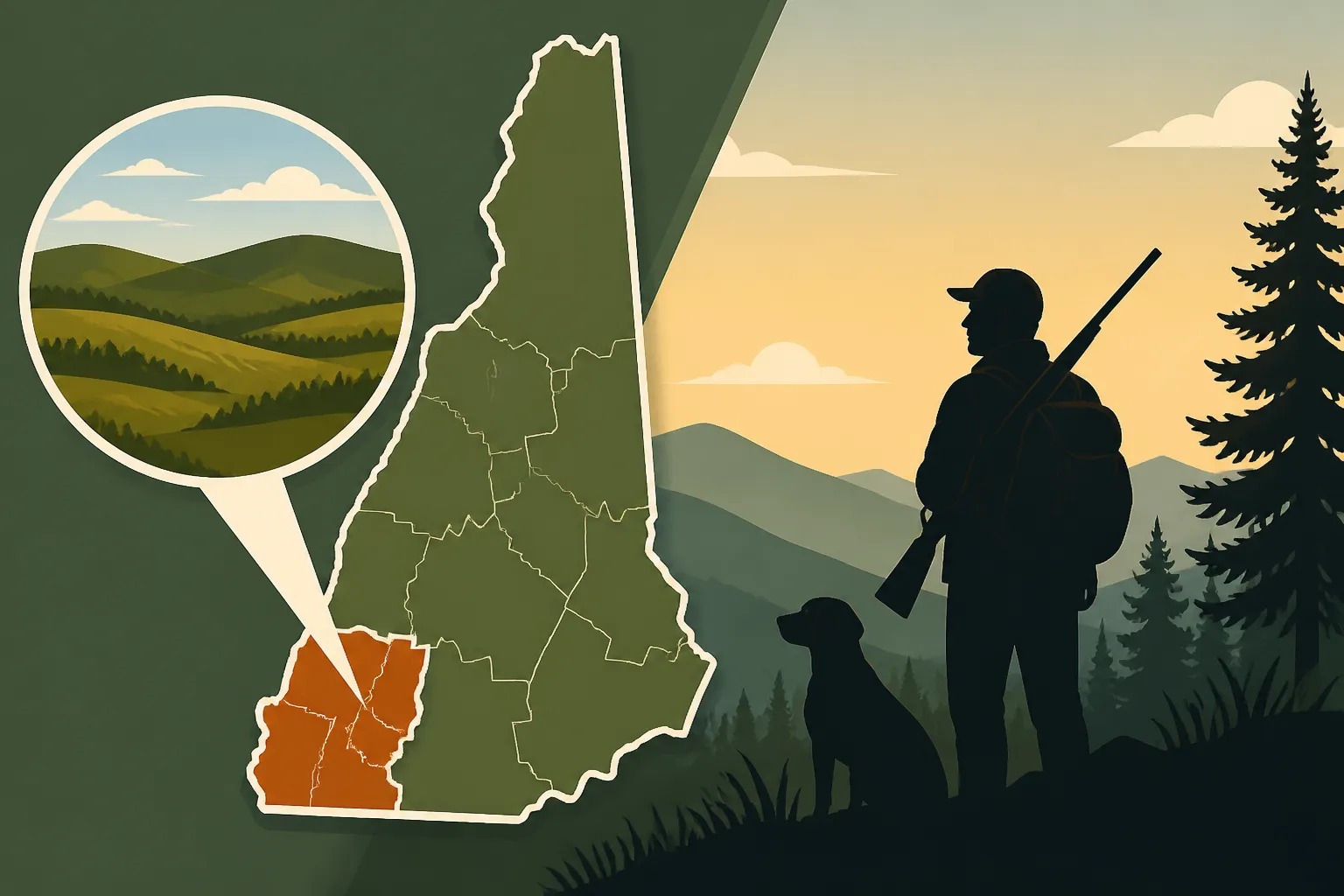
WMU G covers a significant portion of New Hampshire's southwestern corner, an area often characterized by its undulating terrain, known affectionately by locals as the "hill country." This isn't the dramatic, towering peaks of the White Mountains, but rather a more subtle, yet equally demanding, landscape of hardwood ridges, mixed forests, and low-lying wetlands. You'll find yourself traversing everything from steep, rocky inclines to gentle slopes, all interspersed with the classic New England stone walls that tell tales of past farming endeavors.
The boundaries of WMU G generally stretch from the Connecticut River Valley eastward, encompassing towns like Keene, Swanzey, and Peterborough, and reaching towards the larger state forests and conservation lands. This blend of rural communities, working timberland, and protected acreage creates a mosaic habitat that can be both frustrating and incredibly rewarding for the persistent hunter. The region's history of agriculture means many parcels, even those now overgrown, still hold the remnants of old orchards or field edges, which are prime spots for deer and other game. Understanding these historical influences is key to Reading a White Mountain Deer Yard or any other type of historical land use, as they often dictate current animal movement patterns.
The Defining Characteristics of Southwest Hill Country Terrain
When you envision WMU G, think diversity. You're not looking at a monoculture of pine or an endless expanse of marsh. Instead, you're looking at a dynamic mix. There are tracts of mature hardwoods, primarily oak and maple, which provide critical mast crops for deer, bear, and turkey. Interspersed are younger, regenerating clear-cuts or blowdowns, offering thick security cover and browse. You'll also encounter pockets of dense softwoods, particularly hemlock and pine, which serve as crucial thermal cover during harsh winter months and offer bedding areas.
Navigating this varied terrain often means dealing with significant elevation changes, even if they aren't "mountain" sized. These hills create distinct drainages and saddles, which act as natural funnels for game movement. Water sources, from small brooks and streams to larger beaver flowages, are abundant and often dictate travel corridors. The soil tends to be rockier, with exposed granite ledges in many areas, making for challenging footing but also providing natural landmarks and ambush points. It's truly a place where you'll need reliable footwear, as detailed in Best Boots for White Mountain Granite Trails, even if the elevation isn't as extreme.
Climate and Its Impact on Hunting in WMU G
The Southwest Hill Country experiences typical New England weather patterns, with distinct seasons that heavily influence hunting conditions. Early archery season in September can still feel like summer, requiring lighter layers and careful consideration of thermals, especially in the morning and evening. As fall progresses into October and November, temperatures drop, leaves fall, and the landscape opens up. This is when the hills truly become a hunter's canvas, with visibility increasing, but also requiring more attention to wind direction and thermal drafts.
Winter can arrive early in this region, particularly in the higher elevations. Snowfall, even moderate amounts, can dramatically change game patterns, driving deer into sheltered softwood thickets or deer yards. Hunting a Funnel Between Two Woodlots becomes even more critical when snow pushes deer into predictable travel paths. The combination of cold temperatures, potential for ice, and varied terrain means that preparation is paramount. Understanding how game reacts to weather, especially cold fronts, is a critical skill here.
Game Species and Habitat in the Southwest Hill Country
WMU G is a fantastic area for a variety of game, but it's undoubtedly best known for its robust white-tailed deer population. Beyond deer, you'll find healthy numbers of black bear, wild turkey, and various small game species. The diverse habitat created by the mixed forests, old fields, and water sources provides excellent conditions for these animals, making it a truly appealing region for the dedicated hunter.
The blend of private woodlots and public conservation lands means that game can often find refuge and food, leading to a resilient population. However, it also means that hunting pressure can vary significantly from one parcel to another. Areas with easier access, especially those near roads, tend to see more activity, while remote pockets of public land or difficult-to-access private properties might hold unpressured animals.
White-Tailed Deer: The Dominant Species
White-tailed deer are the undisputed kings of WMU G. The hill country provides everything a deer needs: abundant food, excellent cover, and water. During the spring and summer, deer will browse on lush vegetation in clearings and forest edges. As fall approaches, the oak and maple stands become critical, providing acorns and other mast crops that deer gorge on to build reserves for winter. Finding these mast crop areas is often the first step in Scouting New Hampshire Public Land Before Season.
The varied topography also offers diverse bedding options. Deer will bed on sunny south-facing slopes in cold weather, seeking thermal warmth, or tuck into dense softwood thickets for security and protection from the elements. During the rut, which typically peaks in early-to-mid November, bucks will be on the move, actively seeking does, often using ridge lines, saddles, and creek bottoms as travel corridors. Understanding these behaviors is crucial for Hunting the Rut in Early-to-Mid November. While not known for the absolute largest deer in the state, WMU G consistently produces good numbers of healthy deer, with solid antler growth reflecting the quality habitat.
Black Bear: A Growing Presence
New Hampshire's black bear population has been on the rise, and WMU G is no exception. While perhaps not as dense as the North Country, the Southwest Hill Country offers excellent bear habitat, particularly in areas with extensive mixed forests, berry patches, and wetlands. Bears are omnivores, and their movements are heavily dictated by food availability. In late summer and early fall, they will be found feasting on berries, apples, and, most importantly, acorns.
Hunting bear in WMU G can be challenging, often requiring extensive scouting or the use of bait, where legal. Bears are notoriously secretive, using the dense cover of the hill country to their advantage. Tracks, scat, and rubbed trees are key indicators of bear presence. If you're interested in bear hunting, you'll need to check the specific regulations for your New Hampshire Bear Season Dates by WMU and New Hampshire Bear Baiting and Hound Rules, as they can vary. Patience and persistence are key to success with these formidable animals in the hill country.
Wild Turkey: Roosting in the Hardwoods
Wild turkeys have made a remarkable comeback across New Hampshire, and WMU G boasts a thriving population. The mixed hardwood forests provide ideal roosting trees and abundant food sources like acorns, beechnuts, and insects. You'll often find turkeys working field edges and open timber, especially in the spring during breeding season.
Spring turkey hunting in WMU G can be an exhilarating experience, calling a gobbler off the roost at dawn. Fall hunting offers a different challenge, often involving breaking up a flock and calling individual birds back in. Turkeys are wary creatures, and their keen eyesight demands careful camouflage and minimal movement. Calling a May Gobbler Off the Roost requires a good understanding of their behavior and the terrain. Their presence adds another exciting dimension to the hunting opportunities in the Southwest Hill Country.
Small Game and Furbearers
Beyond big game, WMU G provides excellent opportunities for small game and furbearers. Squirrels, particularly gray squirrels, are abundant in the oak and hickory stands, offering a fun and challenging hunt, especially for beginners. Snowshoe hare can be found in dense softwood thickets and regenerating clear-cuts, often hunted with beagles. Snowshoe Hare in New Hampshire are a quintessential New England quarry.
Coyotes are also prevalent throughout the region, offering year-round hunting opportunities. Their presence can influence deer movement, and calling them in can be an exciting pursuit. Other furbearers like fox, bobcat, and fisher also inhabit the hill country, though their populations are often more elusive and require specialized trapping or calling techniques.
Navigating Public and Private Lands in WMU G
One of the biggest hurdles for any hunter in New Hampshire, and particularly in the more populated Southwest Hill Country, is figuring out where you can legally hunt. WMU G is a patchwork of public and private land, and understanding the nuances of access is absolutely essential for a safe and successful season. It's not always as straightforward as you might hope, but with a little homework and respect, you can unlock some incredible hunting opportunities.
Many hunters get frustrated by "posted" signs or feel like there's no public land to be found. While private land certainly dominates, there are significant public tracts within WMU G, including state forests, state parks (with specific hunting rules), and conservation lands managed by local towns or land trusts. The key is knowing how to identify these areas and, crucially, how to gain legal access. This is where tools like onX Hunt can become an invaluable part of your scouting and hunting strategy, clearly delineating property lines and public versus private ownership.
Identifying Public Hunting Lands
Within WMU G, you'll find various categories of public land. State forests, like Pisgah State Park (which, despite its name, allows hunting in designated areas), offer substantial acreage. These are often managed for timber, wildlife habitat, and recreation, making them excellent places to find game. Bear Brook State Park also has areas open to hunting, but it's absolutely vital to check the specific rules and maps for each individual state park, as regulations can vary significantly even within the same park, or change year to year. New Hampshire State Park Hunting Rules are not uniform.
Beyond state-managed lands, many towns in the Southwest Hill Country own "town forests" or conservation parcels. These can range from small woodlots to thousands of acres. Access rules vary widely, so it's critical to check with the specific town clerk or conservation commission. Land trusts, like the Monadnock Conservancy or the Harris Center for Conservation Education, also manage properties, some of which are open to public hunting. Again, direct communication with these organizations is the only way to confirm access. Remember, just because land is conserved doesn't automatically mean it's open to hunting.
Seeking Private Land Permission
Given the prevalence of private land in WMU G, asking for permission from landowners is often the best way to gain access to prime hunting spots. This can feel intimidating at first, but a polite, respectful approach can open many doors. Start by identifying parcels that look promising, perhaps those with good cover, water, or adjacent to known game travel routes. Using mapping apps like onX Hunt can help you identify landowner names and property boundaries, making it easier to research and approach the correct person.
When you approach a landowner, be courteous, dress presentably, and explain exactly what you'd like to do. Offer to share some of your harvest, or perhaps help with a chore around their property. Emphasize safety and respect for their land. Always carry written permission if granted, as New Hampshire law requires it for certain activities on private land. Building a relationship with a landowner can secure a hunting spot for years to come. For more detailed advice, check out Getting Private Land Permission in New Hampshire. It truly can make all the difference in this region.
Effective Hunting Strategies for the Hill Country
Hunting the Southwest Hill Country within WMU G requires a strategic approach that takes into account the varied terrain, diverse game, and mixed land ownership. It's not a place for one-size-fits-all tactics; instead, adaptability and a keen understanding of animal behavior in this specific environment will serve you best. From pre-season scouting to on-the-go adjustments, success in WMU G often comes down to careful planning and a willingness to work hard.
Understanding how deer, bear, and turkey utilize the natural features of the hill country is paramount. Ridge lines, saddles, creek bottoms, and thickets all play a role in their daily movements and seasonal patterns. Compiling information from sources like GoHunt for general game trends, and then applying that to your specific WMU G terrain using detailed maps, will give you a significant advantage. Don't underestimate the power of simply walking the ground and observing.
Scouting and Map Reading
Pre-season scouting is non-negotiable in WMU G. Before the leaves fall, get out there and walk. Look for old logging roads, forgotten stone walls, and natural funnels. Identify oak ridges that might drop acorns, or thick, regenerating clear-cuts that offer security cover. Pay attention to deer trails, rub lines, and scrapes. These tell you where deer are moving and what they're doing. Reading a New Hampshire Mud for Fresh Deer Movement can provide real-time intel closer to season.
Combine boots-on-the-ground scouting with advanced mapping tools. Apps like onX Hunt allow you to overlay property lines, topo maps, and aerial imagery, giving you an incredible advantage in understanding the landscape. You can mark potential stand sites, bedding areas, and travel corridors, and even identify private land parcels to seek permission on. Understanding elevation changes and how they create thermal drafts, particularly in the mornings and evenings, will help you place your stand or plan your still-hunt route effectively. A digital mapping system is critical for Reading Aerial Photos for North Country Deer and applying that to the hill country.
Still-Hunting and Stand Placement
Given the rolling hills and diverse cover, still-hunting can be a highly effective tactic in WMU G. Moving slowly and deliberately through the woods, pausing frequently to observe, listen, and glass, allows you to cover ground and react to what you find. Focus on moving into the wind or with favorable thermals, especially when traversing a ridge or working a creek bottom. This method is particularly fruitful in the timbered areas of WMU G.
When it comes to stand placement, look for pinch points, saddles, and funnels where deer movement is concentrated. These could be subtle depressions between two ridges, a narrow strip of timber connecting two larger woodlots, or a crossing point along a stream. Consider the prevailing wind direction and the angle of the sun. For archery hunters, proximity to cover is key, while firearms hunters might look for lanes that offer longer shots. Remember to always use a safety harness when hunting from a treestand, regardless of height. A strategic location, such as Hanging a Stand on a Granite Ridge, could mean the difference between seeing nothing and connecting with a deer.
Adapting to Changing Conditions
The hill country weather can be fickle, and successful hunters in WMU G are those who can adapt. A sudden cold front might push deer into thick thermal cover. A heavy rain might temporarily reduce activity but leave perfect conditions for tracking once it stops. Pay attention to the weather forecasts and adjust your plans accordingly. Early season warmth might mean focusing on early morning and late evening hunts, while mid-season cold snaps could make midday movement more likely as deer seek to feed.
Food sources also change throughout the season. Early fall might see deer hitting apple orchards, while later in the season, after the apples are gone, acorn flats become paramount. If it's been a poor mast year, deer will shift to browse or other available food, making agricultural fields or logging cuts more appealing. Hunting After a Poor Acorn Year means changing your focus and scouting new areas. Always be observing, learning, and willing to change your tactics based on what the animals are telling you.
Table: Key Considerations for Hunting WMU G
| Aspect | Description | Strategic Implication |
|---|---|---|
| Terrain | Rolling hardwood ridges, mixed forests, granite outcrops, creek bottoms, old fields. | Still-hunting, identifying funnels, utilizing thermals, durable boots. |
| Land Ownership | Mix of private (dominant), state forests, town forests, conservation lands. | Essential to confirm access; onX Hunt is critical for property lines; seek landowner permission. |
| Primary Game | White-tailed deer (abundant), black bear (growing), wild turkey (healthy), small game. | Tailor tactics to species; focus on food sources (mast, browse), cover, and water. |
| Seasonal Variation | Warm early fall, cold late fall/early winter, potential for snow. | Layering, adapting to wind/thermals, understanding how game uses cover in cold/snow. |
| Hunting Pressure | Varies widely; higher near easy access points, lower in remote or permission-only areas. | Seek out less-pressured areas, either by hiking in further or securing private land access. |
Disclaimer
This article is for general informational purposes only and does not constitute professional advice. Laws, prices and regulations vary by location and change over time. Consult a qualified professional for guidance on your specific situation.