WMU E Covers the White Mountains Core
Trying to figure out where to start your New Hampshire hunting adventure can feel like staring at a complex map with a million possibilities, especially when you're looking at the iconic White Mountains. It’s easy to feel overwhelmed by the sheer scale of the terrain, the thought of deep snow, and wondering if there’s even game up there worth the effort. This guide is here to cut through that confusion, focusing specifically on Wildlife Management Unit E, the beating heart of the White Mountains, to help you understand its unique challenges and incredible opportunities.
Understanding WMU E: The Heart of the White Mountains
When we talk about hunting in New Hampshire, particularly for big game, the conversation often turns to the expansive, rugged terrain of the White Mountains. And right at the core of that majestic region lies Wildlife Management Unit E. This isn't your typical flatland hunting unit; it's a place that demands respect, preparation, and a willingness to embrace true wilderness hunting. Many hunters, especially those new to the state or to mountain hunting, can feel intimidated by the elevation changes, the dense timber, and the sheer vastness of it all. But for those willing to put in the work, WMU E offers some of the most rewarding and memorable experiences New Hampshire has to offer.
Geographic Boundaries and Key Features
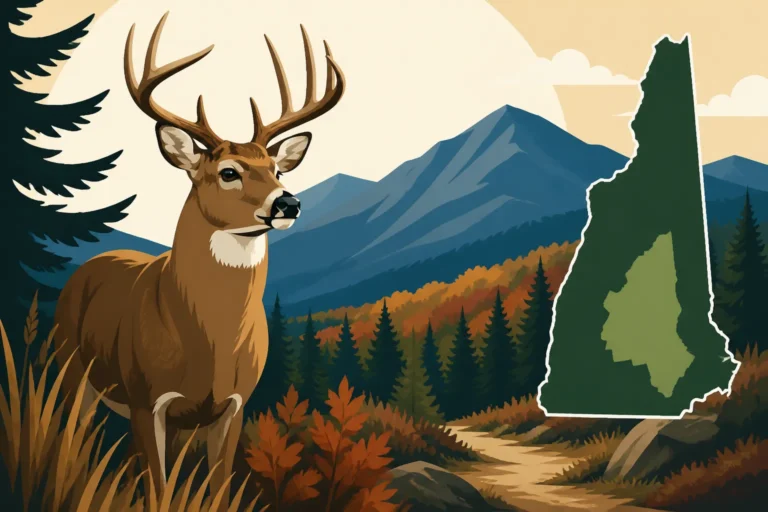
WMU E is geographically defined by some pretty clear lines, generally encompassing the central and northern reaches of the White Mountain National Forest. Imagine drawing a box around the highest peaks, the deepest notches, and the most expansive stretches of unbroken forest, and you're essentially looking at WMU E. It's bordered by WMU B to the north, C and D1 to the east, D2 and H2 to the south, and F to the west. This unit is characterized by dramatic elevation changes, from valley floors to towering peaks like Mount Washington, the highest point in the Northeast. You'll find a mix of mature hardwood ridges, dense evergreen stands, winding river valleys, and remote alpine zones. The terrain is often steep, rocky, and unforgiving, sculpted by glaciers and millennia of harsh New England weather.
Navigating this unit means encountering features like Franconia Notch, Crawford Notch, and Pinkham Notch, all major geographical corridors that impact animal movement and hunter access. The vast majority of WMU E is public land, largely comprised of the White Mountain National Forest, which is a huge draw for hunters seeking genuine wilderness experiences. Unlike some other units with a patchwork of private parcels, in WMU E, you're primarily dealing with federal land. This means extensive access but also regulations specific to a National Forest, which are important to understand. You'll find countless brooks, streams, and rivers, including the headwaters of major systems, carving through the landscape, creating natural funnels and obstacles.
What Makes WMU E Unique for Hunters
WMU E truly stands apart from other New Hampshire WMUs due to its wild, mountainous character. It's not a place for road hunters or those looking for easy access to every corner. The uniqueness stems from several factors: the sheer amount of contiguous public land, the challenging topography, the prevalence of mature timber, and the often harsh weather conditions. Hunting here is a physical and mental test. You won't find many agricultural fields or suburban edges. Instead, you'll be dealing with vast wilderness, requiring navigation skills, endurance, and a deep understanding of how animals move and survive in such an environment. The game animals here are often pressured differently than in lower, more accessible units; they are accustomed to vast, rugged ranges and human presence that is often more recreational (hikers, climbers) than consistently hunting-focused in many areas.
The timber here ranges from thick, regenerating clear-cuts in some areas to towering old-growth stands, each presenting different cover and food sources. Water is abundant, flowing freely from springs and snowmelt, creating vital corridors for wildlife. Hunters often comment on the quiet solitude you can find here – the kind where the only sounds are the rustle of leaves, the crunch of snow, or the distant call of a hawk. It's a place where you truly feel immersed in nature, far from the everyday hustle. This immersion is a huge part of the appeal, but it also means greater responsibility for self-sufficiency and safety. Preparing for the unique demands of this environment is paramount, from your physical conditioning to the gear you pack, like reliable optics for spotting game across wide mountain valleys, or a Best Binoculars for a North Country Bog for those lower elevation pockets.
Game Species and Habitat in WMU E
WMU E might not boast the highest deer densities compared to some southern New Hampshire units, but it offers a unique challenge and the potential for exceptional animals. The habitat, while rugged, supports a variety of game, each with its own adaptations to the high country. Understanding these species and their relationship with the challenging terrain is key to formulating a successful hunting strategy. The sheer remoteness in many parts of WMU E means that animals often live longer, grow larger, and are generally less accustomed to intense human pressure than those in more populated areas.
White-Tailed Deer and Their Challenges in High Country
Deer in WMU E are truly mountain deer. They are typically leaner, often smaller-bodied than their southern counterparts, but incredibly hardy and elusive. They have to work harder for their food, navigate steep slopes, and endure severe winters. This makes them incredibly tough and intelligent animals. You won't find them congregating in vast fields of alfalfa here; instead, they'll be browsing on regenerating forest growth, feeding on acorns when mast crops are good, or seeking shelter in dense conifer stands during harsh weather. Reading a White Mountain Deer Yard becomes critical when snow starts to pile up, as these sheltered areas are where deer seek refuge and can often be found concentrated.
The challenge for hunters is finding these deer. They're not spread evenly across the unit. Instead, they concentrate in areas offering a combination of food, cover, and thermal protection. South-facing slopes, lower elevation benches, and areas of diverse forest composition are often key. Hunting pressure, while present, is often more spread out than in other WMUs, meaning deer are less likely to be pushed into predictable patterns by human presence alone. However, the sheer size of the unit and the difficult terrain means you'll be covering a lot of ground, often silently still-hunting through thick timber or patiently waiting on a Hunting a Granite Ridge Saddle. It's a commitment, but the reward of harvesting a White Mountain buck is immense.
Moose and Bear Opportunities in the Core
WMU E, being largely part of the North Country, offers incredible opportunities for moose and bear. While moose permits are allocated through a lottery system and notoriously difficult to draw, if you are lucky enough to get a tag, WMU E provides prime moose habitat. Moose thrive in areas with wetland complexes, beaver flowages, and young forest growth, all of which are found within this extensive unit. The dense, wet conditions of spruce-fir forests and regenerating clear-cuts offer both food and cover. If you secure a permit, understanding New Hampshire Moose Season Dates is your first step, followed by extensive scouting. The sheer size and power of a New Hampshire moose mean that careful shot placement and a solid retrieval plan are non-negotiable.
Black bears are also prevalent throughout WMU E, thriving in the expansive, remote forests. The combination of dense cover, abundant natural food sources like berries and nuts, and limited human development creates ideal conditions for bears to flourish. Hunting bears in WMU E can be done through baiting or hound hunting, with specific regulations and season dates applying to each method and WMU. Checking Your WMU's Bear Season Dates is crucial as they can vary. Whether you're patiently waiting over a bait site or following hounds through the rugged terrain, bear hunting in WMU E offers an adrenaline-pumping experience. These animals are intelligent and wary, providing a true challenge to any hunter.
Small Game and Upland Birds
While big game often dominates the conversation for WMU E, don't overlook the fantastic small game and upland bird opportunities. The diverse forest types, from mature hardwoods to dense softwoods, provide excellent habitat for species like ruffed grouse, woodcock, and snowshoe hare. Ruffed grouse thrive in younger forest stands and along logging roads and edges, where they can find grit and forage. New Hampshire Ruffed Grouse Population Cycles play a role in how good a given year's hunting will be, but there are always birds to be found. A good bird dog can be invaluable for flushing these wily birds from the thick cover.
Woodcock, migratory birds known for their unique courtship flights, can be found in moist, young forest habitat, often near water sources. Their migration through New Hampshire means they can be present in good numbers during certain times of the fall. Snowshoe hare, with their iconic white winter coats, provide another exciting hunting opportunity, especially in areas of dense spruce and fir thickets. Running beagles through these areas on a crisp winter day, tracking fresh sign in the snow, is a quintessential New England experience. WMU E's vastness ensures plenty of undisturbed habitat for these species, offering a different pace of hunting that can be just as rewarding.
Navigating Public Land and Access Challenges in WMU E
Hunting in WMU E is, for the most part, a public land affair. The White Mountain National Forest covers the vast majority of this unit, offering unparalleled access for those willing to venture deep into the backcountry. However, "access" doesn't always mean easy access. This is rugged, unforgiving terrain that demands respect and proper planning. Many hunters face the challenge of getting truly off the beaten path, away from the hiking trails, and into areas where game animals thrive with less human disturbance. This is where tools and knowledge become your best friends.
White Mountain National Forest Access and Regulations
The White Mountain National Forest (WMNF) is a national treasure, and its extensive network of trails, forest roads, and vast undeveloped areas are open to hunting, with some key considerations. Unlike state wildlife management areas, the WMNF has its own set of rules in addition to state hunting regulations. For instance, while you can camp almost anywhere in the WMNF, there are specific regulations regarding distances from roads, water, and trails, as well as rules about campfires and waste. Understanding Camping Rules on White Mountain National Forest Land is essential for multi-day hunts. Vehicle access is generally limited to designated forest roads, many of which are gated during certain times of the year, pushing hunters to use foot travel or mountain bikes to get deeper.
It's absolutely critical to understand property boundaries, even within a national forest, as there can be private inholdings or adjacent state lands with different rules. This is where modern mapping tools like onX Hunt become invaluable. They offer detailed topographical maps, satellite imagery, and overlays that clearly show public/private land boundaries, forest service roads, and even contour lines, helping you plan your approach and avoid accidental trespass. Many frustrations arise from not knowing where you are or if you're on public land, and onX Hunt removes that uncertainty entirely.
Overcoming Terrain and Weather Obstacles
The terrain in WMU E is the primary challenge. We're talking about steep ascents and descents, rocky slopes, thick blowdowns, and boggy valleys. This isn't flat ground hunting. Physical fitness is a major factor here; you'll be burning calories and testing your endurance. Footwear is also incredibly important. Best Boots for White Mountain Granite Trails are a must-have, providing ankle support, traction, and waterproofing against the often wet and uneven ground. Expect to encounter significant elevation changes during even a short hike, and these changes dramatically affect animal movement and your strategy.
Weather is another formidable obstacle. New Hampshire's White Mountains are infamous for their rapidly changing and often severe weather patterns. A beautiful, crisp fall morning can quickly turn into a driving rain or snowstorm, even in October. Temperatures can plummet, and wind chills can be brutal. Layering your clothing system, with moisture-wicking base layers, insulating mid-layers, and a waterproof/windproof outer shell, is not just a suggestion but a necessity for survival. Layering for a Wet White Mountain Day is a skill you'll quickly master out of necessity. Always pack emergency supplies, including a first-aid kit, fire starter, extra food and water, and a reliable headlamp, because getting caught unprepared in this environment can be dangerous.
Essential Tools for WMU E Success
Beyond the obvious weapon of choice and appropriate clothing, certain tools can dramatically increase your safety and success in WMU E. A high-quality GPS unit or a robust mapping app like onX Hunt on your phone (with downloaded offline maps!) is non-negotiable. Cell service is spotty to non-existent in much of the WMNF, so relying on live data is a recipe for getting lost. A compass and paper map are excellent backups. Best Offline Map App for the North Country is a topic frequently discussed among seasoned mountain hunters, and for good reason.
Optics are also critical. Whether it's good binoculars for glassing distant slopes or a rangefinder for those longer, clearer shots that occasionally present themselves, quality glass is a game-changer. Given the potential for packing out a large animal, a sturdy pack frame or a game cart (if the terrain allows for it on certain forest roads) should be part of your plan. Additionally, a reliable headlamp with extra batteries is crucial for pre-dawn hikes in and post-dusk hikes out, especially when Tracking a Deer in Fresh White Mountain Snow takes longer than anticipated. A satellite messenger or personal locator beacon offers peace of mind for solo hunters or those venturing far from main roads, allowing you to call for help even without cell service.
Strategies for Hunting Success in WMU E
Hunting in WMU E isn't about sitting in a blind over a food plot; it's about active, adaptive hunting. The mountains demand a dynamic approach, where patience is balanced with persistent effort. Success here often comes down to intimate knowledge of the terrain, an understanding of animal behavior in a challenging environment, and the flexibility to change your plans based on what the mountain presents.
Scouting the Mountainous Terrain
Effective scouting is the bedrock of success in WMU E. It's not enough to just look at a map; you need to understand how the terrain funnels animals, where they find food, and where they seek cover. Start with topographic maps and satellite imagery (again, onX Hunt is excellent for this, allowing you to mark waypoints, track distances, and visualize elevation). Look for natural funnels like saddles between ridges, creek crossings, and benches on steep slopes. Identify potential bedding areas in dense cover and feeding areas where hardwoods might drop acorns or where new growth from a timber cut provides browse. Reading Aerial Photos for North Country Deer can reveal hidden features you'd never spot from the ground or a standard topo map.
Ground scouting, even outside of hunting season, is invaluable. Hike the trails, explore forest roads, and just get a feel for the lay of the land. Look for old sign, rub lines, scrapes, and tracks. Pay attention to changes in vegetation, which often indicate different microclimates or soil types that might attract or deter game. During the season, use your optics to glass distant slopes and clearings, especially at first and last light. Animals will often move more openly during these low-light periods, using the cover of darkness to travel between bedding and feeding areas.
Adaptable Hunting Methods for the Core
Given the varied terrain and conditions of WMU E, a versatile hunting approach will serve you best. Still-hunting is often highly effective. This involves moving slowly and deliberately through the woods, taking a few steps, then pausing for several minutes to observe, listen, and scan the surroundings. The goal is to spot game before it spots you, or to hear the subtle sounds of an animal moving through the underbrush. This method works well in the dense timber and allows you to cover ground while remaining stealthy. Still-Hunting White Mountain National Forest Timber requires extreme patience and a keen eye.
For those who prefer to sit, identifying strategic ambush points is key. Look for saddles, pinch points along ridgelines, or funnels where game is naturally channeled. Hanging a treestand in a mature hardwood where deer might be feeding on acorns or along a well-used travel corridor can be productive. However, remember the rules for Treestand Rules on New Hampshire Public Land in the WMNF. Using a ground blind, especially one brushed in naturally, can also work in areas where treestand placement is difficult or where you need to conceal yourself effectively at ground level. This could be near a beaver flowage or a dense thicket where deer are known to bed. Ultimately, the most successful hunters in WMU E are those who can adapt their methods to the specific situation the mountain presents on any given day.
WMU E Hunting Overview
To give you a clearer picture of what to expect in WMU E, here's a brief overview of key factors for hunters. Remember, conditions and success rates can vary annually, so always consult the most current New Hampshire Fish and Game Digest.
| Factor | Description |
|---|---|
| Primary Land Type | Predominantly White Mountain National Forest (Public Land) |
| Terrain Characteristics | Rugged, mountainous, steep slopes, granite outcroppings, dense timber (hardwood and softwood), river valleys, notches. |
| Primary Game Species | White-tailed Deer, Black Bear, Moose (lottery permit), Ruffed Grouse, Woodcock, Snowshoe Hare. |
| Deer Density | Lower than southern WMUs, but generally larger, harder-earned animals. Focus on specific habitat pockets. |
| Moose Habitat | Excellent habitat, particularly in wetland complexes, beaver flowages, and regenerating forest. Limited permits make it a sought-after hunt. |
| Bear Habitat | Abundant throughout the remote forests, with good natural food sources. Hunted via baiting or hounds (check specific WMU E regulations). |
| Access Challenges | Limited vehicle access on gated forest roads, extensive foot travel required, challenging navigation due to rugged terrain and lack of cell service. |
| Weather Conditions | Highly variable, prone to rapid changes, can include rain, snow, and extreme cold, even in early fall. Requires robust layering and emergency preparedness. |
| Key Tools for Success | High-quality mapping apps (e.g., onX Hunt with offline maps), GPS, compass, quality optics (binoculars, rangefinder), sturdy hiking boots, layering clothing system, satellite messenger, game recovery equipment. |
| Hunting Style | Best suited for active still-hunting, patient stand hunting in strategic locations, and physically demanding backcountry excursions. Adaptability is crucial. |
Disclaimer
This article is for general informational purposes only and does not constitute professional advice. Laws, prices and regulations vary by location and change over time. Consult a qualified professional for guidance on your specific situation.