Ridge Country Terrain Defines WMU H2
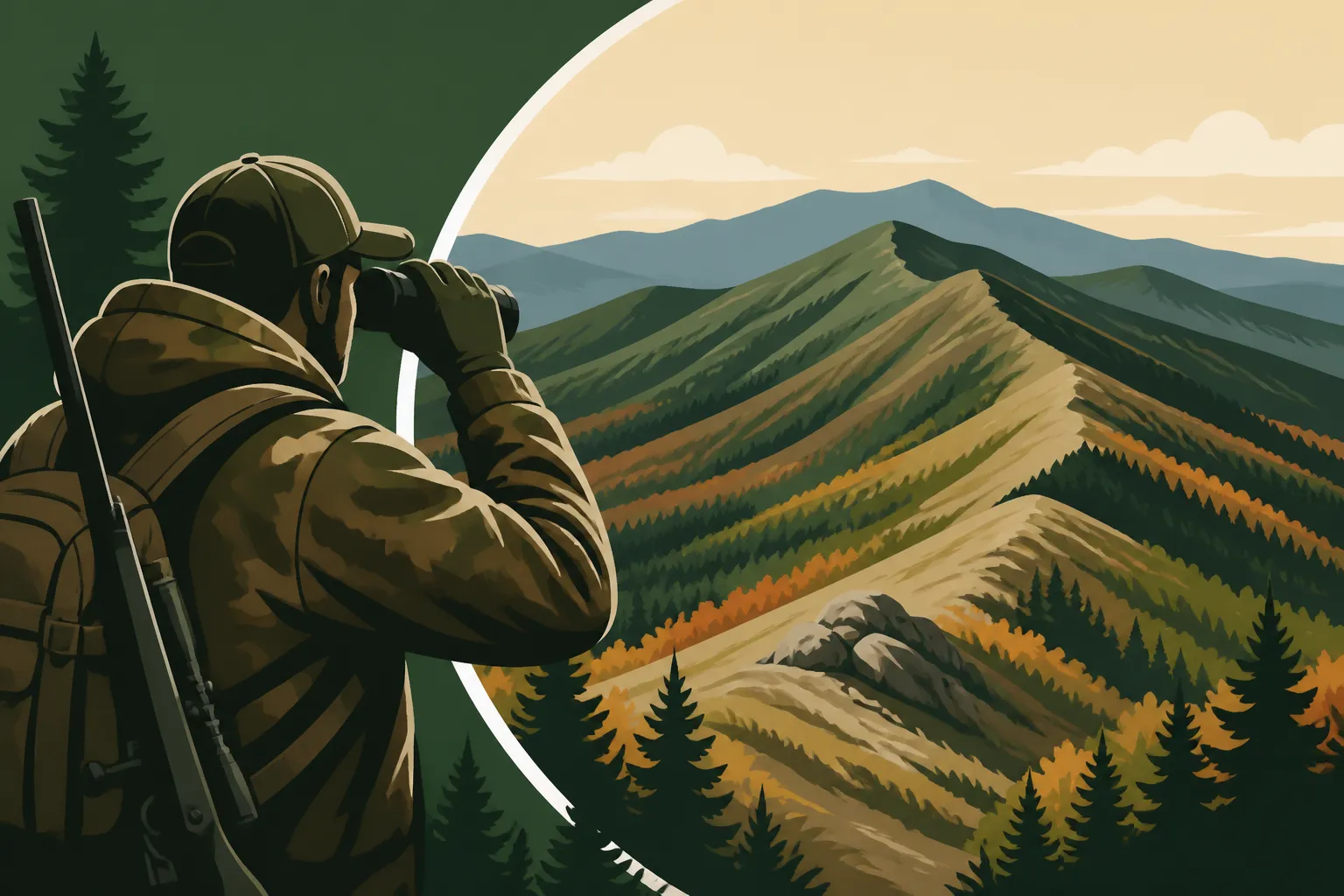
If you've ever cast your eyes over a topographical map of New Hampshire's WMU H2, you know exactly what "ridge country" implies: a relentless series of rises and falls, granite outcrops, and thick timber that can make hunting feel like a relentless uphill battle. Many hunters feel overwhelmed by the sheer scale of the landscape and the seemingly endless cover. This guide will help you decipher the terrain, understand how deer navigate these challenging hills, and equip you with the strategies and mindset to confidently hunt WMU H2's distinctive ridge country.
Understanding WMU H2's Distinctive Ridge Country Landscape
WMU H2 isn't your flatland deer hunting paradise. It's a region defined by its undulating topography, characterized by a series of prominent ridges and valleys that crisscross the landscape. This isn't just about steepness; it's about the consistent pattern of these natural features, which dictate everything from water flow to vegetation zones, and most importantly, deer movement. Getting a grasp on these elements is the first step to unlocking success in this challenging but rewarding environment.
The Geological Underpinnings of Ridge Country
The very backbone of WMU H2 is its geology. You'll encounter a lot of granite, exposed in dramatic ledges and scattered as loose rock fields. These rock features aren't just pretty to look at; they create natural barriers, funnels, and thermal currents that deer depend on. Ridgelines themselves often have distinct "shoulders" or "benches"—flatter areas along the contour of a hill that offer easier travel for deer than the steep slopes below or the exposed crests above. Saddles, those dips or low points between two higher peaks on a ridge, are absolute magnets for deer traffic, acting as natural crossing points. Understanding these subtle variations in elevation and rock formations is crucial for predicting where a whitetail might bed, feed, or travel. It’s like reading a secret map that only the deer, and now you, can understand.
Decoding Vegetation Patterns on the Ridges
The types of trees and undergrowth you find in WMU H2 are directly influenced by the ridge country. You'll often see mature hardwoods – oaks, maples, beeches – dominating the sun-ddrenched slopes and crests of the ridges. These provide critical food sources like acorns in the fall. As you descend into the valleys and north-facing slopes, or areas with poorer drainage, you're more likely to encounter dense stands of softwoods like hemlock, spruce, and pine. These thickets provide invaluable thermal cover and bedding areas, especially during harsh winter conditions. The edges where these distinct vegetation types meet are often prime travel corridors and excellent ambush points. A hunter who can spot these transitions, whether on a map or on foot, is well on their way to finding deer. Think about how a deer might prefer to walk through open hardwoods for easier travel but duck into a dense softwood stand for security; those transition lines are key. Hunting a Ridge-Top Saddle for Rutting Bucks often involves understanding these vegetative transitions.
The Secret Language of Deer Movement in WMU H2
Hunting in WMU H2's ridge country isn't about aimlessly wandering; it's about interpreting the subtle cues of the landscape and how deer use them. Deer in these areas operate on a different rhythm than their lowland cousins, constantly adapting to elevation changes, prevailing winds, and the distribution of food and cover. If you can learn to read these signs, you'll be one step closer to putting venison in the freezer.
How Deer Utilize Benches, Saddles, and Drainage Features
Deer don't climb straight up and down steep hills more than they have to. Instead, they prefer to use the "easiest" path, which often means traveling horizontally along benches or terraces that contour the ridge. These natural shelves, even subtle ones, create highways for deer traffic. Saddles, as mentioned before, are like the interstates of ridge country, connecting different drainages or sections of a ridge. Deer will funnel through these low points to move from bedding to feeding areas, or simply to get to the other side of a large ridge system. Similarly, drainage features – even dry creek beds or subtle swales – provide hidden travel routes that offer concealment from predators, including us hunters. Using a mapping application like onX Hunt can be incredibly helpful here, allowing you to identify these features from above and plan your approach, marking potential bedding or crossing points.
The Critical Influence of Wind and Thermals
In ridge country, wind isn't just a direction; it's a dynamic force that constantly shifts with the topography and time of day. Thermals, the rising and falling air currents, are equally important. As the sun warms the earth in the morning, air rises up the slopes. In the evening, as the air cools, it flows downward. Deer are acutely aware of these air currents and will use them to their advantage, often bedding on a leeward slope where their scent is carried up and away, or on a bench where rising thermals will alert them to anything below. You can't just check the weather app for a single wind direction and expect it to hold true across complex terrain. You need to understand how the wind will swirl and eddy around peaks and through saddles. Placing your stand or planning your still-hunt route to account for both prevailing winds and thermal drifts is paramount. Ignore them, and a savvy New Hampshire buck will likely bust you every time. This is where topics like Wind and Thermals in Steep Granite Terrain become absolutely essential knowledge.
Strategies for Hunting Ridge Country Whitetails in WMU H2
Hunting WMU H2 effectively demands a blend of careful planning, physical stamina, and adaptable tactics. It's not a place for the faint of heart or the unprepared. But for those willing to put in the effort, the rewards can be significant, offering some truly memorable encounters with mature New Hampshire whitetails.
The Power of Pre-Season Scouting and Mapping
Before the season even begins, your boots, binoculars, and a good mapping app are your best friends in WMU H2. Walk these ridges, learn the terrain, and identify key features. Look for pinch points, old logging roads, natural funnels, and especially, fresh sign like rubs, scrapes, and bedding areas. Even better, invest some time scouting using aerial photos and topographical maps. Services like GoHunt and onX Hunt allow you to digitally explore the landscape, marking potential hotspots and planning ingress and egress routes long before you step foot in the woods. Pay close attention to subtle contour changes, dense thickets that might hold deer, and water sources. Scouting New Hampshire Public Land Before Season is not just good advice; it's practically a requirement for success in this challenging terrain. You want to have a clear idea of where you think deer will be before you even load your pack.
Effective Hunting Methods for WMU H2's Terrain
Given the ruggedness, most hunters in WMU H2 lean into one of two primary methods: stand hunting or still-hunting.
Stand Hunting from Elevated Positions: When setting up a treestand, focus on those natural funnels and saddles we talked about. High-traffic areas where deer are forced to move predictably are ideal. Look for travel corridors that connect bedding cover (often thick softwoods in a valley or on a leeward slope) to feeding areas (hardwood ridges for acorns, or perhaps a small, remote clear-cut). Always consider your wind and thermals when hanging a stand; you want your scent to be carried away from expected deer travel lanes. Getting to your stand silently in the dark is another challenge, often requiring extra time and careful foot placement on rocky terrain. Hanging a Stand on a Granite Ridge is a skill that takes practice and careful attention to detail in this environment.
The Art of Still-Hunting: Still-hunting is particularly effective in WMU H2 because the terrain often forces deer into predictable patterns, and the constant elevation changes can hide your approach. Move slowly, taking one or two steps, then stopping to observe for several minutes. Use your binoculars constantly to pick apart distant cover. Focus on moving into the wind or crosswind, especially during periods when thermals are stable. Work ridge lines, paying close attention to the benches and edges where deer might be feeding or bedding. The key is patience; you're not covering ground rapidly, you're hunting every square foot of terrain. Still-Hunting White Mountain National Forest Timber techniques are highly applicable here, even outside the national forest itself.
Here's a quick comparison of some ridge country features and their hunting implications:
| Terrain Feature | Deer Behavior | Hunting Implication | Strategy Suggestion |
|---|---|---|---|
| Ridge Saddles | Primary travel corridors between peaks/drainages | High traffic, natural funnel points | Ideal for ambush stands, especially during rut |
| Ridge Benches/Shoulders | Easier travel, occasional bedding areas | Good still-hunting routes, potential mid-slope stand sites | Hunt slowly along benches, use thermals to your advantage |
| Hardwood Crests | Feeding areas (acorns, beech nuts), sun exposure | Excellent for morning/evening hunts, glassing opportunities | Sit overlooking mast crops, focus on transition zones |
| Softwood Thickets | Primary bedding, thermal cover, security | Difficult to penetrate, approach with extreme caution | Identify access points, hunt downwind/crosswind of edges |
| Steep Slopes | Avoided for travel, quick escape routes | Less travel, but can be used for quick evasions | Use as backdrop for stand, consider escape routes for drives |
Essential Gear for Navigating WMU H2's Rugged Terrain
Don't underestimate the physical demands of hunting WMU H2. The wrong gear can quickly turn a hopeful day into a miserable experience. Being prepared for the unique challenges of ridge country, from your boots to your binoculars, is non-negotiable for safety and success.
Footwear Fit for Granite and Gripping Slopes
Your feet are your most important asset in ridge country. You need boots that provide exceptional ankle support, outstanding traction on slick rock and loose leaves, and waterproof protection for stream crossings and dewy mornings. Look for stiff soles that can handle sharp rocks without your feet feeling every point and edge. Investing in a high-quality pair of hiking or hunting boots is not just a luxury; it's a necessity. Blisters or a twisted ankle can end your hunt, or worse, put you in a dangerous situation miles from the nearest road. Think about the need for durability and comfort over long, strenuous days of climbing and descending. Boots for New Hampshire's White Mountain Granite Terrain is a great place to start researching.
Optics for Unraveling Dense Timber and Distant Ridges
While the timber can be thick, the broken terrain also offers opportunities for long-range glassing. A good pair of binoculars (10x or 12x magnification) is invaluable for picking apart distant hemlock stands, spotting a flick of an ear on an opposite ridge, or identifying movement in dense undergrowth. Even in seemingly thick woods, a quality optic can help you discern a deer from a stump, saving you precious stalking time. A rangefinder is also critical for confident shot placement, especially when shooting across ravines or up/down steep slopes, where distances can be deceiving. Don't cheap out on glass; it's your window into the whitetail's world.
Navigation and Communication in Remote Settings
Cell service in many parts of WMU H2 can be spotty or nonexistent, making reliable navigation and communication crucial. A dedicated GPS unit or a robust mapping app on your phone (like onX Hunt or GoHunt, with downloaded offline maps) is essential. Knowing exactly where you are, where property lines lie, and how to get back to your vehicle is paramount, especially when still-hunting deep into unfamiliar territory. Always carry a compass and a physical map as a backup. For emergencies, a satellite communicator can be a lifesaver, allowing you to send messages or an SOS even without cell service. Best GPS App for New Hampshire Public Land can help you choose the right digital tool, but remember, redundancy is key in the backcountry.
Disclaimer
This article is for general informational purposes only and does not constitute professional advice. Laws, prices and regulations vary by location and change over time. Consult a qualified professional for guidance on your specific situation.