New Hampshire Town Forest Hunting Access
For many New Hampshire hunters, the pursuit of game often leads to the vast expanses of the White Mountain National Forest or sprawling private timber tracts. However, many overlook a truly invaluable, yet often misunderstood, resource: our local town forests. These smaller, community-managed parcels offer fantastic, often convenient, hunting opportunities right in your backyard, but navigating their unique rules and varied access can be a puzzle. This guide aims to clear up that confusion, providing a comprehensive roadmap to successfully and respectfully hunt New Hampshire's diverse town forests.
Understanding New Hampshire's Town Forests
Before you even think about grabbing your gear, it’s crucial to understand what a town forest actually is and why it functions differently than, say, a state park or a federal wildlife area. Many hunters hear "public land" and assume a one-size-fits-all set of regulations, but with town forests, that couldn't be further from the truth. Each town forest is a microcosm, governed by its local community, and understanding this foundational difference is your first step to success.
What Exactly is a Town Forest?
Unlike state forests or the sprawling federal lands, town forests are parcels of land owned and managed by individual municipalities. They vary wildly in size, from a few dozen acres tucked behind a residential neighborhood to several hundred acres bordering larger state or private timber holdings. These lands are often acquired through donations, tax forfeitures, or direct purchases by the town for a variety of purposes. While some might be pristine wilderness, others are actively managed for timber, recreation, or watershed protection.
Imagine a mosaic across the state, where each town has its own little green jewel. Some of these parcels might be old woodlots, once part of a farm, that were eventually deeded to the town. Others could be larger tracts purchased decades ago to protect a water supply or simply preserve open space. The key takeaway is that these aren't centrally managed by a state or federal agency. Their management, and critically, their rules, originate at the local town hall. This hyper-local control is both their strength and their complexity for hunters.
Why They Exist and How They're Managed
Town forests exist for a myriad of reasons, reflecting the values and needs of the local community. Many were established to provide sustainable timber resources for the town, offer recreational opportunities like hiking and cross-country skiing, or protect important ecological features such as wetlands, rare plant habitats, or critical wildlife corridors. Some serve as educational outdoor classrooms for local schools. Because of these diverse objectives, management plans can vary significantly.
You might find a town forest that actively conducts selective timber harvests, creating new openings and diverse habitat beneficial for deer and other game. Another might be managed primarily for passive recreation, with an emphasis on preserving mature stands and minimizing human impact. These varying management approaches directly influence the type of hunting experience you'll have. A well-managed timber stand, for example, will offer different hunting opportunities than an untouched, old-growth section. It’s important to remember that these lands are often overseen by a town forest committee or conservation commission, groups made up of local volunteers who balance ecological health, community recreation, and sometimes, even limited revenue generation.
The Community Aspect of Town Forests
One of the most defining characteristics of town forests is their deep connection to the local community. These aren't just tracts of land; they're often cherished local treasures, used by dog walkers, trail runners, mountain bikers, bird watchers, and families out for a stroll. This multi-use aspect is fantastic for community engagement with nature, but it also presents a unique challenge for hunters. Unlike the remote backcountry of White-Tailed Deer Across New Hampshire, you're often sharing the woods with a diverse group of non-hunters.
This means that while hunting might be permitted, it's rarely the sole use of the land. Hunters on town forests have an even greater responsibility to be good stewards, practice extreme safety, and show respect to all other users. A negative interaction with a hiker can quickly lead to stricter hunting regulations or even outright bans in a town forest, as local residents have a direct voice in how these lands are managed. Success here isn't just about bagging game; it's about building and maintaining a positive image for hunting within the community.
Navigating Access and Regulations in Town Forests
This is where the rubber meets the road. Because town forests are locally managed, you can’t simply assume the rules you know from a state WMA or national forest apply. Each town might have its own specific ordinances, and a little homework upfront will save you a lot of headache, or worse, a citation. This variability is a common frustration for hunters trying to explore new areas, but it's also what keeps many of these spots from being overrun.
The Varying Rules from Town to Town
This is arguably the most critical point: there is no statewide blanket rule for hunting in New Hampshire town forests. What's legal in one town's forest could be strictly prohibited in another just a few miles away. Some towns embrace hunting as a valuable wildlife management tool and recreational activity, while others, often in more suburban areas, may restrict it significantly or even ban it outright due to concerns about public safety and conflicting land uses.
You might find one town forest that allows all legal methods (archery, firearms, muzzleloader), while the next town over only permits archery hunting, or restricts hunting to specific zones or times of year. Some towns require special permits or registration, even if you already hold a valid New Hampshire Hunting Licenses and What They Cost. Others might have specific rules about parking, access points, or the use of trail cameras. This variability means your first stop for any potential town forest hunt must be the town hall, or at least the town's official website, to review their specific ordinances. Don't rely on word-of-mouth; verify everything directly.
Permits, Parking, and Posted Areas
Beyond method and season dates, many town forests have specific logistical requirements. Parking can be a significant issue in smaller, often residential areas. Some town forests have designated parking lots, while others might require you to park along a road shoulder, which could have its own set of town-specific parking regulations. Imagine showing up pre-dawn, ready for a hunt, only to find a "no parking" sign where you intended to leave your vehicle, or worse, returning to a ticket! Always scout parking ahead of time, if possible.
Permits are another variable. While most state and federal lands don't require an additional permit beyond your hunting license, some towns do. This could be a free registration, allowing them to track usage, or a small fee to help with trail maintenance. Always check. Furthermore, pay very close attention to any posted signs. Town forests, even if generally open to hunting, will often have specific areas designated as "no hunting," "safety zones," or "archery-only zones," especially near trails, residential boundaries, or conservation areas. Respecting these boundaries is non-negotiable, and failing to do so could result in serious legal consequences and erode the privilege of hunting in that area for everyone.
Blaze Orange and Safety Considerations
Safety is paramount when hunting in any location, but it takes on an even greater importance in town forests where you're likely to encounter a high volume of non-hunting recreational users. New Hampshire has clear How Much Blaze Orange New Hampshire Requires during certain seasons, but in a town forest, consider exceeding the minimum, even if not legally required for your specific season. More visibility is always better when sharing the woods.
Always assume there are other people around, even if you haven't seen them. This means positive identification of your target and its background is absolutely crucial. Never take a shot where you can't be 100% certain of what lies beyond your target. When moving through areas with high foot traffic, consider carrying your firearm unloaded or cased, and always walk with a heightened sense of awareness. Engaging courteously with other users, perhaps with a friendly "Good morning, hunter in the area, just wanted to let you know," can go a long way in fostering mutual respect and preventing negative encounters.
Finding and Scouting Town Forest Parcels
With so many variables from town to town, how do you even begin to find these potential hunting grounds, let alone figure out where the deer might be? It might seem daunting, but with the right tools and a bit of effort, unlocking the secrets of New Hampshire's town forests can be incredibly rewarding. It often leads to finding overlooked pockets of game.
Using Digital Tools for Discovery
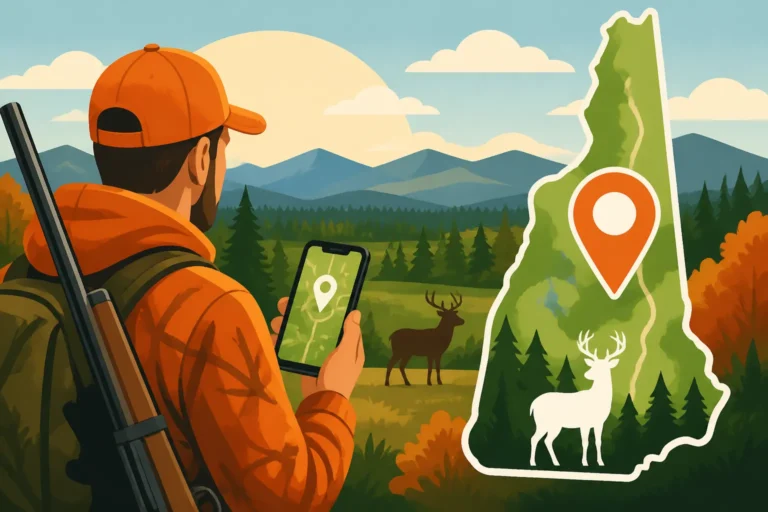
In the age of technology, mapping apps are your best friend for uncovering town forest hunting access. Platforms like onX Hunt and GoHunt are indispensable for this kind of research. These apps allow you to view public land boundaries, often including town-owned parcels, right on your phone or computer. You can overlay aerial imagery with property lines, topography, and even identify potential pinch points, cover, and water sources.
Start by zooming in on areas of interest around towns that you know or that are easily accessible to you. Look for the distinct green or shaded areas indicating public ownership. Once you've identified a promising town forest, use the app to investigate its boundaries, particularly where it abuts private land. You'll want to avoid accidental trespass. Reading Aerial Photos for North Country Deer tactics apply here too; look for changes in timber type, old logging roads, or terrain features that might funnel deer. Some apps even integrate with town parcel data, allowing you to click on a property and see the owner's name, which can be useful for identifying town-owned land. These digital reconnaissance missions save countless hours of aimless wandering and help you prioritize which parcels to investigate further.
Boots-on-the-Ground Reconnaissance
While digital tools are powerful, nothing replaces boots on the ground. Once you've identified a few promising town forest parcels and researched their regulations, it's time for some old-fashioned scouting. The best time for this is often in the late winter or early spring, before foliage explodes, making deer sign much more visible. This is also a great way to avoid disturbing game right before or during hunting season.
Walk the boundaries, noting any "no hunting" signs or safety zones. Identify potential access points and confirm parking. Look for deer sign like rubs, scrapes, tracks, and bedding areas. Pay close attention to transition zones – where hardwoods meet softwoods, where an old field meets timber, or where dense cover provides security near a food source. In smaller parcels, these edges are often where the action happens. You might find a well-used trail running along a swamp edge or a cluster of old apple trees that deer are hitting hard. Remember that many town forests have walking trails, which can be great for covering ground quickly, but also consider venturing off-trail to find undisturbed areas. Scouting New Hampshire Public Land Before Season is not just for big tracts; it's essential here.
Reading the Landscape for Game Sign
Town forests, despite their often modest size, can hold surprising numbers of deer and other game. The key is to understand how deer use these smaller, more pressured environments. They often gravitate towards the thickest cover available, using it as a sanctuary during daylight hours. Look for dense cedar swamps, thick stands of young pines, or steep, brushy ravines. These provide security and thermal cover, especially as seasons get colder.
Deer will also use terrain features to their advantage. A subtle ridge or a slight depression can act as a natural travel corridor, or "funnel," guiding deer movement. Hunting a Funnel Between Two Woodlots is a classic strategy that works particularly well in town forests, where these funnels might be compressed into smaller areas. Don't overlook water sources either; a small stream, a beaver flowage, or even a vernal pool can attract deer, especially during dry spells. Always keep the wind in mind when scouting and hunting. In these smaller areas, deer are extremely sensitive to human scent and will quickly vanish if they detect you.
Common Challenges and How to Overcome Them
Hunting New Hampshire's town forests isn't without its unique hurdles. These areas often present different challenges than hunting remote wilderness, primarily due to their smaller size and proximity to human activity. But with a thoughtful approach, these obstacles can be successfully navigated, turning potential frustrations into opportunities.
Dealing with Hunting Pressure
Let's be real: any easily accessible public land, especially smaller parcels near populated areas, is likely to see hunting pressure. Town forests are no exception. This pressure can make deer more nocturnal, skittish, and prone to using dense, overlooked cover. It's a common complaint among hunters: "The deer are all pushed out!" But don't despair; Hunting Pressure on New Hampshire Public Land can be managed if you adjust your tactics.
To overcome pressure, you need to think differently. First, consider hunting during the week when foot traffic from other recreationists and other hunters might be lower. Second, don't be afraid to hunt the "unattractive" spots – the thickest, nastiest cover that most people avoid. Deer often hide in plain sight, just off a popular trail, if the cover is dense enough. Third, consider using a ground blind or a well-brushed-in natural setup. This minimizes your silhouette and scent cone in areas where deer are constantly on alert. Finally, adjust your timing. Deer might only move in these areas at first light or last light, hugging the edges of dense cover. Get in early, stay late, and be patient.
Limited Acreage and Edge Effects
Many town forests are not vast tracts of land. They can be relatively small, perhaps 50-200 acres, and often have irregular shapes, surrounded by private residences, roads, or other non-hunting zones. This limited acreage means you're dealing with a lot of "edge effect" – the area where two different habitats, or in this case, public and private land, meet. These edges can be fantastic for deer movement, but they also bring the challenge of staying within boundaries.
Successful hunting in limited acreage means precision in scouting and execution. You need to know your boundaries cold. Use your mapping app (like onX Hunt or GoHunt) to mark the precise property lines and refer to it frequently. You absolutely cannot afford to trespass, even accidentally. The edge where the town forest meets private property can be a hot zone for deer moving between feeding and bedding areas, but it's also where you need to be most vigilant about shot angles and target identification to avoid shooting onto private land. Consider stand placement that directs your shot into the public parcel, away from homes or roads. Sometimes, the smallest, most overlooked patch of woods, perhaps just a deep hollow or a thick brushy corner, can be a honey hole if it offers security.
Multi-Use Conflict with Other Recreationists
As mentioned, town forests are often shared-use spaces. You're likely to encounter hikers, mountain bikers, dog walkers (often with off-leash dogs), and nature enthusiasts. While most are respectful, some may not understand hunting or even be openly hostile to it. This can lead to uncomfortable situations or, worse, safety concerns if an unsuspecting person walks into your hunting area.
The best way to mitigate this is proactive safety and communication. Always wear more blaze orange than legally required during firearms seasons, and even consider it during archery season if the area sees heavy foot traffic. Choose stand locations that offer clear shooting lanes away from established trails. If you encounter other users, a friendly nod, a polite "Good morning," and a clear explanation of what you're doing (if they engage you) can go a long way. For instance, "Just out deer hunting, have a safe walk!" can diffuse tension. Remember, you are an ambassador for hunting. Your actions reflect on all of us. Losing your temper or acting aggressively will only confirm negative stereotypes and could lead to hunting restrictions in the future. Coexistence is key here.
Hunting Strategies for Town Forest Success
Alright, we've talked about understanding the land and navigating the rules and challenges. Now, let's dive into some practical hunting strategies that can genuinely make you successful in these unique New Hampshire town forest settings. These aren't necessarily complex tactics, but rather adaptations of traditional methods to suit the smaller, often pressured environment.
Still-Hunting and Ground Blind Tactics
Still-hunting is perhaps one of the most effective strategies for town forests. Instead of sitting in one spot for hours, still-hunting involves moving very slowly and deliberately through the woods, taking a few steps, then pausing for several minutes to observe, listen, and scan for movement. This method allows you to cover ground and find deer that might be tucked away in thick cover, especially if they are pushed by other hunters or recreational users. When moving, try to stay quiet, use the wind to your advantage, and focus on transition areas and dense bedding cover.
For sitting, Using a Ground Blind on Public Land can be incredibly effective. In town forests, you might not always have suitable trees for a treestand, or a treestand might be too conspicuous. A ground blind, especially one that's well-brushed-in with natural vegetation, allows you to remain concealed while offering a safe shooting lane. These are excellent for setting up near pinch points, along the edge of thick bedding areas, or overlooking small food sources like apple trees. The key is to set them up well in advance if possible, allowing deer to get used to their presence, and to ensure they blend seamlessly into the environment.
Small Drive Techniques
If you have a couple of hunting partners, small, organized drives can be incredibly productive in town forests, especially during the firearms season. The limited acreage and defined boundaries of many town forests lend themselves perfectly to this tactic. The idea is simple: one or two "drivers" slowly and quietly push through a section of cover, moving deer towards "posters" positioned strategically at likely escape routes. Deer Drives With Three or Four Hunters can be scaled down even further for these smaller parcels.
Successful small drives require careful planning. First, know the boundaries of the town forest intimately to avoid pushing deer onto private land. Second, understand the terrain and identify natural escape funnels or thickets where deer might try to slip out. Third, ensure clear communication between drivers and posters, either through radios or pre-determined signals. Blaze orange for all participants is absolutely essential for safety. This method isn't about running and yelling; it's about a controlled, methodical push that gently nudges deer into a position where a poster has a safe, ethical shot. It’s a great way to harvest deer that might otherwise stay bedded down tight in thick cover due to pressure.
Focusing on Edge Habitat and Funnels
Deer, especially pressured ones, are creatures of the edge. They utilize the transition zones between different cover types for safety, feeding, and travel. In a town forest, these edges are often abundant. Look for where a dense conifer stand meets a more open hardwood ridge, or where a brushy field border meets the deeper woods. These areas often provide both food and cover, making them prime spots for deer activity.
Funnels, as discussed earlier, are also critical. A narrow strip of timber connecting two larger woodlots, a choke point between a swamp and a housing development, or a subtle saddle in a small ridge can act as a natural conduit for deer movement. These are the places where you have the highest likelihood of intercepting a deer moving from bedding to feeding, or just generally navigating the landscape. Spend extra time scouting these areas, looking for fresh sign. Sometimes, the most subtle depression or rise in ground can create a funnel that deer consistently use. Consider setting up a stand or ground blind on a pinch point created by a beaver flowage or a deep gully. Hunting a Beaver Flowage Edge can be incredibly productive, as deer often travel the high ground along the water.
Respecting the Resource and Other Users
Hunting in New Hampshire's town forests is a privilege, not a right. The future of hunting access on these precious local lands depends heavily on how hunters conduct themselves. Showing respect for the land, the wildlife, and especially other people, is paramount to ensuring these opportunities remain available for generations to come.
Ethical Hunting Practices and Litter Prevention
Ethical hunting begins with knowing and adhering to all New Hampshire Fish and Game regulations, as well as any specific town ordinances for the forest you're hunting. This includes understanding New Hampshire's WMU-Based Deer Season Structure, bag limits, legal methods, and reporting requirements. Beyond the legalities, ethical hunting means making clean, quick kills, properly field dressing your game, and making every reasonable effort to recover any animal you shoot. Blood trailing can be particularly challenging in multi-use areas, so consider your shot choice carefully to minimize the need for extensive tracking.
Litter prevention is another huge part of responsible use. Leave nothing behind but footprints. This means packing out everything you pack in – spent shell casings, food wrappers, empty water bottles, and especially any trash generated during field dressing. If you use flagging tape for blood trailing, remember to remove it all once the animal is recovered. The sight of litter in a cherished town forest is a quick way to generate negative sentiment towards hunters and can lead to immediate restrictions. Be a positive example of outdoor stewardship.
Leaving No Trace Principles
The "Leave No Trace" principles are a fantastic framework for any outdoor activity, and they apply exceptionally well to hunting in town forests. These principles emphasize minimizing your impact on the environment. For hunters, this means:
- Plan Ahead and Prepare: Research regulations, weather, and terrain. Bring appropriate gear and know how to use it.
- Travel and Camp on Durable Surfaces: Stick to existing trails where possible, or move through dense vegetation carefully to avoid trampling sensitive plants. If you're utilizing a ground blind, ensure it's removed at the end of your hunt, or at least at the end of the season, unless town rules state otherwise.
- Dispose of Waste Properly: Pack it in, pack it out. This goes for all trash, and if you are field dressing an animal, be mindful of where you leave entrails. Try to move them off main trails and into dense cover, allowing nature to take its course without causing a nuisance for other users.
- Leave What You Find: Don't disturb historical artifacts, natural features, or wildlife.
- Minimize Campfire Impacts: (Less relevant for hunting, but if you stop for a break, follow fire safety).
- Respect Wildlife: Observe from a distance, don't follow or approach them, and avoid disturbing animals during sensitive times (like nesting or rearing young).
- Be Considerate of Other Visitors: This is perhaps the most crucial for town forest hunting. Yield to others on trails, keep noise levels down, and maintain a friendly demeanor.
By following these guidelines, you demonstrate respect for the land and the community that cares for it.
Coexisting with Hikers, Dog Walkers, and Other Outdoor Enthusiasts
As discussed, town forests are vibrant community hubs. Successfully hunting them requires a mindset of coexistence. It means understanding that while you might be focused on deer, others are there to walk their dog, enjoy a quiet hike, or take photos of birds. Your presence, while legitimate, can sometimes be perceived as intrusive or even threatening if not handled with care.
A few key strategies for positive coexistence:
- Be Highly Visible: Beyond legal requirements, wear extra blaze orange. Make yourself easily seen.
- Be Polite and Approachable: A smile and a brief "Good morning" can go a long way. If someone expresses concern, calmly explain that hunting is permitted and that you're being safe. Don't engage in arguments.
- Avoid High-Traffic Areas During Peak Times: If a certain trail is always packed with hikers on Saturday mornings, consider hunting a different part of the forest, or choose a weekday.
- Control Your Dog (if hunting with one): If you hunt with a dog (e.g., for Snowshoe Hare in New Hampshire or Small Game and Predator Hunting in New Hampshire), ensure it is under strict control and will not bother other users or wildlife.
- Plan for Game Recovery: Consider how you will extract an animal from the woods, especially if it's near trails or residential areas. Having a game cart or a plan for discreet removal can prevent awkward encounters.
Ultimately, the future of hunting in New Hampshire's town forests lies in the hands of hunters themselves. By being responsible, safe, and respectful, we can ensure these unique local opportunities continue to thrive.
Disclaimer
This article is for general informational purposes only and does not constitute professional advice. Laws, prices and regulations vary by location and change over time. Consult a qualified professional for guidance on your specific situation.