Hunting a Beaver Flowage Edge
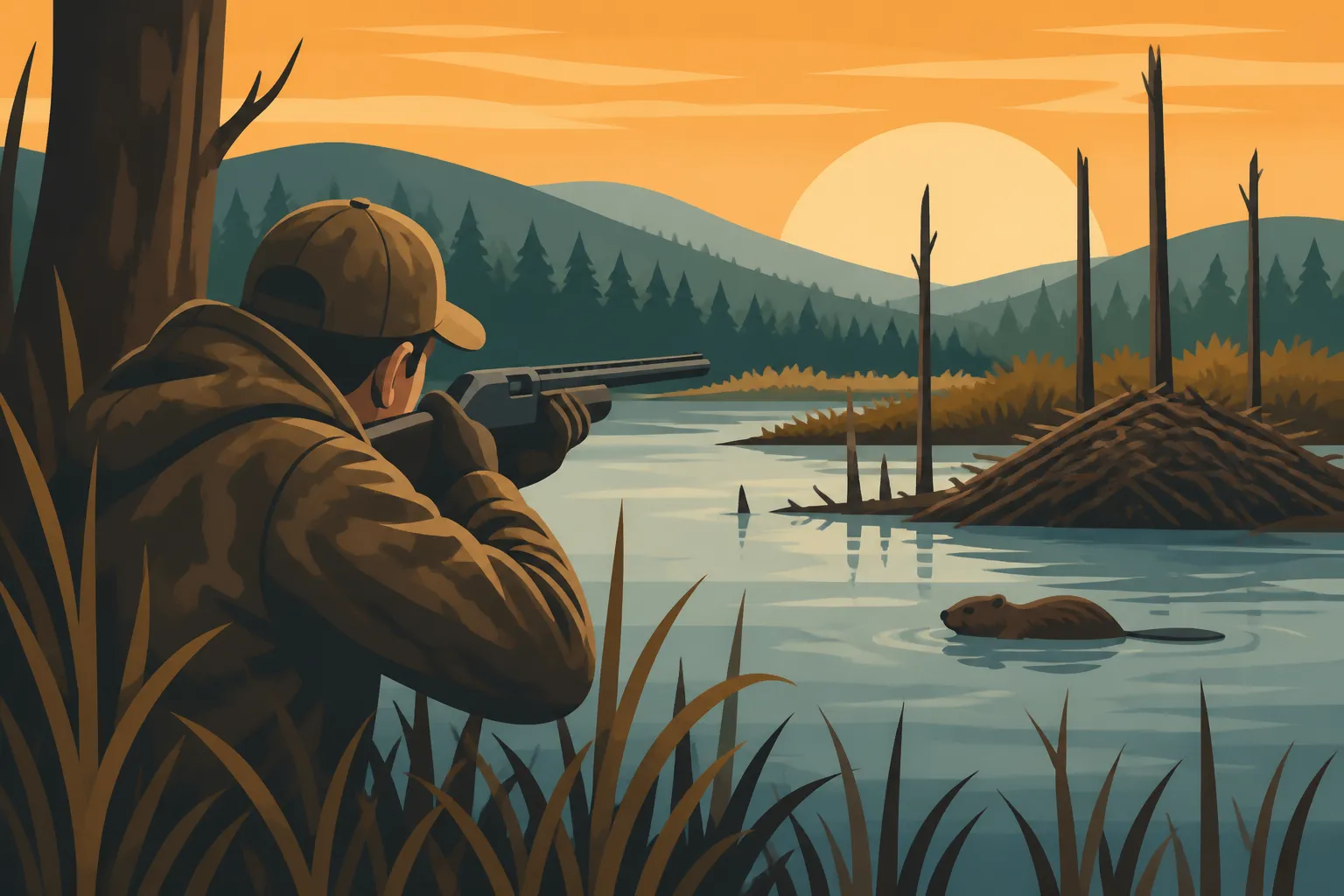
For many New Hampshire hunters, the sight of a beaver flowage can be both intriguing and intimidating. These wetland ecosystems, with their flooded timber, intricate dam systems, and often challenging access, can seem like impenetrable fortresses. But for those willing to put in the effort, the edges of these flowages are absolute magnets for game, offering unique hunting opportunities that are often overlooked by the less persistent. This guide will walk you through the nuances of identifying, scouting, and effectively hunting the prime edges of New Hampshire's numerous beaver flowages.
Understanding the Beaver's World: Why Flowages are Hunter Hotspots
Beaver flowages are much more than just flooded areas; they are dynamic, ever-changing ecosystems engineered by one of nature's most industrious creatures. These areas transform the landscape, creating diverse habitats that attract a wide array of wildlife, making them prime real estate for hunters.
The Ecological Niche of a Beaver Flowage
Think about what a beaver does: it fells trees, builds dams, and creates ponds. This process drastically alters the local hydrology, leading to areas of standing water, dead timber, and new vegetation growth around the edges. The standing water creates new niches for aquatic insects, amphibians, and fish, which in turn attract birds and other predators. The dead and dying trees become excellent homes for cavity-nesting birds and small mammals, while the rich, disturbed soil along the banks sprouts succulent new growth. This mosaic of habitat types — open water, drowned timber, boggy edges, and regenerated forest — provides food, cover, and travel corridors for an incredible variety of game animals.
What Attracts Game to These Areas
The allure of a beaver flowage for game is multifaceted. For deer, the edges often offer dense bedding cover in thick alders or regenerating hardwoods, especially in areas where the beavers have recently moved on or expanded. The rich soil disturbances along the dam provide new forbs and grasses that deer love to browse, acting as natural food plots. For black bears, flowages are a buffet. They'll root around the soft earth for tubers and grubs, tear apart decaying logs for insects, and feast on any berry bushes or mast trees found on the higher ground surrounding the water. Waterfowl, of course, are drawn to the open water, especially in early mornings or late evenings, providing excellent opportunities for duck and goose hunters. Small game like rabbits and grouse also thrive in the varied cover these areas provide. It’s a complete ecosystem, bustling with life, which means game density can be significantly higher than in surrounding uniform timber.
Reading the Signs: Active vs. Abandoned Flowages
Not all beaver flowages are created equal, and knowing the difference between an active and an abandoned site is crucial for successful hunting. An active flowage will show fresh signs of beaver activity: newly chewed stumps, fresh mud on the dam, visible beaver lodges with recent repairs, and perhaps even beaver scent mounds. These areas are typically still expanding or being actively maintained. Game animals will be drawn to the constant fresh growth along the expanding edges and the reliable water source.
An abandoned flowage, on the other hand, might feature decaying dams, breached sections, and lodges that appear overgrown and unused. While the beavers may have moved on, these areas often transition into dense, swampy thickets of young trees and shrubs, which can be fantastic bedding cover for deer for years afterward. The water levels might be lower, exposing more land for foraging. Both types offer opportunities, but your strategy will differ. Active flowages are great for ambush hunting where beavers are still at work, or for game attracted to fresh browse. Abandoned sites, with their dense regrowth, often become sanctuary areas for deer, perfect for still-hunting or carefully placed ground blinds. Understanding these dynamics is key to effective scouting and strategizing your hunt.
Scouting Beaver Flowages: Beyond Just Looking at a Map
You can’t just walk up to a beaver flowage and expect to find game immediately. These areas require diligent, often challenging, scouting. They are complex environments that demand a combination of digital reconnaissance and physical boots-on-the-ground effort to truly unlock their potential.
Digital Scouting Tools for Flowage Identification
Before you ever step foot in the woods, modern digital scouting tools can give you a massive advantage. Satellite imagery is your best friend here. Look for dark, irregularly shaped bodies of water that might not be labeled as traditional ponds on standard maps. Pay attention to areas where streams or brooks appear to widen unnaturally, or where the forest canopy transitions abruptly to open water or marshy conditions. Platforms like GoHunt provide detailed topographic maps and satellite overlays that allow you to identify potential flowages, analyze elevation changes, and pinpoint access points or travel corridors leading to and from these wetlands. You can often see old logging roads or faint game trails on these aerial views that might be hidden by vegetation at ground level. This initial phase of Reading Aerial Photos for North Country Deer can save you hours of wasted effort in the field, helping you prioritize which flowages to investigate further. Look for pinch points, narrow sections of land between the water and a steep ridge, or subtle changes in vegetation that could indicate higher, drier bedding areas nearby.
Boots-on-the-Ground Reconnaissance
Once you've identified promising flowages digitally, it’s time to get your boots muddy. There's no substitute for walking the edges, looking for fresh sign. You're searching for deer tracks in the soft mud, rub lines on saplings, and active scrape lines along the banks. For bear, look for overturned rocks, shredded logs, and claw marks on trees. On active flowages, you’ll want to confirm fresh beaver activity – new cuttings, mud slides, and well-maintained dams. Pay close attention to trails leading in and out of the flowage. Deer will often use these corridors to enter and exit the dense cover for feeding or bedding. Look for "edge" habitats where the wetland transitions to higher ground, as these are natural travel lanes. During your scouting, mentally map out potential stand sites or ground blind locations, considering prevailing winds and sun angles. It’s also a great time to assess the navigability of the terrain, identifying areas of deep muck, dense tangles, or relatively open walking paths. This hands-on experience is critical, especially when Scouting New Hampshire Public Land Before Season, as conditions can change dramatically year to year.
Timing Your Scouting Missions
The timing of your scouting missions can significantly impact what you discover. Early spring, after snowmelt but before thick foliage emerges, is an excellent time to scout. Without leaves on the trees, you can see further into the woods, observe subtle topography, and identify old trails that might be obscured later in the year. Plus, deer sign from the previous fall and winter is still visible, giving you clues about historic usage. Late summer, just before hunting season, is another prime window. The new season’s fresh sign will be apparent, and you can assess current food sources like acorns or soft mast. However, be prepared for heavy insect pressure during this time. For specific game, consider their cycles. If you're targeting deer, scout during the late summer to early fall when they are establishing their patterns. For bears, spring and early summer scouting can reveal denning areas or prime foraging spots as they emerge from hibernation. Always remember to minimize your disturbance during scouting; you don't want to alert wary game to your presence before the season even begins.
Strategic Approaches to Hunting the Edge
Hunting the edge of a beaver flowage demands a blend of patience, stealth, and a deep understanding of animal behavior. It's about capitalizing on the natural movement patterns that these unique habitats create. Whether you prefer an elevated position or ground-level concealment, proper strategy is paramount.
Stand Placement: Treestands and Ground Blinds
Choosing the right stand placement around a beaver flowage is a careful balance of visibility, concealment, and wind direction. For a treestand, look for mature hardwoods on slightly higher ground that overlook a natural funnel or a heavily used game trail leading to or from the flowage. A prime spot might be where a dry ridge dips down to the water’s edge, creating a natural pinch point. You want to be high enough to see over some of the lower vegetation but not so high that you silhouette yourself against the sky. Always position your stand with the prevailing wind in mind, ensuring your scent is carried away from expected game travel routes.
Ground blinds are also incredibly effective around flowages, especially in dense thickets of alder or regenerating timber along the banks. These thickets offer excellent natural cover, allowing you to blend in seamlessly. When Using a Ground Blind on Public Land, choose a location that offers good shooting lanes but still provides ample concealment. Brush in your blind extensively using natural materials from the surrounding area. Pay attention to the sun's position throughout the day; you don't want to be staring directly into it at prime hunting hours, nor do you want it highlighting your position. A well-placed ground blind can offer fantastic close-range opportunities, especially for deer that might be feeding right along the water's edge.
Still-Hunting the Perimeter
Still-hunting the perimeter of a beaver flowage can be incredibly productive, especially if you're targeting bedded deer or foraging bears. This method requires extreme patience and a slow, deliberate pace. Focus on walking into the wind or with a crosswind, constantly stopping, looking, and listening. Use the varied terrain and thick cover to your advantage, moving from one piece of concealment to the next. The soft, often damp ground around flowages can muffle your footsteps, aiding in your stealth.
As you move, pay close attention to any breaks in the vegetation or subtle changes in elevation that could indicate a bedding area or a travel route. For example, a small rise of dry ground in the middle of a boggy area might be a preferred bedding spot. Keep your eyes peeled for deer flicking an ear, a patch of dark fur from a bedded bear, or the subtle movement of a turkey. This approach is similar to Still-Hunting White Mountain National Forest Timber, but with the added complexities of wet ground and denser undergrowth. You’ll be covering ground, but at a glacial pace, allowing you to spot game before it spots you, and giving you time to set up for a shot.
The Importance of Wind and Thermals
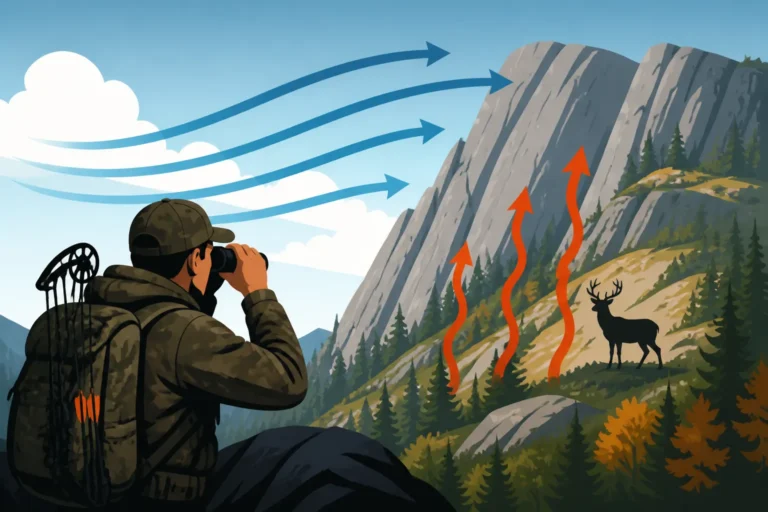
In any hunting scenario, understanding wind and thermals is critical, but around beaver flowages, it becomes an absolute imperative. These low-lying, often wet areas can create tricky microclimates that influence air currents. Cold air tends to sink, meaning in the mornings, thermals will generally carry your scent downhill and towards the flowage. As the sun rises and warms the air, thermals will reverse, carrying your scent uphill and away from the water.
Always try to position yourself so that the wind or thermal current is carrying your scent away from where you expect game to appear. This often means being on the downwind side of travel corridors or feeding areas. If you're still-hunting, continually monitor wind direction using a wind checker. In complex terrain with steep banks or surrounding hills, thermals can swirl, making consistent wind challenging to predict. This is where your scouting pays off, as you might have noticed patterns during your previous visits. Knowing how Wind and Thermals in Steep Granite Terrain behave will give you a significant advantage when trying to approach or ambush game around these natural magnets. A slight breeze can mean the difference between seeing that big buck and it smelling you before you even know it's there.
Adapting Your Tactics for Different Game Species
Beaver flowages are diverse habitats that attract a variety of game, each with its own behaviors and preferred patterns. To be truly successful, you need to tailor your hunting strategy to the specific species you're pursuing.
Whitetail Deer: Feeding, Bedding, and Travel Corridors
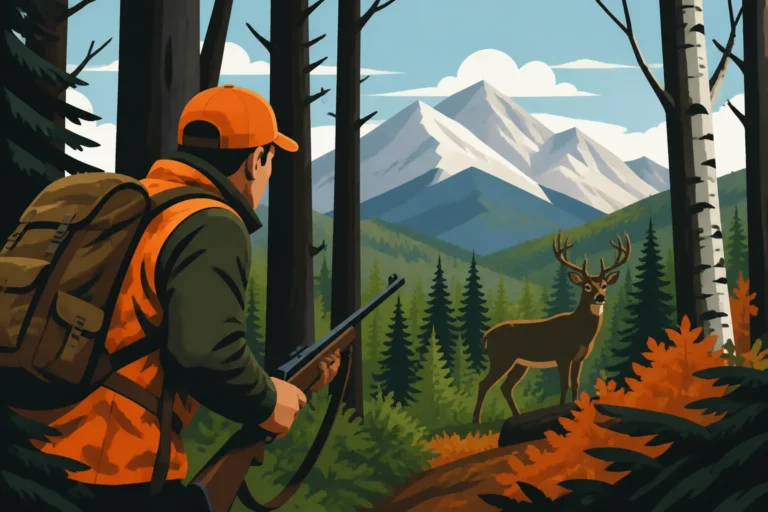
For whitetail deer, beaver flowages serve as fantastic sanctuaries and feeding grounds. The thick, regenerating cover around the edges provides ideal bedding, particularly if there are slightly elevated, drier pockets. Deer will often bed within these dense areas, feeling secure with the water on one side and impenetrable brush on the other. They'll also use the edge of the flowage as a natural travel corridor, especially during the rut when bucks are cruising for does, or when deer are moving between bedding and feeding areas. Look for well-worn trails entering and exiting the thickets, often leading to nearby agricultural fields, oak stands, or other Late-Season Food Sources for New Hampshire Whitetails.
When hunting deer, consider setting up early morning or late afternoon stands. In the morning, deer will be moving from feeding areas back to bedding cover around the flowage. In the evening, they'll be moving out to feed. During midday, still-hunting through the denser edges of the flowage can push out bedded deer, offering opportunities. Understanding Reading a White Mountain Deer Yard can also provide insight, as the dense cover around flowages often mimics the security and food source aspects of traditional deer yards, even if not explicitly defined as such. Be patient; deer in these thick environments often move slowly and deliberately.
Black Bears: Foraging and Rubbing Habits
Black bears are drawn to beaver flowages like magnets due to the abundance of food. They’ll actively forage along the banks, digging for tubers and grubs, and tearing apart old stumps and logs for insects. You might find "bear rubs" – trees where bears have rubbed their backs, leaving hair and scent, especially larger pines or cedars. These rubs are often near travel corridors or preferred foraging areas. Bears are also notorious for breaking into old beaver lodges or exploring culverts and drainage pipes connected to the flowage.
Hunting bears near a flowage often involves baiting, where legal, or still-hunting through known travel routes. If baiting, ensure your site is strategically placed with the wind in mind, allowing the scent to carry without alarming the bear to your presence. Always check your New Hampshire Bear Baiting and Hound Rules for your specific WMU to ensure compliance. If still-hunting, move very slowly, scanning constantly for movement or dark shapes. Bears often blend incredibly well into the shadows and thick undergrowth. Pay attention to fresh tracks and scat, which will tell you if bears are actively using the area. Bears are most active at dawn and dusk but can move throughout the day, especially in more remote or less pressured areas.
Waterfowl and Small Game Opportunities
Beaver flowages are a waterfowl hunter's paradise, particularly for wood ducks, mallards, and even some geese. The flooded timber and shallow edges provide perfect feeding and loafing areas. Decoying Ducks on New Hampshire's Connecticut River often involves setting up spreads in similar flooded timber environments. Setting up a spread of decoys, particularly wood duck and mallard decoys, in a strategic pocket of open water or along a beaver dam can be incredibly effective. Consider using a canoe or kayak to access more remote sections of the flowage. Jump-shooting is also an option, carefully navigating the perimeter and flushing birds from secluded pockets of water.
Beyond ducks, flowages offer opportunities for small game. Rabbits often thrive in the dense undergrowth and briar patches that grow up around the edges of abandoned flowages. Ruffed grouse will utilize the mix of young, dense timber and more mature trees for drumming and foraging. Squirrels will be found in any remaining hardwood trees, especially oaks or beeches. For these species, simply walking the edges with a shotgun or small-caliber rifle, flushing game as you go, can be a rewarding experience. The key is to move slowly, scanning for any sign of movement, and be ready for fast-flushing birds or rabbits bursting from cover.
Essential Gear and Safety Considerations for Wet Terrain
Hunting a beaver flowage edge is often a wet, muddy, and challenging endeavor. Having the right gear and prioritizing safety is not just about comfort; it's about making your hunt successful and ensuring you return home safely.
Footwear and Waterproofing
This is probably the most critical gear consideration for beaver flowage hunting. Forget your standard hiking boots; you need serious waterproofing. Knee-high rubber boots or chest waders are often indispensable. Look for options with good traction, as the mud and slippery logs can be treacherous. Brands like LaCrosse and Muck Boots are popular among New Hampshire hunters for their durability and comfort in wet conditions. Even if you don't plan on wading through deep water, the edges of flowages are almost always soft, wet, and muddy. You'll thank yourself for having waterproof footwear when you're trekking through a boggy section or crossing a small feeder stream. Consider wearing gaiters, even with tall boots, to prevent water or debris from getting inside when you're pushing through dense, wet brush. For really cold late-season hunts, look for insulated models to keep your feet warm, which is essential for Cold-Weather Sitting Strategy in the North Country.
Navigation and Communication
Getting lost in the intricate, often featureless terrain of a beaver flowage is a real concern. The flooded timber can make familiar landmarks disappear, and dense vegetation can disorient you quickly. A reliable GPS device or a mapping app on your smartphone, such as Best GPS App for New Hampshire Public Land, is absolutely essential. Download offline maps before you go, as cell service is often nonexistent in these remote areas. Mark your access point, stand locations, and any significant landmarks during scouting. A compass and a physical map are excellent backups in case of electronic failure.
Communication is also vital. Carry a fully charged cell phone (in a waterproof bag), but don't rely on it for emergencies. A satellite messenger device, like those from Garmin inReach or Zoleo, provides a lifeline for two-way communication and SOS capabilities, even when out of cell range. Let someone know where you're going and when you expect to return. Hunting solo in these challenging environments carries inherent risks, so being prepared for the unexpected is crucial.
Dealing with Mosquitoes and Other Pests
Where there's water, there are often insects, and beaver flowages are no exception. Mosquitoes, black flies, and ticks can be relentless, especially during warmer weather scouting trips and early season hunts. Dealing with these pests is not just a comfort issue; it's also a health concern, as ticks can carry Lyme disease and other illnesses.
Come prepared with a strong insect repellent containing DEET or picaridin. Permethrin-treated clothing can also be a game-changer, repelling ticks and other crawling insects. Wear long sleeves and pants, even on warmer days, to reduce exposed skin. A head net can be invaluable for maintaining sanity during particularly bad insect hatches. After your hunt, perform a thorough tick check, paying close attention to hidden areas like the scalp, armpits, and groin. Preventing bites and stings allows you to focus on your hunt and enjoy the experience, rather than constantly swatting away pests. Remember that Recovering a Deer From a Beaver Flowage might mean staying out after dark, so having proper lighting like a powerful headlamp is also essential.
Disclaimer
Hunting is an inherently dangerous activity. This guide provides information for educational purposes only. Always consult and strictly adhere to all current New Hampshire Fish and Game Department regulations, federal laws, and local ordinances before engaging in any hunting activities. Ensure you have the proper licenses, permits, and hunter education. Hunt safely, ethically, and responsibly.