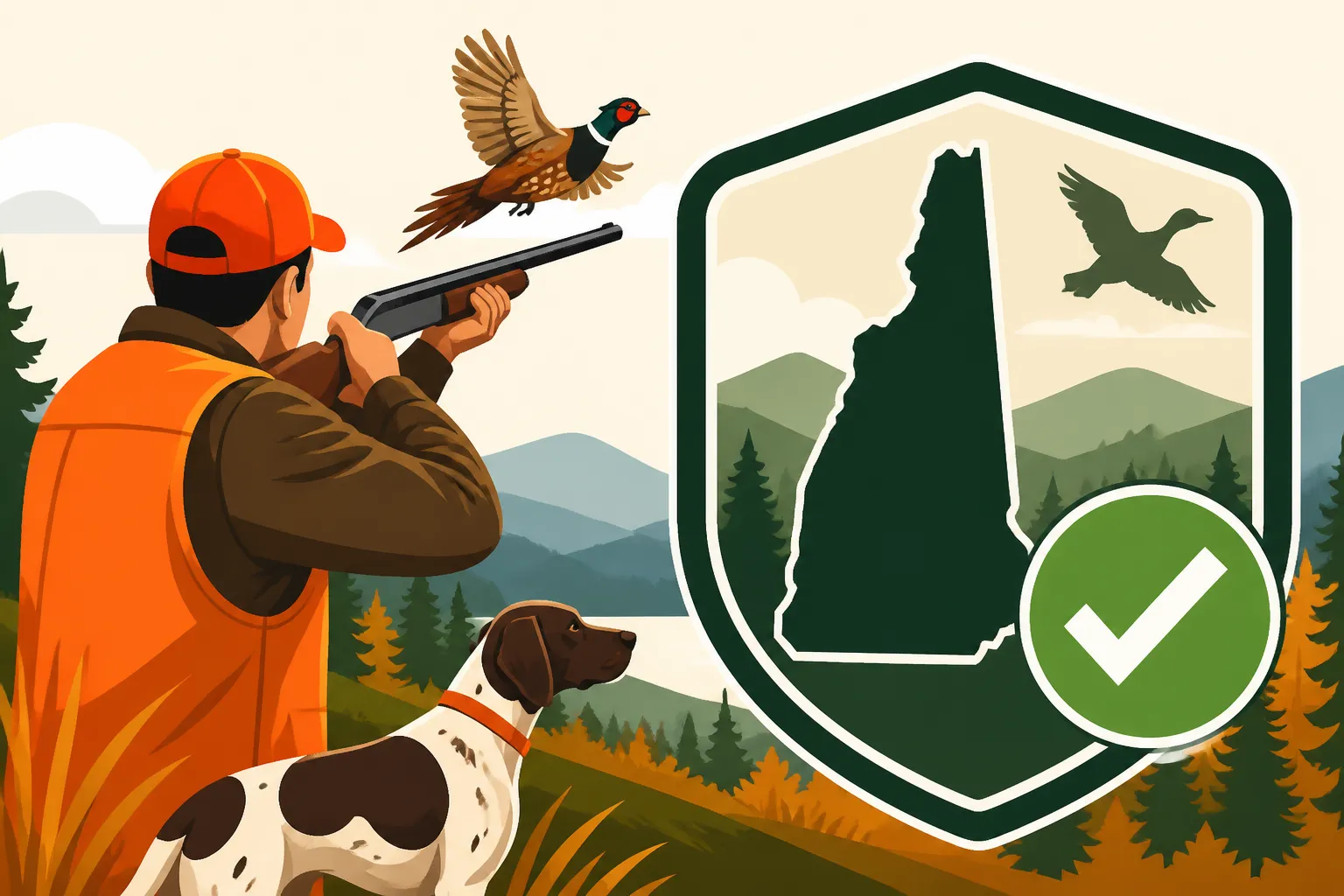
New Hampshire HIP Certification for Bird Hunters
For many bird hunters in New Hampshire, the thrill of anticipating the fall flight is often accompanied by a little head-scratching when it comes to licenses and permits. You've got your base license, your federal duck stamp, maybe even a state stamp, and then someone mentions "HIP certification," and suddenly, it feels like another hurdle. This guide is here to clear up that confusion, explaining exactly what New Hampshire HIP certification is, why it's crucial for bird hunters, and how you can easily get yours so you can focus on the birds.
What Exactly is HIP Certification and Why Do I Need It?
It’s easy to feel like you’re constantly jumping through hoops when it comes to hunting licenses and permits, and the Harvest Information Program (HIP) certification often feels like just another one. But trust me, this isn’t some arbitrary bureaucratic extra step; it’s a critical component of migratory bird management. It’s a way for wildlife agencies to gather vital data, directly from you, the hunter, to ensure healthy populations for years to come.
The Federal Mandate Behind Migratory Bird Hunting
Unlike deer or bear hunting, which are primarily managed at the state level, migratory birds—think ducks, geese, woodcock, snipe, doves, and rails—are managed under federal treaties with Canada and Mexico. This means that the U.S. Fish and Wildlife Service (USFWS) takes the lead role in setting broad guidelines for seasons and bag limits, which are then implemented by individual states like New Hampshire. Because these birds travel across state and international borders, getting a national snapshot of hunter activity and harvest numbers is absolutely essential for their conservation.
The HIP certification is the primary tool for collecting this information. It’s a federal requirement that every migratory bird hunter must complete annually, no matter which state you hunt in. When you complete your HIP certification, you’re essentially adding your name to a national database of migratory bird hunters. From this database, the USFWS can then randomly select a small percentage of hunters each year to participate in voluntary harvest surveys. These surveys are critically important because they help estimate the total number of birds harvested across the country, giving wildlife biologists the data they need to make informed management decisions. It’s a system designed to protect the very resource we cherish.
How HIP Data Helps Wildlife Management
Imagine trying to manage a business without knowing how much product you're selling or how much inventory you have. That's essentially what wildlife agencies would be up against without accurate harvest data. HIP data, combined with other extensive surveys like breeding population counts and banding studies, paints a comprehensive picture of migratory bird populations.
For species like mallards and Canada geese that frequent New Hampshire's waterways, understanding local and regional harvest rates is critical. If harvest rates are too high in one area, it could impact breeding populations elsewhere along the Atlantic Flyway. The information gathered through HIP helps wildlife managers at organizations like New Hampshire Fish and Game determine appropriate bag limits and season lengths. For instance, if data suggests a decline in woodcock populations, federal frameworks might be adjusted, leading New Hampshire to modify its season dates or daily bag limits for that species. This ensures that hunting remains sustainable, striking a balance between hunter opportunity and species conservation. Without hunters diligently completing their HIP certification, this crucial data would be missing, potentially leading to less effective management and, in the long run, fewer birds for everyone.
Getting Your New Hampshire HIP Certification
The good news is that obtaining your New Hampshire HIP certification is typically a straightforward process, certainly easier than finding that elusive wood duck in a thick beaver flowage. It's often bundled right into your annual license purchasing routine, so it doesn't have to be a separate, intimidating task.
The Simple Steps to Certification
Before you can even think about HIP certification, you’ll need to ensure you have a valid New Hampshire hunting license. This is your foundational permit for hunting any game in the state. Once that's squared away, getting your HIP certification is usually just a few extra clicks or a quick conversation.
Most hunters complete their HIP certification when they purchase their annual hunting license online through the New Hampshire Fish and Game Department's licensing portal. When you select your hunting license, you’ll likely be prompted with a series of questions related to migratory bird hunting. It will ask if you intend to hunt migratory birds, and if you answer yes, it will then lead you through the specific HIP survey questions. The system will guide you, making sure you don't miss any steps. If you prefer to buy your licenses in person at a vendor, the staff there will guide you through the same questions to get you HIP certified on the spot. It's truly designed to be as seamless as possible, integrating into the existing license purchasing system rather than being a completely separate application. Think of it as an add-on to your regular license, essential for any bird hunting adventures.
What Questions to Expect During Certification
The survey questions you'll encounter during HIP certification are designed to gather broad harvest information from the previous hunting season, not to quiz you on your memory or accuracy down to the bird. Don’t stress about recalling exact numbers; your best estimate is what’s required. The questions typically cover which types of migratory birds you hunted last year and how many you harvested, categorized by species groups.
For example, you might be asked:
- "Did you hunt doves last year?" If yes, "About how many doves did you harvest?"
- "Did you hunt ducks last year?" If yes, "About how many ducks did you harvest?"
- "Did you hunt geese last year?" If yes, "About how many geese did you harvest?"
- Similar questions will follow for woodcock, snipe, rails, and coots.
The key here is honest estimation. The USFWS isn't looking to catch you in a lie; they're looking for general trends and participation levels to help inform their stratified random sampling. Your answers help them decide which hunters to send more detailed voluntary harvest surveys to later in the season. These initial questions help create an accurate cross-section of the migratory bird hunting population. So, don't worry about being perfectly precise; just provide your best recollection, and you'll be doing your part for conservation.
Common Pitfalls and Important Reminders for Bird Hunters
Even seasoned hunters can sometimes overlook the small details, and HIP certification is one of those things that can easily slip through the cracks amidst all the other preparations for hunting season. A little vigilance can save you a lot of hassle and ensure your hunting experience is both legal and enjoyable.
Forgetting Your HIP Certification
It's a surprisingly common mistake, and one that can lead to an uncomfortable conversation with a New Hampshire Fish and Game warden in the field. You've got your shotgun, your decoys are set, the thermos is hot, and you're ready for the morning flight, but then a warden asks to see your license and HIP certification, and you realize you never completed that extra step. Ouch. Forgetting your HIP certification means you’re technically hunting migratory birds illegally. While the penalties might vary, it's generally considered a violation and can result in fines and a disruption to your hunt.
The simple fact is, if you plan to hunt any migratory birds in New Hampshire—whether it’s the early goose season on the Connecticut River, chasing fall turkeys during the shotgun-only week (yes, turkeys are considered migratory game birds in many contexts, though the HIP specifically targets species like ducks, geese, woodcock, snipe, etc. often covered by the federal migratory bird treaties), or pursuing woodcock in the uplands—you must have current HIP certification. It’s as non-negotiable as having a federal duck stamp if you’re over 16 and hunting waterfowl. Many hunters rely on mapping apps like GoHunt to find public access points and navigate complex wetland systems, which is fantastic for fieldcraft. But the regulatory side, like your HIP certification, is a separate, vital step that shouldn't be overlooked. Always double-check your licensing documents before you head out.
Re-certifying Each Year and for Each State
One of the most crucial things to remember about HIP is that it is an annual certification. Even if you were HIP certified last year, you’ll need to do it again for the current hunting season. This isn't just a New Hampshire rule; it's how the federal program works to ensure the most up-to-date data is collected each year. The migration patterns, breeding success, and hunter participation can change from one season to the next, so annual certification keeps the data fresh and relevant for management decisions.
Furthermore, if you’re an adventurous bird hunter who likes to pursue ducks in New Hampshire in October, then perhaps head to Maine for a November grouse hunt, and maybe even down to Massachusetts for late-season sea ducks, you’ll need a separate HIP certification for each state you hunt in. Each state acts as its own sampling frame for the federal program. So, while your New Hampshire HIP is valid for hunting migratory birds within the Granite State, it won't cover you if you cross the border into Vermont or Maine. It’s an easy mistake to make, especially for those who hunt in multiple states. Tools like GoHunt can be invaluable for pinpointing those prime duck blinds or goose fields, but remember that the actual HIP certification has to go through the official New Hampshire Fish and Game channels for their state's specific program, and similarly for any other state you plan to hunt. So, before you cross any state lines with your shotgun, make sure you've taken the extra minute to get properly certified for that state.
The Impact of HIP on New Hampshire's Waterfowl Seasons
New Hampshire might be known for its granite peaks and lush forests, but it also plays a vital role in the Atlantic Flyway, hosting a diverse array of migratory birds. The data collected through the Harvest Information Program is directly translated into the regulations that govern our waterfowl and migratory bird seasons, profoundly impacting hunter opportunities and conservation efforts.
How Data Influences Bag Limits and Season Structure
The HIP data collected from hunters across New Hampshire, along with the detailed voluntary surveys sent to a subset of those hunters, provides a critical foundation for setting regulations. New Hampshire Fish and Game biologists work closely with the USFWS and other flyway states to analyze this data. For instance, if the HIP data, combined with federal breeding population surveys, shows a decline in a particular duck species’ population—say, pintails or black ducks—it might trigger a discussion about reducing bag limits or shortening seasons for those species in the following year. Conversely, if populations are robust, and hunter participation and harvest levels are within sustainable limits, the state might maintain or even adjust for longer seasons or more generous bag limits.
This collaborative, data-driven approach is why you see specific regulations for different species, why the New Hampshire Duck and Goose Bag Limits can vary by species, and why some seasons are split into different segments throughout the fall and winter. It’s all an effort to manage the harvest effectively, ensuring that enough birds survive to return to their breeding grounds and sustain future populations. Without hunters like you completing their HIP certification, this intricate system would lose a vital piece of the puzzle, potentially leading to less precise management and less healthy bird populations over time.
New Hampshire's Place in the Atlantic Flyway
New Hampshire, while relatively small, is an important stopover and breeding ground for many migratory birds navigating the Atlantic Flyway. From the extensive wetlands along the Connecticut River to the coastal marshes and inland ponds, the state offers crucial habitat. Understanding the dynamics of the New Hampshire Waterfowl on the Atlantic Flyway is crucial for any serious bird hunter, and HIP data feeds directly into this understanding.
Species like mallards, wood ducks, green-winged teal, and Canada geese either breed here or pass through in significant numbers. The data gathered from New Hampshire's HIP certified hunters contributes to a larger picture that helps manage these populations not just locally, but regionally and continentally. For example, if a large number of Canada geese are harvested in New Hampshire's Northern Zone Waterfowl Dates, that data is weighed against harvest data from other states along the flyway, as well as breeding population surveys, to ensure that the overall population remains healthy. This collaborative management means that your participation in the HIP is not just about local compliance, but about contributing to the sustained health of migratory bird populations across their entire range. It’s a powerful example of how individual hunter actions contribute to collective conservation success.
Here's a quick look at some key details regarding your New Hampshire HIP Certification:
| Requirement Category | Detail | Important Notes |
|---|---|---|
| Who Needs It | All migratory bird hunters (ducks, geese, woodcock, snipe, doves, rails, coots). | This includes both residents and non-residents. |
| When to Get It | Annually, before hunting migratory birds. | Typically completed when purchasing your New Hampshire hunting license. |
| How to Get It | Online via NH Fish and Game licensing portal or in-person at a license vendor. | Involves answering a short survey about previous year's migratory bird hunting activity. |
| Cost | No additional fee beyond your regular hunting license and federal duck stamp. | It's a certification, not a separate permit with a fee. |
| Proof of Certification | Typically printed on your hunting license or available digitally. | Always carry proof when hunting migratory birds. |
| Multi-State Hunting | Required for each state where you hunt migratory birds. | A New Hampshire HIP certification is only valid in New Hampshire. |
| Purpose | Helps wildlife agencies collect vital harvest data for species management. | Contributes to sustainable hunting practices and setting season dates/bag limits for all species on the Atlantic Flyway. |
Disclaimer
Always consult the official New Hampshire Fish and Game Department website or the current New Hampshire Hunting Digest for the most up-to-date regulations, season dates, and licensing requirements. Information can change, and it is the hunter's responsibility to be aware of and comply with all applicable laws.