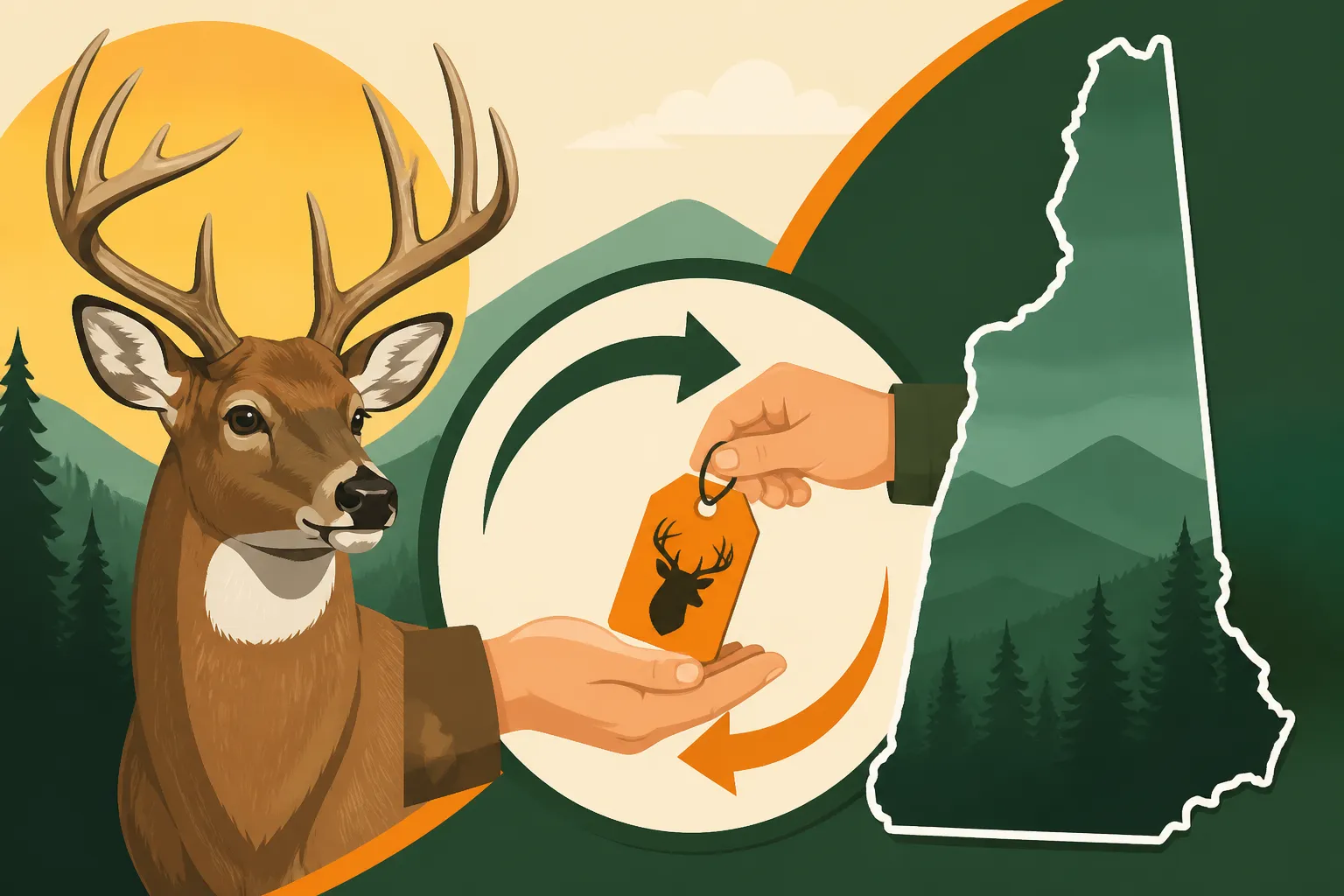
New Hampshire Deer Tag Transfer Rules
It’s a common scenario: you’ve got a hunting buddy who hasn't filled their tag, or maybe a new hunter in the family wants to try their hand, and you’ve got an extra deer permit burning a hole in your pocket. The thought inevitably crosses your mind: can I just transfer my New Hampshire deer tag to them? Navigating the rules around hunting licenses and tags can feel like trying to track a ghost in fresh snow, especially when you’re just trying to be helpful or make the most of an opportunity. This guide is here to shed some light on the specific regulations in New Hampshire regarding deer tag transfers, helping you understand what’s permissible, what’s definitely not, and why these rules are in place.
Understanding New Hampshire's General Rule on Deer Tag Transfers
Let’s get right to it: in New Hampshire, your deer tag, once purchased and issued to you, is generally non-transferable. This might seem strict, but it's a foundational principle in wildlife management that ensures fair chase, proper harvest reporting, and population control. Your hunting license and the tags that come with it are specific to you, the individual hunter.
The Individual Hunter Principle: Why Your License is Yours Alone
Every hunting license and associated tag issued in New Hampshire, whether it's your general deer tag or a specific permit, is linked directly to your hunter education credentials and your unique hunter identification number. This personalization is crucial for several reasons. Firstly, it ensures accountability. When a deer is harvested, it's tied back to the individual who pulled the trigger or released the arrow, allowing the New Hampshire Fish and Game Department to accurately track harvest data, manage herd health, and enforce regulations.
Imagine a scenario where tags could be freely transferred. It would become nearly impossible to monitor individual hunter impact, understand regional harvest pressure, or even ensure that every hunter has met the necessary safety and education requirements. For instance, a novice hunter who hasn't completed their New Hampshire Hunter Education Requirements couldn't simply be given your tag to go out and hunt. The system is designed to prevent such loopholes, maintaining integrity in the field.
The Concept of "Tagging Out": Who Owns the Harvested Animal?
The moment you successfully harvest a deer in New Hampshire, your tag must be immediately and properly affixed to the animal. This act of "tagging out" signifies that you are the person who lawfully harvested that specific animal. The physical tag serves as proof of legal possession and officially registers that deer as part of your individual bag limit for the season.
The regulations are quite clear: once a deer is down, it's your deer to tag. You cannot, for example, harvest a deer and then decide to use your friend's unused tag because you've already filled your own. This practice, known as "party hunting" in some contexts or illegal transfer in others, directly undermines bag limits and fair chase principles. It’s also important to be familiar with the New Hampshire Deer Reporting Requirements, as correctly registering your harvest is a critical part of the process that further ties the animal to your license.
Digital vs. Physical Tags: Does the Format Matter?
In our increasingly digital world, New Hampshire offers options for managing licenses and permits. You might have a physical tag or be utilizing a digital version through an app. However, the format of your tag does not change the core rule: it's still non-transferable.
Whether it’s a physical paper tag you punch and attach, or a digital confirmation you might be able to display on a mobile device (always check the current regulations for specific digital use rules), the legal principle remains the same. The tag belongs to the individual hunter whose name and license number are associated with it. Any attempt to use another person's tag, regardless of its form, is a violation of state hunting laws and can lead to significant penalties. This includes everything from the fundamental New Hampshire Hunting Licenses and What They Cost to specialized permits; they are all linked to the individual.
Common Misconceptions and Why Transfers Are Restricted
Many hunters, especially those new to the state or less familiar with the nuances of wildlife regulations, often harbor misconceptions about tag transfers. These often stem from a good place – a desire to share the hunting experience or to avoid "wasting" an unused tag – but they can lead to serious legal trouble.
Sharing Tags After a Harvest: Why It's a No-Go
Perhaps the most common misconception involves using an unused tag from another hunter after you've already harvested your own animal. Let's say you've tagged a magnificent buck during New Hampshire's November Firearms Deer Season, and your hunting partner, for whatever reason, hasn't had any luck. You might think, "Well, my tag is filled, but they have an extra one. Can I use theirs for another deer if I get the chance?" The answer is a resounding no.
Each hunter has a specific bag limit, and once you've reached that limit and tagged your animal, your individual hunting privilege for that species is fulfilled. Using another person's tag, even with their permission, is considered an illegal harvest. This rule isn't arbitrary; it directly impacts the accuracy of harvest data that New Hampshire Fish and Game uses to set future season limits and manage deer populations effectively. Without accurate data, they can't ensure a healthy, sustainable herd for everyone.
"Borrowing" a Tag for Another Hunter: The Legal Implications
Another scenario that trips people up is the idea of "borrowing" a tag for another hunter, especially if they forgot theirs or didn't get one. You might have a young relative who wants to try hunting for the first time, and you think, "I have an extra antlerless tag, they can just use mine." This is also illegal.
Only the person whose name is on the license and tag is legally permitted to use it. If a new hunter, even a youth, wants to participate, they must obtain their own appropriate licenses and permits, such as those covered under New Hampshire Youth Deer Weekend Rules or New Hampshire Apprentice Hunter License Rules. These programs are specifically designed to introduce new hunters safely and legally, under proper supervision. Attempting to circumvent these established pathways by using another person’s tag can result in fines, confiscation of the harvested animal, and even the suspension of hunting privileges for both individuals involved.
The Safety and Management Rationale: Why These Rules Exist
At its core, the non-transferability of hunting tags is about sound wildlife management and hunter safety.
From a management perspective, every tag represents a potential harvest that is accounted for in population models. If tags could be freely moved between hunters, it would make accurate population assessment and harvest forecasting incredibly difficult, leading to potential overharvest in some areas and under-harvest in others. New Hampshire's New Hampshire's WMU-Based Deer Season Structure relies heavily on precise data to set quotas and season lengths in different regions.
From a safety standpoint, requiring each hunter to have their own license and tag reinforces the importance of hunter education and individual responsibility. It ensures that everyone participating in the hunt has a direct stake in understanding and adhering to the regulations, promoting safe practices in the field. This also ties into important public health measures, such as New Hampshire's CWD Prevention Rules, where knowing who harvested an animal in what area is vital for tracking potential disease spread.
Legitimate Scenarios for Shared or Assisted Harvest
While outright tag transfers are generally prohibited, there are specific, legal scenarios where hunters can share the experience or assist each other in ways that might feel like a transfer but are distinct within the law. It's crucial to understand these distinctions to stay on the right side of New Hampshire Fish and Game regulations.
Youth and Apprentice Hunters: Mentored Hunting Exceptions
One of the most important exceptions is for youth and apprentice hunters. New Hampshire actively encourages new hunters, especially youth, to learn the traditions and ethics of hunting. Programs like the New Hampshire Mentored Youth Hunting Rules allow unlicensed individuals (of eligible age) to hunt specified game when directly supervised by a licensed adult mentor.
In these situations, the youth or apprentice hunter is typically using the mentor's license and tag, but under very strict conditions. The mentor must be of a certain age, possess a valid hunting license, and remain within a specific distance of the apprentice at all times. The harvested animal counts against the mentor's bag limit. This isn't a "transfer" of the tag itself, but rather an allowance for the mentor to share their hunting privilege and bag limit with a supervised beginner. It’s an invaluable way to introduce the next generation to hunting without compromising the integrity of the tagging system.
Landowner Permits: Specific Situations
Certain landowners in New Hampshire may be eligible for specific deer permits that address agricultural damage or nuisance deer. While these permits are issued to the landowner, they come with their own set of rules regarding who can use them and under what circumstances. For example, a landowner might be issued a special permit to harvest an antlerless deer to mitigate crop damage, and they may be able to designate someone to perform the harvest on their behalf, strictly following the permit's conditions.
However, this is not a free-for-all "tag transfer." These are specialized permits with narrow applications. The hunter using such a permit would still need their own valid hunting license, and the harvest would typically be reported under the specific permit, often counting against a separate quota or requiring a specific reporting process. It's vital for anyone considering hunting on a landowner permit to fully understand the New Hampshire Landowner Deer Permit Rules and the exact stipulations provided by Fish and Game for that specific permit. You can't just hand off your standard deer tag as a landowner.
Assisting in Game Recovery: Not a Transfer, But Related
Let's say you've successfully harvested a deer, but it’s a big one, or it’s in a tough spot—maybe down a steep ravine or deep in a beaver flowage. It's perfectly legal, and often encouraged, to enlist the help of friends, family, or even a tracking dog to recover your game. This is not considered a tag transfer. The deer is already legally tagged to you, and your assistants are simply helping you retrieve your lawfully harvested animal.
Similarly, if you're field dressing an animal, and a friend lends a hand, that's also fine. They are assisting in the processing of your deer. The key distinction here is that the act of harvesting and tagging has already occurred legally by the licensed individual whose tag is affixed. Resources like Recovering a Deer From a Beaver Flowage or Field Dressing a Deer in Cold Weather highlight these scenarios where assistance is practical and legal, as long as the initial harvest and tagging were done correctly by the licensed hunter.
Navigating the Rules and Avoiding Costly Mistakes
The world of hunting regulations can be complex, and making an honest mistake can still lead to serious consequences. Knowing where to find the most accurate information and who to ask for clarification is just as important as knowing the rules themselves.
Checking the Current Digest: Always Your First Step
The single most important resource for any hunter in New Hampshire is the official New Hampshire Fish and Game Department's hunting digest. This document, published annually, contains all the current laws, season dates, bag limits, and specific regulations for every game species. Before every season, and especially if you have questions about something as critical as tag usage, make reading the current digest your first priority.
You can usually find the digest online on the NH Fish and Game website, or pick up a physical copy wherever hunting licenses are sold. While helpful mapping and planning tools like GoHunt can provide excellent insights into terrain and potential hotspots, always cross-reference any regulatory questions with the official digest. Digital tools are fantastic for scouting, like using the GoHunt app to identify Hunting a Granite Ridge Saddle or Reading Aerial Photos for North Country Deer, but the law itself resides in the official publications.
When in Doubt, Contact NH Fish and Game: Get it Straight from the Source
If, after consulting the digest, you still have lingering questions or a unique situation isn’t clearly addressed, don't guess. The New Hampshire Fish and Game Department is there to help. Reaching out to their local conservation officers or calling their headquarters for clarification is always the safest bet.
They would much rather answer a question beforehand than deal with a violation after the fact. Be prepared to explain your situation clearly and concisely. Getting an answer directly from the source ensures you're operating within the bounds of the law, protecting both yourself and the integrity of New Hampshire's wildlife management efforts. This is far better than relying on hearsay from a buddy at deer camp or an internet forum, which might lead you astray.
The Ramifications of Non-Compliance: Fines, License Loss, and More
Ignoring or attempting to circumvent New Hampshire's deer tag transfer rules can have severe consequences. These aren't just minor infractions; they are violations of wildlife law and are treated seriously.
Potential Penalties for Illegal Tag Transfers:
| Violation Type | Potential Consequences (Examples) |
|---|---|
| Illegal Possession of Game | Seizure of harvested animal, significant fines (potentially hundreds to thousands of dollars). |
| Illegal Tagging / False Reporting | Fines, potential loss of hunting license for multiple years, mandatory hunter education retraining. |
| Aiding and Abetting a Violation | The individual attempting to transfer the tag and the individual using it can both face penalties. |
| Misrepresentation of a License | Fines, suspension of hunting privileges, legal fees. |
| Impact on Future Hunting Privileges | Accumulation of points against your hunting record, making it harder to obtain future licenses or participate in lotteries (e.g., New Hampshire Moose Lottery Application Process). |
Beyond the legal and financial penalties, there’s also the ethical cost. Adhering to these rules is part of being a responsible hunter and contributing to the conservation of New Hampshire's cherished wildlife. We all want to see healthy deer populations thriving, and respecting the regulations is a cornerstone of that mission. So, the next time you're thinking about a deer tag, remember: it’s personal, it’s for you, and keeping it that way helps keep New Hampshire hunting strong.
Disclaimer
Please note that this information is intended for general guidance and informational purposes only. Hunting regulations can be complex and are subject to change. Always consult the most current New Hampshire Fish and Game Department hunting digest and official resources for the definitive and up-to-date rules and regulations before participating in any hunting activity.