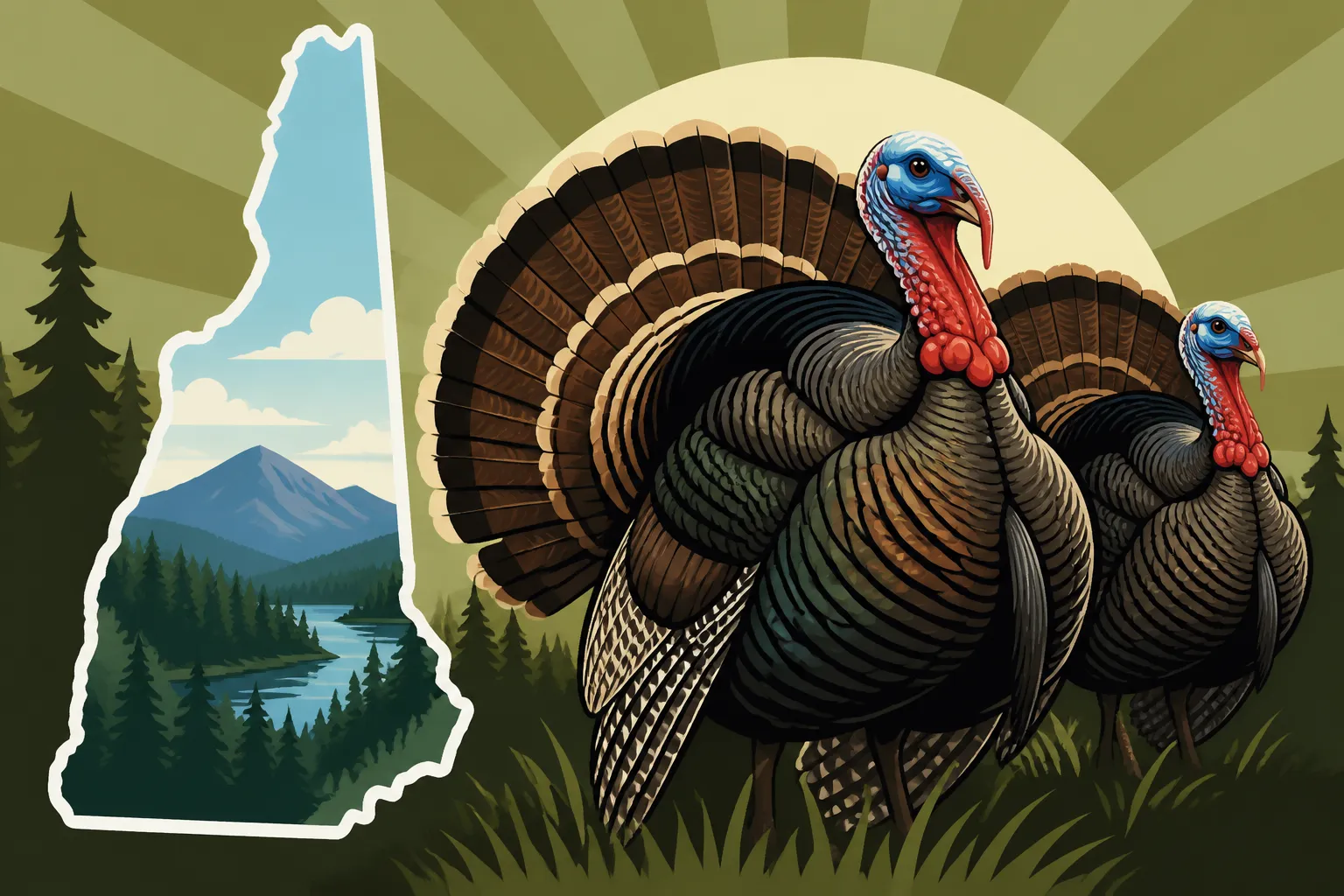
New Hampshire Record Book Gobblers
Hunting a truly exceptional wild turkey, one that might actually make it into the record books, is a different challenge than simply filling your tag. Many of us dream of taking that monster gobbler, but understanding what truly qualifies a bird for recognition and how to pursue such an elusive trophy requires specific knowledge and a strategic approach unique to the Granite State. This guide will walk you through what defines a New Hampshire record book gobbler, where to find these magnificent birds, and the steps to take if you’re fortunate enough to harvest one.
Understanding New Hampshire Record Book Gobblers
When we talk about "record book" wild turkeys, we're almost always referring to the scoring system established by the National Wild Turkey Federation (NWTF). This isn't just about the heaviest bird you've ever seen, though weight is certainly a factor. It’s a precise measurement of several physical characteristics that combine to create a total score, allowing for comparison of gobblers across the country. In New Hampshire, our Eastern wild turkeys can certainly hold their own, and understanding this system is the first step toward recognizing a true trophy.
The NWTF Scoring System Explained
The NWTF's scoring system is designed to provide a fair and consistent method for comparing turkeys. It takes into account three primary factors: live weight, beard length, and spur length. Each of these contributes to a cumulative score.
Let's break down how it works:
- Live Weight: The bird's weight in pounds is a critical component. For scoring, you multiply the live weight by a factor of two. So, a 20-pound gobbler would contribute 40 points to its score from weight alone. This immediately tells you that a heavier bird gets a significant boost. Imagine dragging a hefty 24-pound tom out of a thick cedar swamp; that extra weight really pays off on the scorecard.
- Beard Length: The length of the turkey's beard is measured in inches from the point where it emerges from the skin to the very tip. This measurement is then multiplied by a factor of ten. A dense, long beard, perhaps 10.5 inches, would add 105 points to the score. Hunters often mistakenly think multiple beards are an advantage, but it's only the longest beard that's officially measured. However, multiple beards often correlate with older, more dominant birds that tend to have impressive main beards anyway.
- Spur Length: The spurs, found on the back of the turkey's legs, are measured along the outside curve from the point where they emerge from the scaly leg skin to the tip. Each spur is measured individually, to the nearest sixteenth of an inch, and then multiplied by a factor of ten. A gobbler with two solid 1.25-inch spurs would contribute 25 points (12.5 from each) to its total. Spurs are a fantastic indicator of age, and generally, older birds have longer, sharper, and more curved spurs, often referred to as "hooks."
The sum of these three components (weight x 2 + beard length x 10 + spur length x 10 for each spur) gives you the total score. For instance, a 22-pound gobbler with a 10-inch beard and two 1.25-inch spurs would score: (22 x 2) + (10 x 10) + (1.25 x 10) + (1.25 x 10) = 44 + 100 + 12.5 + 12.5 = 169 points. While this is a respectable bird, true "record book" status often requires scores well over 180, and sometimes pushing 200 points for an Eastern.
New Hampshire's Place in the Records
New Hampshire has a thriving wild turkey population, thanks to incredible restoration efforts over the past few decades. Our birds are healthy, robust, and certainly capable of producing record-quality characteristics. While we might not be as widely known for monster gobblers as some of the southern states, dedicated hunters routinely harvest birds in New Hampshire that score very well.
The challenge in New Hampshire often lies in the dense, mountainous terrain and varied habitat. Unlike wide-open agricultural fields, our woodlands can make it harder to spot and pattern older, wiser birds. However, this also means those birds grow up with significant cover and less human pressure in many areas, allowing them to reach prime age and develop impressive features. A quick look through the NWTF's records will show you that New Hampshire has produced its share of exceptional gobblers, proving that the potential is absolutely there for the persistent hunter. The sheer satisfaction of calling in a mature tom from the thick timber of the White Mountains or a secluded section of the Connecticut River Valley is often its own reward, even before you consider the score.
Beyond the Numbers: The True Trophy
While the NWTF scoring system provides a great benchmark, it's essential to remember that a "trophy" is truly in the eye of the behunter. A bird with character—perhaps an unusually long, thin beard, or spurs that are perfectly matched—can feel like more of a trophy than one that simply ranks higher on paper. The story behind the hunt, the effort put in, and the connection to the land are often far more meaningful than any numerical score.
Maybe it was the gobbler you finally took after three seasons of chasing him around a particular beaver flowage, or the bird that outsmarted you for days before you finally set up just right on a remote ridge. These experiences are what truly define a successful hunt and a memorable bird, regardless of whether it makes an official list. The pursuit of a record book bird often leads to a deeper understanding of turkey behavior and habitat, pushing you to refine your scouting and calling skills. Using a mapping application to scout potential roosting sites and strut zones, for example, can give you an edge in finding those older, harder-to-fool birds.
Hunting Strategies for New Hampshire's Biggest Gobblers
Chasing a record book gobbler in New Hampshire isn't just about luck; it's about meticulous planning, understanding turkey behavior, and executing flawless techniques. These older, dominant toms are survivors, having evaded predators and hunters for several seasons. They've learned the tricks, so you need to be smarter, quieter, and more patient than ever before. It's an exhilarating challenge that pushes your skills to their limits.
Scouting for Mature Toms
Successful turkey hunting, especially for big birds, starts long before opening day. Pre-season scouting is absolutely critical. You're not just looking for any turkey sign; you're looking for signs of mature gobblers.
- Roosting Areas: During late winter and early spring, before the leaves fully emerge, spend time driving or hiking around known turkey areas at dawn and dusk. Listen for gobblers on the roost. Older toms often prefer tall, isolated trees with good visibility, especially near water or on ridge lines. Pinpointing these roost trees gives you a huge advantage for an opening morning setup. The deep, resonating gobble of an older bird is distinct from a jake's less confident calls. Keep notes on where and when you hear them, as these patterns can be consistent.
- Strut Zones: Look for areas where gobblers display. These are often open fields, logging roads, ridgetops, or even powerline clearings. You'll find visual cues like strut marks in the dirt, discarded primary feathers, and droppings. A large, circular dropping with a distinctive "J" hook often indicates a mature tom. Scouting New Hampshire Public Land Before Season is a great resource for identifying these prime locations. Using a mapping platform like GoHunt can help you identify open areas, fields, and timber edges that might serve as natural strutting grounds. You can mark potential areas of interest and even overlay historical weather data to understand how conditions might influence turkey movement.
- Track and Sign: While turkeys leave tracks, looking for them in soft mud or snow (if late winter scouting) can confirm the presence of large birds. Larger tracks and heavier-looking droppings generally point to older toms. Pay attention to scratchings in the leaves; a mature tom's foraging might be more methodical and cover a larger area than a hen or jake.
- Trail Cameras: If legal and allowed on the land you hunt, trail cameras can be invaluable. Place them on logging roads, field edges, or near potential strut zones. They can help you identify specific birds, understand their travel patterns, and even gauge their size and beard/spur characteristics. Remember to check local regulations regarding trail camera use, especially on public land.
Calling Strategies for Dominant Birds
Calling a mature gobbler isn't always about making the loudest, most aggressive sounds. Often, it's about subtlety, timing, and knowing when to be quiet. Dominant toms have heard it all, and they're often wary.
- Less is More: Many experienced hunters find that less aggressive calling often works better for older birds. A few soft tree yelps at dawn, followed by silence, might be all it takes to get him to pitch down and start looking. Over-calling can make them suspicious. They’ve likely been pressured by hunters before and can be "call shy."
- Location Calls: Locator calls like owl hoots or crow calls are excellent for getting a shock gobble without giving away your position as a turkey. Use them sparingly, especially right before dawn. Once you pinpoint his roost, move in silently and set up.
- Patience with Yelp/Cluck Series: When you do call, focus on realistic yelps, clucks, and purrs. Mimic a contented hen. Sometimes, a series of soft clucks and purrs is more enticing than aggressive cutting, especially if he's hung up out of range. If he gobbles but doesn't come, try shutting up for a while. Let his curiosity get the best of him. Calling a May Gobbler Off the Roost provides excellent insights into specific calling tactics.
- Decoy Use: Decoys can be incredibly effective, but placement is key. For a record-book tom, consider a single hen decoy, or a hen with a jake decoy. The jake can sometimes draw in an aggressive tom looking to assert dominance. Place your decoy where the gobbler can see it from a distance, but also ensure it's within easy shooting range of your setup. Avoid placing decoys too close to you, as an approaching gobbler will focus on the decoy, potentially exposing you. For more specific advice, check out Decoy Placement for Pressured Spring Birds.
Patience and Persistence in the Field
Hunting record book gobblers demands an elevated level of patience and persistence. These birds didn't get big by being easy to fool.
- All-Day Hunting: Don't limit your hunt to just the first few hours of daylight. While morning is often prime time, midday and afternoon can be surprisingly productive, especially as toms regroup or seek out hens. A midday gobbler might be a bird that's been busted by other hunters or one that's simply on the prowl for a lone hen. New Hampshire allows all-day hunting during parts of the season, so take advantage of it. For information on specific season dates, see New Hampshire Spring Turkey Season Dates and New Hampshire Fall Turkey Season Dates.
- Run-and-Gun Tactics: If the morning hunt is slow, don't be afraid to move. Use a "run-and-gun" approach, covering ground and stopping frequently to call. This can be particularly effective on large public land tracts or areas where birds are scattered. You might walk a logging road, stop, call for five minutes, and if nothing responds, move another quarter mile. This strategy increases your chances of encountering a bird that is ready to gobble and commit. Run-and-Gun Turkey Tactics on Public Land offers more detailed advice on this method.
- Stealth and Concealment: Older toms have incredible eyesight. Wear full camouflage, including a face mask and gloves. Break up your outline, and set up against a wide tree or in thick brush that offers a solid backdrop. Minimize movement. Even a slight twitch of your head can send a wary gobbler scurrying. Understand the terrain and use it to your advantage, especially when trying to cut off a bird that's hung up.
Where to Find New Hampshire's Biggest Birds
Finding a truly exceptional gobbler isn't just about technique; it's also about knowing where to look. While big birds can pop up anywhere, certain areas and habitats in New Hampshire consistently produce larger, older turkeys. Understanding these zones and features will significantly increase your odds.
Prime WMUs for Trophy Turkeys
New Hampshire is divided into Wildlife Management Units (WMUs), and while turkeys are widespread, some units have a reputation for better turkey populations and, consequently, higher chances of encountering mature birds. These aren't always the WMUs with the highest overall harvest, but rather those that combine good habitat with perhaps slightly less hunting pressure.
Generally, WMUs with a mix of agricultural land and dense woodlands, particularly in the central and southern parts of the state, tend to offer excellent turkey habitat. The fertile river valleys, like those found in parts of the Connecticut River Valley, can support denser populations of healthy birds due to abundant food sources. Similarly, WMUs with extensive private timberlands or large public tracts that are less accessible can hold older birds that have managed to avoid hunters for several seasons.
Consulting the New Hampshire Fish and Game Department's annual harvest reports can sometimes give you clues about where larger birds are consistently taken. While they don't explicitly list "record book" areas, units that show a good proportion of older-aged gobblers harvested, combined with a healthy population, are usually a good bet. For a deeper dive into the best areas, consider Best New Hampshire WMUs for Turkeys.
Habitat Features That Hold Giants
It's not just the WMU, but the specific habitat within it that truly matters. Mature gobblers thrive in certain environments that provide security, food, and optimal strutting areas.
- Mixed Forests with Openings: The ideal habitat is a mosaic of mature hardwoods (oak, beech, maple) for roosting and foraging, interspersed with evergreen stands (pine, hemlock) for thermal cover and protection, and small clearings or fields for strutting. Think about areas where timber management has created openings or where old farm fields are slowly reverting to forest. These transition zones are often turkey magnets.
- Food Sources: Turkeys are omnivores, but mast crops like acorns and beechnuts are critical, especially outside of spring. Areas with abundant mast trees, particularly on south-facing slopes that get more sun, will attract and hold turkeys throughout the fall and winter, allowing them to grow large. In the spring, they'll seek out green fields and insects.
- Water Sources: While turkeys don't need standing water daily, they do utilize it. Proximity to small streams, seeps, or ponds can make an area more attractive, especially in drier periods.
- Elevation Changes and Ridgelines: Gobblers often use high ground for security and visibility. Setting up on a ridge-top saddle or a bench along a hillside can put you in a prime position to intercept a bird traveling between roosting areas and feeding grounds. They'll use these features to survey their domain. Pay attention to New Hampshire Turkey Roost Tree Preferences when scouting.
- Edge Habitat: The edges where different habitats meet are always productive. The border between a hardwood ridge and a pine thicket, or a forest edge adjacent to a hayfield, provides both cover and feeding opportunities, attracting turkeys. Using a tool like GoHunt to study topographical maps and satellite imagery can help you identify these "edge" areas and potential travel corridors where turkeys are likely to move.
Public vs. Private Land Opportunities
Both public and private lands in New Hampshire offer opportunities for pursuing trophy gobblers, each with its own advantages and challenges.
- Public Land: New Hampshire has vast tracts of public land, including the White Mountain National Forest, numerous Wildlife Management Areas (WMAs), and state forests. These areas offer incredible access, but often come with higher hunting pressure, especially in easily accessible spots. To find older birds on public land, you'll often need to venture deeper, away from roads and parking areas. Be prepared to hike, and consider areas that might be overlooked by others. Patience is key here, as you might need to scout multiple locations to find an unpressured tom. Public Hunting Land in New Hampshire is a great place to start your research, and New Hampshire Wildlife Management Areas can provide detailed information on specific areas.
- Private Land: Gaining permission to hunt private land can be a golden ticket, especially if the land has good turkey habitat and light hunting pressure. Farmers, landowners with large woodlots, or properties adjacent to state parks often hold excellent turkey populations. Always secure permission well in advance, and always in writing if possible, to avoid any misunderstandings. Respecting the landowner's property and rules is paramount. These properties often allow birds to mature without consistent disturbance, leading to larger, more impressive specimens. GoHunt's property line feature can be incredibly useful for identifying land ownership and knowing who to contact for permission.
Preparing Your Harvest for the Record Book
Congratulations! You've successfully outsmarted a magnificent New Hampshire gobbler that you believe could be a record book contender. The work isn't over yet. Proper field care, accurate measurement, and understanding the application process are crucial to officially documenting your trophy. Don't let your hard work in the field go to waste by rushing these final steps.
Field Care and Preservation
The moment you harvest a gobbler, especially one you suspect is record-worthy, proper field care begins. The NWTF requires an accurate weight measurement, and you'll want to preserve the beard and spurs in their best possible condition for later measurement.
- Tagging and Reporting: First and foremost, comply with all New Hampshire Fish and Game regulations for tagging and reporting your bird. This typically involves attaching your tag immediately and reporting the harvest as required, whether online or at a physical station. For specifics, see New Hampshire Turkey Checking Requirements.
- Immediate Weighing: The NWTF score uses live weight. While getting a certified live weight might not always be immediately possible in the field, get the most accurate weight you can as soon as possible after the harvest. A portable digital scale is excellent for this. The fresher the bird, the more accurate its weight will be compared to its live state. If you plan to register, document the weight clearly and, if possible, have a witness verify it.
- Protect the Beard: Beards are fragile and can easily be damaged, especially if dragged across rough terrain. Carefully tuck the beard into the bird's breast feathers, or gently wrap it in a piece of paper towel or cloth. Avoid putting pressure on it.
- Protect the Spurs: Similarly, spurs can chip or break. Handle the legs carefully. Some hunters will even wrap the legs with tape or cloth to protect them during transport.
- Cooling and Transport: If it's a warm day, get the bird cooled down as quickly as possible to prevent spoilage, especially if you plan to eat the meat. However, if you are looking to save the whole bird for taxidermy or if you are preparing for a taxidermy mount, consult your taxidermist immediately for their specific field dressing and preservation instructions. Most will advise against field dressing if you want a full body mount or even a fan/beard mount, as incisions can compromise the skin.
Official Measurement Procedures
Once your bird is home and tagged, the next step is accurate measurement. The NWTF has specific guidelines to ensure consistency.
- Certified Weighing Station (If Required): For the most official records, a certified scale might be necessary for the weight. However, many hunters use their own accurate scales, documented with photos and witnessed.
- Beard Measurement: The beard is measured from the point where it emerges from the skin to the longest tip, usually with a flexible tape measure or string, then measured against a ruler. Ensure it's fully extended and not kinked.
- Spur Measurement: Each spur is measured along its outside curve from the point it protrudes from the leg skin to its tip. A flexible tape or string works best here as well, then measure the string.
- Official Scorer: For an official NWTF entry, you'll need to have the bird measured by an authorized NWTF scorer. These individuals are trained to follow the precise rules, ensuring your bird receives an accurate and recognized score. They will verify your measurements and help complete the necessary paperwork. You can often find authorized scorers through the NWTF website or by contacting your local chapter.
The Application Process
Once you have your measurements and a verified score, you can submit your gobbler for inclusion in the NWTF record books.
- Gather Documentation: You'll need photos of the bird, especially close-ups of the beard and spurs, and proof of harvest (your New Hampshire license and tag information). Details of the hunt, including the date and WMU, will also be required.
- Complete the Application: The NWTF provides specific application forms that must be filled out accurately. This form will detail all the measurements, the total score, and personal information about the hunter.
- Submit to NWTF: Once everything is complete and signed by the official scorer, you'll submit the application to the National Wild Turkey Federation. There is typically a processing fee associated with record book entries.
- Wait for Confirmation: The NWTF will review your application. If everything is in order, your New Hampshire gobbler will officially be entered into their records, recognizing your achievement. This can be a very proud moment, seeing your name and your bird among the best.
Even if you don't go through the full official process, accurately measuring and documenting your bird provides a fantastic personal record of your success and the quality of the turkeys found here in New Hampshire.
Table: NWTF Eastern Wild Turkey Scoring Breakdown
| Component | Measurement Unit | Multiplier | Example Bird (22 lbs, 10" beard, 1.25" spurs) | Contribution to Score |
|---|---|---|---|---|
| Live Weight | Pounds | x 2 | 22 lbs | 44 points |
| Beard Length | Inches | x 10 | 10 inches | 100 points |
| Left Spur Length | Inches (1/16") | x 10 | 1.25 inches | 12.5 points |
| Right Spur Length | Inches (1/16") | x 10 | 1.25 inches | 12.5 points |
| Total Score | Points | 169 points |
This article is for general informational purposes only and does not constitute professional advice. Laws, prices and regulations vary by location and change over time. Consult a qualified professional for guidance on your specific situation.