New Hampshire Rabbit Habitat Restoration Efforts
It's a common lament among small game hunters in New Hampshire: finding those elusive cottontails and snowshoe hares seems to get harder every year. The reality is, prime rabbit habitat is increasingly scarce, leaving many of us scratching our heads about where to even start. This comprehensive guide will delve into the critical efforts underway across the Granite State to restore and enhance vital rabbit habitat, exploring what these furry friends need to thrive, who's spearheading the work, and how you can actively contribute to these crucial conservation initiatives.
The Disappearing Act: Why New Hampshire's Rabbits Need Habitat Help
For generations, rabbits were a staple of New Hampshire's landscapes, from the brushy edges of old farms to the thick spruce swamps of the North Country. They provided sport, food, and a healthy component of the ecosystem. But if you've spent any time hunting or just observing wildlife in recent decades, you've likely noticed a decline in rabbit numbers in many areas. This isn't just anecdotal; it's a reflection of significant changes in our state's wild places.
The Impact of Development and Forest Maturation
One of the biggest culprits behind the decline in rabbit populations is habitat loss and fragmentation. New Hampshire, like much of New England, has experienced considerable development. Houses, roads, and commercial properties replace what once were brushy fields, overgrown pastures, and young forests – precisely the kind of dense, tangled cover that rabbits adore. These developments not only remove habitat but also break up what remains into smaller, isolated patches, making it harder for rabbits to move safely between areas for food, breeding, and to escape predators.
Beyond direct development, the natural progression of our forests also plays a major role. Much of New Hampshire's landscape was once agricultural, with vast areas cleared for farming and pasture. When these farms were abandoned, they didn't just instantly become mature hardwoods. They first went through stages of early successional growth: weeds, shrubs, saplings, and briars – a haven for rabbits. Over the past 50 to 100 years, many of these old fields have matured into dense, pole-timber stands or even mature forests. While beautiful in their own right, these mature woods lack the dense understory and varied edge habitat that rabbits require. Think about it: a mature forest floor is often open, making a rabbit an easy target for a hawk or fox. They need that thick stuff, that escape cover, to survive. It's a natural cycle, but one that has tipped the scales against our cottontails and hares.
Understanding Rabbit Population Trends
Understanding the population trends of New Hampshire's two primary rabbit species – the Eastern Cottontail and the Snowshoe Hare – helps us grasp the scale of the habitat challenge. The Eastern Cottontail, often found in southern and central New Hampshire, thrives in areas with mixed agriculture, old fields, dense hedgerows, and brushy borders. As these agricultural landscapes decline and suburban development expands, cottontail populations in many areas have become localized and vulnerable.
The Snowshoe Hare, on the other hand, is a creature of the colder, more northern parts of the state, preferring dense spruce-fir forests, cedar swamps, and regenerating clear-cuts. While large-scale logging operations in the past sometimes created excellent temporary hare habitat, the management of these forests has changed over time. Furthermore, factors like milder winters and increased predator populations in areas where hare habitat is fragmented also put pressure on their numbers. You might find a good pocket of hares in a beaver flowage or a dense softwood thicket, but vast expanses of ideal habitat are harder to come by. To learn more about this specific species, take a look at New Hampshire Snowshoe Hare Population Trends. Knowing these trends is crucial because it informs where and how habitat restoration efforts are best focused, targeting the unique needs of each species.
Crafting a Rabbit Paradise: What Makes Ideal Habitat
So, what exactly does a rabbit need to thrive? It's more than just a patch of grass. These small mammals are incredibly dependent on specific structural elements in their environment that provide safety from predators, abundant food, and suitable places to raise their young. Without these key components, even robust populations can quickly dwindle.
The Essential Elements: Food, Cover, and Breeding Sites
Imagine you're a rabbit. Your entire life revolves around avoiding becoming someone else's meal. This dictates almost everything about your preferred habitat. First and foremost, you need dense escape cover. This means thickets of briars, multiflora rose, hawthorn, young conifers, tangled grapevines, brush piles, and old stone walls overgrown with vegetation. This isn't just overhead cover; it's impenetrable, three-dimensional cover that you can dive into at a moment's notice to evade a coyote or an owl. This cover needs to be abundant and interconnected, allowing rabbits to move through their territory without being exposed for long periods. You can find some of these prime locations by Hunting a Brushy Fence Row at Dusk.
Next, rabbits need a consistent supply of food. They are herbivores and will browse on a wide variety of plants, including grasses, clover, forbs, young shoots, and the bark of woody plants in winter. This food needs to be easily accessible from their dense cover. You won't find many rabbits foraging in the middle of a wide-open field unless there's thick cover just a hop, skip, and a jump away. The "edge" habitat – where a field meets a forest or a brushy patch – is incredibly important for this reason, providing both food and quick access to safety.
Finally, they need safe breeding and nesting sites. Cottontails often dig shallow nests in dense grass or under thick cover, lining them with fur. Snowshoe hares might utilize thick brush or blowdowns. Good nesting cover means undisturbed areas that offer protection from predators and the elements, ensuring the next generation has a fighting chance. Habitat restoration aims to create this ideal trifecta in close proximity.
The Role of Early Successional Habitat
The concept of "early successional habitat" is absolutely central to rabbit conservation. This term refers to young, regenerating forests, shrublands, and brushy fields – essentially, areas that are in an early stage of ecological development after a disturbance. These disturbances could be natural, like wildfires or beaver activity, or man-made, such as logging, prescribed burns, or agricultural abandonment. This type of habitat is characterized by dense, low-growing vegetation, abundant wildflowers, grasses, and young trees, offering exactly the kind of food and cover that rabbits and many other small game species, like ruffed grouse and woodcock, rely on.
In many parts of New Hampshire, our forests have simply grown beyond this early successional stage. Without active management or natural disturbances, these areas mature into closed-canopy forests with open understories, effectively becoming biological deserts for rabbits. Therefore, a significant part of rabbit habitat restoration involves creating and maintaining these dynamic, "messy" early successional landscapes. This might involve clear-cutting small patches of timber, establishing food plots, or even just leaving brush piles after logging. It’s about creating that dense, low-growing, tangled environment that's a rabbit's best friend.
New Hampshire's Restoration Efforts in Action
It's not all doom and gloom for New Hampshire's rabbit populations. There are dedicated individuals and organizations actively working to turn the tide, implementing various strategies to restore and create the kind of habitat these creatures desperately need. These efforts often involve a combination of state-led initiatives and private landowner partnerships, recognizing that conservation is a shared responsibility.
State and Federal Programs
The New Hampshire Fish and Game Department (NHF&G) plays a crucial role in managing and restoring habitat for all wildlife, including rabbits. They work on lands managed by the state, such as Wildlife Management Areas (WMAs) and State Forests. You can explore some of these areas by checking out New Hampshire Wildlife Management Areas. These areas are often targeted for habitat improvement projects, which might include specific forestry practices designed to promote early successional growth. This could mean small-scale clear-cuts, selective thinning to allow sunlight to reach the forest floor and encourage understory growth, or creating brush piles from logging debris.
Federal partners, such as the U.S. Forest Service within the White Mountain National Forest, also contribute to these efforts, although their focus might be more on species like snowshoe hare which inhabit higher elevations and northern forests. Their forest management plans often incorporate considerations for various wildlife species, and sometimes specific projects are designed to create pockets of dense regenerating forest that benefit hares.
These government agencies often partner with non-governmental organizations (NGOs) like the Ruffed Grouse Society and Audubon, which recognize that habitat restoration for one species often benefits a host of others. They might share resources, expertise, or even funding to implement projects on public and private lands. Programs focused on species like grouse or woodcock, which also depend heavily on early successional habitat, inherently benefit rabbits as well.
Private Landowner Initiatives and Resources
While public lands are important, a significant portion of New Hampshire's potential rabbit habitat lies on private property. Recognizing this, many state and federal programs offer technical and financial assistance to private landowners who are interested in improving their land for wildlife. Programs might include:
- Wildlife Habitat Incentive Program (WHIP): Although now often integrated into other broader programs, the spirit of WHIP lives on, providing financial assistance to landowners for creating, enhancing, or restoring wildlife habitat.
- Environmental Quality Incentives Program (EQIP): Administered by the Natural Resources Conservation Service (NRCS), EQIP offers financial and technical assistance to agricultural producers and non-industrial forest landowners to address natural resource concerns. This can include practices that directly benefit rabbits, such as creating brush piles, planting native shrubs, or establishing vegetative buffers.
- Technical Assistance from NHF&G Biologists: Landowners can often get free advice from state wildlife biologists who can visit their property, assess its potential, and recommend specific habitat improvement strategies tailored to their land and goals. This is a fantastic resource for anyone serious about making a difference.
These programs don't just hand out money; they provide expert guidance to ensure the efforts are ecologically sound and truly beneficial. For instance, a landowner might be guided on how to create a series of interconnected brush piles, plant specific native berry-producing shrubs, or conduct a small timber harvest that regenerates dense young growth. The key is working with the land, not against it, to produce the diverse cover rabbits need.
Here's a quick look at some common habitat restoration techniques and their benefits:
| Restoration Technique | Description | Primary Benefit for Rabbits |
|---|---|---|
| Brush Piles | Intentional stacking of woody debris (branches, logs) | Immediate dense escape cover, nesting sites, protection from elements |
| Small-Scale Clear-cuts | Harvesting timber in small patches (e.g., 1-5 acres) | Promotes dense regrowth of shrubs and saplings (early successional) |
| Edge Feathering | Gradual tapering of forest edge into shrubland/grassland | Increases food and cover transition, creates diverse habitat |
| Native Shrub Plantings | Introducing berry-producing or thorny native shrubs (e.g., hawthorn, sumac) | Provides food, dense cover, and thorny protection |
| Prescribed Burns | Controlled burning of vegetation | Regenerates herbaceous growth, reduces competition, opens understory |
| Old Field Management | Mowing or disking fields on a rotational basis | Prevents succession to forest, maintains brushy/grassy cover |
| Conifer Plantings (Dense) | Planting tight rows/clumps of spruce, pine, or cedar | Provides excellent thermal and escape cover, especially in winter |
When you're out scouting, perhaps using a tool like GoHunt to analyze aerial maps for potential habitat, knowing these techniques can help you identify areas where restoration might have occurred or where natural processes have created similar conditions. It's all about recognizing the signs of good rabbit country.
Getting Involved: How Hunters and Landowners Can Make a Difference
The future of rabbit hunting and robust rabbit populations in New Hampshire isn't solely in the hands of government agencies. As hunters and landowners, we have a vital role to play, not just in advocating for habitat, but in actively creating it. Every small patch of suitable cover can contribute to a larger network of habitat, benefiting not just rabbits but countless other species.
Recognizing and Enhancing Habitat on Your Own Property
If you own land, even a small parcel, you have an incredible opportunity to make a tangible difference. The first step is to evaluate your property through a rabbit's eyes. Where are the dense thickets? Where are the open feeding areas? How do they connect? Are there areas that could be improved? You can use resources like GoHunt's mapping features to get an overhead view of your property and identify potential areas for improvement, like those brushy corners or overgrown fencerows that might already hold a few bunnies.
Here are some actionable steps you can take:
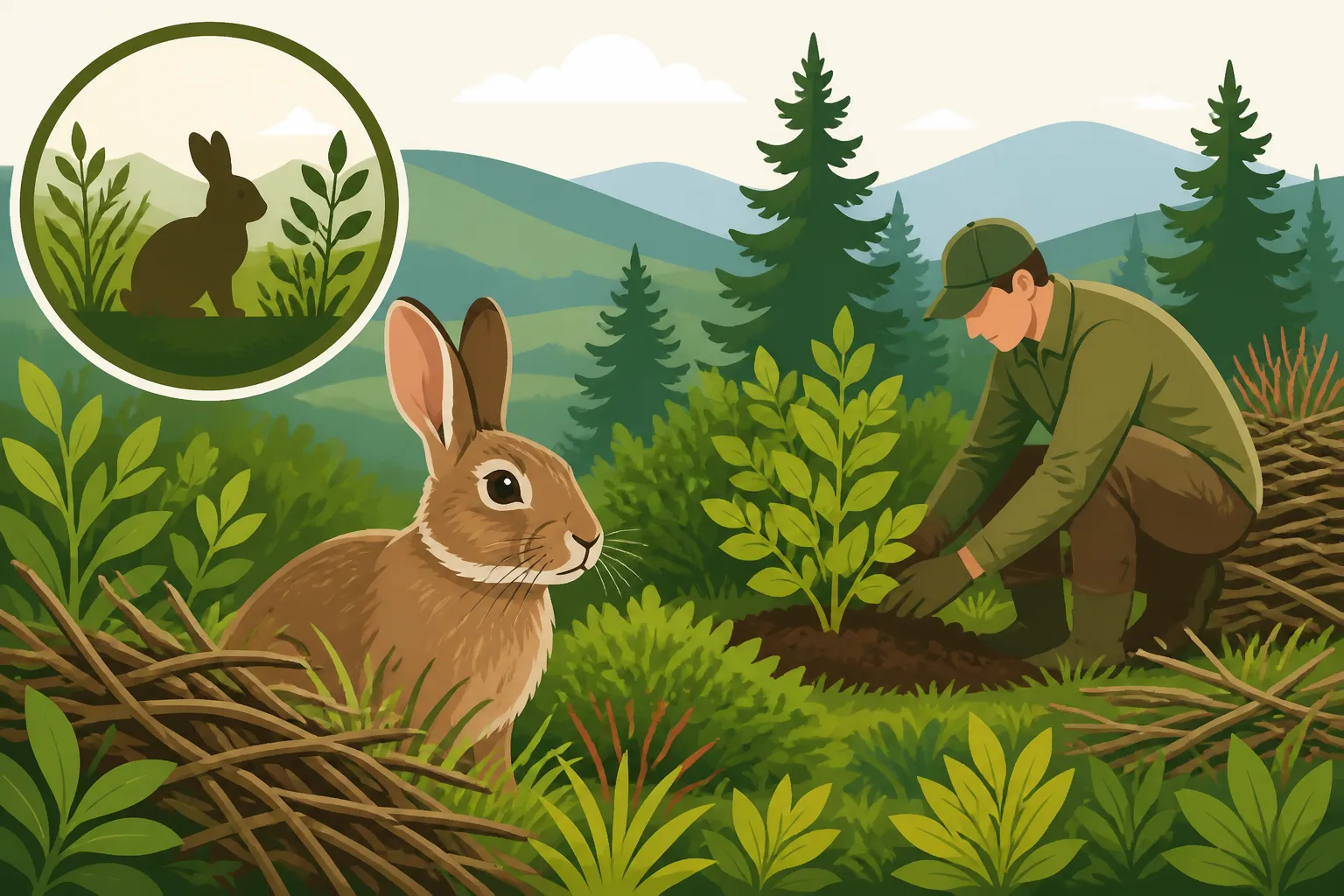
- Create Brush Piles: This is perhaps the easiest and most immediate way to improve rabbit habitat. Instead of burning or hauling away branches from tree trimming or clearing, stack them into dense, tall brush piles. Make sure they have a solid base of larger logs to create voids underneath for rabbits to hide. Locate these near existing fields or forest edges.
- Plant Native Shrubs: Choose native species that provide both food and dense cover. Examples include hawthorn, dogwood, sumac, viburnum, and even thorny species like multiflora rose (though check local regulations on invasive species). These not only provide cover but also food sources and can create impenetrable barriers.
- Manage Old Fields: If you have old fields or overgrown pastures, consider rotating areas of mowing or disking to prevent them from becoming mature forest. Leaving strips unmowed or creating irregular edges can maintain that crucial early successional growth.
- Hinge-Cut Trees: This forestry technique involves cutting partway through a small tree and pushing it over, leaving it attached to the stump. The downed tree provides immediate dense cover, and the remaining attachment keeps it alive and sprouting new growth, offering food. This is excellent for creating low-lying, tangled cover.
- Leave Edges Untouched: Resist the urge to "clean up" every fencerow or field edge. These messy, brushy borders are gold for rabbits. Allow them to grow thick and wild. You might even find good hunting opportunities along these natural corridors, as described in Hunting a Fencerow for Late-Season Deer.
Remember, you don't need to transform your entire property. Even small, strategic improvements can connect existing habitat and provide refuge for rabbits. And don't forget the importance of clean water sources nearby!
Partnering with Conservation Groups
If you're eager to do more but don't own land, or if you want to expand your efforts, partnering with local or statewide conservation groups is an excellent option. Organizations like the New Hampshire Fish and Game Department, the Ruffed Grouse Society, or various land trusts often have volunteer opportunities for habitat improvement projects. This could involve anything from building brush piles on public land to planting trees, or helping with controlled burns (under expert supervision, of course).
These groups are always looking for passionate individuals to lend a hand, and it's a fantastic way to learn more about wildlife management, connect with like-minded people, and directly contribute to the health of New Hampshire's ecosystems. Becoming a member or volunteer for such groups provides not only a chance to work with your hands but also to advocate for policies that support habitat creation statewide.
Furthermore, many hunting clubs and organizations also undertake habitat improvement projects on lands they manage or have access to. Getting involved with your local club can open doors to group efforts that can achieve more significant results than an individual might alone. Whether you're interested in Hunting Small Game and Predator Hunting in New Hampshire or simply want to see more wildlife in our forests, active participation in habitat restoration is one of the most impactful things you can do. By working together, we can ensure that future generations of New Hampshire hunters and wildlife enthusiasts will continue to enjoy the sight of a rabbit scurrying into the briars or a snowshoe hare bounding through a cedar swamp.
Disclaimer
This article is for general informational purposes only and does not constitute professional advice. Laws, prices and regulations vary by location and change over time. Consult a qualified professional for guidance on your specific situation.