New Hampshire Grouse Drumming Log Surveys
It can be incredibly frustrating to hit the New Hampshire woods hoping for ruffed grouse, only to find the drumming activity is sparse, or perhaps too concentrated in areas you can't access. You've heard about these "drumming log surveys" that biologists conduct, but trying to figure out what they actually mean for your hunt, for your specific patch of cover, can feel like trying to decipher an ancient code. This guide is here to unravel the mystery of New Hampshire's grouse drumming log surveys, showing you how these valuable insights are gathered and, more importantly, how you, as a dedicated hunter, can leverage this information to refine your strategies and better understand the health of our state's beloved ruffed grouse populations.
What Exactly Are Grouse Drumming Log Surveys?
For those of us who cherish the thundering flush of a ruffed grouse, understanding their populations is key, not just for hunting success but for conservation. New Hampshire Fish and Game, alongside other wildlife agencies, conducts drumming log surveys specifically to get a handle on how many grouse are out there. It's a method that taps directly into the bird's natural behaviors to give us a peek into their world.
The Science Behind the Drum
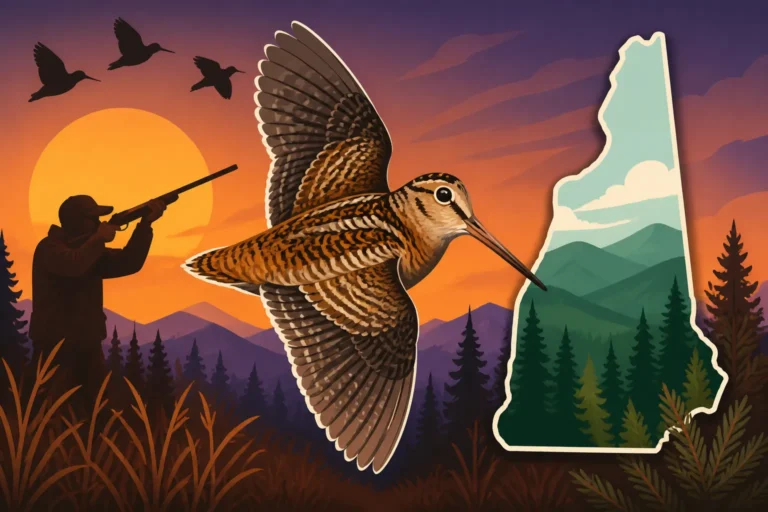
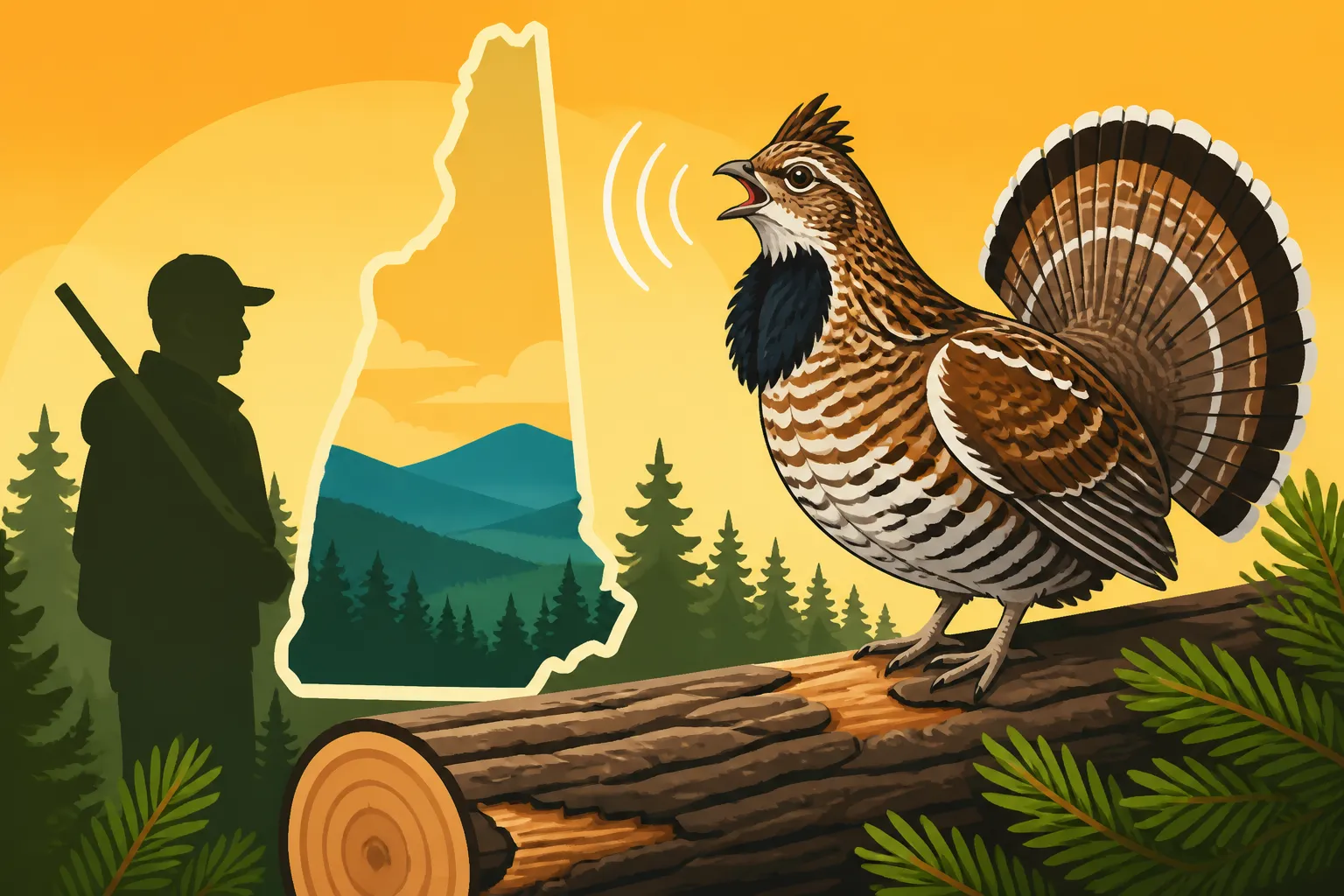
Imagine a male ruffed grouse standing proudly on his chosen stage – a fallen log, a rock, or even an old stump. He’s not just showing off; he's communicating. This distinctive drumming sound, which often startles us deep in the woods, isn't vocal. It's actually created by the rapid cupping of his wings against the air, creating a mini-sonic boom that echoes through the timber. He does this for two primary reasons: to attract hens for breeding and to proclaim his territory to rival males. Each drumbeat is a statement, a signal of his presence and virility. The science behind these surveys capitalizes on this predictable behavior. Since each drumming male occupies a relatively stable territory and drums regularly during the breeding season, counting these individual "drummers" allows biologists to estimate the number of breeding males in a given area. This isn't just a random count; it's a systematic effort to measure the pulse of the grouse population. Understanding this natural display is the first step in appreciating the data collected.
How Surveys Are Conducted in New Hampshire
New Hampshire's approach to these surveys is methodical. Typically, they involve establishing predetermined routes, often along quiet logging roads, ATV trails, or even old woods roads that wind through prime grouse habitat. These routes, which are usually about two to four miles long, have listening stops spaced roughly half a mile apart. Observers, often trained volunteers or wildlife technicians, will arrive at the first stop before dawn, usually just as the sun begins to kiss the treetops, and listen for a set period, often four to ten minutes. They record every distinct drumming sequence they hear, noting its direction and approximate distance. They then move to the next stop, repeating the process. This meticulous process ensures that individual drumming males aren't double-counted and provides a snapshot of activity over a specific route. The surveys are usually conducted during the peak drumming period, which in New Hampshire, tends to be from mid-April through late May, when males are most active in their courtship displays. The weather needs to be cooperative too – calm winds and no rain are crucial for accurate listening.
Why These Surveys Matter to Hunters
For us hunters, these drumming log surveys are more than just biological data; they're a window into the health and distribution of the very birds we pursue. Think about it: if the surveys consistently show low drumming counts in a particular Wildlife Management Unit (WMU) or region, it's a strong indicator that the grouse population there might be struggling, perhaps due to habitat loss, harsh winters, or increased predation. Conversely, robust drumming counts suggest a healthy, thriving population. This information can help you make more informed decisions about where to focus your efforts. Instead of blindly walking mile after mile, you can consult these reports to identify areas with historically strong drumming activity, which often correlates with good hunting opportunities later in the fall. It's like getting a cheat sheet for scouting, offering a broader perspective than what you might gather from a few days of pre-season walks. Plus, understanding the health of the population fosters a deeper connection to the resource and reinforces the importance of habitat conservation.
Deciphering the Drumming Data for Your Hunt
Okay, so the biologists are out there listening for drums. But once that data is collected, how does it actually translate into useful information for us in the field? It’s not just about raw numbers; it’s about understanding the trends and implications. Just like reading the weather, you learn to see patterns.
Understanding Population Trends
The most straightforward takeaway from drumming surveys is the year-to-year population trend. Biologists will compare the drumming activity from the current spring to previous years. Are the drumming counts up, down, or stable? A sustained increase in drumming activity over several years might suggest a growing population, which could lead to better hunting prospects. On the other hand, a noticeable dip in drumming activity might indicate a downswing in the grouse population cycle or localized issues, urging caution and perhaps a focus on other areas. For example, if you see that Coos County, known for its excellent grouse cover, has consistently shown strong drumming counts, that's a good sign that your New Hampshire Ruffed Grouse Harvest Numbers might be more robust in that area. Remember, grouse populations naturally fluctuate in cycles, and these surveys help us track where we are in that cycle, offering a realistic expectation for the upcoming season. It’s never a guarantee, but it certainly helps you stack the odds in your favor.
Habitat Indicators from Drumming Counts
Beyond just population numbers, drumming survey routes can tell us a lot about habitat quality. If certain routes consistently yield high drumming counts, it suggests that the habitat along those routes is excellent for grouse. What kind of habitat are we talking about? Often, it's areas with a mosaic of young forest growth, dense pockets of conifers, brushy clear-cuts, or areas near beaver flowages. Grouse thrive in diverse cover that offers food, nesting sites, and protection from predators. When you look at a survey report, you can often correlate high-count areas with specific cover types visible on maps or through local knowledge. For instance, a route running through a region with recent timber harvesting followed by dense regeneration might show consistently high drumming numbers. This tells you that the disturbed habitat is benefiting grouse. You might then focus your scouting on similar areas, perhaps by Reading Aerial Photos for North Country Deer to find good grouse cover that isn't directly on a survey route but shares similar characteristics. Identifying these habitat indicators is a crucial step in translating biological data into actionable hunting strategy.
Integrating Survey Information with Your Scouting
This is where the rubber meets the road. Having the survey data is great, but it's most powerful when you combine it with your own boots-on-the-ground scouting. Think of the drumming survey reports as a broad-brush map, highlighting regions of interest. Then, you use your scouting to fill in the details. Maybe a particular WMU had a strong drumming count. Now, you can use tools like GoHunt, which often integrates public land data and allows you to overlay different map layers, to zoom into that WMU. Look for features that complement what you know about grouse habitat: old logging roads, dense thickets, edges of clear-cuts, or areas with a mix of hardwoods and conifers. You might find that survey routes are often along easily accessible roads, but the real gems are sometimes just off those routes, in the adjacent cover that saw a lot of drumming activity. This allows you to expand beyond the immediate survey path and find similar, often less-pressured, habitat nearby. This layering of official data with your personal scouting, aided by advanced mapping platforms like GoHunt, creates a much more comprehensive and effective hunting plan.
The Challenges and Nuances of Grouse Drumming Surveys
While drumming log surveys are an invaluable tool for wildlife management and for hunters, they aren't a crystal ball. There are always inherent challenges and nuances that can affect the data, and understanding these can help us interpret the results with a more critical eye. It's about appreciating the complexity of wild populations, rather than expecting perfect predictability.
Factors Influencing Drumming Activity
Grouse drumming, while a consistent behavior, isn't immune to environmental factors. Weather, for instance, plays a huge role. Cold, windy, or rainy mornings can significantly suppress drumming activity. A biologist might be out on a survey route and hear very little, not because there are no grouse, but because a stiff breeze is muffling the sound or the birds are simply hunkered down due to adverse conditions. The time of day also matters; drumming peaks around sunrise and then tapers off. If a survey is started too late, or if it's interrupted by human activity like logging operations or even just heavy recreational use, the counts might not accurately reflect the true population density. Even the presence of predators can influence how much a grouse drums or where it chooses its log. So, while the methodology is sound, the real-world variables can introduce fluctuations that need to be considered when looking at the raw numbers. It's a snapshot, and sometimes the lighting isn't perfect.
Limitations of the Data
It's important to remember what drumming surveys don't tell us. They primarily count drumming males. They don't give us a direct count of hens, nor do they tell us about brood success or chick survival, which are critical for the fall population. A spring with high drumming counts could still lead to a tough fall hunt if a cold, wet nesting season decimated the chicks. Furthermore, these surveys are broad-scale indicators. They might tell you that WMU G, encompassing some of New Hampshire's southwest hill country, has a good grouse population overall, but they won't tell you exactly where the birds are holding on your favorite piece of public land. You might know there are birds in the general area, but finding that specific patch of alder swamp or the perfect Hunting a Clear-Cut Regrowth Edge still requires your direct effort. The surveys are a guide, not a precise map to individual birds. You still need to put in the time for Scouting New Hampshire Public Land Before Season to pinpoint those specific hotspots.
Here's a quick look at what drumming surveys can and cannot tell us:
| What Drumming Surveys CAN Tell You | What Drumming Surveys CANNOT Tell You |
|---|---|
| Relative abundance of breeding male grouse in an area. | Exact number of total grouse (males, females, and young) in the fall. |
| Long-term population trends (up, down, stable) in specific regions. | Precise locations of grouse on your specific hunting property. |
| General indicators of prime grouse habitat types (e.g., young forest). | The impact of a particular nesting season on chick survival. |
| Early warnings of potential population declines or surges. | How many birds will be on a specific drumming log come hunting season. |
| Relative comparison of grouse activity between different WMUs. | The effect of hunting pressure on a very local scale. |
Contributing to Conservation Efforts
As hunters, we're also conservationists, and understanding these surveys can inspire us to contribute to grouse habitat. If you notice a general decline in drumming activity in your favorite areas, it might prompt you to investigate why. Is the forest maturing beyond what grouse prefer? Are there opportunities for habitat management, like advocating for clear-cuts or promoting early successional forest? New Hampshire Fish and Game often has programs where landowners can get advice on habitat improvement, and sometimes grants are available. By staying informed about the survey results and recognizing the importance of diverse, regenerating forest habitat, you can become an advocate for grouse. After all, the health of the grouse population directly impacts our future hunting opportunities. Supporting organizations that fund habitat work or even volunteering for local clean-up efforts in potential grouse cover are tangible ways to give back. It's a shared responsibility to ensure the future of species like the ruffed grouse.
Practical Steps for Applying Survey Knowledge in the Field
So, you’ve absorbed all this information about drumming log surveys. Now, let’s talk about how you actually use it to put more grouse in your vest. It's one thing to read about it, another entirely to apply it effectively when the leaves are turning and the air is crisp.
Identifying Prime Grouse Habitat
When you look at the survey results, don't just note the WMUs with high numbers; try to understand why those areas are doing well. Often, you'll find that successful survey routes pass through specific types of cover: areas that have been recently logged, clear-cuts that are 5-20 years old and now a tangle of new growth, or regions with an abundance of alder swamps and old apple orchards. These are the places grouse thrive. So, if the surveys indicate strong populations in, say, Grafton County, you then drill down on your maps. Look for those tell-tale signs: parcels with active timber sales, areas marked as clear-cuts or young regenerating forests, or even old farmsteads where apple trees might still be producing fruit. These are the spots you want to prioritize for your Shed Hunting on New Hampshire Public Land or late-summer scouting trips. Even if a particular spot isn't a direct survey route, if it looks like prime habitat in a high-performing region, it's worth checking out.
Timing Your Hunt with Peak Activity
While drumming surveys are done in the spring, the information can subtly influence your fall hunting schedule. If you've been tracking the surveys over several years and notice that a particular WMU or a general region is experiencing a population upswing (higher drumming counts), it might be worth dedicating more of your valuable hunting time there. Conversely, if a region shows declining numbers, you might choose to hunt those areas less intensively or shift your focus elsewhere for a season or two. This isn't about giving up on a favorite spot, but rather about being strategic. For instance, knowing the New Hampshire Ruffed Grouse Population Cycles can help you predict when an area might be "hotter" or "cooler" than average. Combine this with typical grouse behavior – early season, they're often along edges and easy-to-access areas, then they move into denser cover as pressure mounts and the leaves fall. You might choose to hit those promising survey-identified spots early in the season when birds are more dispersed.
Combining Survey Data with Other Resources
The real power comes from layering this drumming survey data with other critical hunting intelligence. Don't rely solely on one source. Think about using an app like GoHunt, which can provide property boundaries, topographical maps, and even satellite imagery. With GoHunt, you can identify those critical habitat features – dense conifer stands, stream bottoms, old logging roads – in the general areas indicated by strong drumming activity. For example, if a survey highlights a promising section of the White Mountain National Forest, you can use a mapping app to pinpoint likely spots like Hunting a Granite Ridge Saddle or Hunting a Beaver Flowage Edge within that area. These are prime spots for grouse. You can also cross-reference with New Hampshire Wildlife Management Areas information, as WMAs are often managed for diverse wildlife and might contain ideal grouse cover. The more data points you have, from official surveys to personal scouting and digital mapping, the clearer your picture of the grouse landscape will become, leading to more productive and enjoyable hunts.
Disclaimer
This article is for general informational purposes only and does not constitute professional advice. Laws, prices and regulations vary by location and change over time. Consult a qualified professional for guidance on your specific situation.