Why Moose Calves Die From Winter Ticks
Winter tick infestations drain blood from New Hampshire moose calves, causing severe anemia and high mortality rates across the population.
Know what you’re after.
Big game, small game, upland birds, and waterfowl — identification, behavior, rut and migration timing, and how each species moves through the season.
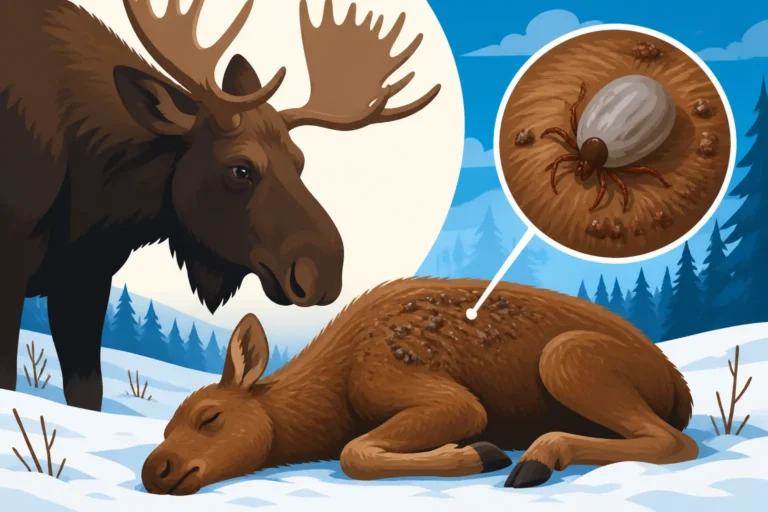
Winter tick infestations drain blood from New Hampshire moose calves, causing severe anemia and high mortality rates across the population.

New Hampshire moose calves can harbor thirty thousand to ninety thousand winter ticks during their first vulnerable season in the northern forests.
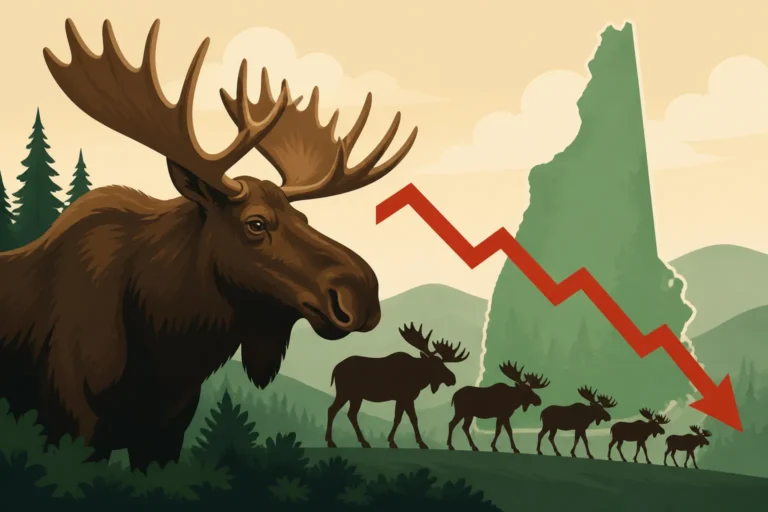
New Hampshire moose population decline since the 1990s and how winter ticks cause the reduction of the state herd.

New Hampshire moose population numbers, historical recovery, and current tracking methods used by state wildlife biologists.

New Hampshire Fish and Game uses scientific methods and hunter harvest data to estimate state deer populations and manage wildlife.
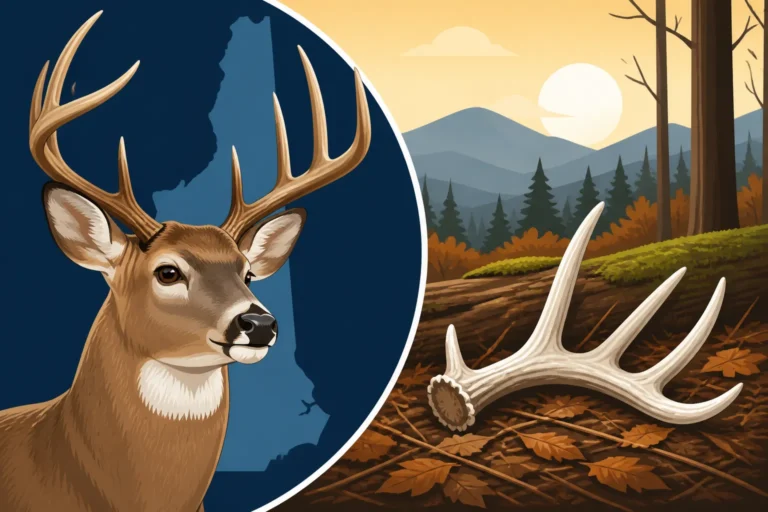
New Hampshire bucks typically shed antlers from late December through March, with January and February seeing peak drops.
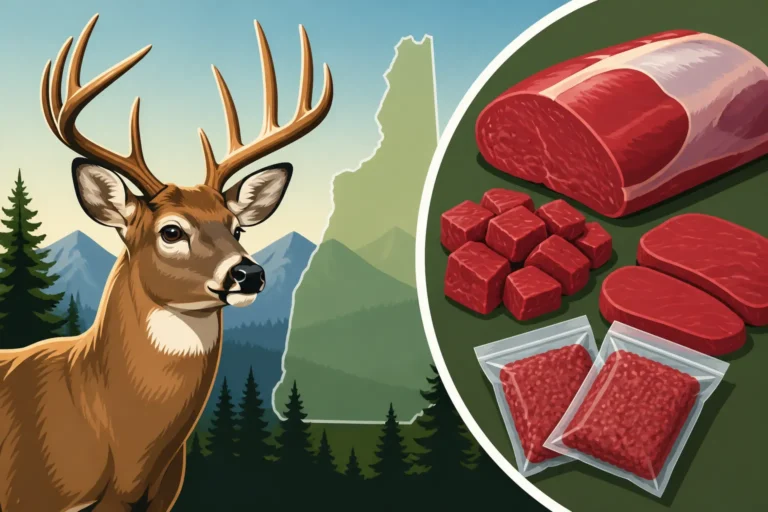
New Hampshire buck meat yield calculations explain live weight, dressed weight conversions, and final processed venison amounts.

New Hampshire deer vehicle collisions peak during the fall rut and winter, threatening drivers with serious road hazards.
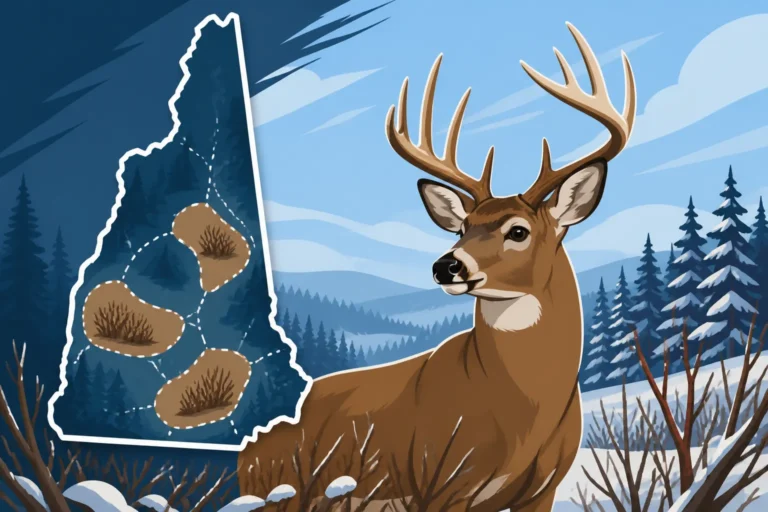
New Hampshire deer wintering yards provide dense evergreen cover and shallow snow, helping whitetails survive harsh northern winters.
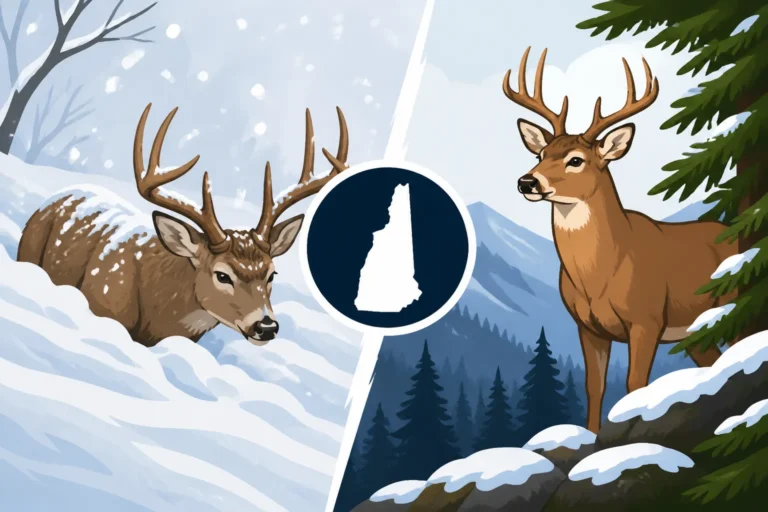
Heavy winter snowfall in New Hampshire drains white-tailed deer energy and increases their vulnerability to predators like coyotes.