ATV Rules on New Hampshire Forest Roads
Trying to figure out where you can legally drive your ATV when you're scouting or hunting on New Hampshire's vast network of forest roads can feel like navigating a maze blindfolded. You've got these incredible backcountry opportunities, but the rules for off-highway vehicles (OHVs) can vary wildly from one piece of ground to the next, leaving many of us scratching our heads and worried about inadvertently breaking a rule. This guide is here to untangle that knot, walking you through the ins and outs of ATV rules on New Hampshire forest roads so you can focus on the hunt, not the legalities of getting there.
Understanding the Landscape of New Hampshire Forest Roads
Before we dive into the specific rules, it's crucial to understand that not all "forest roads" are created equal in New Hampshire. The Granite State boasts a diverse patchwork of land ownership, and each type comes with its own set of regulations for ATV use. What's permissible on a logging road deep in the North Country might be strictly forbidden just a few miles away in the White Mountain National Forest or even on a state-owned parcel. This variability is often the root of the confusion, so let's break down who owns these roads and what that generally means for you.
Who Owns These Roads? State Forests, National Forest, Private Timberlands
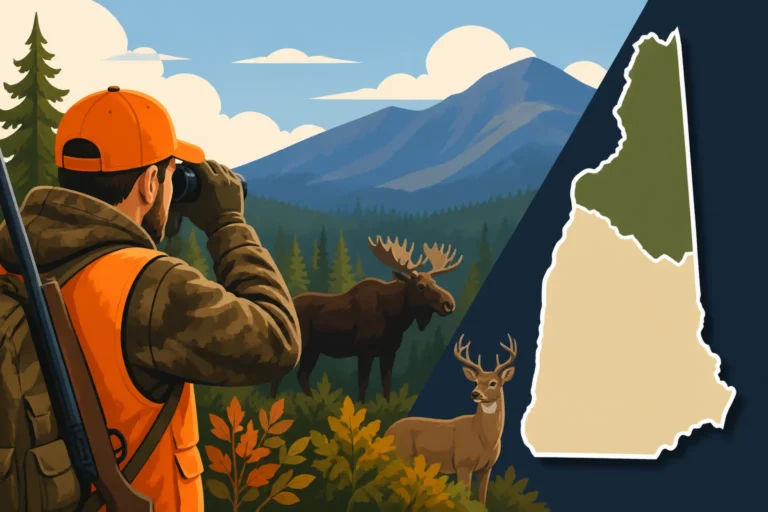
New Hampshire's forest roads are primarily found across three main categories of land ownership: federally managed lands, state-managed lands, and privately owned timberlands. Each category has its own governing body, and with that comes different rules, enforcement, and designated access points.
First, you have the White Mountain National Forest (WMNF), a massive expanse of over 800,000 acres stretching across the northern part of the state. This is federal land, managed by the U.S. Forest Service. Within the WMNF, ATV use is generally restricted to designated trails, and many forest roads are specifically closed to motorized vehicles. It's not uncommon to find gates, signs, or even berms blocking access, which can be a real head-scratcher when you're trying to figure out if that old logging road is fair game. Hunters often rely on these roads for access to remote areas, but the lines for ATV use are very strict.
Then there are State Forests and State Reservations, managed by the New Hampshire Department of Natural and Cultural Resources (DNCR), along with Wildlife Management Areas (WMAs), overseen by New Hampshire Fish and Game. These lands often have their own internal road networks, which can range from well-maintained gravel paths to barely discernible two-tracks. Rules on state lands can be highly specific to each location, making it essential to consult local regulations for individual parks or forests. Generally, state lands are more restrictive for ATVs compared to some private holdings. For example, many WMAs are managed primarily for wildlife habitat and foot access, with motorized vehicle use strictly limited.
Finally, a significant portion of New Hampshire's working forests are privately owned timberlands. These are often managed by large timber companies or private landowners who may grant access for recreational use, including ATV riding, sometimes through formal agreements or permits. However, access can also be revoked or changed at any time. These are the lands where you might find expansive networks of active and inactive logging roads. The key here is always, always to ensure you have explicit permission before driving an ATV on private land, even if it appears open. Many a hunter has found themselves in hot water assuming an old road was public access. You might want to brush up on Getting Private Land Permission in New Hampshire if you plan to explore these options.
What is a "Forest Road" Anyway? Types of Roads, Designations
The term "forest road" can be pretty broad, and understanding the different types of roads and their official designations is crucial for legal ATV operation. It's not just about whether it looks like a road; it's about what it is legally.
You'll encounter everything from well-graded, maintained gravel roads that might even be open to street-legal vehicles during certain seasons, to old skidder trails that are barely more than a path through the woods. Some "forest roads" are officially designated Class VI roads by towns, which means they are public roads but often unmaintained, and local ordinances might dictate ATV use. Others are gated logging roads, which are typically private access roads for timber operations, even if they look inviting.
The critical distinction for ATV users comes down to designated trails. In most cases, especially on public lands like the White Mountain National Forest, ATV use is only permitted on trails specifically marked and maintained for OHV use. An old logging road that isn't part of this designated trail system is almost certainly off-limits, even if it looks like a perfect route into your hunting spot. Trying to find ground that sees fewer hunters might lead you down some of these lesser-used paths, but it's vital to know their legal status.
These designations are often found on official maps from the managing agency, or, more conveniently, on modern mapping applications. Understanding whether you're looking at a multi-use trail, a forest management road, a seasonal road, or a permanently closed route is your first step to responsible ATV use.
Navigating Specific ATV Rules and Regulations
Now that we understand the different types of land and roads, let's drill down into the actual rules that govern ATV use. These aren't just suggestions; they're laws, and knowing them can save you a lot of grief, not to mention fines.
General State-Level ATV Regulations
First off, any ATV you operate in New Hampshire, whether on a forest road or a designated trail, needs to be registered with the New Hampshire Fish and Game Department. This isn't just a suggestion; it's a legal requirement, and registration fees go towards maintaining the state's trail system. You'll need to display your registration decals clearly on your machine.
Helmet laws are also critical. Anyone under 18 years old must wear a helmet when operating or riding on an OHRV (Off-Highway Recreational Vehicle), which includes ATVs. While not strictly mandated for adults over 18, wearing a helmet is always a smart safety practice, especially on unfamiliar, rugged forest roads.
Beyond registration and helmets, general operating guidelines apply statewide. This includes things like obeying posted speed limits, staying to the right, and yielding to hikers, bikers, and equestrians. It also means you can't operate an ATV under the influence of alcohol or drugs – that's a given. Proper lighting is required for night operation, and you need to ensure your exhaust system meets noise regulations. It's always a good idea to carry your registration and any permits with you while riding. If you're new to the game, you'll need to comply with New Hampshire Hunter Education Requirements before you even think about hitting the trails for a hunt.
ATV Use on White Mountain National Forest Roads
The White Mountain National Forest (WMNF) is a prime example of where ATV rules are particularly strict and focused on designated routes only. The U.S. Forest Service manages this land with an emphasis on conservation and minimizing impacts, so unauthorized ATV use is a big no-no.
Within the WMNF, you will find specific OHRV trail systems that are open to ATVs. These are usually clearly marked and often connect different areas. However, the vast majority of forest roads, including many old logging roads and skidder trails, are closed to ATVs. It's easy to see an inviting two-track disappear into the timber and assume it's open, but unless it's explicitly signed as an open OHRV trail, consider it closed. Forest Service rangers actively patrol these areas, and violations can result in hefty fines and even confiscation of your machine.
Seasonal closures are also a common factor in the WMNF. Some designated trails may be closed during certain times of the year, often due to wet conditions that could lead to trail damage, or to protect wildlife during sensitive periods. Always check the current status of trails before heading out. Websites and local ranger stations are your best source of up-to-date information. This is where tools like onX Hunt truly shine. You can often see the overlay of designated ATV trails and land ownership boundaries, helping you avoid accidental trespass or illegal access. Similarly, GoHunt's mapping features can provide valuable insights into access points and restrictions, helping you plan your route without breaking any rules.
Remember, the emphasis in the WMNF is on "Leave No Trace" principles, and that extends to staying on established, designated routes to prevent erosion, habitat disturbance, and conflicts with other users enjoying the wilderness, perhaps while Still-Hunting White Mountain National Forest Timber.
Rules on State Forests and Other Public Lands
New Hampshire's State Forests, Reservations, and Wildlife Management Areas each have their own nuances when it comes to ATV access. While generally less expansive than the WMNF, these lands can still offer great hunting opportunities, but ATV use is often even more restricted.
Many State Forests may allow limited ATV use on designated trails, similar to the WMNF, but it's not a universal rule. Some state forests might have no ATV access at all, or only allow it on specific dates for maintenance or special events. For example, some old logging roads in State Forests are maintained for administrative use only and are not open to public motorized vehicles.
Wildlife Management Areas (WMAs), managed by NH Fish and Game, are particularly focused on wildlife habitat. As such, most WMAs have very strict rules against ATV use off of designated parking areas or access roads. The primary purpose of these areas is to provide habitat and recreational opportunities that are compatible with wildlife, which often means limiting motorized disturbance. You'll frequently see gates or signs indicating "foot traffic only" or "no motorized vehicles" on WMA access roads. This is a critical distinction for hunters who might be tempted to drive an ATV right to their blind or stand.
To navigate these various state and local public lands, your best bet is to consult the specific rules and regulations for the exact property you plan to visit. The NH Fish and Game website is an invaluable resource, often providing maps and detailed regulations for WMAs. For State Forests and Reservations, the DNCR website or contacting the specific park office will yield the most accurate information. Assuming rules are uniform across all state-owned lands is a common mistake and one that can easily lead to a citation. Checking the Hunting a Beaver Flowage Edge in a WMA, for example, might be a hike-in only proposition.
Practical Considerations for Hunters Using ATVs
For us hunters, ATVs aren't just about recreation; they're often valuable tools for scouting, accessing remote areas, and retrieving game. However, integrating ATV use into your hunting strategy requires careful planning and a deep respect for the rules.
The Importance of Up-to-Date Mapping and Information
In New Hampshire, where land ownership and ATV rules are so fragmented, reliable, up-to-date mapping and information are not just helpful – they're essential. Relying on outdated maps or verbal directions from a friend is a recipe for trouble.
Modern mapping applications like onX Hunt have revolutionized how hunters navigate public and private lands. These apps often feature layers that show land ownership boundaries, public land designations (like WMNF or State Forest), and crucially, designated OHRV trails. They can also show you gated roads, administrative roads, and other features that indicate restricted access. Before you even leave your driveway, you can zoom in on your target area, identify potential ATV-legal access points, and plan your route. You can mark your intended parking spot and where you'll switch to foot travel, perhaps to reach a spot ideal for Hanging a Stand on a Granite Ridge.
Similarly, resources like GoHunt can provide valuable planning tools and regulatory information specific to different areas. Staying current with these digital tools can prevent headaches and ensure you're always operating within the legal framework. Remember, rules can change, new trails can open or close, and boundaries can be updated. What was legal last year might not be this year, so a quick check before each season or hunt is a good habit.
Environmental Impact and Ethical Use
Beyond the legalities, responsible and ethical ATV use is paramount, especially for hunters. Our access to these lands often hinges on our ability to demonstrate respect for the environment and other users.
Stay on marked trails: This is the golden rule. Venturing off designated trails, even for a short distance, can cause significant environmental damage, including soil erosion, disruption of sensitive habitats, and damage to vegetation. It also creates user conflicts with hikers, birdwatchers, and other nature enthusiasts who cherish the quiet of the woods.
Minimize disturbance: ATVs, by their nature, create noise. Be mindful of this, especially during peak hunting hours or in areas known for sensitive wildlife. Slow down around other users and be considerate of their experience. If you're Hunting a Green Field Planted for Deer, roaring up on an ATV might spook everything for miles around.
Game retrieval: This is often where hunters are most tempted to bend the rules. Dragging a deer out of a deep ravine is tough work, and the thought of using an ATV can be incredibly appealing. However, if the area is closed to ATVs, it's closed. Plan for manual game retrieval using game carts, pack frames, or good old-fashioned dragging. Knowing how to Dragging a Deer Out of a Granite Ravine without motorized help is a valuable skill for a New Hampshire hunter.
Your actions reflect on the entire hunting community. By adhering to the rules and practicing ethical use, we help maintain positive relationships with land managers and other recreational users, ensuring continued access for future generations.
Planning Your Hunt Around ATV Access
Successfully incorporating ATV use into your New Hampshire hunt means thinking strategically about how and where you'll use your machine.
Scouting: An ATV can be a fantastic tool for covering large areas quickly during scouting, especially on permitted logging roads or designated trails. You can efficiently check multiple entry points, assess habitat changes, or look for sign over a wider region. Just be sure to dismount and walk quietly once you get close to potential hunting areas to avoid leaving a scent trail or spooking game. Scouting New Hampshire Public Land Before Season is much easier with judicious ATV use.
Access to hunting spots: Use your ATV to get to the vicinity of your hunting spot, then switch to foot. Parking your ATV well away from where you plan to hunt and walking in helps reduce noise disturbance and human scent at your primary location. Think about parking at a designated trail head and then hiking a ridge. Consider the wind and thermals, especially in steep granite terrain, when choosing your parking spot and walk-in route.
Game retrieval: As mentioned, plan for how you'll get your game out. If you're hunting an area with limited ATV access, a good game cart or a sturdy pack frame is indispensable. Some hunters will position their ATV at the closest legal access point and then make multiple trips on foot with quartered game. If you're successful on a moose hunt, knowing how to Getting a Moose Out on a Logging Road will be crucial, and an ATV on a legal road could be a lifesaver.
Here's a quick summary of ATV rules by general land type in New Hampshire:
| Land Ownership Type | General ATV Access Rules | Key Considerations for Hunters |
|---|---|---|
| White Mountain National Forest | Designated trails only. Strict enforcement. Many forest roads are closed to OHVs. | Use mapping apps (e.g., onX Hunt) to verify designated trails. Check for seasonal closures. Expect to hike significant distances. |
| New Hampshire State Forests / WMAs | Highly variable. Often very restricted or no ATV access, especially in WMAs. Limited designated trails on some state forests. | Consult specific property regulations before going. Many WMAs are foot-access only beyond parking. |
| Private Timberlands | Requires explicit permission. Access may be granted via permit, lease, or direct landowner contact. | Never assume access. Get written permission if possible. Respect private property, even on old logging roads. |
Remember, hunters have a special responsibility to be good stewards of the land. By understanding and following the ATV rules on New Hampshire's diverse forest roads, you ensure that you not only have a successful and legal hunt but also contribute to the long-term health and accessibility of these wild places for everyone.
Disclaimer
This article is for general informational purposes only and does not constitute professional advice. Laws, prices and regulations vary by location and change over time. Consult a qualified professional for guidance on your specific situation.