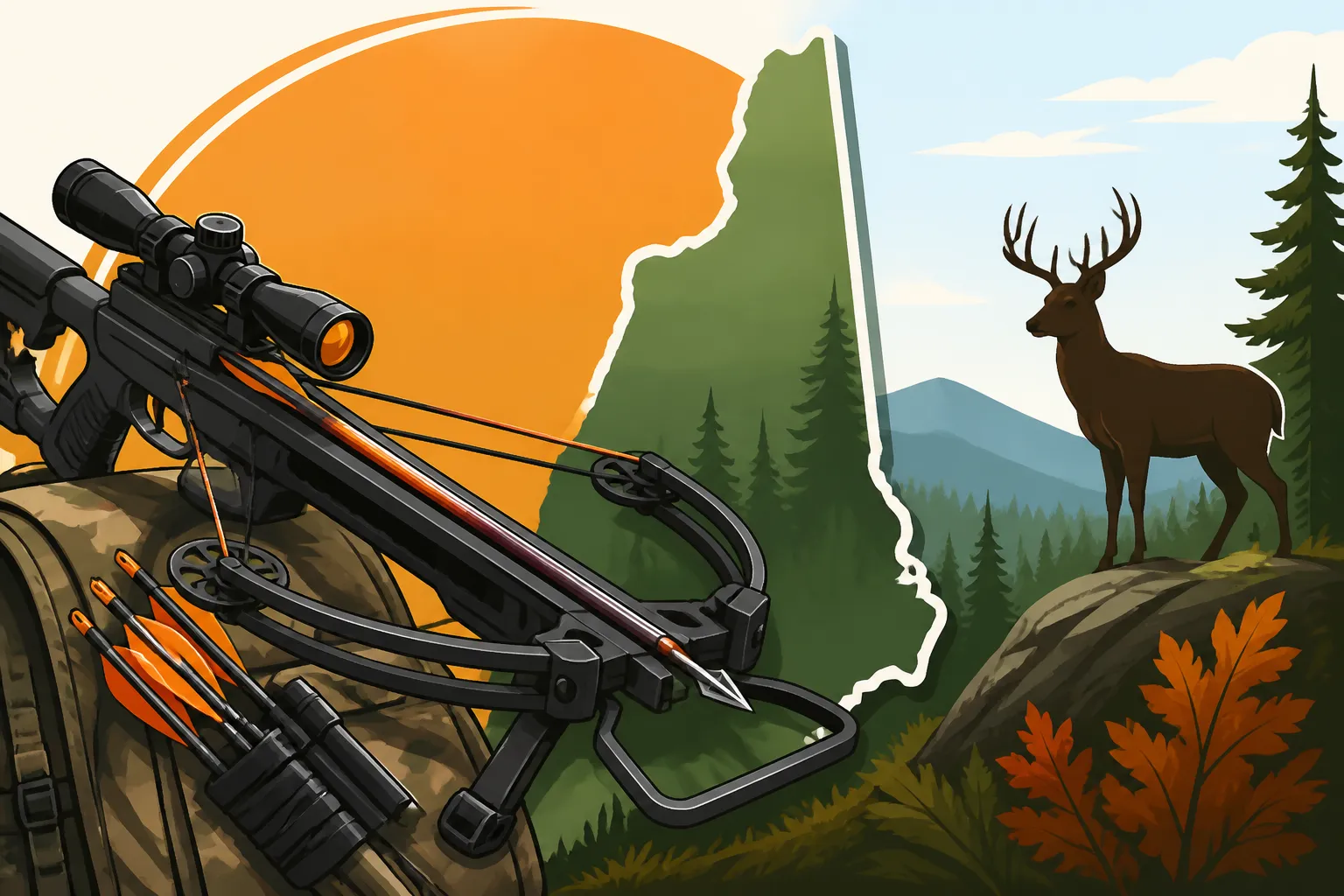
Crossbow Gear for New Hampshire’s Legal WMUs
Deciding to bring a crossbow into the woods for deer season in New Hampshire’s designated legal WMUs is an exciting step, but it often brings a heap of questions about what gear you truly need to be effective and, more importantly, compliant. It can feel like navigating a maze of regulations and equipment choices, leaving you wondering if your setup is truly optimal for the varied terrain and sometimes finicky weather we have here in the Granite State. This comprehensive guide is here to cut through that confusion, helping you understand the specific requirements and providing practical advice on selecting every piece of crossbow gear, from the bow itself to the smallest accessory, ensuring you’re ready for a successful and ethical hunt.
Understanding New Hampshire's Crossbow Regulations and WMUs
Before you even think about buying a new scope or broadhead, the absolute first step is to fully grasp New Hampshire's specific rules regarding crossbow use. It's not a free-for-all; certain areas and seasons have particular stipulations. This can be frustrating for hunters who just want to get out there, but understanding these nuances is crucial for staying legal and safe.
The Twelve Crossbow-Legal WMUs
New Hampshire has specifically designated twelve Wildlife Management Units (WMUs) where crossbows are permitted during the archery deer season. This isn't just an arbitrary number; these WMUs are often chosen based on deer population density, habitat types, and sometimes, accessibility considerations that might favor the use of a crossbow. For example, some of these units might have a mix of dense suburban edges and more traditional woodlands, where the specific characteristics of a crossbow, like its reduced draw cycle in a treestand or ground blind, could be seen as advantageous for certain hunters. It's a system designed to balance hunting opportunity with specific management goals.
The frustration often comes from hunters who reside or typically hunt outside these zones. It means you can't just pick up your crossbow and head to your favorite spot if it's not within one of these approved WMUs. You need to verify your specific hunting area against the official list. This might require you to explore new public lands or seek permission on private parcels within these designated zones, which can be a whole new challenge. For a complete listing and the most current details, always check the New Hampshire Fish and Game Department's annual hunting digest. This resource is your bible for understanding where and when you can legally hunt with your crossbow in New Hampshire. Knowing these boundaries is your absolute first step to a compliant hunt. If you're wondering New Hampshire's Twelve Crossbow-Legal WMUs, you'll find the full breakdown there.
Essential License and Permit Requirements
Beyond simply owning a crossbow, you need to ensure you possess the correct licenses and permits to legally hunt with it during the archery season in New Hampshire. This isn't just about having a general hunting license; it specifically involves purchasing an archery permit, even if you are using a crossbow. The state views crossbows as part of the archery season, so your regular firearms license won't cut it. This can trip up hunters who are new to crossbows or transitioning from other weapon types, as they might assume their current license covers all bases. Always double-check your permits before heading into the field.
Imagine you've scouted a prime piece of public land in WMU M, one of the legal zones. You've dialed in your new crossbow, and you're ready for opening day. But if you haven't specifically purchased that archery permit in addition to your regular hunting license, you're not legal. This isn't a situation you want to find yourself in, especially if a conservation officer checks your credentials. The process for obtaining these permits is straightforward through the New Hampshire Fish and Game website or authorized agents, but it's a critical step that cannot be overlooked. Make sure you carry both your base hunting license and your archery permit with you at all times while hunting.
Choosing Your Crossbow for New Hampshire Terrain
Once you’ve got the rules down, the real fun begins: picking out the crossbow itself. New Hampshire's diverse landscape, from the thick, dark softwoods of the North Country to the rolling hardwoods and open fields of the southern regions, demands a crossbow that can handle a variety of situations. Your choice here isn't just about speed; it's about balance, maneuverability, and reliability when it matters most.
Recurve vs. Compound Crossbows for Versatility
When it comes to crossbows, you primarily have two types to consider: recurve and compound. Each has its own set of advantages and disadvantages that become particularly apparent when navigating New Hampshire's varied hunting grounds. Recurve crossbows are simpler in design, often lighter, and can be easier to maintain in the field, making them a solid choice for those who prioritize reliability and ease of repair. Their wider limb span, however, can sometimes be a hindrance when still-hunting through dense alders or climbing into a tight treestand setup in an old oak.
Compound crossbows, on the other hand, use a system of cams and cables to achieve higher speeds with narrower limbs, offering better maneuverability in thick cover. This can be a huge advantage when you're tucked into a ground blind in a cedar swamp or trying to keep your limbs clear while drawing from a climbing stand. However, their complexity means more potential points of failure and generally more specialized tools needed for maintenance. Think about the specific terrain you anticipate hunting. If you're constantly pushing through thick brush or hunting from tight quarters, the narrower profile of a compound crossbow might offer a distinct edge, allowing you to react quicker to a deer slipping through the cover. Conversely, if you're hunting more open hardwoods or from elevated platforms with good clearance, the robust simplicity of a recurve might be more appealing.
Draw Weight and Kinetic Energy Considerations
The draw weight of a crossbow directly influences the kinetic energy of your bolt, which is critical for ethical kills on New Hampshire deer. While higher draw weights generally mean faster bolt speeds and more kinetic energy, there's a point of diminishing returns, especially if the crossbow becomes too difficult or noisy to cock in a real hunting scenario. For most New Hampshire whitetails, a crossbow with a draw weight that generates sufficient kinetic energy for proper penetration with a well-placed shot is key. You're looking for that sweet spot where you have enough power to cleanly pass through a deer, even if it hits a shoulder blade, without the bow being overly cumbersome or loud.
Many modern crossbows offer draw weights that are more than adequate for deer, often ranging from 150 lbs to over 200 lbs. What’s more important than the raw number is how that energy translates into bolt speed and kinetic energy with your chosen bolt weight and broadhead. A slower, heavier bolt can sometimes offer better penetration than a lighter, faster one due to momentum. It's crucial to test your setup, understanding its capabilities and limitations. A hypothetical scenario might involve a buck quartering away at 30 yards. Your crossbow needs to deliver enough punch to drive the broadhead through the vitals and ideally exit for a good blood trail. Without adequate kinetic energy, you risk a superficial wound and a difficult recovery. Remember, Setting Up a Crossbow in New Hampshire's Approved Units means matching your setup to the task.
Essential Optics and Sights for Crossbow Hunting
Once you've chosen your crossbow, the next critical component is your aiming system. Good optics can make all the difference between a clean kill and a missed opportunity, especially in New Hampshire's varied lighting conditions and cover. Don't skimp here; your ability to place a shot precisely hinges on clear, reliable sighting.
Scopes for Accuracy in New Hampshire's Woods
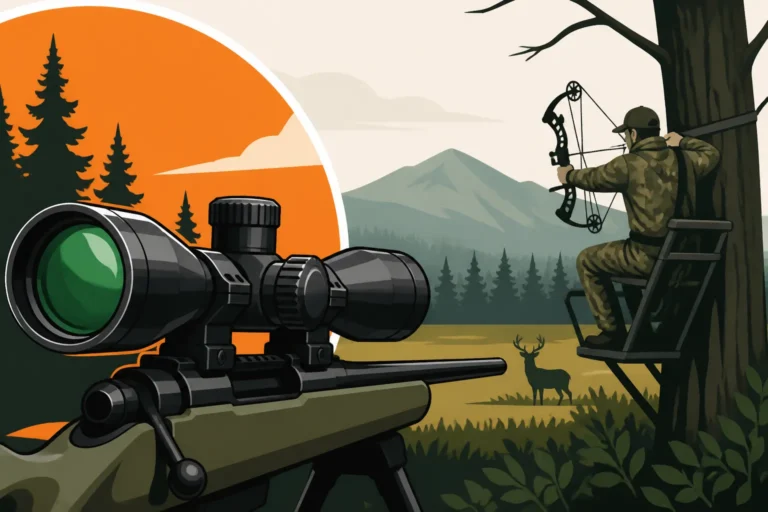
Most crossbow hunters in New Hampshire opt for a scope, and for good reason. They provide magnification and a reticle system specifically designed for the ballistic trajectory of a crossbow bolt, which differs significantly from a rifle bullet. When hunting in our typical timbered settings, shots are often inside 40 yards, but having the clarity and precise aiming points a good scope offers is invaluable. Look for scopes with multiple aiming points or a speed-calibrated reticle that allows you to sight in for various distances, typically 20, 30, and 40 yards, or even 50 if your setup and practice allow. This compensates for the significant drop of a crossbow bolt.
Illuminated reticles can be a game-changer during those prime low-light hours – dawn and dusk – when deer are most active, especially under a thick canopy of pine or hemlock. Imagine a stealthy buck stepping out of a dense softwood thicket just as the sun dips below the ridge. Without an illuminated reticle, that dark crosshair might disappear against the animal's dark hide, making an accurate shot nearly impossible. However, be mindful of battery life and always carry spares. Focus on scopes that are waterproof, fogproof, and shockproof – New Hampshire weather can be unforgiving, and a sudden downpour or an accidental bump shouldn't render your scope useless. When thinking about Choosing a Scope Magnification for Timber Country, understand that too much magnification can actually be a detriment in close quarters, narrowing your field of view.
Red Dot Sights for Close-Quarters Hunting
While scopes are prevalent, red dot sights carve out a niche for themselves, particularly for hunters who anticipate very close-range encounters or prefer maximum speed of target acquisition. A red dot excels in dense cover where quick, instinctual shots might be required. Imagine still-hunting through a thick stand of tag alders along a beaver flowage, and a deer jumps up at 15 yards. Bringing a magnified scope up and finding your target can be slower than simply shouldering your crossbow and putting the red dot on the vitals. The parallax-free nature of many red dots means your eye position is less critical, allowing for faster, more forgiving aiming.
However, red dots typically offer no magnification, meaning longer shots become much more challenging due to bolt drop. You'll need to know your holdovers precisely or limit your shots to very close ranges. They also require battery power, just like illuminated scopes, so reliability and battery life are still concerns. For hunters primarily using a ground blind in a tight, brushy area, or those who truly focus on close-range opportunities, a red dot can be an excellent choice. It simplifies the aiming process, reducing target acquisition time, which can be critical when a New Hampshire whitetail suddenly appears in a thicket.
Bolts and Broadheads: The Business End of Your Setup
Your crossbow is only as good as the bolt you shoot and the broadhead attached to it. These components are responsible for delivering the lethal energy necessary for an ethical kill, and choosing them carefully for New Hampshire's deer is paramount. It’s not just about what looks cool; it’s about what performs reliably.
Selecting the Right Crossbow Bolts
Choosing the right crossbow bolt is a critical decision that directly impacts accuracy, penetration, and consistency. You need bolts that are specifically designed for crossbows, not standard vertical bow arrows, as crossbow bolts are typically shorter, stiffer, and often heavier to handle the immense force of the crossbow. When selecting bolts, focus on spine stiffness (measured in "deflection"), straightness, and weight. The spine must match your crossbow's power; too flexible, and you'll get erratic flight; too stiff, and you might lose some energy. A straightness tolerance of .003" or better is generally recommended for hunting accuracy, ensuring each shot flies true.
Bolt weight, when combined with your crossbow's speed, dictates the kinetic energy and momentum delivered to the target. For New Hampshire whitetails, a heavier bolt (typically 400-500 grains including the broadhead) often provides better penetration and carries more momentum, which can be crucial for passing through heavy bone or thick hide. Lighter bolts fly faster initially but lose energy more quickly and may not penetrate as deeply. Practicing with the exact bolts you intend to hunt with is non-negotiable, as even slight variations can impact your point of impact. Consider a scenario where you've sighted in with lightweight practice bolts, only to switch to heavier hunting bolts just before opening day. Your point of impact will likely be different, leading to potential misses or, worse, unethical shots. For more specifics on matching your projectile, consider Crossbow Bolt Weight for New Hampshire Deer.
Fixed Blade vs. Mechanical Broadheads for New Hampshire Deer
The debate between fixed blade and mechanical (expandable) broadheads is a long-standing one among bowhunters, and it's especially relevant for crossbow hunting in New Hampshire. Each type has distinct characteristics that can affect performance on a deer. Fixed blade broadheads are known for their rugged simplicity and reliability. They deploy no moving parts, so what you see is what you get; they offer excellent penetration, particularly on quartering shots or when encountering bone. They are generally more robust and less prone to failure than mechanicals. However, some fixed blades can be harder to tune for perfect flight out of a high-speed crossbow, and their cutting diameter is often smaller.
Mechanical broadheads, on the other hand, feature blades that remain folded until impact, then deploy to create a larger cutting diameter. This larger cutting diameter can lead to more devastating wound channels and better blood trails. They are often easier to tune for broadhead flight, as their compact profile in flight reduces wind planing. The downside is that mechanicals have moving parts that can potentially fail or not deploy fully, especially if they hit heavy bone or are used with lower kinetic energy setups. In New Hampshire's often dense cover, you might get a glancing hit, and a fixed blade's rigidity could be an advantage. For a comprehensive look, Fixed Versus Mechanical Broadheads in Timber delves deeper into this choice. Your decision should consider your crossbow's kinetic energy, your confidence in shot placement, and the kind of hunting you typically do. A great resource like GoHunt can provide forums and articles where other New Hampshire hunters discuss their experiences with different broadheads, helping you gauge what might work best for your setup.
Accessories for a Successful New Hampshire Crossbow Hunt
Beyond the core components, several accessories can significantly enhance your crossbow hunting experience in New Hampshire, making you more efficient, safer, and ultimately more successful. These aren't just luxuries; they're tools that improve your overall hunting system.
Quivers, Slings, and Cocking Devices for Field Efficiency
Field efficiency is key, especially when you're navigating uneven terrain or sitting patiently in a stand. A good quiver keeps your bolts secure, quiet, and easily accessible. Many crossbows come with a detachable quiver that mounts to the bow, but some hunters prefer a hip or backpack-mounted quiver for better balance and reduced bulk on the crossbow itself, especially when still-hunting through thick woods. Test out different styles to see what works best for your movements and hunting style. You don't want your bolts rattling or snagging on branches as you move.
A comfortable and durable sling is absolutely essential for hiking into your hunting spot, particularly if you're venturing deep into public lands like the White Mountain National Forest or one of the larger WMAs. Carrying a crossbow for any significant distance without a sling can quickly become tiring and awkward. Look for a padded, non-slip sling that distributes the weight evenly. Finally, a reliable cocking device is a must-have. While rope cockers are effective and lightweight, a cranking device offers a smoother, quieter, and often less physically demanding way to cock your crossbow, especially if you have a high draw weight. This quiet operation can be vital in a treestand, allowing you to re-cock discreetly if needed, without alarming nearby deer. The consistency of a cranking device also helps maintain accuracy by ensuring a perfectly even draw every time.
Decoys, Calls, and Scent Control for Crossbow Hunters
Using decoys, calls, and effective scent control can greatly increase your odds, especially for crossbow hunters who require closer shot opportunities. A well-placed deer decoy, particularly a 3D or silhouette doe, can draw a buck into bow range, stopping him long enough for a precise shot. This is incredibly useful for crossbow hunters, as it helps create that crucial moment of stillness needed for a clear, ethical shot. Imagine a mature buck cruising a field edge, and your doe decoy positioned at 20 yards brings him to a grinding halt, offering you a perfect broadside presentation.
Game calls, such as grunt tubes or doe bleats, can also be highly effective. A soft doe bleat at the right moment can pique a deer's curiosity and bring it a few crucial steps closer. During the rut, rattling antlers or a snort-wheeze call can challenge a dominant buck and draw him right into your ambush zone. Paired with these attractants, stringent scent control measures are paramount. Using scent-eliminating sprays, washing your hunting clothes in scent-free detergent, and storing them in airtight containers are not just suggestions; they're necessities in New Hampshire's hunting environment. Deer here are often pressured, and their sense of smell is their primary defense. Services like GoHunt provide valuable resources on patterning deer movement and understanding how scent disperses in various wind conditions, which can be critical for planning your ambush points effectively. Ignoring scent control is like announcing your presence to every deer in the woodlot.
Preparing for Your Hunt: Maintenance and Field Practices
Having the right gear is only half the battle; keeping it in top shape and knowing how to use it proficiently are equally important. New Hampshire's conditions, from damp fall days to freezing late-season mornings, demand consistent maintenance and diligent practice.
Crossbow Maintenance and Storage in New England Conditions
Crossbows, like any precision hunting tool, require regular maintenance to perform reliably, especially in the variable New England weather. The string and cables are the heart of your crossbow, constantly under immense tension. Regular waxing of the string and cables, typically every 10-20 shots, is crucial to prevent fraying and extend their lifespan. Neglecting this simple step can lead to premature wear, reduced accuracy, and potentially, a catastrophic failure in the field. Imagine having a deer step out, only to realize your string is fraying, making you hesitate or, worse, causing a misfire.
Additionally, regularly inspect all screws and bolts, ensuring they are tight, especially after extensive shooting or transport over rough terrain. Components can vibrate loose, affecting accuracy or even causing parts to fall off. Keep the limbs clean and free of debris, checking for any cracks or damage, particularly around the cams on a compound crossbow. Proper storage is also key: keep your crossbow in a cool, dry place, ideally in a padded case, to protect it from moisture, dust, and accidental bumps. Bringing your crossbow into a warm house after a cold, damp hunt can cause condensation, leading to rust if not properly wiped down and oiled. A quick wipe-down with a silicone cloth after each hunt helps keep metal parts protected. These steps ensure your crossbow is always ready for action, minimizing the chances of equipment failure during a critical moment in the woods.
Practice Regimen for Ethical Shots
Owning a crossbow doesn't automatically make you an accurate shooter. An ethical hunter understands the responsibility to place a shot precisely for a quick, humane kill. This demands a consistent and realistic practice regimen. Don't just shoot from a bench rest at 20 yards. Practice from the actual positions you'll be hunting from: your treestand, a ground blind, or kneeling on the forest floor. Simulate real hunting scenarios, taking quick shots after being still for an extended period, or shooting with all your hunting layers on. This helps build muscle memory and identifies any clothing interference issues.
Practice at various distances that you anticipate shooting in the field, typically out to 40 or 50 yards, depending on your comfort level and local regulations. While a crossbow can be very accurate, bolt drop becomes significant at longer ranges, and misjudging distance can lead to a wounded animal. Using a quality rangefinder is paramount during practice and in the field. It’s also wise to practice shooting with your broadheads, as they can sometimes fly differently than field tips. A good resource like GoHunt offers articles on effective practice strategies and may even show typical shot distances for different terrains, helping you tailor your regimen to New Hampshire's specific hunting challenges. Remember, the goal isn't just to hit the target, but to consistently hit the vital zone under pressure.
Specialized Gear for New Hampshire's Unique Challenges
Hunting in New Hampshire isn't always fair-weather strolls. The Granite State throws unique challenges at hunters, from frigid temperatures to rugged, unforgiving terrain. Having specialized gear to combat these conditions can make the difference between a miserable trip and a successful, comfortable hunt.
Cold Weather Gear and Layering for Long Sits
New Hampshire's archery season stretches into December in some WMUs, meaning you'll often be facing cold, damp, or even freezing conditions, especially if you're sitting stationary in a treestand or ground blind. For crossbow hunters, who typically sit still for extended periods, effective cold weather gear and a proper layering system are non-negotiable. Start with a moisture-wicking base layer to draw sweat away from your body; cotton is a definite no-go as it retains moisture and chills you. Over this, build with insulating mid-layers, such as fleece or wool, that trap warm air. Your outer layer should be windproof and waterproof (or at least highly water-resistant) to protect against the biting New Hampshire winds and any unexpected rain or snow.
Consider the bulk of your clothing. While you need warmth, too much bulk can impede your crossbow's movement or make it difficult to get a solid cheek weld on the stock. Look for warm-yet-packable insulation like Primaloft or Thinsulate. A heated vest or hand warmers can also be a godsend during long, frigid sits. Your extremities are particularly vulnerable: insulated boots rated for extreme cold, thick wool socks, and warm gloves (preferably with a flip-back finger design for trigger control) are vital. Remember, if you're shivering uncontrollably, you won't be able to hold steady for an ethical shot. For more in-depth advice on staying warm, check out Layering for New Hampshire's Cold Hunting Season.
Navigation and Safety Tools for Public Lands
Venture onto New Hampshire's vast public lands, especially the White Mountain National Forest or sprawling Wildlife Management Areas, and you quickly realize the importance of robust navigation and safety tools. Cell service can be spotty or nonexistent in many prime hunting spots, so relying solely on your phone for navigation is a dangerous gamble. A dedicated GPS device or a reliable mapping app with offline map capabilities, such as those that provide detailed topographical maps and property lines, are essential. Tools like onX Hunt (not making a real-time claim, just describing the type of functionality) can show you public versus private land boundaries, crucial for staying legal and avoiding trespass. Knowing your exact location and where property lines lie removes a huge amount of stress and allows you to focus on the hunt.
Beyond navigation, a basic safety kit is paramount. This should include a compass, a small first-aid kit for minor cuts or sprains, a headlamp with spare batteries (for early morning hikes in or late-night blood trailing), fire-starting material, and a whistle. For truly remote hunts, consider a satellite messenger device. These devices allow you to send SOS messages and communicate with loved ones even without cell service, providing peace of mind in an emergency. Scouting With the New Hampshire Fish and Game App can also aid in pre-hunt planning, though its offline capabilities are key. These tools aren't just for emergencies; they help you hunt smarter by understanding the terrain and ensuring you can get in and out safely, regardless of the conditions or time of day.
Here's a quick comparison of common broadhead types:
| Feature | Fixed Blade Broadheads | Mechanical Broadheads |
|---|---|---|
| Design | Blades are rigid and exposed, no moving parts. | Blades retract into ferrule, expand upon impact. |
| Flight | Can be harder to tune perfectly at high speeds. | Often fly more like field tips, easier to tune. |
| Penetration | Excellent, especially through bone; consistent. | Can vary based on deployment, may lose energy on impact. |
| Cutting Diameter | Generally smaller (1" – 1.25"). | Larger (1.5" – 2" or more) for wider wound channels. |
| Reliability | High; minimal chance of failure. | Blades can sometimes fail to deploy or deploy partially. |
| Durability | Very durable, often reusable with sharpening. | Blades can bend or break, sometimes one-time use. |
| New Hampshire Use | Good for all deer, especially larger bucks or quartering shots. | Excels for broadside shots on vitals, good blood trails. |
Disclaimer
This article is for general informational purposes only and does not constitute professional advice. Laws, prices and regulations vary by location and change over time. Consult a qualified professional for guidance on your specific situation.