Predator Calls for New Hampshire Coyote and Bobcat
There's nothing quite like the thrill of calling in a predator, especially when you're deep in the New Hampshire woods, battling the elements and relying on your wits. Many hunters struggle to consistently bring in coyotes or catch a glimpse of an elusive bobcat, often due to a misunderstanding of how these animals perceive sound and what calls truly resonate with them in our unique New England environment. This guide is going to walk you through the ins and outs of predator calling specifically for New Hampshire's coyotes and bobcats, diving deep into the types of calls, the techniques that work, and how to maximize your chances of success.
Understanding Your Quarry: Coyotes and Bobcats in New Hampshire
Before you even think about blowing a call, you need to understand the animals you're trying to attract. New Hampshire's coyotes and bobcats are intelligent, cautious, and incredibly well-adapted to our varied landscape. They're not just looking for a meal; they're constantly assessing their surroundings for danger.
The Eastern Coyote: Opportunistic and Wary
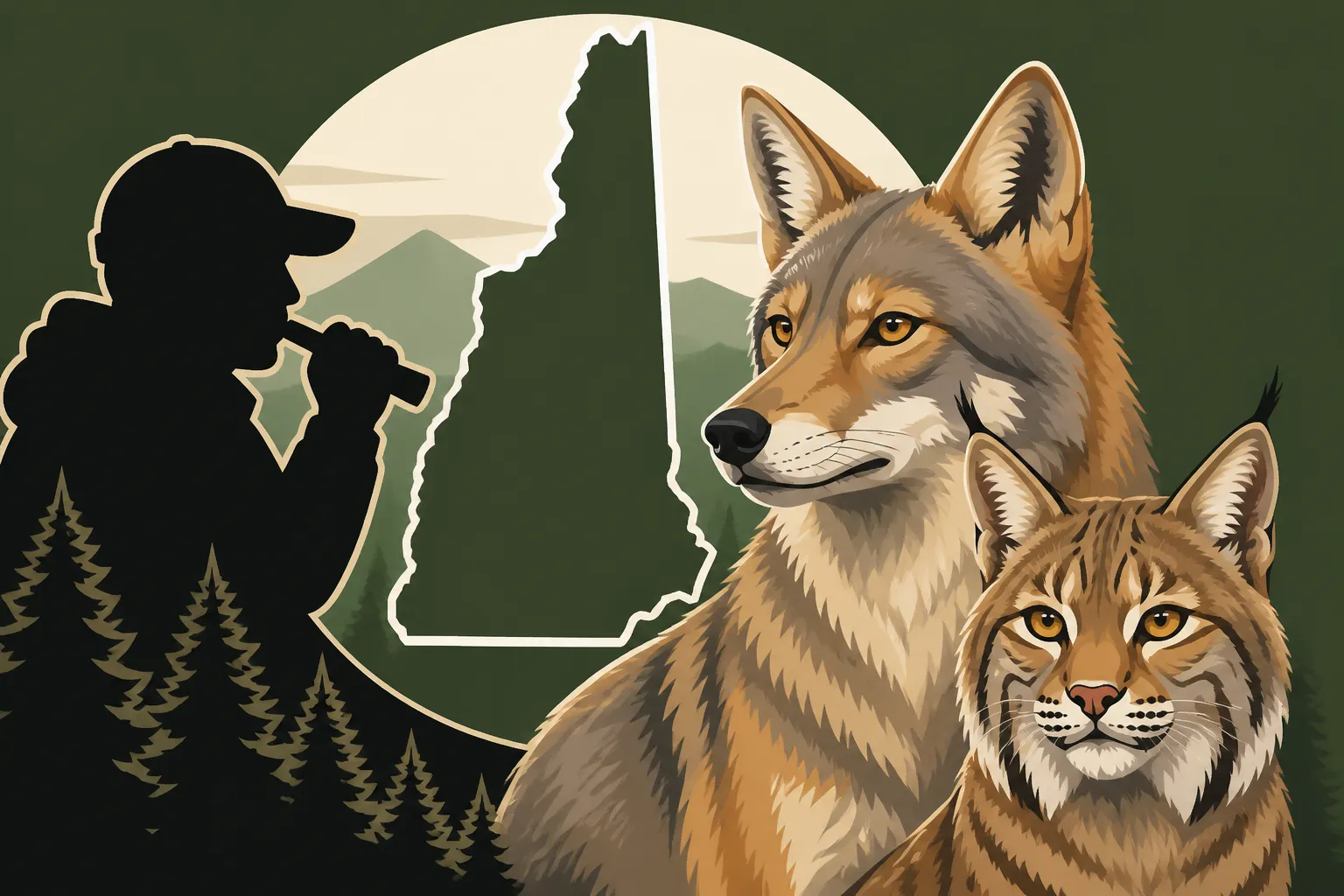
The Eastern coyote (often called a "coy-wolf" due to its genetic mix) is a formidable predator that thrives across New Hampshire, from the deep woods of the North Country to the suburban fringes near cities like Manchester and Nashua. They are highly opportunistic, meaning they'll readily take advantage of whatever food source is available. This could be a deer fawn in spring, a snowshoe hare in winter, or even discarded human food scraps. Their diet versatility makes them responsive to a wide array of distress calls.
What makes them so challenging, however, is their wariness. They've learned to avoid humans, especially those carrying firearms. When you're calling, a coyote won't typically charge in headfirst without first circling downwind to catch your scent. This means your setup, concealment, and understanding of wind direction are just as crucial as the call itself. They often travel in pairs or small family groups, so calling in one might mean others are nearby, observing. Coyote Calling at First Light can be incredibly effective, especially if you understand their routines.
Elusive Bobcats: The Ultimate Calling Challenge
Bobcats are a whole different beast. While their numbers are healthy in New Hampshire, actually seeing one, let alone calling one in, is a significant accomplishment. They are incredibly secretive, mostly nocturnal, and masters of camouflage. Unlike coyotes, bobcats are solitary hunters and tend to be less vocal. They primarily rely on sight and hearing for hunting, ambushing prey rather than engaging in long chases.
When a bobcat responds to a call, it's usually out of pure predatory instinct, often a keen interest in a desperate-sounding meal. They are not as prone to circling downwind as coyotes, but they will use every bit of cover to approach silently, often appearing out of nowhere. This demands even stricter attention to your concealment and vigilance. Think small prey animals—mice, voles, songbirds, or the distress cry of a rabbit—to pique a bobcat's interest.
The Science of Sound: How Predator Calls Work
At its heart, predator calling is about mimicking nature. You're trying to replicate sounds that trigger an instinctual response in coyotes and bobcats: either the promise of an easy meal or the threat of another predator. Understanding why certain sounds work is key to using them effectively.
Prey Distress Calls: The Universal Language of Hunger
The most common and arguably most effective type of predator call is the "prey distress" call. This sound mimics an animal in severe trouble—a rabbit caught by a hawk, a mouse squealing as it's pounced on, or a bird fluttering helplessly. To a predator, this isn't just a sad sound; it's a dinner bell ringing loudly. The animal is in distress, likely injured, and therefore an easy target.
The effectiveness lies in the raw, primal urge of hunger. Coyotes and bobcats are constantly seeking food, and a distress call signals a high-reward, low-effort opportunity. The more realistic and urgent your call, the more convincing it is to a hungry predator. It cuts through the background noise of the forest and demands attention. Different prey species have distinct distress calls, and having a variety in your arsenal can make a big difference, allowing you to adapt to what local predators might be keying in on.
Locating and Attracting: The Different Call Types
Beyond distress calls, there are other categories of sounds that play a crucial role in predator hunting. Locator calls, for instance, are not meant to attract a predator to your exact location, but rather to get them to respond with their own vocalizations, revealing their position. Coyote howls are classic locator calls. If you let out a challenge howl, a resident coyote might answer back, signaling its territory and giving you a direction to set up.
Another category includes "attraction" or "curiosity" calls, which might involve sounds like a pup in distress or even simple, repetitive sounds that pique a predator's curiosity. While these aren't as aggressive as distress calls, they can sometimes bring in a cautious animal that might be hesitant to commit to a full-blown feeding frenzy. Understanding when to use a locator versus a distress call is part of the art of predator calling. You wouldn't want to howl directly at a coyote if you're trying to lure it in close.
Essential Predator Call Types for New Hampshire Hunters
When you walk into a sporting goods store, the sheer number of predator calls can be overwhelming. For New Hampshire, you really only need to focus on a few key types, each with its own advantages.
Mouth Calls: Versatility and Control
Mouth calls are the bread and butter for many predator hunters. These are generally handheld calls that you operate with your mouth, breath, and often your hands to manipulate the sound. They come in two primary forms: open reed and closed reed.
Open reed calls, often resembling a small harmonica with an exposed reed, offer incredible versatility. With practice, you can produce a wide range of sounds, from rabbit distress to fawn bleats, and even some bird calls. The key is controlling your breath pressure and how you bite or manipulate the reed. They can be a bit more challenging to learn but reward you with a diverse sound library right in your pocket. Closed reed calls, on the other hand, are often easier to master. The reed is enclosed, and you simply blow into them to produce a specific sound, most commonly a rabbit squeal. While less versatile, their ease of use makes them excellent for beginners or for quick, decisive calling. Mouth calls are lightweight, don't require batteries, and give you immediate feedback and control over the sound, making them ideal for run-and-gun scenarios in our varied terrain.
| Call Type | Pros | Cons | Best Use Cases |
|---|---|---|---|
| Open Reed | Highly versatile, wide range of sounds | Steeper learning curve, requires practice | Mimicking various prey, adapting to predator response |
| Closed Reed | Easy to learn, consistent sound | Less versatile, often one primary sound | Quick distress calls, beginner-friendly |
| E-Caller | Realistic sounds, remote operation | Requires batteries, can be expensive | Long-range calling, hands-free operation, volume control |
| Hand Call | Good for short-range, immediate sound | Limited volume, can spook close animals | Quick adjustments, close-in finishing calls |
Electronic Calls: Range and Realism
Electronic calls, or e-callers, have revolutionized predator hunting. These devices play pre-recorded sounds through a speaker, offering unparalleled realism, volume, and variety. Most e-callers come with a remote control, allowing you to place the speaker away from your position, which can be a huge advantage. Predators will often key in on the sound source, looking directly at the speaker, which keeps their attention away from you.
The range of sounds available on an e-caller is vast, including multiple species of rabbits, hares, birds, deer fawns, and even coyote vocalizations like howls, barks, and pup distress calls. This versatility allows you to switch between sounds instantly and adjust volume, which is critical for adapting to different situations. While they require batteries and can be a larger investment, a quality e-caller like those featured on GoHunt can be incredibly effective, especially for reaching out to distant coyotes or for hands-free operation while you're focused on scanning the landscape. Remember, however, that some public lands or specific regulations might restrict their use, so always check the latest New Hampshire Fish and Game rules. Predator Calling New Hampshire's White Mountain Backcountry might require something with a bit more punch to reach far.
Mastering the Art of Calling: Techniques and Strategies
Having the best calls in the world won't do you any good if you don't know how to use them effectively. Predator calling is as much about strategy and woodsmanship as it is about the sounds themselves.
Setting Up for Success: Wind, Cover, and Concealment
Your setup is paramount. Coyotes and bobcats, especially in New Hampshire's pressured hunting environments, have excellent noses. Always set up with the wind in your face or quartering across you, so your scent blows away from where you expect the predator to approach. If the wind shifts, be prepared to move or adjust your strategy. This takes priority over everything else.
Next, consider your cover and concealment. You need to break up your silhouette against a natural backdrop. A thick stand of pines, a large blowdown, or the edge of a field with tall grass can all work. Don't just sit in the open. You want to be able to see the area where the predator will likely appear, ideally with a clear shooting lane, but remain completely hidden yourself. Many hunters make the mistake of sky-lighting themselves on a ridge or moving too much. Staying still, even for long stretches, is critical. Think about what a site looks like on GoHunt maps when planning your approach.
Calling Sequences: When to Be Aggressive, When to Be Subtle
There’s no single magic calling sequence that works every time. It's an art, not a science, and it requires you to read the situation. Generally, you want to start with a short, relatively loud burst of a distress call, perhaps a rabbit in distress. Wait a minute or two, scanning constantly. If nothing happens, increase the intensity or duration of your call. The goal is to sound like an animal that's in serious trouble.
If you get a response, like a distant howl or a glimpse of movement, you might switch to more subtle whimpers or soft squeaks to draw them in that final distance. If nothing shows up after 10-15 minutes, consider switching the type of distress call (from rabbit to bird, for example) or trying a locator howl to see if you can get a distant coyote to respond. Don't overcall, especially with bobcats, as they can be easily spooked by too much noise. Often, less is more.
Incorporating Visuals: Decoys and Motion
Adding a visual element to your calling setup can dramatically increase your success rate. Predators are highly visual hunters, and seeing something move can be the final push they need to commit to your call. Motion decoys, especially those that mimic a struggling small animal like a rabbit or a bird, are incredibly effective.
Place your decoy within your shooting lane, usually 20-50 yards out, and slightly downwind of your call (if using an e-caller speaker). The idea is that when the predator approaches, they'll focus on the decoy, providing you with a cleaner shot opportunity and keeping their eyes off your hidden position. Sometimes, even a simple tuft of rabbit fur tied to a stick and gently blowing in the breeze can be enough to pique curiosity, particularly with bobcats who rely heavily on visual cues for their ambush hunting style.
Advanced Tactics and Considerations
Once you've got the basics down, you can start refining your approach with more advanced tactics that account for New Hampshire's specific hunting conditions and animal behavior.
Scouting and Timing: The Key to Consistent Success
You can call all day, but if you're not in an area where coyotes or bobcats are present, you're just wasting your breath. Effective predator calling begins with thorough scouting. Look for tracks in the snow or mud, scat, den sites, and kill remains. Reading New Hampshire Mud for Fresh Deer Movement can also reveal coyote travel patterns. Areas with dense cover near open fields, recent logging cuts, or beaver flowages are often prime habitat. Use mapping tools like GoHunt to identify potential travel corridors, pinch points, and cover.
Timing is also critical. Early morning and late afternoon are generally the best times, as predators are most active during these low-light periods. However, don't rule out midday, especially on overcast or snowy days, when animals might be out searching for food. Also, consider the time of year. During the breeding season (late winter/early spring), coyote vocalizations, including challenge howls, can be very effective. In late fall and winter, when food is scarcer, distress calls become even more enticing.
Adapting to Conditions: Weather and Pressure
New Hampshire weather can be unpredictable, and it significantly impacts predator behavior. On calm, clear days, sounds travel farther, but predators might also be more alert. On windy days, sounds are muffled, requiring more volume, and animals might stay in thicker cover. Rain or snow can make tracking easier but might also reduce predator activity. Learn to adjust your calling strategy to the conditions.
Hunting pressure also plays a huge role. In areas with high hunting pressure, predators become incredibly wary. They've heard every call in the book and know what a human sounds like. In these situations, subtle, less aggressive calling, longer waits, and impeccable concealment are crucial. You might need to use calls that mimic less common prey or rely more on visual decoys to draw them in. Sometimes, simply finding ground that others walk past, even small private tracts in New Hampshire, can make a huge difference.
Safety First: Ethical Calling and Awareness
As always, safety is paramount. When predator hunting, you're mimicking prey animals, which means other hunters might mistake you for game. Always wear sufficient blaze orange, especially during deer season. Even though it's not strictly required for coyote hunting outside of general firearms season, it's a wise precaution. Always identify your target positively before shooting.
Beyond safety, consider the ethics of calling. While coyotes and bobcats are legal to hunt, respect the animals and the environment. Don't harass animals, and if you harvest one, ensure proper game care and reporting. Predator calling can be an incredibly rewarding way to spend time in the New Hampshire woods, but it demands patience, skill, and a deep respect for the wild. Checking the hunting digest for your WMU's bear dates is important, and for coyotes and bobcats, knowing your specific WMU's hunting rules is just as critical.
Disclaimer
This article is for general informational purposes only and does not constitute professional advice. Laws, prices and regulations vary by location and change over time. Consult a qualified professional for guidance on your specific situation.