Best Binoculars for a North Country Bog
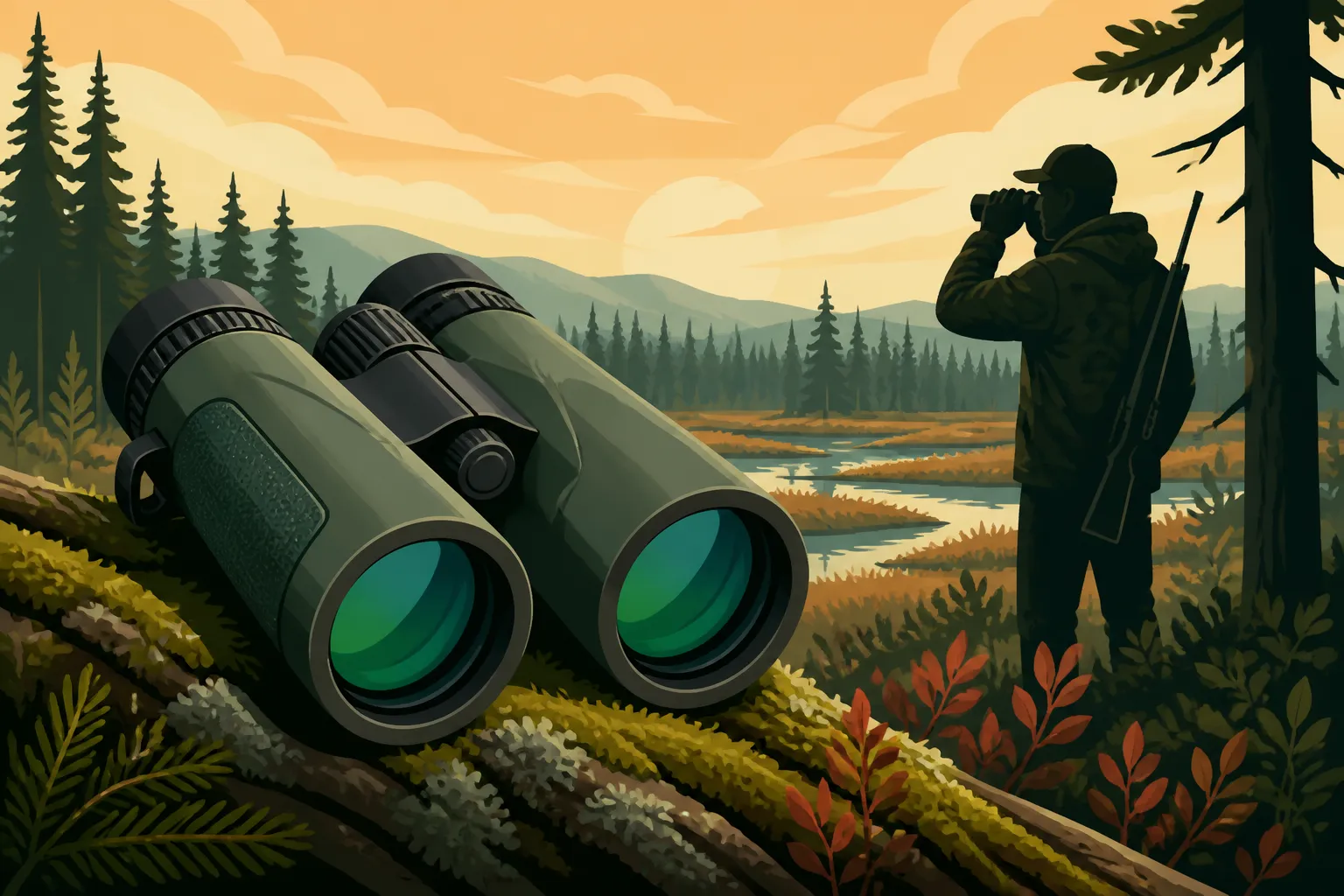
The unique challenges of hunting in New Hampshire's North Country, especially in dense, wet bog environments, often leave hunters frustrated with optics that just don't cut it. Trying to pick out a moose's ear or a bear's silhouette in dim light, through a mist, can be an exercise in futility if your binoculars aren't up to the task. This comprehensive guide will walk you through exactly what to look for in binoculars specifically designed for these demanding conditions, ensuring you make the most of every precious minute in the field.
The Unique Challenges of Glassing New Hampshire's North Country Bogs
Hunting in the North Country isn't like glassing open plains out West. Here, the cover is thick, the light is often low, and the terrain itself presents significant hurdles for optical performance. A bog is a truly special kind of challenge, demanding the best from both hunter and gear.
Low Light and Dense Cover in the Bog
Imagine standing on the edge of a vast, sprawling bog just as dawn breaks. The air is heavy, and mist hangs low over the water, shrouding the alders and black spruce in a veil. Even at midday, the dense canopy of conifers and hardwoods can create a perpetual twilight zone. This lack of ambient light is perhaps the biggest optical hurdle. Your eyes, even adjusted, struggle to resolve detail, and game animals like a bull moose or a big black bear, with their dark hides, seem to vanish into the shadows.
It's in these moments that cheap binoculars reveal their weaknesses. They gather minimal light, leaving you staring into a murky, indistinct blur. You might spot movement, but confirming what it is, let alone if it's legal game, becomes nearly impossible. The frustration of seeing a dark shape that could be a moose, but being unable to make out its rack, is enough to ruin a hunt. You need an optic that can draw in every last photon of light and deliver it clearly to your eye, helping you differentiate between a stump and a shoulder, or a cluster of branches and an antler tined for velvet. This is where quality optics truly shine, transforming vague shadows into discernible forms.
Humidity, Rain, and Temperature Swings
New Hampshire's weather is notoriously fickle, and bogs amplify its effects. The perpetual dampness, combined with sudden downpours or dramatic temperature drops between dawn and midday, creates a perfect storm for optical failure. Few things are more disheartening than raising your binoculars for a critical look, only to find the lenses completely fogged over, both internally and externally. External fog can be wiped away, but internal fog means your hunt is effectively over until the conditions change, and even then, moisture could linger and cause long-term damage.
The problem isn't just external moisture. The air inside poorly sealed binoculars can condense when moving from a warm, humid pocket of air to a colder environment. Imagine trekking through a cold bog in the early morning, your body warmth slightly heating your binoculars, then stopping to glass a distant opening as a cold front moves in. Poof, fog. Good binoculars are built to withstand these extremes. They are typically sealed with O-rings and purged with inert gases like nitrogen or argon, which prevents internal fogging by removing all moisture-laden air. This robust construction is non-negotiable for anyone seriously hunting New Hampshire's bogs, ensuring that your view remains crystal clear, no matter what the weather throws at you. You might find detailed discussions on such features when researching different models, perhaps even utilizing online resources or community forums found through platforms like GoHunt.
Identifying Game in a Cluttered Environment
Bogs are defined by their dense, tangled vegetation. Alders, tag alders, black spruce thickets, and dense willow stands create a natural maze. When a moose or a bear steps out, you rarely get a full body view. More often, you're looking for a tell-tale horizontal line of a back, the slight movement of an ear, or just the top of an antler poking above the brush. In this cluttered environment, clear identification is paramount. You need to distinguish between a legal animal and something that isn't, and you need to do it quickly and confidently. Glassing a Bog for a Bull Moose requires an optic that excels at revealing fine details.
Cheap binoculars often suffer from chromatic aberration, which manifests as colored fringing around objects, or a general lack of contrast. This blurriness makes it incredibly difficult to differentiate a branch from a leg or to count antler points. A sharp, high-contrast image delivered by quality optics helps immensely. It allows your brain to process those subtle differences in texture, color, and shape that indicate a living animal, rather than just another part of the environment. Imagine spotting a patch of dark hide: with poor optics, it's just a dark patch. With excellent binoculars, you might discern the texture of coarse hair, the curve of a shoulder, or the flick of a tail, providing the crucial information needed for a decision.
Key Binocular Features for Bog Hunting Success
When you're slogging through a North Country bog, every piece of gear needs to earn its keep. For binoculars, that means a suite of features specifically tailored to overcome the environmental challenges we've discussed.
Magnification and Objective Lens Size for Bogs
This is often the first thing hunters look at: 8×42, 10×42, 10×50? The numbers refer to magnification (how much closer an object appears) and the diameter of the objective lens in millimeters (how much light it gathers). For bog hunting, there's a delicate balance to strike.
Many hunters automatically gravitate towards higher magnification like 10x, thinking "more power, better." However, in the dense, close-quarters environment of a bog, higher magnification often comes with a trade-off. A 10x binocular has a narrower field of view, meaning you see less of the surrounding area. This can make it harder to initially locate game that might be moving through thick cover, or to scan broadly for activity. Moreover, higher magnification amplifies hand shake, which can lead to a jumpy, fatiguing image, especially after a long trek or when trying to hold steady in an awkward position.
For bog hunting, an 8x magnification often hits the sweet spot. An 8x binocular provides a wider field of view, making it easier to acquire targets quickly and to track moving game in thick brush. The lower magnification also makes the image more stable, reducing eye strain and allowing for longer periods of comfortable glassing. This wider, more stable image can be invaluable when trying to discern a moose hidden within the alders or Hunting a Beaver Flowage Edge.
The objective lens size is equally important, especially for light gathering. A 42mm objective lens is a popular and versatile choice, offering a good balance between light transmission and a manageable size/weight. You could go up to 50mm for even more light-gathering capability, which is tempting for dim bog conditions, but remember that a larger objective lens means heavier, bulkier binoculars. For long treks into the North Country, where every ounce counts, a larger, heavier binocular can quickly become a burden. While 8×42 is often a great choice, some might consider 8×32 for extreme weight savings, though you'd sacrifice some low-light performance. It’s a trade-off.
Optical Coatings and Prisms: The Secret to Clarity
This is where the real magic happens in a pair of binoculars, and it’s often overlooked by new hunters. The quality of the glass, the coatings applied to its surfaces, and the type of prisms used are what determine brightness, color fidelity, and contrast—all absolutely critical in a dark, murky bog.
Look for binoculars that are "Fully Multi-Coated" (FMC). This means that all air-to-glass surfaces have multiple layers of anti-reflective coatings. These coatings are essential because they reduce light loss due to reflection, ensuring that as much light as possible reaches your eyes. Without them, a significant percentage of light would bounce off each lens surface, resulting in a dim, washed-out image, precisely what you don't want in a low-light bog. Manufacturers often have proprietary names for their coatings, but the core principle remains the same: more and better coatings equal a brighter, clearer image.
Beyond coatings, the prism system is key. Most quality hunting binoculars use either Porro prisms or Roof prisms. Roof prisms are more common in modern hunting binoculars because they allow for a more compact, streamlined design. Within roof prisms, look for "phase-corrected BaK-4 prisms." BaK-4 glass (Barium Crown glass) is superior to BK7 glass, as it produces a more circular exit pupil and therefore a brighter, crisper image. "Phase-correction coatings" are crucial for roof prism binoculars. Without them, light waves can become out of phase as they reflect through the prisms, leading to a loss of resolution and contrast. Phase coatings realign these light waves, delivering a much sharper, higher-contrast image, which is vital for distinguishing subtle details in dense cover or when identifying a New Hampshire Bear Population Estimate at distance. When you're sifting through endless options, resources like GoHunt's gear reviews can be a lifesaver, providing detailed breakdowns that go beyond basic specs.
Durability and Ergonomics in the Field
A bog is no place for delicate equipment. Your binoculars need to be tough enough to handle drops, bumps, and constant exposure to the elements. This means looking for several key durability and ergonomic features.
First and foremost, "waterproof" and "fog-proof" are non-negotiables. As mentioned earlier, this is achieved through O-ring seals and nitrogen or argon gas purging. Don't settle for "water-resistant" – that's not enough for a New Hampshire bog. You need optics that can be submerged (briefly, accidentally) and still perform flawlessly.
Next, consider the exterior armor. Most quality hunting binoculars feature a tough, rubberized coating. This not only protects the optics from impacts but also provides a non-slip grip, even when your hands are wet, cold, or gloved. It also makes them quieter to handle, preventing accidental clanking against other gear.
Ergonomics are about how the binoculars feel in your hands and how easy they are to use. A comfortable grip is vital, especially during extended periods of glassing. The focus wheel should be smooth and easy to manipulate, even with gloves on, but firm enough not to drift accidentally. Eye relief (the distance your eye can be from the eyepiece and still see the full field of view) is important, particularly if you wear glasses. Look for adjustable eyecups that twist up and down to accommodate different users. The overall weight and balance also contribute to comfort during a long day of Moose Hunting New Hampshire's North Country. You want something substantial enough to feel stable, but not so heavy it becomes a chore to carry, especially when Packing for a Nine-Day Moose Hunt.
Recommended Binocular Specifications and Why They Matter
Putting all these features together, we can identify a sweet spot for binoculars that will truly excel in New Hampshire's North Country bogs. It's about finding the right blend of power, clarity, and ruggedness without overburdening yourself.
Finding the Right Balance: Magnification, Lens, and Build
For the reasons we've explored, the 8×42 configuration is often the king for bog hunting. The 8x magnification gives you a wide, stable field of view, crucial for scanning dense cover and quickly acquiring game. The 42mm objective lens provides excellent light-gathering capabilities, helping to brighten those dim bog interiors without making the binoculars overly heavy or cumbersome.
However, if you anticipate doing a lot of longer-range glassing from the bog into clearerings or across wider stretches of marsh, and you're confident in your ability to hold steady, a 10×42 could be a viable option. Just be aware of the narrower field of view and increased hand shake. For instance, if you are Hunting a New Hampshire North Country Moose Bog but are positioned to overlook a vast expanse, the 10x might offer an edge in resolving distant details.
Here's a quick comparison of common binocular options for bog hunting:
| Feature/Option | 8×32 | 8×42 | 10×42 | 10×50 |
|---|---|---|---|---|
| Magnification | Good for close range, wide view | Excellent for general bog use | Good for slightly longer range | Best for maximum detail/distance |
| Light Gathering | Adequate, but can struggle in deep gloom | Very Good, strong low-light performance | Good, but requires more stable hold | Excellent, but bulkier |
| Field of View | Very Wide | Wide | Moderate, narrower than 8x | Moderate |
| Stability | Very Stable | Stable | Less Stable, more hand shake | Least Stable, tripod often recommended |
| Size/Weight | Compact & Lightweight | Versatile, manageable size and weight | Manageable, slightly heavier than 8×42 | Bulkier & Heaviest |
| Best For | Fast, close-quarters, hiking focus | All-around bog hunting, general purpose | More open bog edges, limited long range | Dedicated long-range glassing from a fixed position |
It’s not just about the numbers on the box; it’s about how those numbers translate to real-world performance, something you can often glean from expert analyses, even on platforms like GoHunt.
What to Look For Beyond the Numbers
Beyond the basic specs, dive into the nitty-gritty of optical performance. Read reviews, compare brands, and, if possible, get your hands on a few pairs before making a decision. Pay attention to terms like "edge-to-edge clarity." In a bog, where a deer might step into your peripheral view, you want a sharp image across the entire field of view, not just the center. Poor edge-to-edge clarity means the outer portions of the image are blurry, negating the benefit of a wide field of view.
Also, consider color fidelity. Good binoculars reproduce colors accurately. This can be crucial for identifying subtle hues that help distinguish a brown bear from a dark stump, or the faint, reddish tinge of fresh moose hide in the distance. Some lower-quality optics can have a yellowish or bluish cast, which further degrades the image in already dim conditions.
Finally, user reviews mentioning fogging issues or poor performance in adverse weather should be a red flag. Hunters who spend time in varied conditions like those found in the North Country will often call out these flaws directly. The real test of an optic isn't in the store, but in the driving rain or the heavy fog.
Budgeting for Quality Optics
Let's be realistic: high-quality binoculars are an investment. You might be tempted to save a few dollars, but when you're relying on your optics to make a critical identification or spot game that could be your once-in-a-lifetime opportunity, skimping on glass can be a costly mistake.
That being said, you don't necessarily need to mortgage your house for a top-tier European brand. There are many excellent manufacturers offering binoculars that provide superb performance without breaking the bank. The sweet spot for value often lies in the mid-range price point, where you gain significant optical improvements over entry-level models without paying for the diminishing returns of the absolute premium options. Think of it as buying a reliable truck versus a luxury sports car – both get you where you need to go, but one offers practical performance for the job. Investing in a quality pair of binoculars will serve you reliably for many seasons, enduring the rigors of New Hampshire hunting, whether you are Hunting the Rut in Early-to-Mid November or Still-Hunting White Mountain National Forest Timber.
Field Testing and Maintenance for Lifelong Performance
Even the best binoculars won't perform optimally if they aren't properly tested and cared for. A little effort on the front end and consistent maintenance will ensure your investment lasts for years.
Pre-Season Testing in Real Conditions
Don't wait until opening morning to discover your binoculars aren't quite right. Just like you'd sight in your rifle or practice with your bow, you need to field-test your optics. Take them out at dawn and dusk, in various weather conditions if possible. Go for a walk in a similar environment to a bog—perhaps a wet, dense patch of woods.
Pay attention to:
- Comfort: Do they feel good in your hands? Is the focus wheel easy to use, even with cold fingers or gloves?
- Image Quality: How well do they perform in low light? Can you resolve fine details at various distances? Do you experience eye strain after extended use?
- Fogging: Move them from a warm vehicle to cold outdoor air. Do they fog internally? If so, you have an issue.
- Durability Check: While you wouldn't intentionally drop them, are the lens caps secure? Does the armor feel robust?
This pre-season testing is critical for building confidence in your gear. If you find any issues, you have time to address them before a crucial hunt. Consider using them during Shed Hunting on New Hampshire Public Land to get a feel for their performance in the woods.
Proper Care in the Field
The North Country is tough on gear, so diligent care in the field is essential.
- Lens Caps and Rain Guards: These are your first line of defense. Keep them on whenever you're not actively glassing. It takes mere seconds to remove them, but it can save your lenses from scratches, dirt, and moisture.
- Cleaning: Carry a small lens cleaning kit – a lens pen, a microfiber cloth, and perhaps a small blower brush. Never wipe lenses with your shirt or a dirty rag, as this can scratch the delicate coatings. Use the blower brush to remove loose debris, then gently wipe with a clean microfiber cloth. For stubborn smudges, a drop of lens cleaning fluid applied to the cloth (never directly to the lens) can work wonders.
- Keep Them Dry: Despite being waterproof, it's always best to keep your binoculars as dry as possible. Use a waterproof compartment in your pack, or a dedicated binocular harness with a protective flap. If they do get wet, wipe them down thoroughly as soon as you can, paying special attention to crevices where water can sit. After a particularly wet day, let them air dry completely overnight. Remember to regularly check your binocular's seals and lenses, especially after a tough outing.
Harnesses and Carrying Systems
How you carry your binoculars can significantly impact both their protection and your ability to use them quickly and efficiently. A good binocular harness is almost as important as the binoculars themselves, especially when Hunting a Granite Ridge Saddle or navigating dense bog terrain.
A harness distributes the weight of the binoculars across your shoulders and back, rather than letting them bounce around your neck. This is a game-changer for comfort on long treks. Most harnesses also keep your binoculars close to your chest, reducing swing and making them less likely to snag on branches or get damaged during a fall. Many modern harnesses also incorporate a protective flap that covers the lenses, adding an extra layer of defense against rain, snow, and dust, while still allowing for quick access when game is spotted. This combination of protection and accessibility is ideal for the rough and tumble world of North Country bog hunting, ensuring your optics are ready when you need them most.
Disclaimer
This article is for general informational purposes only and does not constitute professional advice. Laws, prices and regulations vary by location and change over time. Consult a qualified professional for guidance on your specific situation.