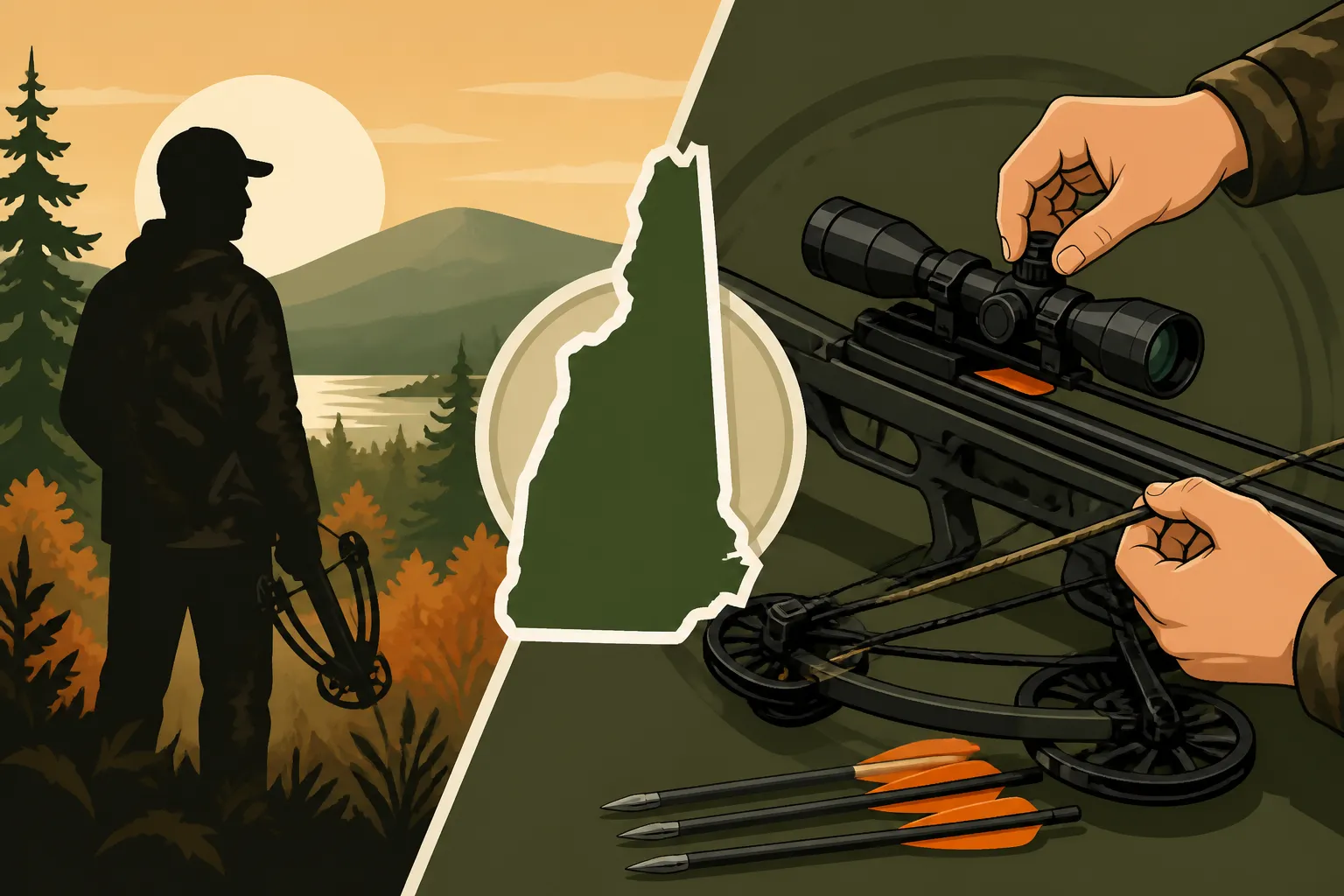
Setting Up a Crossbow Under New Hampshire Rules
Hunting in New Hampshire with a crossbow can feel like navigating a maze of regulations if you're not sure where to start. Many folks are excited by the opportunity crossbows offer, but also a bit overwhelmed trying to understand the specific rules that apply in our beautiful Granite State. This guide is here to untangle all that for you, from understanding legal requirements and choosing the right gear to effective field strategies, ensuring you're set up for a safe and successful season.
Understanding New Hampshire's Crossbow Regulations
Before you even think about stepping into the woods with a crossbow, it’s absolutely essential to grasp New Hampshire’s specific hunting regulations. Trust me, it's better to spend a little time upfront understanding the rulebook than facing a fine or losing your hunting privileges later. Our state has some particular nuances when it comes to crossbows, especially concerning who can use them and where.
Who Can Use a Crossbow and Where
Historically, crossbows had more restrictions in New Hampshire, often reserved for hunters with specific physical disabilities or during certain seasons. However, the landscape has evolved, and now more hunters have the opportunity to utilize them. It's crucial to understand that while crossbows are legal for use during the regular archery deer season, they are not universally legal in all Wildlife Management Units (WMUs) for that season. This is where it gets a little tricky, and why many hunters find themselves scratching their heads.
New Hampshire designates specific WMUs where crossbows are allowed for all eligible hunters during the archery season. These are generally the WMUs that historically have less hunting pressure or specific management goals. It’s absolutely your responsibility to know if the WMU you plan to hunt falls within this approved list. Just because you have an archery license doesn't mean you can use a crossbow anywhere an archer can use a vertical bow. You can delve deeper into this by checking out New Hampshire's Twelve Crossbow-Legal WMUs, which will give you the precise breakdown of where you can and cannot go. Always double-check the current hunting digest, as WMU rules can occasionally be updated.
Legal Definitions and Equipment Standards
Beyond the geographical restrictions, New Hampshire also has precise definitions for what constitutes a legal crossbow and the type of ammunition you can use. This isn't just bureaucratic red tape; these rules are in place for hunter safety, fair chase, and to ensure humane harvesting of game. You can't just pick up any crossbow and any bolt and assume it's good to go.
For instance, there are typically regulations concerning minimum draw weight for crossbows. This ensures that the projectile carries enough kinetic energy to deliver a quick and ethical kill. While specific numbers can change, it generally means smaller, toy-like crossbows are not permitted. Similarly, there are often minimum length requirements for bolts (the arrows shot from a crossbow). This isn't just about what fits the crossbow; it's also about ensuring stable flight and sufficient penetration. When it comes to broadheads, New Hampshire, like most states, has rules on minimum cutting diameter and whether mechanical or fixed-blade broadheads are allowed. Generally, broadheads must be razor sharp, with at least two cutting edges, and possess a minimum width. It's not uncommon to see specific prohibitions against certain types of broadheads, such as those that might expand upon impact in a way that's deemed unethical or unsafe. Make sure your broadheads meet the legal requirements detailed in New Hampshire Crossbow Equipment Rules. Always consult the official New Hampshire Fish and Game regulations for the most current and exact figures on draw weight, bolt length, and broadhead specifications.
Season Dates and Reporting Requirements
Once you've confirmed your WMU is crossbow-friendly and your equipment meets the legal definitions, you need to be acutely aware of the season dates. Crossbow hunting for deer in New Hampshire typically aligns with the regular archery deer season. This means you'll be hunting alongside vertical bow archers, adhering to the same opening and closing dates for that specific season. However, remember that some WMUs might have slightly different archery season end dates, so always verify the exact dates for your chosen WMU. For a general overview, you can check New Hampshire Archery Season Dates, but again, always refer to the most current digest.
Beyond season dates, reporting your harvest is a critical part of the hunting process in New Hampshire. It’s not just a suggestion; it’s a legal requirement. Whether you harvest a deer with a crossbow, vertical bow, muzzleloader, or firearm, that animal must be registered. Our state relies on this data to manage deer populations effectively. In recent years, digital reporting through an app has become an option, but there might still be in-person registration requirements, especially during certain periods or for specific WMUs. Make sure you understand the procedures, including deadlines, for New Hampshire Deer Reporting Requirements to ensure you comply with the law after a successful hunt.
Choosing and Outfitting Your Crossbow for New Hampshire
Now that you're well-versed in the regulations, let's talk about getting you set up with the right gear. Choosing a crossbow and equipping it properly for New Hampshire's diverse terrain and weather can make all the difference between a frustrating outing and a successful, enjoyable hunt.
Selecting the Right Crossbow Model
The market is flooded with crossbows, and picking the right one can feel daunting. When you're looking for a crossbow to hunt in New Hampshire, you need to consider a few key factors: draw weight, speed, and noise level. Our state offers a variety of hunting environments, from dense softwood thickets in the North Country to more open hardwoods and agricultural edges in the southern WMUs.
A crossbow with a manageable draw weight is important, even with cocking aids. While most modern crossbows come with these, you still want something you can comfortably and safely cock in the field, possibly from a treestand or ground blind. Speed, while not the be-all and end-all, does offer a flatter trajectory, which can be advantageous in varying timber situations. However, extreme speed sometimes comes at the cost of increased noise, which can spook wary New Hampshire deer, especially during the rut when they might be more alert.
Consider the size and maneuverability. Are you primarily hunting from a treestand in tight New Hampshire hardwoods where a compact crossbow would be a huge asset? Or are you mainly still-hunting through more open logging cuts where a slightly longer axle-to-axle might be acceptable? For researching different models and comparing their features, many hunters find online resources helpful. Tools like GoHunt can provide detailed specifications and user reviews, helping you narrow down options that fit both your budget and your specific hunting style in New Hampshire. Thinking about the actual physical dimensions of the crossbow, and how you’ll carry and shoot it in our varied terrain, is key to a comfortable and effective setup.
Essential Accessories and Components
A crossbow isn't just the bow itself; it's a system. Outfitting it with the right accessories is just as important as choosing the crossbow itself.
- Scopes: Most hunting crossbows come with a scope, but the quality can vary. For New Hampshire's timber country, a good quality scope with clear glass and illuminated reticles can be a game-changer, especially during those low-light dawn and dusk hours. Many scopes are designed with multiple aiming points (dots or stadia lines) calibrated for different distances, which is incredibly useful for crossbow hunting. You'll want to ensure the reticle pattern is suitable for the ranges you expect to shoot in our woods, typically closer shots in dense cover.
- Quivers: An on-bow quiver keeps your bolts readily accessible, which is a must-have. Some hunters prefer detachable quivers that can be removed once in the stand or blind to reduce weight and bulk, and to prevent vibration. Whichever you choose, ensure it securely holds your bolts and is quiet.
- Cocking Aids: These are practically non-negotiable for modern crossbows. Rope cockers significantly reduce the effort required to cock the bow and ensure a consistent, even draw, which is vital for accuracy. For hunters seeking even less effort, crank cocking devices are available, though they add weight and can take a little longer. Consistency in cocking is paramount for consistent accuracy, so don't skip this.
- Slings: Carrying a crossbow through New Hampshire's often rugged and hilly terrain, especially if you're venturing into the White Mountains, will quickly make you appreciate a comfortable sling. Look for one that's wide, padded, and has non-slip features to keep your crossbow securely on your shoulder as you navigate blowdowns and granite ledges.
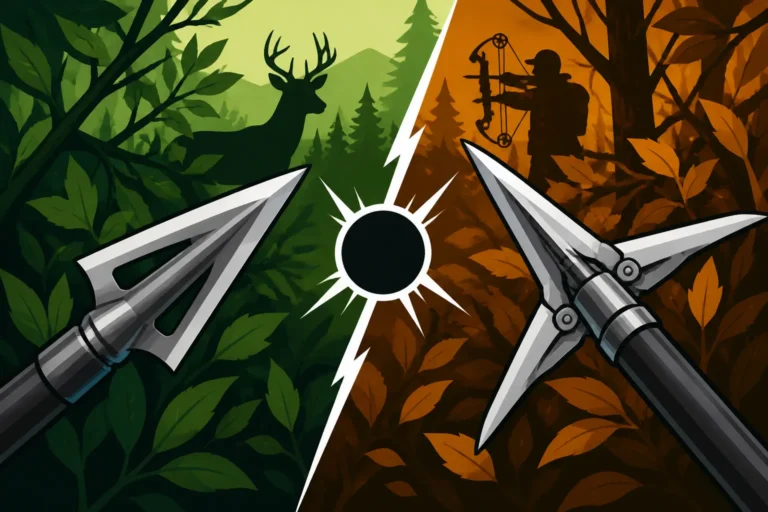
- Broadheads and Bolts: This is where the rubber meets the road. New Hampshire has legal requirements for broadheads, as discussed earlier. For deer, many hunters debate between fixed-blade and mechanical broadheads. Fixed blades are known for their reliability and robust construction, often preferred in situations where deflection might occur, like hitting a shoulder blade. Mechanical broadheads, on the other hand, typically offer a wider cutting diameter upon deployment, which can lead to larger wound channels and better blood trails. However, they rely on moving parts, and some hunters worry about deployment failure in dense bone. You need to pick what you're confident in, and critically, ensure it's tuned to fly accurately from your crossbow. Remember, every setup is unique, and you can get more specific advice on Best Broadhead for a New Hampshire Whitetail.
Sighting In and Practice
Getting your crossbow sighted in properly is not just about hitting the bullseye at the range; it's about ethical hunting. An inaccurate crossbow leads to wounded animals, which none of us want.
- Sighting In: Start by using a stable bench rest. Fire a few shots at a close distance, say 10 or 20 yards, to get on paper. Adjust your scope until you're consistently hitting the center. Then, move to longer distances – 30, 40, and even 50 yards. Many crossbow scopes have multiple reticles, so you'll want to calibrate these for various ranges. Always shoot multiple shots at each distance to confirm your adjustments. Pay attention to how the bolt flies; any wobble or inconsistent flight could indicate an issue with your setup, bolts, or broadheads.
- Importance of Practice: Consistent practice is crucial. Don't just sight in once and call it good. Practice from different positions you might encounter while hunting: from a simulated treestand height, kneeling, or even from a ground blind. Practice at various angles, as shooting downhill or uphill changes your aiming point. You need to know your effective range—the distance at which you can consistently make an ethical kill shot. For most crossbow hunters, this will be within 40-50 yards, though some advanced setups and skilled shooters may extend that. Understand your limitations.
- Maintenance Tips: New Hampshire weather can be tough on gear. Keep your crossbow in top shape by regularly waxing the string to reduce friction and extend its life. Inspect your limbs for any cracks or splinters, especially after a hunt or if the bow has been exposed to extreme temperatures. Check your cams and cables for wear. Keep bolts clean and ensure fletchings are intact for accurate flight. A well-maintained crossbow is a reliable crossbow, and that peace of mind is invaluable when that buck of a lifetime steps out.
Field Considerations for Crossbow Hunters in New Hampshire
Having a legally compliant and well-tuned crossbow is only half the battle. Knowing how to effectively use it in New Hampshire's diverse hunting environments is where real skill comes into play. Our woods offer unique challenges and opportunities that demand specific strategies from crossbow hunters.
Treestand and Ground Blind Strategies
The compact nature of many modern crossbows makes them well-suited for both treestand and ground blind hunting, but each scenario demands careful planning.
- Treestands: When hunting from a treestand in New Hampshire, especially in our dense hardwood forests, you need clear shooting lanes. Unlike a rifle, you can't just thread a bolt through a tiny gap. The crossbow itself is wider than a vertical bow, and the bolt needs an unobstructed path. Set up your stand where you have natural lanes or where you can discreetly trim branches before the season, ensuring you don't spook game. Because crossbows typically have a shorter effective range than a firearm, stand placement closer to deer travel corridors or feeding areas is paramount. Consider where deer might approach from and have multiple shooting lanes cleared for different angles. Also, familiarize yourself with Treestand Rules on New Hampshire Public Land if you're hunting on state or federal property.
- Ground Blinds: Ground blinds offer excellent concealment and can be a fantastic option for crossbow hunters, especially in areas with good cover like thick pines or brushy field edges. The enclosed space can help you manage movement and scent. When setting up a ground blind, ensure you brush it in well to break up its outline. Position your chair or stool so you can comfortably draw and shoot the crossbow without hitting the blind's walls or windows. Again, clear shooting lanes are crucial. Ground blinds are particularly effective when hunting a Clover Plot at First Light or a Standing Corn Field for Deer where you need to be very still and hidden. You can learn more about general strategies in Using a Ground Blind on Public Land.
Shot Placement and Recovery
Ethical shot placement is paramount with any hunting weapon, and crossbows are no exception. Due to the nature of a crossbow bolt – relying on hemorrhage from a sharp broadhead rather than hydrostatic shock – precise shot placement is even more critical.
Aim for the "boiler room" – the lung and heart area – to ensure a quick, humane kill. This is generally a zone behind the shoulder, slightly lower than mid-body. Avoid shoulder shots, as the bones can easily deflect a broadhead, leading to a wounded animal. While a crossbow packs a punch, its energy is concentrated, meaning bone impacts can still cause issues. Knowing your crossbow's capabilities and practicing shot placement on a 3D target will build confidence. The goal is two holes: an entry and an exit wound, to maximize blood loss and facilitate tracking.
After the shot, patience is your best friend. Resist the urge to immediately pursue the animal. Give it time – often 30 minutes to an hour for a well-hit deer, or even longer for a questionable hit – to bed down and expire. This patience greatly increases your chances of a successful recovery. When you do begin tracking, move slowly and deliberately, looking for blood, broken branches, and disturbed leaves. New Hampshire's varied terrain, from rocky ledges to thick underbrush, can make tracking challenging. If tracking extends into darkness, Blood Trailing After Dark in New Hampshire offers crucial tips to help you recover your game safely and effectively.
Navigating Public Lands with a Crossbow
New Hampshire offers a wealth of public hunting land, including vast tracts of the White Mountain National Forest and numerous Wildlife Management Areas. Hunting these areas with a crossbow means adhering to general public land rules in addition to your specific crossbow regulations.
Always carry a map and compass, or rely on a robust GPS app. Services like GoHunt often integrate property lines and public land boundaries, which are invaluable for ensuring you're not inadvertently trespassing. The ability to use offline maps is crucial in many remote New Hampshire areas where cell service is non-existent. Familiarize yourself with how to use Best GPS App for New Hampshire Public Land. Understanding terrain features, like those discussed in Reading Aerial Photos for North Country Deer, can help you find less pressured areas.
Respect for the land and other users is key. Many public lands see significant foot traffic from hikers, mountain bikers, and other outdoor enthusiasts, especially during the fall. While crossbows are generally quiet, be mindful of your presence. Also, be aware of any specific regulations regarding vehicle access, camping, or Trail Camera Rules on New Hampshire Public Land. Hunting near private land boundaries requires extreme caution and a clear understanding of where those lines are. Always assume land is private until proven otherwise, and never cross a boundary to retrieve game without explicit permission. New Hampshire takes trespass very seriously. While the solitude of public land is a huge draw, managing Hunting Pressure on New Hampshire Public Land often means hiking further off the beaten path to find undisturbed animals.
Maintaining Your Crossbow and Staying Current
Like any finely tuned piece of equipment, your crossbow needs regular care and attention to perform reliably season after season. Beyond that, the regulatory landscape can shift, and staying informed is your responsibility as a hunter.
Routine Maintenance and Storage
A little routine maintenance goes a long way in ensuring your crossbow is always ready for action. The string and cables are the heart of your crossbow, and they endure immense stress. Regularly apply string wax to the string and cables to protect them from wear and tear, and to prolong their lifespan. Inspect your limbs for any signs of cracking or delamination, especially near the cam pockets. Even a small crack can lead to a catastrophic failure under tension. Your cams should spin freely and be in proper alignment; any wobbles or unusual sounds need immediate attention.
After each hunt, especially if your crossbow has been exposed to rain or damp conditions, wipe it down thoroughly. Pay attention to metal components to prevent rust. Store your crossbow uncocked to relieve tension on the limbs and string, which helps maintain its peak performance over time. It's best to store it in a cool, dry place, ideally in a padded case to protect it from accidental bumps or falls. Protecting your investment ensures you'll have a reliable tool for many seasons of New Hampshire hunting to come.
Staying Informed on Regulatory Changes
This might sound like a broken record, but it's genuinely one of the most important aspects of legal hunting: you must stay current with New Hampshire's hunting regulations. Wildlife laws and rules can and do change from year to year. What was legal last season might have subtle but significant adjustments this season.
Always obtain and thoroughly read the current New Hampshire Fish and Game hunting digest for the year you intend to hunt. This digest is your official rulebook and will contain the most up-to-date information on crossbow-legal WMUs, season dates, equipment specifications, and reporting requirements. Many hunters find resources like GoHunt helpful for tracking state-specific hunting news or updates, but these should always be cross-referenced with the official Fish and Game publications. Don't rely solely on word-of-mouth or last year's digest. It's your personal responsibility to be aware of and comply with all current regulations to ensure a safe, legal, and enjoyable hunting experience in New Hampshire.
Broadhead Comparison for Crossbow Hunters
Choosing the right broadhead is a critical decision for any crossbow hunter. Here's a quick comparison of the two main types, keeping New Hampshire hunting conditions in mind:
| Feature | Fixed-Blade Broadheads | Mechanical (Expandable) Broadheads |
|---|---|---|
| Design | Blades are rigid and non-moving, fixed to the ferrule. | Blades deploy upon impact, often spring-loaded or cam-operated. |
| Durability | Generally more robust, less prone to damage from bone/impact. | Can be more delicate; potential for blade bending or non-deployment. |
| Flight Accuracy | Can be sensitive to tuning and crossbow speed; may require more tuning for perfect flight. | Generally more forgiving and fly like field points due to smaller profile in flight. |
| Wound Channel | Typically smaller cutting diameter, but consistent. Reliable penetration through tough hide/bone. | Can create larger cutting diameter upon deployment, leading to greater hemorrhage. |
| Penetration | Excellent, especially through bone, due to structural integrity. | Good, but deployment can sometimes absorb kinetic energy, potentially reducing penetration. |
| Reliability | Very high, few moving parts to fail. | High, but depends on design and quality; rare deployment failures are possible. |
| Ideal for NH | Thick cover, potential for brush contact, situations where maximum penetration through tough hide or bone is paramount. | Open shots, seeking maximum hemorrhage and blood trail from a wider cut. Requires careful testing. |
This article is for general informational purposes only and does not constitute professional advice. Laws, prices and regulations vary by location and change over time. Consult a qualified professional for guidance on your specific situation.