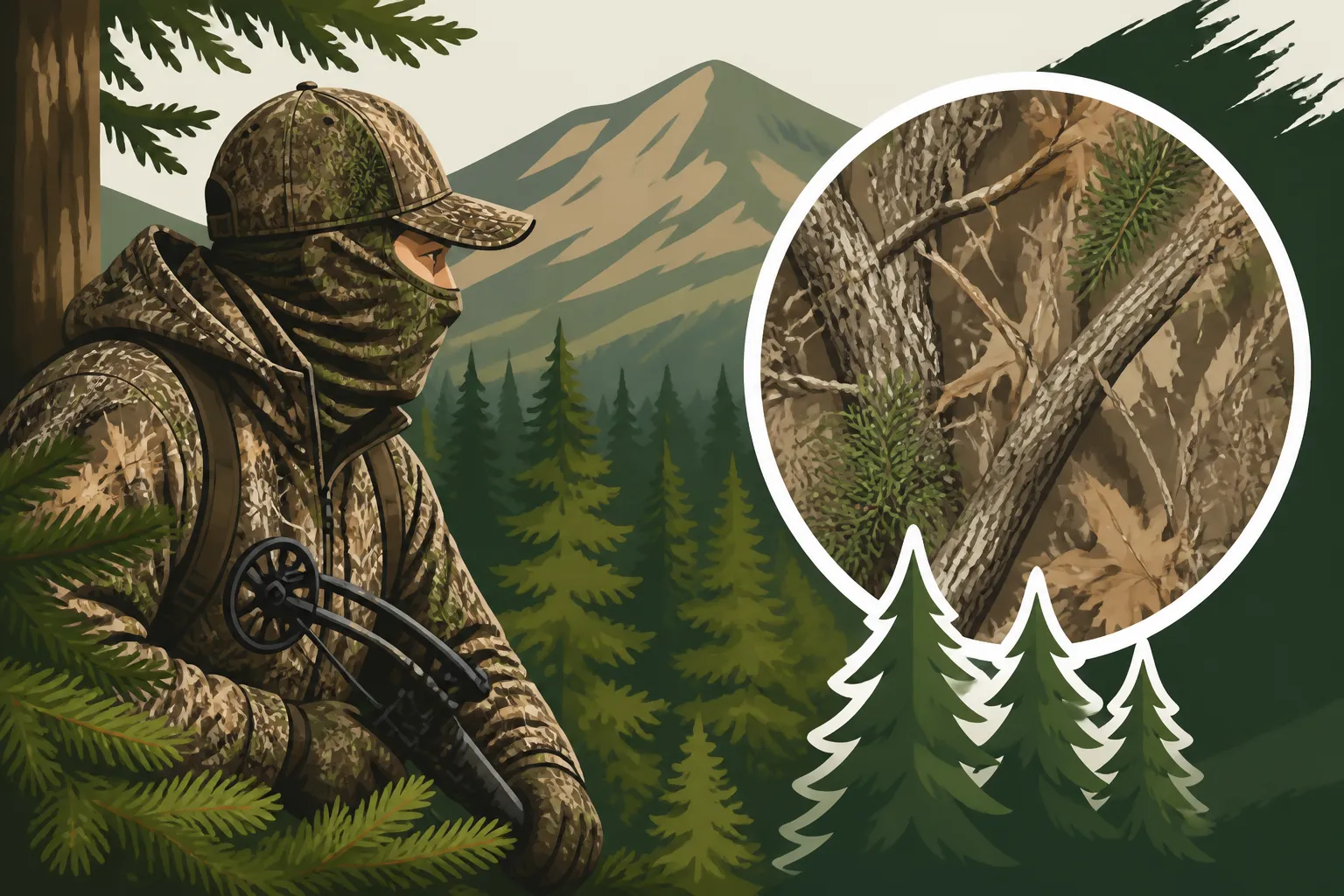
Best Camo for Softwood Cover
Navigating the dense, often dark, and visually complex world of New Hampshire's softwood cover can be a real challenge for hunters. Many of us make the mistake of thinking any old camo will do, only to find our outlines sticking out like a sore thumb against a backdrop of pines, spruce, and hemlock. This guide is all about helping you understand the unique visual characteristics of these environments and selecting the best camouflage to truly disappear into them, giving you that critical edge.
Understanding New Hampshire's Softwood Cover
New Hampshire is blessed with an abundance of diverse forests, and our softwood stands present a particular kind of beauty, and a particular kind of challenge, for hunters. These aren't your open hardwoods where a dappled pattern works wonders; these are places where shadows run deep and the color palette leans towards the evergreen.
What Defines Softwood Cover in New Hampshire?
When we talk about softwood cover in New Hampshire, we're primarily looking at areas dominated by conifer trees like white pine, red spruce, balsam fir, and Eastern hemlock. You'll find these dense stands throughout the state, from the high country of the White Mountains down to the lower elevations and wetlands. Think about those thick cedar swamps in the North Country, or the expansive pine plantations that dot our public lands. These areas are characterized by tall, often tightly packed trees with needles that persist year-round. The canopy can be incredibly dense, filtering sunlight and creating a perpetual state of low light or deep shadow on the forest floor, even on a sunny day. Underneath, you might find a sparse understory, or conversely, a tangled mess of blowdowns and younger saplings, depending on the stand's age and history.
The visual impact of these areas is distinct. Unlike hardwoods, which burst with vibrant greens in spring and fiery oranges and reds in fall before going bare, softwoods maintain a consistent, often monochromatic, appearance. This consistency means your camo needs to be versatile enough to blend through all seasons, or at least be chosen specifically for the season you're hunting in.
The Visual Challenges of Softwood Environments
Hunting in softwood cover presents several unique visual challenges. First and foremost are the deep, often stark shadows. Sunlight filters through the dense canopy, creating strong contrasts between areas of direct light (if any) and profound shade. This can make patterns that rely on bright contrasts or open spaces look out of place. Deer, bears, and other game are incredibly adept at picking out unnatural shapes and movements in these environments.
The dominant color scheme is another hurdle. You're dealing with a lot of dark green, deep gray, and varying shades of brown from bark and fallen needles. Patterns heavy on light tans or stark white might work in open deciduous woods, but here, they'll create an obvious contrast. Furthermore, the sheer verticality of the trees and their needle-like foliage create a visual texture that is very different from broad leaves and branching hardwoods. Your camo needs to mimic this texture rather than fight against it. Imagine trying to spot a Moose in New Hampshire's North Country moving through a spruce thicket; their natural dark coat blends almost perfectly with the deep shadows. Your goal is to achieve a similar level of concealment.
Why Your Hardwood Camo Might Not Cut It Here
Many hunters own general-purpose camouflage designed for deciduous forests, and while it might offer some benefit, it often falls short in pure softwood environments. Patterns optimized for hardwoods typically feature more open branches, larger leaf patterns, and a broader spectrum of greens, browns, and grays to mimic the diverse foliage and bark of oak, maple, and birch trees. They're designed to break up your outline against a backdrop of broad leaves and bare branches, often with more light filtering through.
However, when you take that same camo into a dense New Hampshire pine stand, a few things happen. The larger, more open patterns can create distinct blocks of color or shape that stand out against the uniform, finely textured needles and deep, often unbroken shadows of softwoods. The color palette, too, might be off. Hardwood camo might have too many lighter, warmer tones that simply don't exist in the deeper, cooler greens and grays of a hemlock stand. Instead of blending, your camo might inadvertently highlight your presence, negating the very purpose of wearing it. For deep timber, particularly in the White Mountain National Forest, where Still-Hunting White Mountain National Forest Timber is a common strategy, you need something that truly melts into the specific environment.
Key Principles of Effective Softwood Camouflage
When you’re thinking about disappearing into New Hampshire’s softwood forests, it’s not just about throwing on any green or brown pattern. There’s an art and a science to effective camouflage, especially when trying to outsmart the keen eyes of a whitetail deer or a black bear in their natural evergreen strongholds.
Breaking Up Your Outline
The most crucial job of any camouflage pattern is to break up the human silhouette. We are, by nature, very recognizable shapes in the wild, and animals are hardwired to spot anything that looks out of place. In softwood cover, with its often linear and vertical elements, a solid block of color or a pattern with too much open space can make you stick out like a billboard.
This is where the concept of macro and micro patterns comes into play. Macro patterns are the large, overarching shapes in your camo that mimic big features like tree trunks, large branches, or significant shadows. Micro patterns are the finer details within those larger shapes – the texture of bark, clusters of needles, or small patches of light and shadow. Effective softwood camo often employs a good balance of both. You want large enough elements to distort your human form at a distance, but also intricate enough details up close to blend with the fine textures of pine needles and bark. Some digital patterns attempt this, but often the more organic, naturalistic patterns that mimic the clustered needles and crisscrossing branches of a conifer forest tend to perform better. The goal isn't just to be green; it's to be a jumbled, unrecognizable mass of green and brown that dissolves into the visual noise of the forest.
Color Palettes That Blend
The color palette for softwood camouflage is distinct from what you might choose for open fields or deciduous woods. Here, the dominant colors are deep greens, often leaning towards bluish-greens or even muted grays, along with various shades of dark brown and charcoal. You might also find subtle hints of tan or very light gray, but these should be used sparingly, primarily for contrast to create depth and break up shapes.
Avoid patterns with too much bright green, yellow-green, or stark white. While a touch of light color can provide contrast and depth, an overabundance will make you pop against the darker, more somber backdrop of a pine stand. Think about the colors of a mature white pine’s bark – mostly gray and deep brown, with streaks of lighter gray. Or the deep, almost black-green of a spruce bough in the shadows. Your camo should reflect these true colors. Before you head out, consider the specific softwood species in your hunting area. Are they mostly dark spruces and firs, or are there more stately, grayer white pines? Tools like GoHunt can help you analyze aerial photos, giving you a better sense of the dominant forest types and their general color tones, which can inform your camo choice.
Considering Light and Shadow
Light behaves very differently in softwood cover compared to open areas. The dense canopy acts as a natural filter, creating deep shadows that are often more uniform than the dappled light of a hardwood forest. Your camouflage needs to account for this. Patterns that are too light or too reflective will stand out dramatically in these dark conditions. Conversely, a pattern that’s too uniformly dark might appear as a solid blob, again making your outline apparent.
The best softwood camo patterns incorporate elements that mimic both the deep shadows and the occasional glints of light that penetrate the canopy. This means using dark base colors with lighter, intricate patterns layered on top to create a sense of depth and distortion. When Hunting a Beaver Flowage Edge bordered by dense conifers, for instance, the light can change dramatically depending on whether you're under the canopy or on the more open edge. Your camo should ideally perform well in both. It’s about creating a visual texture that allows you to disappear whether you’re silhouetted against a filtered sky or tucked deep within the gloom of a hemlock thicket.
Top Camo Patterns and Features for New Hampshire Softwoods
Choosing the right camouflage isn't just about picking a cool-looking design; it's about selecting a pattern and material that genuinely helps you blend into the specific environment you're hunting. For New Hampshire's softwoods, there are particular styles and features that stand head and shoulders above the rest.
Patterns That Excel
When you're trying to melt into a stand of New Hampshire pines, spruces, or hemlocks, certain pattern characteristics are going to serve you far better than others. Look for designs that emphasize:
- Vertical Elements: Softwood forests are defined by their vertical lines – the trunks of trees, the way light filters down, even the needles often hang downwards. Patterns that incorporate strong vertical lines or shadows help you blend with this natural orientation.
- Deep, Muted Colors: As discussed, a palette of deep greens (leaning towards blue-green or grey-green), dark browns, grays, and charcoal is paramount. Avoid anything too bright or with stark, contrasting white or light tan patches, unless it's a very subtle element designed to create depth.
- Layered, Complex Textures: Think about the texture of pine bark or the overlapping layers of spruce boughs. Your camo should mimic this complexity. Patterns that use a "fuzzy" or "blurred" edge on their shapes, rather than crisp, defined lines, can often achieve a more natural appearance that diffuses your outline in the low light of softwoods. Patterns often labeled "deep timber," "pine forest," or "evergreen specific" usually hit these notes.
- Medium to Large Scale Breakup: While you want intricate details for close-up blend, you also need larger, less defined shapes to break up your human form at a distance. If the pattern is too small and busy, it can "blob out" into a solid color from afar, which is counterproductive.
Consider patterns that have elements resembling bark, pine needles, or the deep, dark shadows often found under a thick conifer canopy. Some patterns excel at creating a three-dimensional illusion, pulling the eye away from your actual shape.
Material Considerations
Beyond the visual pattern, the material of your camouflage clothing plays a huge role in your success in softwood cover. Here are a few key considerations:
- Quietness: This is paramount, especially if you plan on Still-Hunting White Mountain National Forest Timber or trying to slip into a bedding area Where New Hampshire Bucks Bed in Thick Cover. Many softwoods have a sparse understory, meaning every rustle and scrape of fabric against a branch can be amplified. Opt for fabrics like fleece, brushed polyester, or soft wool blends that are inherently quiet. Avoid noisy nylons or stiff cottons.
- Weather Resistance: New Hampshire weather can be unpredictable, especially during hunting season. Softwood stands, while offering some protection from wind, can also hold moisture. Look for materials that offer at least some water resistance, or plan to layer a quiet rain shell over your camo. Moisture-wicking properties are also important, as hiking through dense cover can build up a sweat, even in cold weather.
- Layering Potential: Softwood hunting often involves a combination of periods of intense activity (still-hunting, tracking) and long stretches of static waiting. Your camo system should allow for effective layering underneath. Layering for New Hampshire's Cold Hunting Season is essential in New Hampshire, and your outer camo shell should be sized to accommodate appropriate base and mid-layers without becoming too bulky or restrictive.
Accessorizing for Full Concealment
Your jacket and pants are just the start. To achieve truly effective concealment in softwood cover, you need to think about every visible part of your body.
- Gloves: Exposed hands are incredibly obvious. They move, they're often a lighter skin tone, and they present a distinct, unnatural shape. Always wear gloves that match your chosen camo pattern or are a deep, muted earth tone.
- Headwear: A baseball cap or beanie can help break up the round shape of your head, but a full balaclava or face mask is even better. This covers your face and neck, which are highly visible and often reflect light. Again, choose colors and patterns that integrate with your main camo.
- Face Paint: In very close-quarters situations, or for bowhunting where minimal movement is key, a dab of face paint to break up the lines of your face can be a game-changer.
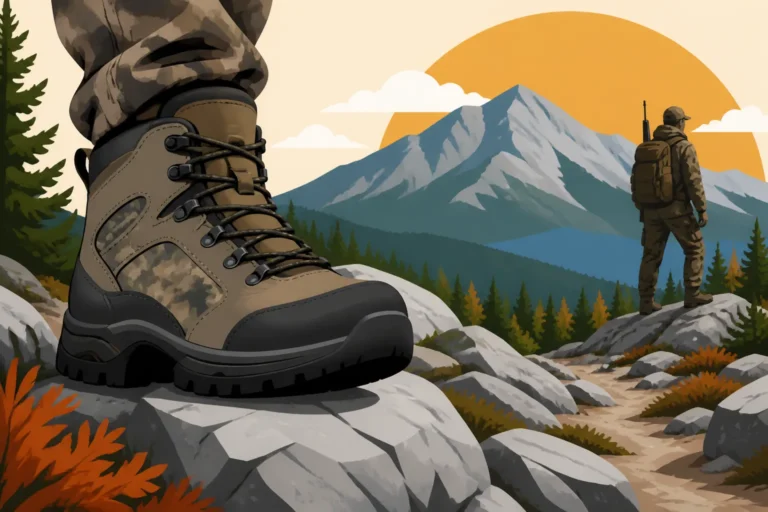
- Footwear: While your Boots for New Hampshire's Granite Terrain are primarily for function, ensure they are a neutral, dark color. Bright laces or shiny eyelets can be visible.
- Backpack and Gear: Don't forget about your pack! A brightly colored backpack or gear bag can instantly give you away. Choose a pack in a suitable camo pattern or a solid, muted color like olive green or dark brown. Even your binoculars, if they're a bright color, can reflect light and stand out. Consider using a camo wrap or harness to dull their appearance.
Practical Tips for Hunting in Softwood Cover
Beyond simply choosing the right camo, how you use it and how you interact with the environment will ultimately determine your success in New Hampshire's softwood forests. It’s about more than just blending in; it’s about becoming part of the landscape.
Scouting and Setup
Effective scouting is the bedrock of successful hunting, and it's especially critical when targeting game in dense softwood cover. Before you even think about stepping into the woods, especially those dense softwood pockets, a tool like GoHunt can be invaluable. Use it to analyze aerial maps and satellite imagery to pinpoint potential travel corridors, bedding areas within thick evergreens, and natural funnels. Look for subtle changes in timber type or density that might create an edge, which deer and other game often use. Reading Aerial Photos for North Country Deer can reveal hidden softwood thickets that serve as prime bedding.
When you're boots-on-the-ground scouting, pay close attention to the specific types of softwoods present and the overall light conditions. Is it a dense, dark stand of hemlocks? Or a more open pine grove with filtered light? This will help you refine your camo choice. When setting up, whether it's a ground blind or a treestand, always utilize natural cover. Don't just rely on your camo to hide you; position yourself in front of a tree trunk, within a thicket of young firs, or against a natural backdrop that further breaks up your outline. Remember that in dense softwoods, visibility might be limited, so choosing a stand location that allows for a clear shooting lane while maintaining excellent concealment is key. This careful approach to setting up in a spot like a Hunting a Granite Ridge Saddle or a transition zone can make all the difference.
Movement and Noise Discipline
Even the best camouflage in the world won't hide you if you're constantly moving or making noise. In the quiet, often damp confines of a softwood forest, sound carries surprisingly well. The rustle of a stiff camo jacket, the crunch of a twig underfoot, or the scrape of a zipper can alert wary game long before they see you.
- Slow Down: Movement is the easiest thing for an animal to detect. When still-hunting or creeping into a setup, move at a snail's pace. Take one step, pause, scan, listen, then take another step. This allows you to identify game before you spook it, and also gives any animals that might have noticed slight movement time to relax.
- Utilize Cover: Move from tree to tree, thicket to thicket. Don't walk in the open if you can walk behind a screen of spruce. Use the natural vertical lines of the softwoods to your advantage, always trying to keep something between you and where you expect game to be.
- Dress Quietly: We've already touched on material considerations for camo, but this extends to all your gear. Ensure your backpack, binoculars, and other items are not rattling or clanking. Wrap anything noisy in soft cloth if necessary.
- Wind and Thermals: Always be mindful of wind direction and thermals, especially in varied terrain. Scent control is just as important as visual concealment. No amount of good camo will overcome your scent being carried directly to a deer's nose. Use a mapping app like GoHunt to understand terrain features that influence wind and thermals, particularly in deep valleys or along ridges. Wind and Thermals in Steep Granite Terrain can be tricky, and mastering them is vital.
Adapting to Seasonal Changes
While softwoods are "evergreen," the surrounding environment and ground cover certainly change with the seasons, and your camouflage strategy should adapt accordingly.
- Early Fall (September/October): The understory in some softwood areas might still have some green, but many of the surrounding deciduous leaves will be turning. Your deeper, darker greens and browns will work well, but you might consider adding a touch more muted brown or even a subtle hint of dull red if you're hunting near mixed wood edges.
- Late Fall (November/December): This is often when softwoods truly shine as cover, especially after hardwoods have dropped their leaves. Your deep green and dark brown patterns will be at their peak effectiveness. The contrast between the bare deciduous woods and the dense softwoods becomes very pronounced, making these evergreen areas prime bedding and sanctuary spots. This is a critical time for Hunting New Hampshire's Archery Season Into December or the later firearms seasons.
- Winter (with snow): If you're hunting late into the season and snow is on the ground, your standard softwood camo might stand out too much. If snow cover is significant and consistent, you might need to incorporate some muted white or snow-specific patterns. A grey-scale camo with evergreen elements can be surprisingly effective in a snow-covered pine forest.
Remember, the goal is not to be invisible, but to be indistinguishable. By understanding the visual dynamics of New Hampshire's softwood cover and applying these principles, you'll greatly increase your chances of getting close to your quarry.
Camouflage Style Comparison for New Hampshire Softwoods
Here's a quick overview of how different camo pattern styles might fare in New Hampshire's softwood environments:
| Camo Style | Ideal Application in NH Softwoods | Key Visual Characteristics | Pros | Cons |
|---|---|---|---|---|
| Deep Timber/Evergreen | Dense pine, spruce, hemlock stands; low light, deep shadows; year-round use where softwoods dominate. | Muted greens, deep browns, grays; strong vertical elements; fine, complex textures mimicking needles/bark. | Excellent concealment in dark, dense conifer forests; disrupts outline effectively. | Less effective in open, brightly lit areas or hardwood forests. |
| Transitional Forest | Mixed forests with significant softwood component; edges of softwood thickets; areas with some deciduous trees interspersed. | Blends of greens, browns, grays, with some muted tans; incorporates both vertical and horizontal elements. | Versatile for mixed habitats; good bridge between pure softwood and pure hardwood. | May not be as specialized as pure evergreen patterns for the densest softwood pockets. |
| Winter/Snow Camo | Late-season hunting with consistent snow cover in softwood forests. | Dominant whites and grays, with scattered dark brown or black shapes; mimics branches and shadows in snow. | Superior concealment in snowy conditions. | Highly visible in snow-free conditions; limited seasonal use. |
| Digital/Geometric | Can be effective if the color palette is right for softwoods; good for breaking up outlines at certain distances. | Pixilated or blocky patterns; modern aesthetic. | Can be very disruptive to the human form; good for uniform textures. | Can look unnatural if colors are off or if patterns are too uniform in a highly organic environment. |
| Leafy Suit/Ghillie | Stationary hunting (e.g., ground blind, treestand) in extremely dense cover; ambushing from thickets. | Three-dimensional fabric leaves/fibers; highly textured. | Exceptional 3D breakup; excellent for motionless concealment. | Impedes movement and can be noisy; cumbersome for active hunting like still-hunting. |
This article is for general informational purposes only and does not constitute professional advice. Laws, prices and regulations vary by location and change over time. Consult a qualified professional for guidance on your specific situation.