Best Safety Harness for a Treestand Hunt
Sitting high in a treestand, nestled against an old growth pine in the New Hampshire woods, you feel a stillness that's hard to find anywhere else. The crunch of frost underfoot as you climbed in pre-dawn, the crisp bite in the air, the hopeful anticipation of a whitetail buck moving through a clear-cut – it's all part of the magic. But that magic can turn into a nightmare in an instant if you're not absolutely dialed in on safety. A misstep, a sleepy lean, an equipment failure – it's how falls happen, and those falls can be devastating, leaving you stranded, seriously injured, or worse, alone in the remote wilderness. This guide is here to walk you through everything you need to know about selecting, using, and maintaining the best safety harness for your treestand hunts, ensuring your focus stays on the hunt, not on a preventable tragedy.
Why a Safety Harness Isn't Optional in New Hampshire's Woods
Let's be real: hunting from an elevated position carries inherent risks. The quiet pursuit of game from a treestand is incredibly effective, offering a commanding view and helping to keep your scent above a deer's nose. But every time you climb up into that stand, you're putting yourself in a potentially dangerous situation. The unforgiving terrain of New Hampshire, from the steep granite ridges of the White Mountains to the boggy lowlands of the North Country, can make a bad situation even worse.
Imagine a chilly November morning. You've been sitting for hours, the cold seeping into your bones despite your Layering for New Hampshire's Cold Hunting Season. You shift to get comfortable, or maybe you reach for your thermos, and suddenly your foot slips on a frosty platform edge. Or perhaps your treestand creaks, a strap gives way, or a climbing stick shifts. In that moment, without a reliable safety harness, gravity becomes your enemy, and the ground below is a hard, unforgiving reality.
The consequences of a treestand fall can range from broken bones and concussions to spinal injuries and even death. And in many of New Hampshire's prime hunting areas, you might be hours from the nearest road, let alone medical help. Cell service can be spotty, leaving you utterly isolated. This isn't just about following rules; it's about protecting yourself and ensuring you make it home to your family. A safety harness isn't an accessory; it's the single most important piece of safety equipment you'll ever take into a treestand, a non-negotiable tool that acts as your lifeline.
Key Features to Look for in a Treestand Safety Harness
When you're choosing a safety harness, you're not just picking a piece of gear; you're investing in your life. It needs to be dependable, comfortable, and easy to use, even with cold fingers or in low light. There are several critical features you should scrutinize before making a decision.
Fit, Comfort, and Adjustability for All-Day Sits
Think about how much time you spend in your stand. Hours, right? Your harness needs to fit you like a glove, allowing for a full range of motion without pinching, chafing, or restricting circulation. This is especially crucial when you're bundled up in multiple layers of hunting clothing for those crisp New Hampshire mornings.
Look for a harness with ample adjustment points – at the shoulders, waist, and leg straps. These adjustments should be easy to manipulate, even with gloves on. A harness that's too loose can shift uncomfortably, creating slack that could increase the impact if you fall, or even allow you to slip out of it entirely. Too tight, and it can cause discomfort and restrict blood flow, which is not only distracting but dangerous during long periods of immobility. Try it on over your heaviest hunting clothes before you commit. Walk around, sit down, simulate drawing your bow or raising your rifle. Does it allow you to move naturally? Does it feel secure? Some hunters even find a brand like GoHunt's gear reviews helpful for specific model feedback on fit from other hunters.
Weight Capacity, Materials, and Durability
Your safety harness is going to take a beating. It'll be exposed to rain, snow, freezing temperatures, UV rays, and the general wear and tear of being hauled into the woods. The materials used, and their construction, are paramount.
Look for high-strength webbing, often nylon or polyester, with reinforced stitching at all stress points. All buckles and metal components should be robust, free of sharp edges, and resistant to corrosion. Check the weight capacity, ensuring it comfortably exceeds your own weight plus the weight of your heaviest clothing and gear. A quality harness should feel substantial without being overly bulky. It needs to withstand the harsh realities of the New Hampshire hunting season year after year. Always inspect your harness thoroughly before each season, and especially before each hunt. Look for any fraying, cuts, tears, or signs of material fatigue. If you see anything questionable, it's time for a replacement.
The Life-Saving Suspension Relief Device
This is arguably one of the most critical, yet often overlooked, features of a modern safety harness. If you fall and are left suspended by your harness, blood can pool in your legs, leading to a condition known as suspension trauma (also called harness hang syndrome). This can be life-threatening within minutes.
A suspension relief device is designed to give you a way to relieve pressure on your legs and allow normal blood flow while you wait for rescue or work to get back into your stand. This often takes the form of a small strap or loop that you can deploy to stand in, essentially creating a stirrup. It's not a rescue device itself, but a crucial tool to buy you time. Make sure your chosen harness includes one, and more importantly, understand how to deploy and use it before you ever need it in an emergency. Practice deploying it while safely on the ground. Knowing you have that option could be the difference between a bad fall and a fatal one.
Lineman's Belt and Tree Strap Functionality
These components are vital for safe climbing and movement in your stand. The lineman's belt allows you to remain securely attached to the tree while ascending or descending, keeping both hands free for climbing. It's also invaluable when installing or adjusting your stand.
Once you're in the stand, the tree strap (sometimes called a primary tree strap or tether) connects your harness to the tree, ensuring you're secured while sitting, standing, or moving around on the platform. The length of this strap is important – it should be short enough to prevent you from hitting the ground if you fall out of the stand, but long enough to allow for comfortable movement and shooting. Make sure both are made of equally durable materials and have strong, easy-to-use carabiners or attachment points. When you're Setting Up a Climbing Stand for New Hampshire Hardwoods or a Best Ladder Stand for a Field Edge, these are the pieces that ensure constant connection to the tree.
Understanding Different Harness Types and Their Use
Just like there are different hunting styles and preferences, there are various types of safety harnesses designed to cater to different needs. While the core function remains the same – keeping you safe – their design and application can vary.
The Classic Full-Body Harness
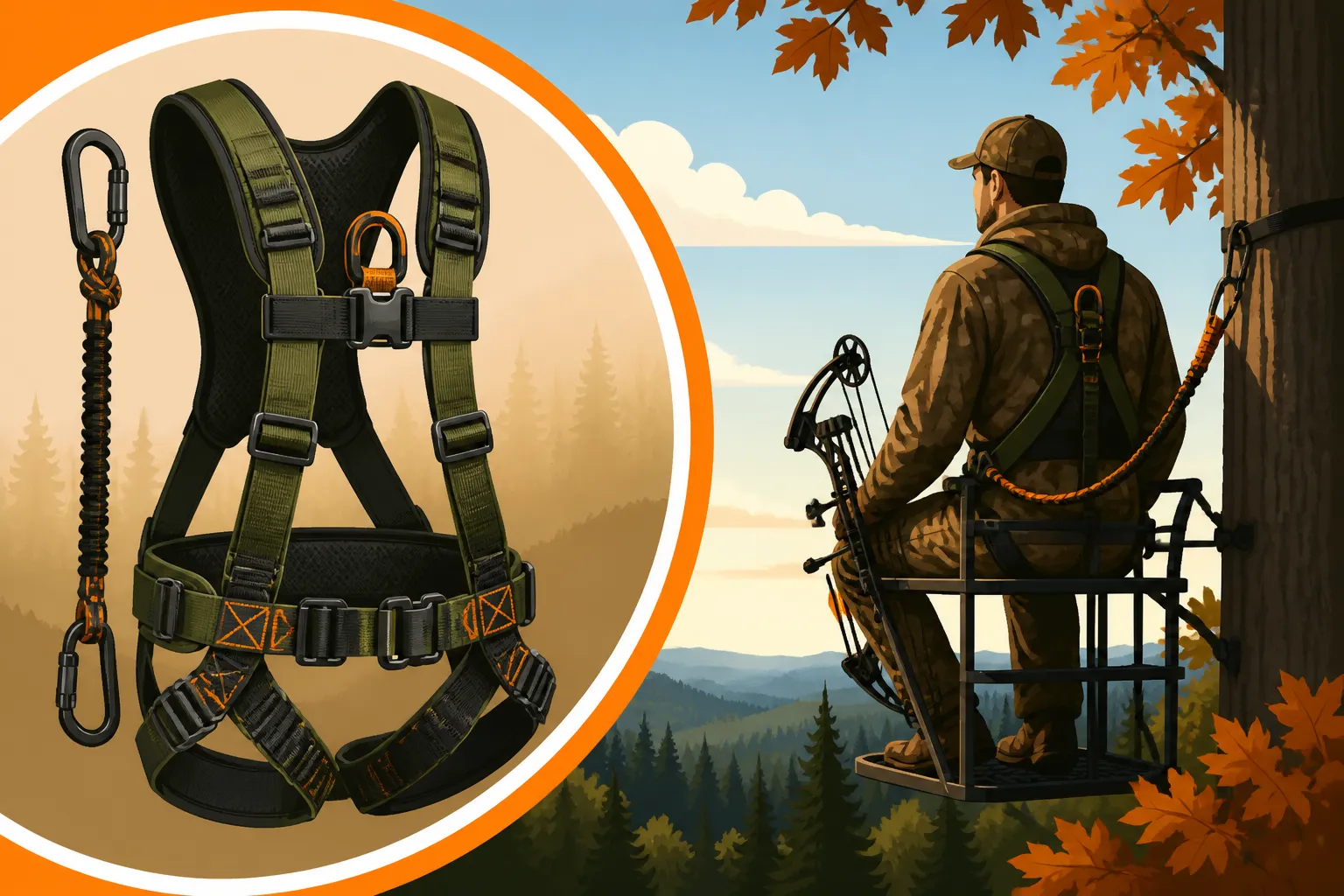
This is perhaps the most common and recognizable type of treestand safety harness. A full-body harness distributes the impact of a fall across your entire torso, including your chest, shoulders, waist, and thighs. This broad distribution of force helps to minimize injury during a fall.
These harnesses typically feature a series of interconnected straps that wrap around your upper body and legs, often meeting at a central attachment point on your back, where your tree strap or lifeline connects. They offer excellent security and are generally quite adjustable. Many come with integrated loops or pockets for carrying small gear, though their primary focus is pure safety. For many New Hampshire hunters, especially those who prioritize maximum security and are comfortable with the feel of a traditional harness, this style is a reliable workhorse.
Vest-Style Harnesses: Convenience Meets Safety
Vest-style harnesses integrate the safety harness straps into a functional hunting vest. This design offers a convenient and often more comfortable alternative for hunters who dislike the "strappy" feel of a traditional full-body harness. The vest itself can be designed with pockets for calls, rangefinders, and other essentials, making it a truly multi-functional piece of gear.
The primary advantage here is comfort and ease of donning. You simply put on your vest, and you're good to go. The weight of the straps is distributed by the vest material, which can feel less constricting, especially for longer sits. However, ensure that the vest components are still robust and the harness itself meets the same safety standards as a standalone unit. As with any gear, check out independent reviews, perhaps from platforms like GoHunt, to see how different vest-style harnesses perform in real-world hunting scenarios.
Lightweight and Minimalist Harness Options
For the mobile hunter who values low bulk and minimal weight, or for those who find traditional harnesses cumbersome, minimalist options exist. These harnesses strip away any non-essential padding or features, focusing solely on the core safety function. They are often just a series of robust straps designed to be worn over or under your hunting clothes without adding significant bulk.
These can be particularly appealing for hunters who do a lot of still-hunting or run-and-gun tactics and only use a treestand for short periods, or for those who hike deep into the backcountry, like when Still-Hunting White Mountain National Forest Timber. The trade-off for reduced weight and bulk can sometimes be slightly less comfort during a prolonged suspension, as there's less padding to distribute pressure. However, modern minimalist designs often incorporate clever engineering to optimize comfort even with less material. If you choose a minimalist harness, it's even more critical to ensure a perfect fit and to thoroughly understand and practice using its suspension relief device.
Proper Use and Maintenance of Your Safety Harness
Having the best safety harness in the world won't do you any good if you don't use it correctly or maintain it properly. Your commitment to safety extends beyond just buying the gear; it's about making it an integral part of your hunting routine.
Pre-Hunt Checks: Your Lifeline's Inspection
Before every hunt, especially before an elevated one, perform a thorough inspection of your safety harness. This might seem tedious, but it's literally a matter of life and death.
- Webbing and Straps: Run your hands along all the webbing. Look for any cuts, abrasions, fraying, pulled stitches, or signs of chemical damage. Even small nicks can compromise the integrity of the material.
- Buckles and Hardware: Examine all buckles, D-rings, carabiners, and other metal components. Ensure they operate smoothly and lock securely. Look for any signs of rust, cracks, bends, or deformation.
- Stitching: Pay close attention to all stitched areas, especially where straps connect to hardware. Loose threads or undone seams are red flags.
- Tree Strap/Lifeline: Inspect your tree strap or lifeline for any wear, kinks, or damage. If you use a single lifeline system, make sure the knot or connection point is sound.
- Suspension Relief Device: Confirm it's present, properly stowed, and that you remember how to deploy it.
If anything looks suspicious, do not use the harness. Period. It's better to miss a hunt than to risk your life.
Donning the Harness and Attaching to the Tree Correctly
Getting your harness on correctly is the first step to ensuring it works as intended. Follow the manufacturer's instructions religiously. Typically, you'll put it on much like a backpack, feeding your arms through the shoulder straps and then securing the leg straps. Adjust all straps so the harness feels snug but not restrictive. The chest strap should be centered, and the leg straps should be comfortable around your thighs.
Once you're ready to climb:
- Lineman's Belt: While on the ground, secure your lineman's belt around the tree, ensuring it's at a comfortable working height. Attach both ends to your harness's side D-rings. This keeps you connected while you ascend. Maintain three points of contact (two hands, one foot, or two feet, one hand) as you climb.
- Tree Strap/Lifeline: Once you reach your stand, and before you unclip your lineman's belt, install your primary tree strap or lifeline securely around the tree above your stand. Connect your harness's tether strap to this lifeline. The tether should be just long enough to allow you to stand and turn, but short enough to prevent you from falling out of the stand or hitting the platform if you fall. A good rule of thumb is that your tether should not allow you to drop more than 12 inches.
- Constant Connection: The golden rule: stay connected from the moment your feet leave the ground until they return to it. Whether climbing with climbing sticks or a ladder stand, or even just moving around on the platform, you should always be attached to the tree via either your lineman's belt or your tree strap. For those dawn patrols, remember your Best Headlamp for a Pre-Dawn Granite Climb – good visibility is also crucial for safe climbing.
Emergency Preparedness and Practice
Even with the best harness and perfect use, accidents can happen. Being prepared for an emergency is part of being a responsible hunter.
- Rescue Plan: Always have a plan. Let someone know where you're hunting and when you expect to be back. Consider carrying a personal locator beacon or satellite messenger, especially if you're in remote areas with no cell service.
- Emergency Knife: Keep a sharp knife easily accessible on your harness. If you become tangled, or if a strap needs to be cut for a rescue, it could be invaluable.
- Practice: Seriously, practice deploying your suspension relief device while safely on the ground. Understand how it works and how to use it under pressure. Knowing you can do it calmly will be a huge advantage if you ever face a real emergency. This goes hand-in-hand with New Hampshire Hunter Education Requirements, where safety is always emphasized.
Storage and Care for Longevity
Proper care will extend the life of your harness and ensure its reliability.
- Cleanliness: After each season, or if it gets particularly dirty, clean your harness. Use mild soap and water, never harsh detergents or bleach, which can degrade the webbing. Air dry completely, away from direct sunlight.
- Storage: Store your harness in a cool, dry place, away from direct sunlight, extreme temperatures, and chemicals like gasoline, oils, or pesticides. UV light is particularly damaging to webbing over time. Keep it in a gear bag to protect it from dust and rodents.
- Manufacturer Recommendations: Always refer to the manufacturer's specific guidelines for cleaning, inspection, and replacement. Most harnesses have a recommended lifespan, typically around 3-5 years, after which the materials may degrade even without visible damage.
By taking these steps, your safety harness will be ready to perform its life-saving duty whenever you climb into a treestand in the beautiful New Hampshire wild. Hunting is about tradition, skill, and connection with nature, but above all, it's about being safe.
| Feature/Component | Check Status | Importance |
|---|---|---|
| Webbing/Straps | No fraying, cuts, tears, or discoloration | Structural integrity, prevents breaking under stress |
| Buckles/Connectors | Functioning smoothly, no cracks, rust, or deformation | Secure attachment, prevents accidental release, distributes force |
| Stitching | Intact, no loose threads or undone seams | Holds components together, ensures strength at stress points |
| Tree Strap/Lifeline | No wear, kinks, or damage | Primary connection to tree, crucial for preventing ground impact |
| Suspension Relief Device | Present, accessible, and functional | Prevents suspension trauma after a fall, buys time for rescue |
| Carabiners/Snaps | Gates close securely, no rust, damage, or sticky action | Critical connection points, prevents accidental disconnection |
| Fit and Adjustment | Snug but comfortable, allows full range of motion | Effective distribution of force, prevents slipping or choking |
| Manufacture Date/Lifespan | Within recommended lifespan (check manufacturer) | Materials degrade over time, ensuring continued reliability |
| Overall Cleanliness | Free from excessive dirt, mud, or chemical residue | Prevents material degradation, easier to spot damage |
This table serves as a quick visual checklist for your pre-hunt inspection. When you're out Scouting New Hampshire Public Land Before Season to find the perfect treestand location, remember that planning for safety is just as important as finding the deer sign. Be aware of factors like Wind and Thermals in Steep Granite Terrain which can affect your climb and sit stability. Invest in your safety, and your hunting adventures in New Hampshire will continue for years to come.
Disclaimer
This article is for general informational purposes only and does not constitute professional advice. Laws, prices and regulations vary by location and change over time. Consult a qualified professional for guidance on your specific situation.