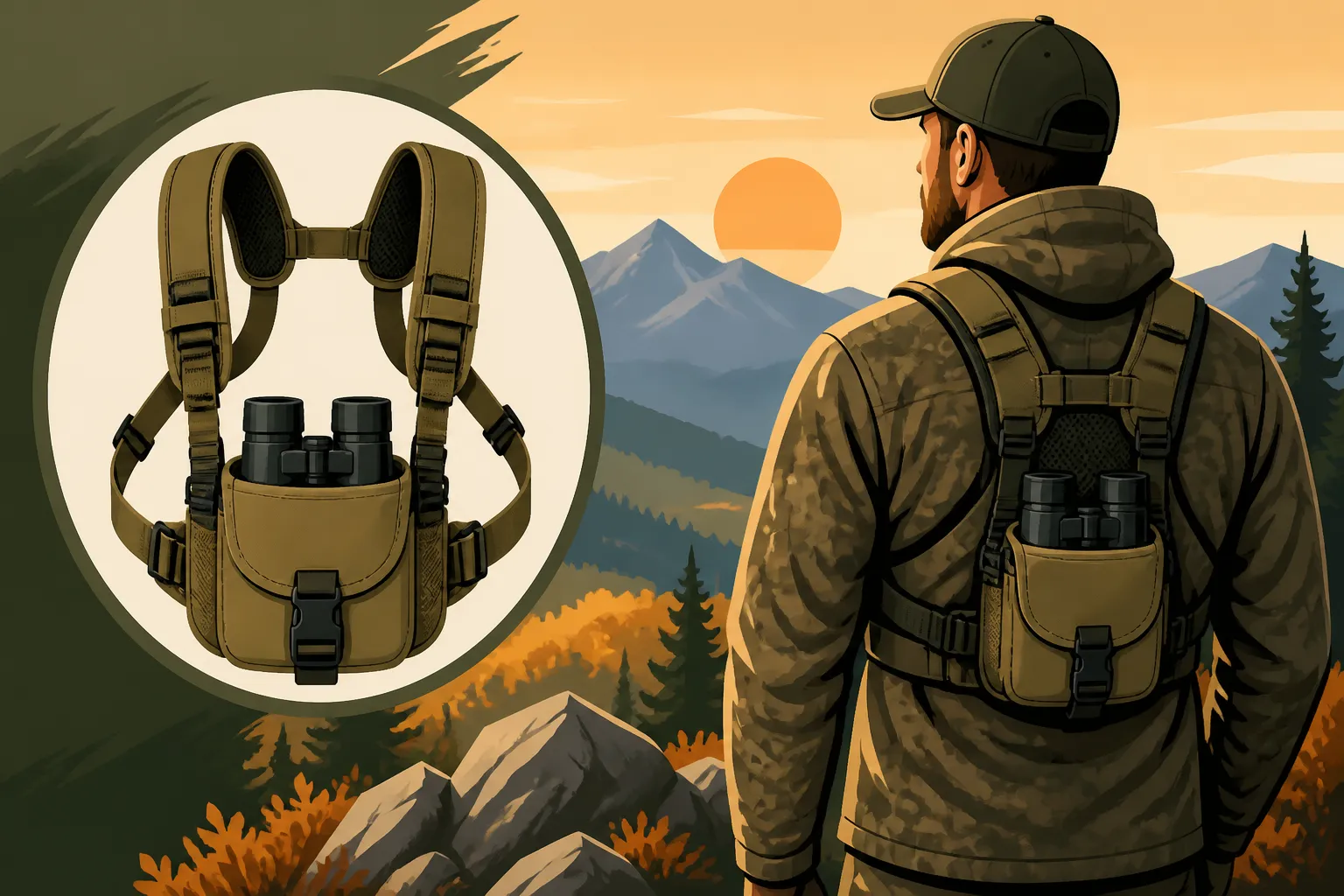
Best Binocular Harness for a Ridge Walk
There's nothing quite like cresting a ridge in the New Hampshire backcountry, the reward of that sweeping view after a tough climb. But let's be honest, trying to keep your binoculars handy and secure while scrambling over granite and downed timber can be a real pain. That constant bouncing against your chest, the fear of them swinging into a rock, or worse, falling and breaking – it's a frustration many of us know all too well. This guide will help you understand why a quality binocular harness is a game-changer for these challenging treks and what to look for to keep your optics safe and accessible.
Why a Dedicated Binocular Harness is Essential for New Hampshire Ridge Walks
Anyone who's spent time hunting the steep, unforgiving terrain of New Hampshire, especially up in the White Mountains or across some of those jagged Monadnock region ridges, knows that every piece of gear needs to pull its weight and stay put. Slinging your expensive binoculars around your neck with just the factory strap might seem fine for a flat field edge, but it quickly becomes a liability when you're navigating inclines, dodging blowdowns, or making a quick ascent to get a better vantage point. The constant swinging and bouncing isn't just annoying; it can actually wear you out faster, distract you from your footing, and even be downright dangerous if a sudden swing throws you off balance.
Beyond the sheer annoyance, a simple neck strap offers virtually no protection for your valuable optics. Imagine slipping on a wet rock or tripping over a root, and your binoculars smash against a boulder. We've all invested good money in clear glass, and the last thing any of us wants is to crack a lens or knock something out of alignment mid-hunt. Ridge walking in New Hampshire often means contending with unexpected weather too – a sudden shower, freezing fog, or even light snow can pop up, and an open neck strap leaves your binos exposed to the elements. A well-designed harness, on the other hand, acts like a protective shell, shielding your binoculars from impact, dust, and moisture, keeping them ready for action no matter what the mountain throws at you.
Furthermore, quick, silent access to your binoculars is paramount when still-hunting those high ridges. You might spot movement in the timber below, or catch a flicker of white on a distant slope, and every second counts. Fumbling with a bouncing strap or trying to dig your binos out of a backpack means lost time and potentially a missed opportunity. A good harness keeps your binoculars centered on your chest, right where your hands can find them instinctively. This means you can raise them to your eyes smoothly, quietly, and efficiently, allowing you to quickly identify that distant deer or size up a potential target without unnecessary movement or noise that could alert game. It’s about being prepared and maximizing your chances in those fleeting moments when it truly matters. You might be Hunting a Ridge-Top Saddle for Rutting Bucks, and every second counts.
Key Features to Look for in a Binocular Harness for Rugged Terrain
Choosing the right binocular harness for those demanding New Hampshire ridge walks isn't just about picking the first one you see. It’s about understanding the specific challenges of our rugged landscape and finding a harness that meets those needs. Here are some key features that make a real difference when you're out in the Granite State's challenging terrain.
Comfort and Fit for Long Days
First and foremost, comfort is king when you're spending hours on your feet, especially climbing and descending. A quality binocular harness should distribute the weight of your optics evenly across your shoulders and back, rather than concentrating it on your neck. Look for harnesses with wide, padded shoulder straps that won't dig in, even when wearing heavier layers for those cold November mornings. Adjustable straps are non-negotiable; you need to be able to fine-tune the fit over different clothing thicknesses, from a light base layer in early archery season to a heavy insulated jacket during late-season muzzleloader hunts. Many harnesses offer a four-point suspension system that keeps the binoculars snug against your chest, preventing that annoying bounce and sway as you move. This secure fit also reduces fatigue, allowing you to focus on your surroundings and your next step, rather than constantly adjusting your gear.
Protection from the Elements and Impacts
New Hampshire weather is notoriously unpredictable. One moment it's sunny, the next you're enveloped in a cloud, or a sudden downpour hits. Your binoculars need protection, not just from physical impacts but also from moisture and dust. Look for harnesses made from durable, water-resistant fabrics like Cordura nylon or similar heavy-duty materials. A main compartment that fully encloses your binoculars is crucial, ideally with a quiet, secure closure system. Magnetized flaps or silent buckles are fantastic, as they allow for quick access without the loud rip of hook-and-loop fasteners that can spook game. Some harnesses even feature integrated rain covers for extreme downpours. A padded main compartment will absorb shocks from bumps and accidental drops, safeguarding your valuable lenses and internal components. This protection ensures your optics remain in pristine condition, ready for critical moments like Glassing a Clear-Cut from a distant ridge.
Accessibility and Additional Storage
When you need your binoculars, you need them now. That's why quick, one-handed access is a critical feature. The best harnesses allow you to open the main compartment and retrieve your binoculars with minimal effort and without having to use both hands or look down. This means you can keep your eyes on the terrain or that distant movement while getting your glass up. Silent closures are equally important; you don't want a noisy zipper or buckle to give away your position. Beyond just holding your binoculars, many harnesses offer additional storage options, which can be incredibly useful. Small, integrated pockets are perfect for stashing essentials like a wind checker, a spare release aid, a grunt tube, your hunting license, or even a small GPS unit or a smartphone running a mapping app like GoHunt. This keeps crucial items readily available without having to dig through your pack, streamlining your setup and keeping you agile on those rugged ridges.
Durability and Quality Construction
Ridge walking puts serious stress on gear. You’re rubbing against trees, crawling through thickets, and exposing your equipment to sharp rocks and abrasive surfaces. A flimsy harness won't last a single season. Pay close attention to the quality of materials and construction. Look for heavy-duty stitching, reinforced stress points, and robust hardware. Metal buckles and D-rings are generally more durable than plastic, especially in cold weather where plastic can become brittle. Zippers should be heavy-duty and operate smoothly, and any elastic components should feel substantial and well-secured. Investing in a harness built to withstand abuse means you won't be replacing it year after year and, more importantly, it won't fail you when you're miles deep in the backcountry. A truly durable harness is an investment in reliability and peace of mind on every challenging hunt.
Here's a quick comparison of common harness styles:
| Feature | Chest-Mounted Harness (Traditional) | Minimalist Strap System | Backpack Attachment System |
|---|---|---|---|
| Weight Distribution | Excellent, across shoulders/back | Good, if well-designed | Varies, usually off chest onto pack |
| Protection | High, often padded and enclosed | Low, binos exposed | Low to Medium, binos exposed |
| Accessibility | Very High, quick one-handed access | High, binos always accessible | Medium, requires detaching or reaching |
| Storage | Good, often includes extra pockets | Minimal, usually none | Varies, uses backpack pockets |
| Stealth | High, silent closures common | High, no closures to make noise | Medium, might require pack removal |
| Comfort on Rough Terrain | Very High, stable, no bounce or swing | Medium, some bounce/swing possible | Medium to High, if well integrated |
| Ideal Use Case | Active hunting, rugged terrain, all-weather | Light scouting, easy terrain, minimalist | Long treks, heavy loads, less frequent access |
Different Styles of Binocular Harnesses and Their Pros & Cons
Just like there are different hunting styles and preferences, there are various types of binocular harnesses, each with its own advantages and disadvantages. When you're constantly on the move, like when you're Still-Hunting White Mountain National Forest Timber or following a ridge line, the style of harness you choose can significantly impact your comfort and effectiveness.
Traditional Chest-Mounted Harnesses
These are arguably the most popular and often the best choice for serious New Hampshire hunters tackling varied terrain. A traditional chest-mounted harness features a main pouch or compartment that sits securely on your chest, housing your binoculars. Wide, adjustable straps loop over your shoulders and often connect to a back panel, distributing the weight across your entire upper body. This design virtually eliminates the annoying bounce and swing you get from a neck strap, keeping your binoculars protected and readily accessible.
The biggest pro of this style is the combination of protection and accessibility. Your binoculars are shielded from bumps, scrapes, and the weather within the padded compartment, yet the flap closure (often magnetic or silent buckle) allows for quick, one-handed retrieval. Many models include additional pockets on the front or sides, perfect for storing calls, a rangefinder, or a small folding knife. The downside? They can be a bit bulkier than other options, especially if you're layering up heavily, and some hunters might find the chest-mounted pouch restrictive, particularly when scrambling in tight spots or shooting from certain positions. However, for sheer security and quick access while moving through the woods, they are hard to beat.
Minimalist Strap Systems
For hunters who prioritize lightness and a streamlined profile, minimalist strap systems offer an alternative. These harnesses typically consist of a simpler arrangement of elastic or non-elastic straps that crisscross your back and shoulders, keeping your binoculars held tight against your chest without an enclosed pouch. The binoculars themselves are still openly exposed, but they remain much more stable than with a simple neck strap.
The primary advantage here is the lack of bulk and weight. If you're really trying to go ultra-light and prefer to have your binoculars completely exposed for instant viewing, this style might appeal. They can also feel less restrictive, making it easier to maneuver through dense brush or when drawing a bow. However, the trade-off is a significant reduction in protection. Your binoculars are fully exposed to impacts, dust, and precipitation, meaning you'll need to be extra careful and potentially carry a separate rain cover. There's also usually no additional storage, so you'll still need pockets or a pack for your other small essentials. While great for mild weather or open terrain, they might not be the top choice for truly rugged New Hampshire ridge walks where bumping into rocks and dealing with sudden squalls are common.
Backpack Attachment Systems
Some newer harness systems integrate directly with a hunting backpack, aiming to consolidate your load. These might involve small pouches that attach to your backpack's shoulder straps or hip belt, or dedicated systems that suspend your binoculars from the pack frame itself. The idea is to keep the weight off your neck and chest entirely, integrating it into your main pack load.
The main benefit here is weight management. If you're carrying a heavy pack on an extended hunt, distributing the binocular weight to the pack can improve overall comfort. It also keeps your chest completely clear, which can be beneficial for those who feel claustrophobic with a chest-mounted system or need maximum freedom of movement. However, accessibility is often compromised. Retrieving your binoculars typically requires more deliberate effort, sometimes even needing you to stop and use two hands, or to partially remove your pack. This makes quick, spontaneous glassing opportunities more challenging. Protection can also vary widely depending on the specific attachment, as many are open designs. While interesting for specific, long-haul scenarios, they might not be the most practical for the frequent glassing and quick movements required during active ridge hunting in New Hampshire.
Setting Up and Using Your Harness for Optimal Performance
Getting the right binocular harness is only half the battle; knowing how to set it up and use it effectively can make all the difference in the field. When you’re traversing challenging terrain in New Hampshire, like tracking a deer in fresh snow or ascending a steep, rocky path, every piece of gear needs to work seamlessly with you, not against you.
Adjusting for Comfort and Security
The first thing you’ll want to do when you get your new harness is to spend some time adjusting it. Don't just throw it on and head out the door. Put on the layers you typically wear while hunting – from your base layer to your heaviest outer jacket, as a good harness should fit well over all of them. Adjust the shoulder straps so that the main binocular compartment sits high and snug on your chest, close to your sternum. You want it secure enough that it doesn’t bounce or swing when you walk, but not so tight that it restricts your breathing or movement.
Many harnesses also have adjustable straps that wrap around your torso or connect to a back panel. Make sure these are snug but comfortable, preventing any lateral movement. A well-adjusted harness should feel like an extension of your body, distributing the weight evenly and allowing for full range of motion, whether you're climbing over a log, shouldering your rifle, or drawing your bow. Take a few practice walks, simulate climbing, and bend over to pick things up. Fine-tune those straps until you find that sweet spot of comfort and stability. Remember, a secure fit is key not just for comfort, but also for protecting your optics from sudden impacts.
Proper Placement of Binos and Accessories
Once your harness is adjusted, think about how you place your binoculars within the main compartment. Position them so that the objective lenses (the large ones at the front) are facing either down or away from your body, depending on the harness design, to minimize debris collection and protect them from your own body heat/sweat. Ensure the eyepiece caps are off or easily removed, and the focus wheel is readily accessible once you pull them out. Some harnesses include a bungee or retention strap for your binoculars; utilize this to prevent them from accidentally falling out if the main flap is open.
If your harness has extra pockets, use them wisely. These are great for small, frequently accessed items. I often keep my rangefinder in one, a wind checker in another, and maybe a small emergency whistle or a spare lens cloth. If you're using a mapping app like GoHunt on your phone, a secure, easily accessible pocket can be a lifesaver. This systematic organization means you're not fumbling for items when a prime moment arises. Being able to access your Best GPS App for New Hampshire Public Land without missing a beat while glassing is crucial.
Tips for Navigating Difficult Terrain with a Harness
Navigating the challenging terrain New Hampshire offers requires concentration, and your gear shouldn't be a hindrance. A properly set up binocular harness actually aids in this. Because your binoculars are stable and close to your body, they won't throw off your balance when you’re ascending a steep incline or picking your way across a rock slide. This frees up your hands for balance, gripping tree limbs, or using trekking poles. When you need to squat or crawl through thick brush, the harness keeps your optics from snagging.
If you anticipate extremely wet conditions, consider adding a small, flexible dry bag inside the main compartment for extra protection, especially if your harness isn't fully waterproof. During quiet, stealthy movements, practice opening and closing the harness flap silently to avoid startling game. By taking the time to properly set up and organize your harness, you’ll find yourself moving more efficiently, more comfortably, and with the confidence that your valuable optics are protected and always ready for that critical moment. This attention to detail will serve you well, whether you're glassing from a White Mountain Ridgeline Public Access or still-hunting a beaver flowage edge.
Disclaimer
This article is for general informational purposes only and does not constitute professional advice. Laws, prices and regulations vary by location and change over time. Consult a qualified professional for guidance on your specific situation.