Knives and Processing Gear for Field Dressing
There's nothing quite like the rush of a successful hunt in the New Hampshire wilderness, but the real work often begins after the shot. Many hunters dread the thought of field dressing, especially when faced with cold temperatures, uneven terrain, or the sheer size of a mature buck or even a moose. This guide aims to take the mystery and apprehension out of field dressing, equipping you with the knowledge about essential knives and processing gear to handle your game efficiently, hygienically, and safely, no matter what the Granite State throws your way.
The Indispensable Role of a Good Hunting Knife
A sharp, reliable hunting knife isn't just a tool; it's an extension of your intent to respectfully care for the animal you've harvested. Trying to field dress with a dull or ill-suited blade is not only frustrating but also dangerous, increasing the risk of cuts and making a clean job nearly impossible. Investing in quality and understanding its application will serve you well for years in the field.
Choosing Your Primary Field Dressing Blade
When you're out in the woods, whether it's the thick cover of the Merrimack Valley or the rugged terrain of the North Country, your primary field dressing knife needs to be robust and dependable. The choice between a fixed blade and a folding blade is often a matter of personal preference, but there are practical considerations for each. Fixed blades, with their solid construction, tend to be stronger and easier to clean thoroughly. There are no moving parts for blood and grime to get into, which is a significant advantage for hygiene. Many seasoned New Hampshire hunters swear by a fixed blade with a 3.5 to 5-inch blade length, as it offers a good balance of control for intricate work and leverage for tougher tasks.
On the other hand, folding knives offer the convenience of portability and often come with a clip for easy access on your belt or pack. While modern folders are incredibly strong, their intricate mechanisms can be a pain to clean completely after a messy field dressing session. If you do opt for a folder, look for designs that are easy to disassemble for cleaning or feature a very open construction. Regardless of the type, the blade material is paramount. Stainless steel alloys, like 440C, VG-10, or newer super steels, offer excellent corrosion resistance, which is vital when exposed to blood and moisture in often damp New Hampshire conditions. Good edge retention means less time sharpening and more time working on the animal. The handle ergonomics are equally important; a handle that provides a secure, non-slip grip, even when wet or bloody, is crucial for safety and control. Think about the texture and material—rubberized or heavily textured synthetic handles often outperform smooth wood or bone in real-world field dressing scenarios. For more on selecting the right blade, you might find Best Knife for Field Dressing a Whitetail helpful.
Specialized Knives for Different Tasks
While a good all-around fixed blade can handle most field dressing, having a few specialized tools can make the process much smoother, especially when dealing with larger game or if you're planning to cape an animal for taxidermy. These aren't always necessary for every hunt, but they certainly elevate your processing game.
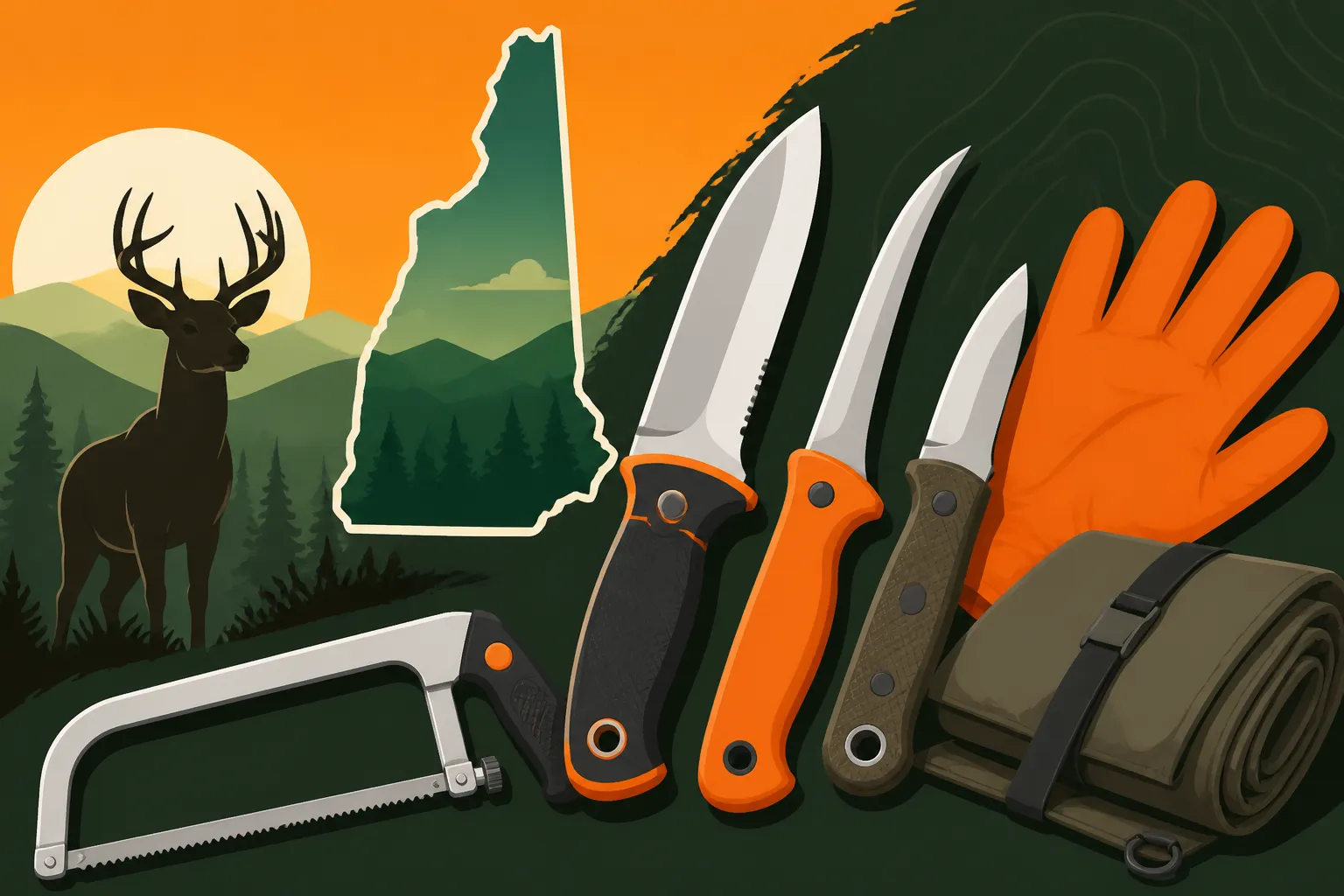
A gut hook, often incorporated into the back of a primary blade or as a standalone tool, can be incredibly useful for opening the body cavity of a deer or bear without puncturing the intestines. This significantly reduces the risk of contaminating the meat with stomach contents, a common concern for many hunters. Skinning knives typically feature a wider, curved blade with a blunt or rounded tip, designed to separate the hide from the muscle without cutting into the meat or the hide itself. This makes the initial stages of skinning much more efficient, whether you're working on a deer or preparing a bear hide. When dealing with a larger animal like a black bear, having a dedicated skinning knife, like those designed for larger game, can be a game-changer. For specific advice on preparing a bear, check out Best Knife for Skinning a Bear.
For those who quarter their animals in the field, especially when deep in the White Mountain National Forest or other remote public lands, a boning knife becomes invaluable. These knives have thin, flexible blades, typically 6 to 8 inches long, that allow you to precisely cut meat away from bones and separate muscle groups. This makes the job of breaking down an animal into manageable pieces for transport much easier and more efficient, reducing wasted meat. Finally, if you're hoping for a shoulder mount, a small, very sharp caping knife with a fine point is essential. These precise tools allow you to make clean, intricate cuts around the eyes, ears, and mouth, ensuring a professional-looking cape for your taxidermist. Having the right tools on hand can turn a daunting task into a manageable one, improving the quality of your harvest and your overall hunting experience.
Essential Gear Beyond the Blade
While the knife is the star of the show, it's far from the only piece of gear you'll need for proper field dressing. Attention to detail with hygiene and protection for your meat after it's processed can make all the difference in the quality of your harvest and your safety.
Gloves, Wipes, and Hand Sanitizer for Hygiene
Hygiene in the field is not just about cleanliness; it's about food safety and preventing the spread of potential diseases. When you're field dressing an animal, you're dealing with blood, digestive contents, and often, varying environmental conditions. Nitrile gloves are an absolute must-have. They provide a barrier against bacteria and pathogens that might be present in the animal's fluids, and they also keep your hands clean, which is a major comfort when you still have hours left in the woods. Carry multiple pairs, as they can tear, especially when encountering sharp bones or dense hair. Some hunters even prefer cut-resistant gloves as an outer layer over nitrile gloves, offering an extra layer of protection against accidental nicks or slips, particularly useful in cold, wet conditions where dexterity might be compromised.
After the initial field dressing, your hands, knife, and any other tools will be covered in blood and tissue. This is where a good supply of heavy-duty wet wipes and a bottle of hand sanitizer come into play. Wipes are fantastic for a quick clean of your hands and knife blade, removing the bulk of the mess before you pack up. Following up with a generous application of hand sanitizer helps to kill any remaining bacteria. It's not just about preventing contamination of your vehicle or gear; it’s also about protecting yourself from any potential zoonotic diseases. Always remember that even a seemingly healthy animal can carry bacteria, so good hygiene is your first line of defense. Taking these simple steps ensures that you're treating the animal, your harvest, and yourself with the utmost respect and care.
Game Bags and Meat Protection
Once an animal is field dressed, the next critical step is protecting the meat from spoilage and contamination until you can get it to a cooler or processing facility. This is where quality game bags truly shine. You've gone through all the effort of a successful hunt and careful field dressing; don't let your efforts be undone by inadequate meat protection. Best Game Bags for Field Care delves deeper into this topic.
Traditional cotton or synthetic game bags are designed to be breathable, allowing air to circulate around the carcass or quarters. This airflow is crucial for dissipating body heat, which is the primary enemy of freshly harvested meat. Without proper cooling, especially in warmer early season archery conditions or a mild fall day, bacteria can multiply rapidly, leading to spoilage. Breathable bags also help form a protective "crust" on the meat, further reducing bacterial growth and keeping flies and other insects from laying eggs. When hunting in remote areas of the North Country, where you might be packing out a deer or even a moose in quarters, these bags are essential. They keep the meat clean from dirt, leaves, and pine needles as you navigate through brush and over rugged terrain. Consider heavy-duty bags that can withstand the rigors of being hauled through thick woods or strapped to a pack frame. Some hunters even carry a lightweight tarp or large contractor bag to lay on the ground while field dressing, providing a clean surface to work on and helping to keep the game bags pristine. This attention to detail can drastically improve the quality of your venison, bear, or moose meat.
The Critical Importance of Sharpening and Maintenance
A hunting knife is only as good as its edge. A dull knife is not only inefficient but also dangerous, requiring more force and increasing the likelihood of slips and accidents. Just like any other piece of critical gear, proper maintenance of your field dressing tools ensures they are always ready when you need them.
Keeping Your Edge Razor Sharp in the Field
Imagine you're deep in the White Mountain National Forest, having just harvested a beautiful buck after a long stalk, and your knife struggles to make a clean cut. It's a frustrating and unsafe situation that can be easily avoided. Keeping your blade razor sharp in the field is absolutely paramount for efficient and safe field dressing. Even the best factory edge will dull after just one animal, especially when working around bone and gristle. This is why a portable sharpener is an indispensable item in your hunting pack. There's a wide array of options available, from small, lightweight pull-through sharpeners with ceramic or carbide inserts to compact sharpening stones or ceramic rods. Each has its pros and cons, but the key is to find one that you can use effectively and quickly.
For minor touch-ups, a fine ceramic rod or a compact diamond stone can quickly bring an edge back to life. Some multi-tools even incorporate small sharpeners. The trick is to hone your knife before it becomes truly dull. A few quick passes during a field dressing session can maintain a working edge, saving you from having to do a full resharpening later. Once you're done with the main cutting, a small leather strop or even the back of a piece of cardboard can further refine the edge, making it truly razor-sharp. Remember, a sharp knife glides through tissue with minimal effort, reducing fatigue and drastically lowering the chance of an accidental slip that could lead to injury.
Post-Hunt Cleaning and Storage
The work isn't over when the meat is packed out. Proper post-hunt cleaning and storage of your knives and processing gear are crucial for their longevity and your readiness for the next season. Neglecting this step can lead to rust, corrosion, and degraded performance, making your prized tools unreliable.
As soon as possible after your hunt, give all your knives, sharpeners, and other processing gear a thorough cleaning. Warm, soapy water works wonders, especially when combined with a stiff brush to get into crevices and serrations. Pay particular attention to the area where the blade meets the handle, as blood and tissue can easily collect there and lead to unpleasant odors or even corrosion over time. For folding knives, if they can be disassembled, take them apart for a complete scrub down. After cleaning, thoroughly dry everything. Moisture is the enemy of steel. Even "stainless" steels can rust if left wet for prolonged periods. Wiping down the blade with an oiled cloth (food-grade mineral oil is excellent for blades that will contact meat) or applying a thin layer of protectant helps prevent rust and keeps the mechanism of folding knives moving smoothly. Store your knives in a dry place, ideally in a sheath that allows for air circulation rather than trapping moisture. This meticulous attention to detail ensures your gear remains in top condition, ready to perform flawlessly when the next hunting opportunity arises in the wilds of New Hampshire.
Processing Larger Game: Moose and Bear Specifics
While the basic principles of field dressing apply to all game, bringing down a moose or a black bear in New Hampshire presents unique challenges that require additional planning, specific tools, and a different approach. These are big animals, and handling them correctly is crucial for both meat quality and safety.
Quartering a Moose in New Hampshire's North Country
Harvesting a New Hampshire moose is often a once-in-a-lifetime tag, and it comes with a once-in-a-lifetime processing challenge due to the sheer size of the animal. A mature bull moose can weigh upwards of 1,000 pounds, making it impossible to drag out whole. This means field quartering is not just an option, but a necessity, especially if you're deep in the North Country backcountry or a remote bog. The first thing you'll realize is that your standard deer knife might feel a bit small. While it can certainly get the job done, having heavier-duty tools will save you immense time and effort. A small, portable bone saw or even a reciprocating saw (if you have portable power available) becomes incredibly valuable for cutting through the ribs, spine, and pelvic bone. For more specific insights on this, you can look at Best Bone Saw for Moose Quartering.
The process usually involves skinning the animal while it's lying on its side, then separating the front and hindquarters, backstraps, and tenderloins. The front quarters can often be removed simply by severing muscle and connective tissue, as they are not attached by bone. Hindquarters require careful work around the hip joint. You'll need durable game bags large enough to accommodate these substantial portions of meat. Keeping the meat clean during this process, especially on the forest floor, is paramount. Lay down tarps or even the clean side of the hide to keep the meat off the dirt. Cooling is another major factor; moose meat needs to cool rapidly, and separating it into quarters helps immensely. Planning your hunt with an eye toward recovery and processing is key; consider how you'll get the meat out, whether by vehicle access, ATV, or packing it out on foot. Field Dressing a Moose in the North Country offers a more detailed look into this monumental task. It’s also wise to check your gear for a multi-day trip as outlined in Packing for a Nine-Day Moose Hunt.
Handling Bear Meat and Hide Considerations
Black bears are also substantial animals, and their processing has its own set of nuances, particularly concerning their fat and hide. Bear fat, while edible, can impart a strong flavor to the meat if not handled correctly and quickly. Many hunters choose to trim off as much fat as possible during field dressing to ensure the best possible eating quality. The sooner you can get the meat cooled and separated from the fat, the better.
The hide is another critical component. If you're planning to have the hide tanned or a rug made, careful skinning and immediate cooling are essential. Bear hides are thick and retain heat for a long time, which can lead to hair slippage if not cooled rapidly. Many taxidermists recommend skinning the bear as quickly as possible and salting the hide if it cannot be frozen or taken to a taxidermist within a day. This involves thoroughly fleshing the hide (removing all fat and muscle tissue) and then liberally applying non-iodized salt to both the flesh side and often, carefully, to the hair side as well, especially around the ears and paws. This draws out moisture and prevents bacterial growth. For bear meat, proper hygiene and temperature control are key. Like other game, keep it clean and cool it down swiftly. Bear meat is excellent when prepared correctly, but swift and careful processing makes all the difference. Understanding your New Hampshire bear season rules can also help in planning your processing.
Field Dressing Best Practices and Safety
Field dressing might seem like a gruesome chore to the uninitiated, but it's a vital part of the hunting process, demonstrating respect for the animal and ensuring the best possible meat quality. Approaching it with a methodical plan and prioritizing safety makes it a much smoother and more efficient task.
Step-by-Step Field Dressing for Deer
For many New Hampshire hunters, deer are the most common game animal to field dress. While every animal and situation is different, a consistent approach will serve you well. First and foremost, safety cannot be overstated. A sharp knife can cause serious injury in a split second. Always cut away from your body, use deliberate motions, and be mindful of your surroundings and any unstable footing. Wearing cut-resistant gloves over your nitrile gloves adds an important layer of protection. Once the animal is secure, preferably lying on its back or side, start by making a shallow cut through the hide from the breastbone to the pelvis. Be extremely careful not to puncture the abdominal cavity too deeply to avoid severing intestines. Many hunters will lift the hide with two fingers and push the knife blade upwards, cutting from the inside out, which is a safer method.
Next, you'll need to open the sternum to access the chest cavity. A small bone saw or even a strong knife tip can often separate the cartilage. Once both cavities are open, reach into the chest cavity to sever the trachea and esophagus as far forward as possible. Then, work your way back, cutting around the diaphragm (the membrane separating the chest and abdominal cavities) and carefully severing any attachments holding the internal organs. Gently roll the animal onto its side, allowing gravity to assist in removing the viscera. Ensure all organs are removed cleanly. The goal is to get the entrails out quickly to allow the carcass to begin cooling immediately. After removal, inspect the organs for any abnormalities. Draining the blood from the chest cavity is also critical for cooling. If you’re hunting in colder weather, which is often the case during New Hampshire's firearm season, refer to Field Dressing a Deer in Cold Weather for specialized tips.
Avoiding Meat Contamination and Spoilage
The primary goals of field dressing, beyond removing the unwanted organs, are to prevent meat contamination and rapid spoilage. New Hampshire's varied climate means you could be hunting in mild early fall temperatures or freezing late-season conditions, and your strategy needs to adapt.
Rapid cooling is the absolute most important factor in preventing spoilage. Animal body heat can remain for hours, and internal temperatures can stay high enough to allow bacteria to flourish, especially in temperatures above 40 degrees Fahrenheit. Once the animal is field dressed, propping open the body cavity with a stick or two allows for maximum airflow. If it's a warm day, consider pouring ice into the cavity once you get the animal back to camp or your vehicle, as discussed in Butchering a Deer at Camp. However, be mindful of bringing water directly into contact with the meat without proper game bags. Keeping dirt, leaves, and other debris away from the exposed meat surfaces is also critical. Use your tarp, clean game bags, or even the inside of the hide to create a clean workspace. The sooner you can get the animal to a cooler or hanging in a cool place, the better. When transporting, ensure the carcass is elevated if possible, to allow for air circulation.
Another important consideration, especially in New Hampshire, is adherence to CWD (Chronic Wasting Disease) prevention rules. While New Hampshire has remained CWD-free, precautions are in place to keep it that way. This often includes restrictions on bringing certain parts of deer, moose, or elk from other states into New Hampshire, and careful handling of the brain and spinal cord, even locally. Always consult the New Hampshire Fish and Game Department's regulations or utilize resources like New Hampshire's CWD Prevention Rules to ensure you are compliant. Knowing where your game came from and how to handle it properly contributes to the health of the herd and the safety of your food. For overall scouting and planning which can lead to a smoother recovery, I always recommend checking resources like GoHunt, which can help you understand terrain and access points for easier extraction of your game, thereby speeding up the time to proper cooling.
Here's a quick comparison of essential field dressing knife types:
| Knife Type | Primary Use | Blade Style | Key Features | Best For |
|---|---|---|---|---|
| Fixed Blade | All-around field dressing, general utility | Drop point, Clip point | Strong, easy to clean, reliable | Deer, bear, general camp tasks |
| Folding Knife | All-around field dressing, EDC | Drop point, Clip point | Compact, portable, can be quick to deploy | Deer, small game (convenience) |
| Gut Hook Knife | Opening body cavity without puncturing viscera | Hooked, blunt tip | Reduces contamination risk, efficient | Deer, smaller bear |
| Skinning Knife | Separating hide from meat | Wide, curved, blunt tip | Prevents hide damage, efficient skinning | Bear, deer (trophy prep) |
| Boning Knife | Removing meat from bone, quartering | Thin, flexible | Precision cutting around bone, minimal waste | Moose, bear, deer (field quartering) |
| Caping Knife | Fine cuts for trophy preparation | Small, fine point | Intricate work around eyes, ears, mouth for taxidermy | Deer, bear (trophy caping) |
Beyond the table, remember that having a means to drag or carry your animal out is also part of the full "processing" picture. Whether you're Dragging a Deer Out of a Granite Ravine or thinking about Getting a Moose Out on a Logging Road, the planning for extraction begins before the hunt and influences how you field dress and prepare your animal for transport.
Disclaimer
This article is for general informational purposes only and does not constitute professional advice. Laws, prices and regulations vary by location and change over time. Consult a qualified professional for guidance on your specific situation.