Best Water Filter for a Backcountry Moose Camp
When you're deep in the New Hampshire North Country on a moose hunt, miles from any paved road or convenience store, the last thing you want to worry about is clean drinking water. Hauling in gallons of bottled water for a multi-day camp is simply not practical, and trusting untreated wilderness water is a recipe for a miserable, hunt-ending illness. This guide will walk you through choosing and using the best water filter to ensure your backcountry moose camp has a safe, abundant supply of potable water, keeping you healthy and focused on the hunt.
Why a Reliable Water Filter is Non-Negotiable in a Moose Camp
Imagine spending years applying for that coveted New Hampshire moose permit, drawing the tag, doing all your scouting, and then having your hunt ruined because of a simple oversight like clean water. It happens more often than you'd think. The remote nature of a moose hunt, often involving strenuous physical activity and significant time away from civilization, makes a dependable water source absolutely critical.
The Realities of North Country Water Sources
New Hampshire's North Country, particularly where moose thrive, is a mosaic of pristine-looking streams, hidden bogs, and countless small ponds. From the crystal-clear mountain brooks cascading down the slopes of the Mahoosuc Range to the dark, tannin-stained waters of a remote beaver flowage, water is seemingly everywhere. However, "pristine" in appearance doesn't always mean safe to drink. Animal waste, decaying organic matter, and microscopic organisms can turn even the clearest water into a health hazard. Moose, deer, bear, and countless smaller creatures all frequent these water sources, and their droppings can introduce bacteria and parasites. It's a harsh reality that the very wilderness we cherish for its wildness also harbors unseen threats to our health. Relying on untreated water is a gamble no hunter should take when so much is on the line.
Health Risks in the Backcountry
Getting sick in the backcountry is a nightmare scenario, especially when you're several hours' hike or ATV ride from the nearest medical help. The most common culprits in wilderness water are protozoa like Giardia and Cryptosporidium, which can cause severe gastrointestinal distress, dehydration, and exhaustion. Imagine trying to call a bull moose, or even quarter and pack one out, while suffering from relentless cramps, vomiting, or diarrhea. Your energy levels would plummet, your focus would be gone, and your hunt would be over, likely prematurely. Bacteria like E. coli, though less common in pure backcountry settings than developed areas, can also be present and cause similar debilitating symptoms. Proper hydration is already a challenge during a physically demanding hunt; introducing a waterborne illness adds an impossible layer of difficulty.
Weight Savings and Logistical Advantages
Think about the sheer volume of water you'd need for a multi-day moose hunt with a few buddies. A gallon of water weighs over eight pounds. If you're planning a five-day hunt for three people, and each person needs at least a gallon per day for drinking, cooking, and basic hygiene, that's 15 gallons, or 120 pounds of water! That's an impossible amount to pack into a remote camp, even with ATV access.
This is where a good water filter shines. You can carry just a liter or two for immediate needs and then filter on demand from local sources. This dramatically reduces pack weight and allows you to establish a camp further into prime moose habitat without worrying about running dry. This logistical advantage is paramount when every ounce counts, and every decision impacts your ability to cover ground and stay comfortable in the often rugged Hunting the North Country terrain. It lets you focus on the hunt, not on rationing precious water.
Types of Water Filters Best Suited for New Hampshire Moose Hunting
When you're out there chasing a big New Hampshire bull, the type of water filter you choose can make a huge difference in your camp's efficiency and your overall comfort. There isn't a single "best" option for every situation, but understanding the strengths and weaknesses of each category will help you pick the right tool for your specific moose camp needs.
Pump Filters for Volume
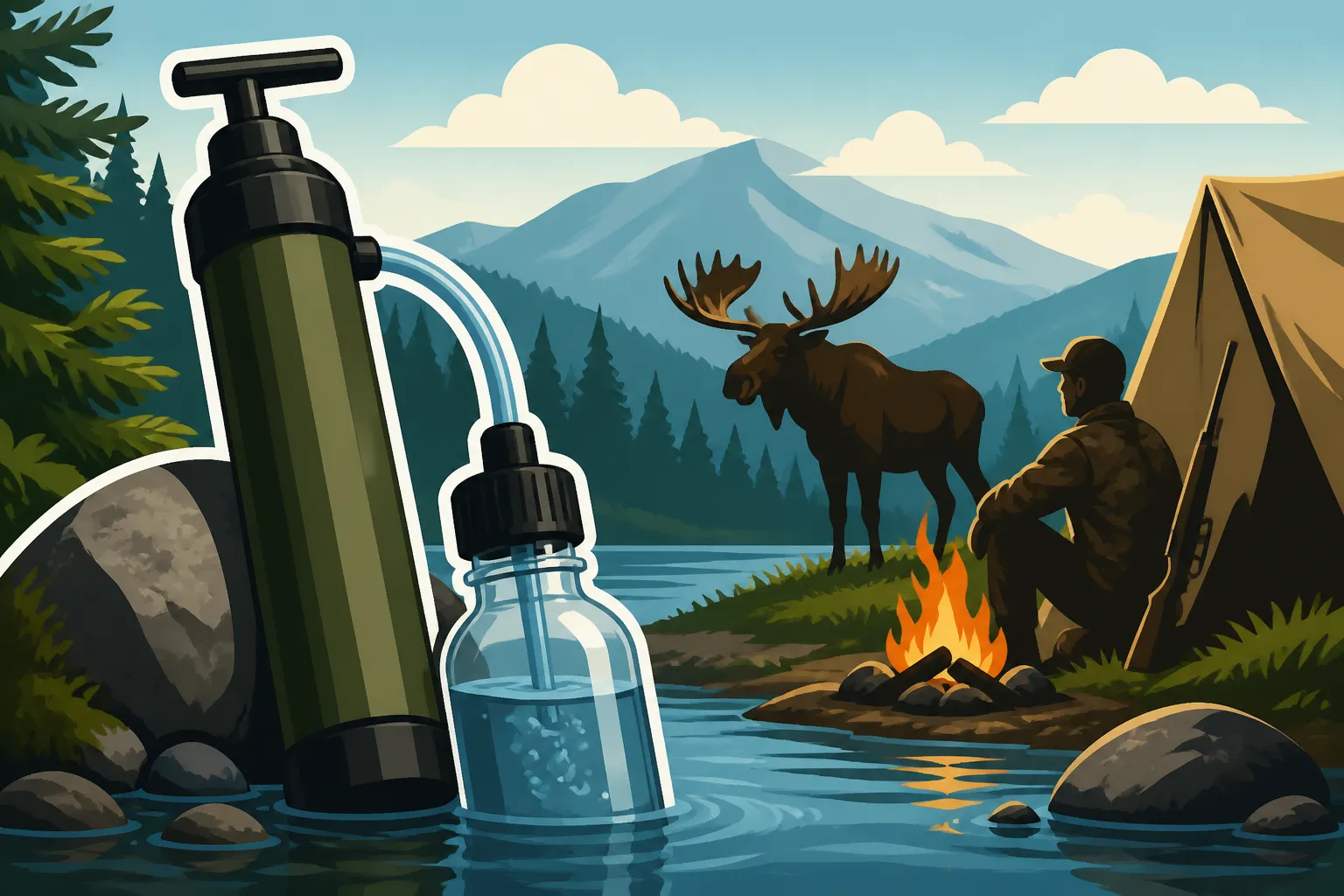
Pump filters have been a backcountry staple for decades, and for good reason. They are generally robust and can process a good volume of water quickly, which is a big plus when you have multiple hunters in camp needing water for coffee, rehydrating meals, and topping off their personal bottles and bladders. You simply drop the intake hose into your water source, and with a few strokes of the handle, clean water starts flowing. Many models allow you to filter directly into a Nalgene bottle, a hydration reservoir, or even a large camp pot.
The main downsides are their weight and bulk compared to other options, and the fact that they have moving parts which can fail or freeze if not properly cared for. They also require manual pumping, which can get tiring if you're processing many liters. However, for a stationary moose camp where you're not constantly on the move with a minimalist pack, a pump like the MSR Guardian or Katadyn BeFree Tactical can be an excellent workhorse, handling the demands of a group. Keeping the seals and moving parts clean and dry, especially in the cold, is key to their longevity.
Squeeze/Gravity Filters for Portability and Convenience
Squeeze and gravity filters have soared in popularity due to their incredible light weight, compact size, and ease of use. Brands like Sawyer Products offer fantastic options here. A squeeze filter usually consists of a small, inline filter cartridge that you attach to a soft bottle or hydration bladder. You fill the "dirty" bag with raw water, attach the filter, and then squeeze the bag to force water through the filter into your clean bottle. They are incredibly simple, have no moving parts to break, and are often very affordable.
Gravity filters take this a step further. You fill a large "dirty" bag with water, hang it from a tree branch, and let gravity do the work, slowly dripping filtered water into a clean container below. This is fantastic for camp, as it's hands-free and can process several liters while you're busy with other camp chores. The main drawback for both squeeze and gravity systems is the flow rate can be slower than a pump, especially as the filter gets older or clogged, which can be frustrating if everyone needs water at once. However, for sheer portability and minimal effort once set up in a fixed camp, they are hard to beat. Many hunters will carry a personal squeeze filter for day hunts and then have a larger gravity system for the main camp.
Chemical Treatments as a Backup
While not a primary solution for a moose camp, chemical treatments like iodine tablets or chlorine dioxide drops serve as an indispensable backup. They are incredibly lightweight, take up virtually no space, and have a long shelf life. These treatments work by killing bacteria, viruses, and many protozoa over a specific contact time, typically 30 minutes to four hours, depending on the chemical and water temperature.
The biggest drawback is the waiting time, which can be inconvenient when you're thirsty now. Also, iodine can impart a distinct, unpleasant taste to the water, though this can be somewhat mitigated with taste-neutralizing tablets. Chlorine dioxide has a milder taste. Neither chemical treatment removes particulates from the water, so if your source is murky, you'll still be drinking cloudy water, albeit disinfected. For these reasons, chemical treatments are best reserved for emergency situations or as a failsafe if your primary filter breaks or clogs. They are absolutely essential for your emergency kit, but should not be your daily go-to for a multi-day camp.
Key Features to Look for in a Backcountry Water Filter
Choosing the right water filter for a backcountry moose camp isn't just about picking the first one you see. You need a tool that can reliably perform under the often harsh conditions of the New Hampshire wilderness. Paying attention to a few key features will ensure you invest in a filter that will keep you hydrated and healthy throughout your hunt.
Filtration Efficacy and Micron Rating
The most critical aspect of any water filter is its ability to remove harmful contaminants. Look for filters that remove bacteria (like E. coli and Salmonella) and protozoa (like Giardia and Cryptosporidium). The efficacy is often measured by a micron rating, which indicates the size of the smallest particle the filter can block. Most effective backcountry filters have a pore size of 0.1 to 0.2 microns. This range is sufficient to block nearly all common bacteria and protozoa found in North American fresh water.
It's important to note that most portable filters do not remove viruses. Viruses are significantly smaller than bacteria and protozoa, requiring an even finer filtration (typically 0.02 microns) or chemical treatment. While viral contamination is less common in remote wilderness water sources compared to highly populated areas or international travel, it's something to be aware of. For New Hampshire moose country, a 0.1-micron filter is generally considered excellent for removing the most prevalent threats. Always double-check the manufacturer's specifications to ensure it meets your safety needs.
Durability and Ease of Maintenance
The backcountry is no place for fragile gear. Your water filter needs to be able to withstand being jostled in a pack, potentially dropped, and exposed to varying weather conditions. Look for filters made with robust materials. Pump filters, with their moving parts, should have a solid housing and durable seals. Squeeze filters need strong bags that won't easily puncture or burst.
Beyond durability, ease of maintenance is paramount. Filters can clog, especially when drawing water from silty or tannin-rich sources common in Hunting a New Hampshire North Country Moose Bog. Many filters can be "backflushed" or cleaned in the field, which involves forcing clean water back through the filter element to dislodge trapped particles. This process should be straightforward and not require specialized tools. The easier it is to clean, the more likely you are to do it regularly, which extends the filter's life and maintains its flow rate. Neglecting maintenance can lead to frustratingly slow filtration or even a completely clogged, unusable filter when you need it most. Also, consider cold weather: filters can be permanently damaged if they freeze while wet. Always store your filter inside your jacket or sleeping bag on cold nights.
Flow Rate and Capacity
When you're filtering water for a group, or even just for yourself after a long day of still-hunting through Still-Hunting White Mountain National Forest Timber, a slow flow rate can be incredibly frustrating. Flow rate measures how quickly the filter can process water, often expressed in liters per minute. Pump filters often have the highest initial flow rates, while squeeze filters can vary. Gravity filters, once set up, offer continuous, hands-free filtration, making their effective capacity quite high for a camp scenario.
Consider the needs of your entire camp. If you're a solo hunter, a slower squeeze filter might be perfectly adequate. But if you have two or three other hunters who also need to fill bottles, rehydrate meals, and possibly make coffee, a higher flow rate or a gravity system with a larger dirty water reservoir will be a much better choice. Some filter systems offer larger capacity "dirty" bags, allowing you to collect more raw water at once, which is a huge convenience in camp. Look for systems that can comfortably produce at least 1-2 liters per minute for personal use, and ideally more for a group camp setting.
Cold Weather Considerations
New Hampshire moose season can be chilly, especially in the North Country. Even early season can bring frosty nights, and late season will certainly have freezing temperatures. Water filters are highly susceptible to damage from freezing. When water inside the filter freezes, it expands, which can rupture the delicate filter membranes, rendering the filter useless and unsafe. This damage isn't always visible, so a frozen filter should be considered compromised.
To prevent this, always store your filter in a warm place when temperatures drop. This means keeping it in your sleeping bag with you overnight, or carrying it inside your jacket during the day. If you're filtering water in freezing conditions, try to do it quickly, and then shake out as much water as possible before warming it up. For long-term storage after your hunt, ensure the filter is completely dry to prevent mold growth and maintain its integrity. A damp filter freezing in the off-season is a common way to ruin a perfectly good piece of gear.
Integrating Your Water Filter into Your Moose Camp Setup
Having the best water filter means nothing if you don't use it effectively and safely. Integrating it seamlessly into your moose camp routine will ensure constant access to clean water and help preserve the life of your equipment. A little planning goes a long way, especially when you're focusing on the main objective: the hunt itself. Packing for a Nine-Day Moose Hunt involves thinking through all these details.
Siting Your Water Source
Choosing the right water source for your camp is the first step. While it might be tempting to just grab water from the nearest puddle, it's always best to find moving water. A small, clear stream or a spring is ideal. Avoid stagnant ponds or puddles if possible, as these tend to have higher concentrations of sediment and microorganisms, which will clog your filter faster. If a stream isn't available, and you're relying on a larger pond or bog, try to draw water from the clearest spot, away from the shoreline where animal traffic and decaying vegetation are more prevalent. You can use a mapping app like GoHunt to scout for perennial streams or potential springs when planning your route and campsite location. Knowing your water sources before you even arrive can save you a lot of time and effort. Always collect water upstream from your camp and never pollute a source you or others might use later.
Filtering for Drinking and Cooking
Establishing a system for "dirty" and "clean" water containers is crucial. Never let your "dirty" water reservoir or collection bottle come into contact with your "clean" bottles, pots, or hands if possible. Many hunters use a dedicated collapsible bucket or a large dirty water bag for collecting raw water, then filter it into their personal water bottles, hydration bladders, or a designated camp cooking pot.
For a gravity system, set it up at camp so that water drips directly into your clean storage. For a pump filter, dedicate one person to filtering duty for a set amount of time to fill everyone's containers. Remember that even water used for cooking needs to be filtered, especially if the cooking process doesn't involve a rolling boil for an extended period. For rehydrating freeze-dried meals, filtered water is typically sufficient. For coffee or tea, it ensures no off-tastes from particulates.
Pro Tips for Maximizing Filter Life
Extending the life of your water filter means more reliable service and less money spent on replacements. Here are a few pointers:
- Pre-Filter When Possible: If your water source is murky or silty, use a bandana, coffee filter, or even a piece of cloth to pre-filter the larger particulates before running the water through your main filter. This dramatically reduces clogging and makes your filter work more efficiently.
- Backflush Regularly: Most modern filters are designed to be backflushed (forcing clean water backward through the filter element). Do this after every few liters, or whenever you notice the flow rate decreasing. This expels trapped sediment and keeps the filter performing optimally. Always use clean water for backflushing.
- Avoid Freezing: As mentioned, freezing can destroy a filter. When temperatures are low, sleep with your filter in your sleeping bag, or keep it inside your jacket close to your body heat during the day. If it accidentally freezes, assume it's compromised and replace it.
- Store Dry: At the end of your hunt, thoroughly backflush your filter and let it air dry completely before storing it. This prevents mold and mildew growth and preserves the filter elements. Many manufacturers recommend specific drying and storage procedures; follow them carefully.
- Carry a Backup: Even the most durable filter can fail. Always carry a backup, whether it's a few chemical treatment tablets, a small, inexpensive squeeze filter, or even a compact backpacking stove to boil water in an emergency. Being able to secure water is one of the pillars of backcountry safety. Using a comprehensive mapping tool like GoHunt can also help you identify multiple potential water sources, reducing reliance on a single, potentially contaminated, one.
| Filter Type | Pros | Cons | Best Use Case for Moose Camp |
|---|---|---|---|
| Pump Filter | Fast flow rate, durable, good for groups | Heavier, more bulky, moving parts can fail, requires effort | Established base camp, filtering larger volumes for multiple hunters |
| Squeeze Filter | Lightweight, compact, easy to use, no moving parts | Slower flow rate, can be tiring to squeeze for volume, bags can puncture | Personal use, day hunts, backup for main camp filter |
| Gravity Filter | Hands-free, good volume, relatively fast flow once set up, lightweight | Slower initial fill, requires hanging point, can be bulky when filled | Main camp filter for groups, continuous water supply |
| Chemical Tabs | Extremely lightweight, compact, ideal backup for emergencies | Long wait times, can affect water taste, doesn't remove particulates | Emergency backup, ultralight fast-and-light missions |
Remember, staying hydrated is crucial for performing at your peak in the field, especially during a demanding moose hunt. A reliable water filter isn't just a piece of gear; it's an investment in your health, safety, and the success of your hunt. By understanding the options and maintaining your equipment, you can focus on calling that bull, not on where your next safe drink will come from. For more insights on preparing for a big hunt, check out New Hampshire Deer Camp Traditions or Gear for a New Hampshire Moose Hunt. If you're considering the legal aspects of getting your harvested animal out, Packing Out a New Hampshire Moose will also be a great resource. You might also find value in articles like Hunting a New Hampshire North Country Moose Bog or Glassing a Bog for a Bull Moose for scouting strategies where water sources are key.
Disclaimer
This article is for general informational purposes only and does not constitute professional advice. Laws, prices and regulations vary by location and change over time. Consult a qualified professional for guidance on your specific situation.