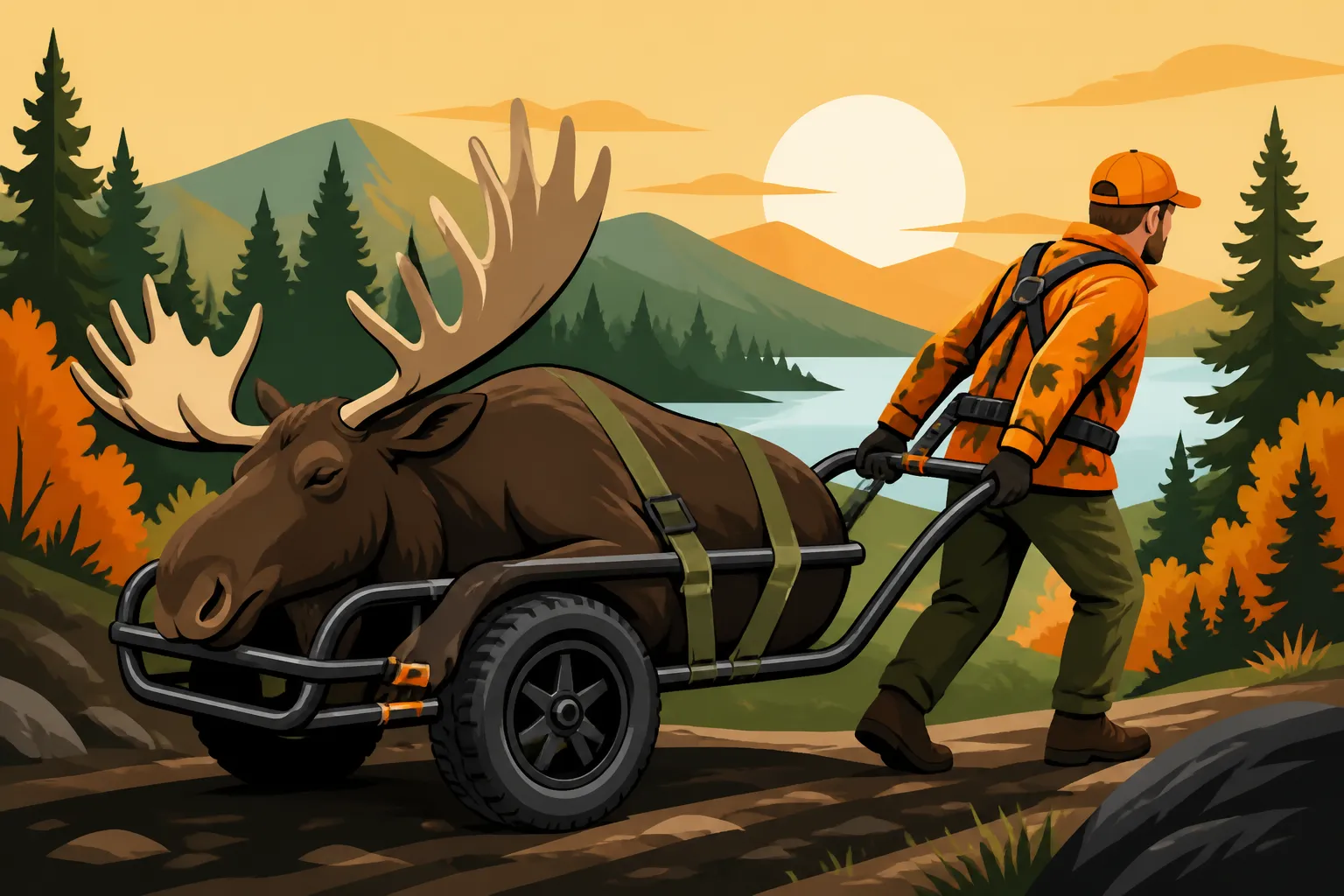
Game Carts for Hauling a Moose Out
You've just tagged a magnificent New Hampshire moose, a truly once-in-a-lifetime experience. The adrenaline is pumping, the photos are taken, and then the enormity of the situation hits: how on earth are you going to get this absolute giant of the North Country out of the woods? This guide is here to walk you through the often-underestimated challenge of retrieving a downed moose and why a well-chosen game cart can be your best friend in this arduous but rewarding task.
The Unforgettable Challenge of a New Hampshire Moose Haul
Bringing a moose out of the dense New Hampshire wilderness is a monumental undertaking, often overlooked in the excitement of drawing that coveted tag. It's not like field dressing a whitetail and throwing it over your shoulder. A moose is an entirely different beast, both literally and figuratively, and it demands respect and a solid plan to retrieve it safely and efficiently.
The Reality of a Downed Moose in the North Country
Imagine this: you're deep in the remote woods of Pittsburg, perhaps even within the Second College Grant, and after days of Glassing a Bog for a Bull Moose or calling through thick stands of spruce, you finally connect. You've done everything right up to this point. But a full-grown New Hampshire bull moose can weigh upwards of 800 to 1,200 pounds, sometimes even more. Cows are still substantial, often 600-800 pounds. They frequently fall in the thickest, nastiest cover imaginable—swamps, beaver flows, steep ravines, or dense clear-cuts where dragging a deer is already a chore. The sheer bulk, combined with the often-treacherous terrain, makes moving the entire animal an impossibility for most hunting parties, especially if you're not within easy reach of an ATV trail or logging road. The dream quickly becomes a logistical nightmare if you're unprepared.
Why a Game Cart Becomes Essential, Not Optional
Many hunters dream of getting their moose out whole, perhaps with the aid of an ATV, but the reality for most New Hampshire moose tags means you're likely hiking in to hunt and will be hauling meat out by hand. Unless you've managed to drop your moose right next to a well-maintained logging road, a game cart isn't just a convenience; it's a critical piece of gear. Trying to drag even quartered sections of a moose by hand over fallen logs, through bogs, and up rocky inclines is back-breaking work that can quickly lead to exhaustion, injury, and spoiled meat. A good game cart, properly loaded, allows one or two people to move hundreds of pounds of meat with far less effort, saving your back and ensuring your hard-earned venison makes it to the cooler in prime condition. It turns an impossible task into a merely Herculean one, which is a big step up!
Understanding Different Types of Game Carts for Moose
When it comes to game carts, you'll find a spectrum of designs, each with its strengths and weaknesses. For hauling a moose, you're not looking for a flimsy model designed for a small buck; you need something heavy-duty, robust, and capable of handling significant weight over challenging terrain. Think of it as investing in your success and your physical well-being.
Two-Wheeled Carts: The Workhorses of the Woods
Two-wheeled game carts are the most common type and often the most versatile for uneven ground. They typically feature a large, sturdy frame and two wheels, allowing them to balance the load over the axle. This design makes them excellent for navigating narrow trails, weaving through dense timber, and pivoting around obstacles. The key benefit is that the weight is primarily supported by the cart's axle, reducing the strain on the person(s) pulling or pushing. Look for models with large-diameter pneumatic tires that can roll over logs and rocks more easily and absorb some shock. The frame should be constructed from thick-gauge aluminum or steel, capable of supporting several hundred pounds without flexing or bending. While they require the operator to bear some of the load for balance, especially on side hills, they are generally easier to maneuver than their four-wheeled counterparts in tight spots.
Four-Wheeled Carts: Stability for Tough Terrain
While less common for individual hunters, four-wheeled game carts offer unparalleled stability, particularly when hauling truly massive loads or traversing relatively open, yet still rough, ground. These carts essentially function like heavy-duty wagons, distributing weight across four points. This means less balancing effort from the operator, which can be a huge advantage when you're already exhausted from Field Dressing a Moose in the North Country. They excel on flatter, more open terrain like old logging roads or clear-cuts where you might not have to navigate tight turns constantly. However, their wider footprint can be a disadvantage in dense timber or on very narrow trails. If you're hunting with a larger group and anticipate a long, relatively straight haul out over somewhat forgiving terrain, a four-wheeled cart, possibly even one designed to be pulled by a small ATV or UTV, might be a consideration. They tend to be heavier themselves, adding to the initial weight you have to bring in.
Specialized Carts for Extreme Backcountry
Beyond the standard two and four-wheeled designs, some manufacturers and even custom fabricators create highly specialized game carts tailored for extreme backcountry conditions. These might incorporate features like tracks instead of wheels for superior flotation over snow or mud, or articulating frames designed to maintain ground contact over highly uneven ground. Some are modular, allowing them to break down into smaller pieces for packing into truly remote locations, which is often the reality when Hunting a New Hampshire North Country Moose Bog. These often come with a higher price tag and require more research, but for the hunter who consistently finds themselves in the most rugged parts of New Hampshire and values efficiency above all else, they might be worth exploring. Companies like GoHunt, known for their comprehensive scouting and gear resources, often feature reviews or recommendations for such specialized equipment, showcasing solutions for even the most challenging retrieval scenarios.
Key Features to Prioritize in a Moose Game Cart
Choosing the right game cart for a New Hampshire moose haul is about more than just picking the first one you see. It's about understanding the specific demands of the environment and the size of the animal you'll be moving. Prioritizing certain features will save you immense frustration and potential heartache when you're deep in the woods, facing a thousand pounds of hard-won meat.
Frame Construction and Material Durability
The frame is the backbone of your game cart, and for a moose, it needs to be incredibly robust. You're looking for high-quality materials and solid construction. Aluminum frames are popular for their lighter weight, which is a huge bonus when you're already Packing for a Nine-Day Moose Hunt and considering bringing the cart in by hand. However, ensure it's made from thick-gauge, aircraft-grade aluminum that's been properly welded, not just riveted. Steel frames, while heavier, often offer superior strength and rigidity, making them exceptionally durable. The trade-off is the added weight, which can make the initial journey into the woods tougher. Regardless of material, scrutinize the welds: they should be clean and continuous, without gaps or rough spots. The stated load capacity is crucial—don't skimp here. A cart rated for a 300-pound deer simply won't cut it for a moose, even quartered. Aim for a capacity of at least 500-800 pounds to handle those heavy quarters with confidence.
Wheel Type and Tire Durability
The wheels and tires are where your cart meets the ground, and in New Hampshire's rugged terrain, they're going to take a beating. Large-diameter pneumatic (air-filled) tires are generally the best choice. Their size helps them roll over obstacles like downed trees, rocks, and mud with less effort, and the air cushion provides some shock absorption, which is good for both the meat and the person pushing. Look for tires with aggressive tread patterns for traction, especially when navigating muddy trails or steep slopes. Tubeless tires are a plus, as they reduce the chance of flats, but if you have tubes, make sure to bring a patch kit and a small pump. Quick-release wheels are also a great feature, allowing for easier breakdown for transport or storage, and making field repairs simpler. Avoid small, hard plastic wheels; they're fine for concrete but useless in the backcountry.
Ergonomics and Handling in New Hampshire Terrain
A moose cart needs to be more than just strong; it needs to be manageable in the hands of the hunter. Ergonomics play a huge role in reducing fatigue and making the haul smoother. Look for handles that are comfortable to grip, ideally with a textured surface or padded for long hauls. Adjustability in handle height can be a big advantage, allowing different users to find a comfortable pulling position. Balance is key: a well-designed cart will feel stable even when heavily loaded, not wanting to tip over easily. Pay attention to the frame design—is it wide enough to prevent tipping, but narrow enough to fit between trees? Ample strapping points and tie-down loops are essential for securing those large, awkward moose quarters. Finally, consider if the cart folds down or disassembles. Even if it's heavy, the ability to break it into more manageable pieces for transport in your truck or ATV can make a world of difference. GoHunt provides detailed specifications on many popular cart models, often including their folded dimensions, which can be invaluable when planning your gear.
Preparing Your Game Cart for the New Hampshire Moose Hunt
Getting your moose tag is just the beginning; the real preparation for the haul begins long before you even step foot in the woods. Properly preparing your game cart is just as important as sighting in your rifle or practicing your calls. This isn't a piece of gear you want to test for the first time with a thousand pounds of moose meat on it.
Pre-Season Maintenance and Inspection
Before the season even draws close, take your game cart out, unfold it, and give it a thorough once-over. This is not the time to discover a seized axle or a dry-rotted tire. Check all bolts and fasteners to ensure they are tight. Lubricate any moving parts, like axles and folding mechanisms, to prevent rust and ensure smooth operation. Inspect the tires for any cracks, bulges, or excessive wear. Inflate pneumatic tires to the manufacturer's recommended pressure. If your cart has tubes, consider replacing old ones if they've been sitting for years, or at least carrying spares. Look over the frame for any signs of stress, bends, or hairline cracks, especially around welds. If you find any issues, address them immediately. A small repair now could prevent a catastrophic failure miles deep in the wilderness when you're Getting a Moose Out on a Logging Road.
Essential Accessories for a Successful Haul
A game cart alone isn't enough; you need a few critical accessories to ensure a successful and safe retrieve. Heavy-duty ratchet straps are non-negotiable. You'll need at least four, possibly six, to securely fasten those massive moose quarters to the cart frame. Don't skimp on quality here; cheap straps can fail under extreme tension. A large, durable tarp or game bags are essential for keeping the meat clean and protecting it from dirt and debris during the haul. Consider a small, robust emergency repair kit for your cart: a multi-tool, tire patch kit, small pump (if pneumatic tires), and some zip ties or baling wire can be lifesavers. A strong rope or paracord can be useful for additional securing or for aiding in pulling the cart up steep inclines. Finally, bring a good headlamp, even if you plan to be out before dark; darkness can descend quickly in the New Hampshire woods, and finishing a haul in the dark is common.
Practice Runs: Getting to Know Your Cart
This step might sound silly, but trust me, it's invaluable. Load your game cart with several sandbags, heavy logs, or even a couple of friends (carefully!) to simulate the weight of moose quarters. Practice pulling and pushing it over varied terrain in your local woods or even a rough field. Navigate around trees, over small logs, and up and down gentle slopes. Pay attention to how the cart balances, how it handles turns, and what kind of effort is required. This practice will not only help you identify any weaknesses in your cart or accessories but also build your confidence and give you a feel for what to expect. You'll learn how to distribute weight, how to leverage the cart, and how to work with a partner, which are all crucial skills for when the real moment arrives. It’s also a great way to test your fitness for the arduous task ahead.
Effective Strategies for Hauling a Moose with a Game Cart
Successfully hauling a moose out of the New Hampshire wilderness with a game cart is as much about strategy and technique as it is about having the right gear. It's a team effort, a test of endurance, and a lesson in patience. Rushing or being unprepared will only lead to frustration and potential loss of valuable meat.
Quartering Your Moose for Manageable Loads
This is perhaps the most critical step for any moose retrieval by hand. Trying to move a whole moose, even with a cart, is rarely feasible or advisable in the backcountry. Quartering the animal is absolutely necessary. This means breaking the moose down into its major components: the four leg quarters, the backstraps, tenderloins, neck meat, and the ribs/brisket. The skull and antlers are a separate, often heavy, component. This process makes each piece manageable enough to lift onto the cart and reduces the overall bulk. Familiarize yourself with proper field dressing and quartering techniques before your hunt. There are many excellent resources out there, and companies like GoHunt sometimes offer tutorials or advice on efficient field processing for large game. This initial breakdown dramatically changes the dynamics of the haul, transforming an impossible task into several challenging but achievable trips.
Loading and Securing Your Moose Quarters
Once your moose is quartered, careful loading and securing of the meat on the cart are paramount. Distribute the weight as evenly as possible over the axle. Place the heaviest quarters (typically the hindquarters) on the bottom, centered on the cart. Use game bags or tarps to keep the meat clean and prevent it from shifting. Then, layer other pieces, like the front quarters and boneless meat, on top. Use your heavy-duty ratchet straps to cinch everything down tightly. The goal is to create a single, solid unit that won't shift or slide, especially when navigating uneven terrain or inclines. Loose loads can throw off the cart's balance, make it harder to pull, and potentially damage the meat or the cart itself. It's often better to make multiple trips with well-secured, manageable loads than one overloaded, unstable trip that risks a mishap. Remember the internal link: Packing Meat Out of a North Country Bog.
Here's a quick comparison of cart types for moose:
| Feature/Cart Type | Two-Wheeled Cart | Four-Wheeled Cart |
|---|---|---|
| Maneuverability | High (tight turns, dense woods) | Moderate (wider turns, more open areas) |
| Stability (Flat Ground) | Good (requires user balance) | Excellent (self-balancing) |
| Stability (Uneven Terrain) | Moderate (user input needed for balance) | Good (can articulate, but wide footprint can hinder) |
| Load Capacity | High (often 500-800 lbs) | Very High (can exceed 1000 lbs) |
| Ideal Use Case | Single hunter/small team, dense forest, narrow trails, varied terrain | Larger team, old logging roads, clear-cuts, more open, less steep ground |
| Weight of Cart | Lighter (easier to pack in) | Heavier (less ideal for packing far by hand) |
| Assembly/Breakdown | Often foldable/disassembles for transport | Varies, can be more cumbersome due to size |
Teamwork and Terrain Navigation
Hauling a moose with a game cart is a team sport. Even the strongest individuals will struggle alone, especially over any significant distance or difficult terrain. Ideally, you want at least two, preferably three or four, people. One person can pull from the front, setting the pace and navigating obstacles, while another pushes from the rear, providing momentum and controlling descents. If you have more hands, others can help stabilize the cart on side hills or assist with lifting over large obstacles. When encountering steep inclines, work together. One person can pull while others push or secure ropes to prevent rollback. For slippery or muddy sections, slow down, test the ground, and proceed cautiously. When crossing streams or beaver flows, assess the depth and current carefully. It might be necessary to temporarily unload the meat and carry it across separately, then bring the empty cart over. This is where Getting a Moose Out on a Logging Road can turn into a monumental effort depending on what shape that "road" is actually in.
Post-Hunt Care and Storage for Your Game Cart
You've done it! The moose is out, the meat is chilling, and you're already reliving the hunt. But before you put your feet up and crack open a celebratory beverage, take a moment to properly care for your game cart. Neglecting it after such a strenuous workout can significantly shorten its lifespan and leave you with problems for your next big game adventure.
Cleaning and Decontamination
The first thing to do when you get home is thoroughly clean your cart. Moose blood, mud, dirt, and possibly other organic matter will be caked onto the frame, wheels, and any fabric components. Use a stiff brush, warm water, and a mild detergent to scrub everything down. Pay special attention to joints, axles, and any areas where blood might have seeped into crevices. Not only does this prevent unpleasant odors and bacterial growth, but it also helps prevent rust on steel components and corrosion on aluminum. Rinse thoroughly and allow the cart to air dry completely. This is also a good practice to prevent the spread of diseases or invasive species. A clean cart is a happy cart, and it's also a more hygienic one for future meat hauling.
Proper Storage for Longevity
Once clean and dry, store your game cart in a way that protects it from the elements. If it folds or disassembles, take advantage of that feature to save space. Hang it in a garage or shed, or store it flat on a shelf, away from direct sunlight, rain, or extreme temperature fluctuations. Leaving it exposed to weather will accelerate rust, dry rot tires, and degrade any plastic or fabric components. If you have pneumatic tires, it's a good idea to slightly over-inflate them (within manufacturer limits) before storage, or at least ensure they are properly inflated. This helps prevent flat spots from forming if the cart sits for extended periods. A little bit of attention to storage now will ensure your cart is ready and reliable for your next big hunt.
Assessing Wear and Tear for Future Hunts
As you're cleaning and storing your cart, take a moment to really inspect it for any signs of wear and tear. This is your opportunity to catch potential issues before they become full-blown problems. Check the tires again for any nicks, cuts, or worn tread. Examine the frame for any bends, cracks, or loose welds that might not have been obvious when it was covered in mud and blood. Test all fasteners and folding mechanisms. Are any parts starting to stick or creak? Make a note of anything that needs repair or replacement, such as a worn-out tire, a missing bolt, or a fraying strap. Order those replacement parts now, rather than waiting until the week before next season. This proactive approach ensures that your game cart remains a trusted, reliable tool, ready for whenever that New Hampshire moose tag comes calling again. It's a key part of your Gear for a New Hampshire Moose Hunt.
Disclaimer
This article is for general informational purposes only and does not constitute professional advice. Laws, prices and regulations vary by location and change over time. Consult a qualified professional for guidance on your specific situation.