Best Truck Bed Setup for Hauling a Moose
You've spent days, weeks, maybe even years dreaming of this moment: drawing a New Hampshire moose permit. The hunt itself is an epic journey, a true test of grit and patience in the North Country. But let's be real, the moment you punch that tag, the real work often begins. Getting a several-hundred-pound animal, often deep in the woods, back to camp and into your truck can be a colossal undertaking. This guide is all about preparing your truck bed to handle the monumental task of hauling a New Hampshire moose, ensuring your prize makes it home safely and cleanly.
The Unique Challenges of a New Hampshire Moose Haul
Hauling a moose isn't just a matter of tossing it in the back of your pickup. It’s an exercise in physics, logistics, and sheer determination. We’re talking about an animal that makes even the biggest whitetail buck look like a rabbit. Anyone who has been fortunate enough to punch a moose tag in the Granite State will tell you that the challenge of getting the animal out of the woods and into your truck is often more demanding than the hunt itself.
Size and Weight: Not Your Average Deer
Let's just put it out there: a mature New Hampshire bull moose can easily weigh between 800 to 1,200 pounds, with some even pushing towards 1,500 pounds. Cows are generally smaller but still represent an enormous mass of muscle and bone. This isn't just heavy; it's incredibly bulky and awkward. Trying to hoist or drag a whole moose, even with multiple people, is a herculean task that can quickly become dangerous if you're not prepared.
Think about it: a big whitetail buck might weigh 200 pounds dressed. That's a significant animal, but most hunters can handle loading one into a truck, perhaps with the aid of ramps or another person. A moose is often five to six times that weight, and its sheer size means it won't just "fit" into most standard truck beds without careful planning. The center of gravity is high, the limbs are long and unwieldy, and the hide itself can be surprisingly slippery when wet or bloody. This immense scale impacts everything from how you approach field dressing to the type of equipment you'll need just to get it off the ground. You need a robust strategy, not just brute force.
New Hampshire's Terrain and Remote Harvests
Unlike deer, which might be taken along a field edge or close to a logging road, New Hampshire moose often live and are harvested in some of the most remote and challenging terrain the state has to offer. We’re talking about the deep woods of the North Country, beaver flowages, steep granite ridges, and dense softwood thickets far from any paved road. This means that the "hauling" often starts long before your truck ever comes into view. You might be a mile or more from the nearest accessible vehicle trail, navigating dense timber or slogging through marshy bogs.
This reality almost invariably dictates that a moose must be field dressed and quartered, if not fully deboned, at the kill site. Trying to drag a whole moose through this kind of terrain is not only physically impossible for most hunters but also severely compromises the meat quality. Imagine dragging a thousand-pound animal over rocks, through mud, and across fallen logs – the hide gets torn, dirt and debris adhere to the meat, and the animal simply doesn't cool efficiently. The practicalities of a New Hampshire moose hunt often mean you'll be packing out meat in pieces, not as a whole carcass. This pre-truck work fundamentally changes what your truck bed setup needs to accomplish. You're less likely to be lifting a single, massive animal, and more likely to be handling multiple very heavy, but manageable, sections. This also reinforces the need for a good mapping solution, like one you might find through a GoHunt subscription, to understand the topography and plan your extraction route well in advance. Planning your route, even if it's just from the kill site to the nearest logging road, is critical, especially when you consider Packing Out a New Hampshire Moose.
Essential Gear for Loading and Securing Your Moose
Once you've managed the monumental task of getting your moose quarters (or, in rare cases, a smaller whole animal) to your truck, the next hurdle is safely and cleanly getting it into the bed and securing it for the drive home. This isn't the time to rely on flimsy ropes or a bare truck bed. Proper preparation here protects your vehicle, your meat, and ensures a safe journey.
Heavy-Duty Truck Bed Protection
Your truck bed is about to become a temporary meat locker, and without proper protection, it will bear the brunt of the blood, hair, bone fragments, and general mess that comes with a large game animal. A bare metal or plastic bedliner simply isn't enough to contain the mess or protect your investment.
A thick, heavy-duty rubber mat is an absolute game-changer. These mats typically have a non-slip surface, which is crucial when you're trying to slide heavy quarters into place, especially on an incline. More importantly, they create a barrier that prevents blood and other fluids from seeping into the nooks and crannies of your truck bed, which can lead to lingering odors and rust. Beyond the mat, a heavy-duty tarp is indispensable. This isn't your average lightweight blue tarp. Look for a thick, reinforced tarp, ideally one with robust grommets, that can completely line the bed and drape over the tailgate. Once the meat is loaded, you can fold the tarp over the top, creating a relatively contained environment that minimizes exposure to road grime and keeps any remaining fluids off your vehicle''s exterior. This also makes cleanup significantly easier; you can often pull the tarp out, hose it down, and let it dry, rather than scrubbing your entire truck bed for hours. Imagine trying to scrub dried moose blood out of corrugated metal – trust me, you want a barrier.
Winches, Ramps, and Lifting Aids
Unless you're blessed with a crew of five Olympic powerlifters, getting a large moose, even quartered, into a truck bed requires mechanical advantage. This is where a reliable winch, sturdy ramps, or even a portable hoist come into play.
For a quartered moose, a sturdy set of loading ramps is often sufficient, especially if you can back your truck up to a slight incline or embankment. Look for ramps that are wide, long enough to create a gentle slope, and rated for significant weight. Standard ATV ramps might not cut it for the weight of several large moose quarters. You might need heavy-duty utility ramps. Even with ramps, you'll likely be pulling or sliding the quarters. This is where a portable winch shines. A 2,000 to 3,000-pound capacity electric winch, mounted to a receiver hitch on the front or rear of your truck, can be invaluable. Even a heavy-duty hand-crank winch can make the difference between an exhausting struggle and a manageable load. Attach a strap or rope to the moose quarter, run it through a block and tackle system if needed, and let the winch do the heavy lifting. For those truly monstrous animals or if you want to attempt to load a smaller moose whole (though rarely recommended), a portable tripod hoist can be a lifesaver. These typically consist of three sturdy legs and a hand-cranked or electric hoist, allowing you to lift the animal vertically and then swing it over the truck bed. Safety is paramount with any lifting equipment; always ensure secure anchor points, check weight ratings, and operate carefully. You'll thank yourself for investing in these tools when you're exhausted after a long day in the field and facing the final, critical step of getting your meat secured.
Secure Strapping and Tie-Down Systems
Once that precious cargo is in your truck bed, the last thing you want is for it to shift, slide, or potentially even fall out on the drive home, especially if you're navigating winding New Hampshire backroads. This requires a robust and redundant tie-down system.
Forget the bungee cords or flimsy ropes you might use for lighter loads. You need heavy-duty ratchet straps, designed for securing cargo in trailers. Aim for straps with a working load limit of at least 500-1000 pounds each, and use several of them. The goal is to create a tightly secured mass that cannot move independently of the truck. Strategically place your tie-down points on the truck bed walls or floor. If you have a larger cargo net designed for truck beds, this can also add an extra layer of security, cinching down the entire load. Make sure the straps are run over and around the moose quarters, pulling them firmly down and towards the front or sides of the truck bed. If you have the entire animal, ensure the straps are placed to prevent rolling or shifting forward during braking. Double-check all tension before you start driving, and ideally, check them again after a few miles. Nothing ruins a successful hunt like seeing your hard-earned meat bounce around in the bed, or worse, come loose on the highway. This meticulous strapping also helps to keep the meat from bouncing, which can cause bruising and further affect meat quality, especially during longer drives from the remote North Country. Good planning with tools like GoHunt can help you plot out routes that minimize sharp turns or rough roads once you're loaded up.
Quartering vs. Whole Animal Transport Considerations
When it comes to hauling a moose in New Hampshire, the decision of whether to transport it whole or quartered is less a choice and more a practical necessity. The sheer scale of these animals, coupled with the rugged terrain, almost always dictates a certain approach.
The Reality of Quartering a Moose in the Field
Let's be blunt: attempting to move a whole New Hampshire moose, especially a mature bull, from the kill site to a truck is an undertaking that few hunters are equipped for. It requires an extraordinary amount of manpower, specialized heavy equipment, and often still results in compromised meat quality due to the immense effort and time involved. The reality for most successful moose hunters in New Hampshire is that the animal will be field dressed and quartered, if not fully deboned, where it falls.
This isn't just about making the load lighter; it's also crucial for cooling the meat. A moose is an enormous animal with a thick hide, and its body heat can take a very long time to dissipate, especially if the weather is even mildly warm. Rapid cooling is paramount to preventing spoilage and ensuring the best possible table fare. Quartering allows for much faster cooling by exposing more surface area to the air. It also breaks the animal down into manageable, albeit still heavy, pieces. These quarters can then be loaded into game bags, which protect the meat from dirt, insects, and debris during the arduous journey from the woods to your vehicle. For many, this might involve multiple trips on foot, dragging sections on sleds, or using game carts. Even getting large quarters down a steep embankment or out of a thick cedar swamp is a massive challenge, and this process is covered in more detail in articles like Field Dressing a Moose in the North Country.
Truck Bed Configuration for Quartered Meat
Once you have your moose quarters, your truck bed setup shifts from needing to accommodate a single, massive object to efficiently managing multiple large, heavy packages. The goal is to keep the meat clean, cool, and secure.
Large, robust coolers are essential. Think 150-quart or even 250-quart coolers – you'll likely need several. Pack these coolers with ice, but be mindful of direct contact with the meat. Many hunters prefer to place the quarters in game bags first, then into coolers with ice, ensuring the ice is not directly melting onto the meat, which can waterlog it. Breathable game bags are key for the initial transport from the field. Once at the truck, if you're not immediately putting them on ice, arrange the game-bagged quarters in your bed in a way that allows for maximum airflow around them. Some hunters will even bring small portable fans to circulate air if the temperatures are above freezing. Consider using spacers or even milk crates to elevate some quarters slightly off the truck bed floor, allowing air to circulate underneath.
A good approach is to dedicate one cooler to each major quarter (two front, two hind), and perhaps a smaller one for the backstraps, tenderloins, and trim. This compartmentalization helps with cooling, organization, and prevents cross-contamination. Always ensure the coolers are also strapped down securely within the truck bed; a sloshing 200-pound cooler full of meat and ice can do serious damage if it shifts during transport.
Considerations for a Smaller, Whole Moose
While quartering is almost always the recommended method for moose in New Hampshire, there might be extremely rare circumstances where a smaller, younger moose (like a calf or small yearlings in some areas) could potentially be transported whole. However, even in these cases, the challenges are immense and often outweigh the perceived convenience.
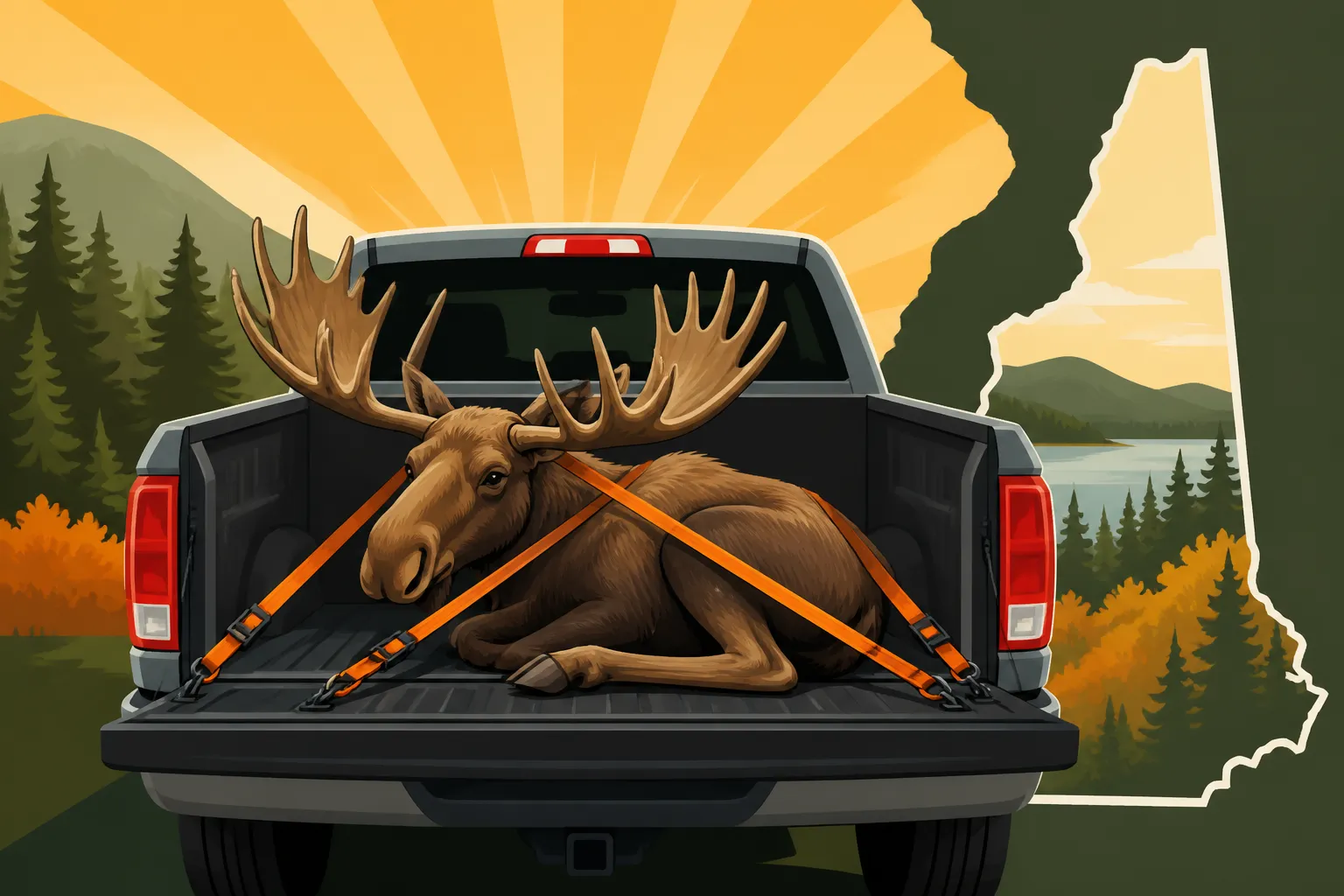
If you somehow manage to get a smaller, whole moose to your truck, you'll need significant help and specialized equipment. A heavy-duty winch is non-negotiable, and you'll likely need a large, robust ramp system. The truck itself must be capable of handling the weight, both in terms of payload capacity and suspension. A full-size pickup, ideally a heavy-duty model, is usually required. Even then, fitting a moose, even a small one, into a standard 8-foot bed can be a squeeze, often requiring the head and neck to hang over the tailgate. This makes securing the animal properly even harder.
More critically, transporting a whole moose, especially in anything but freezing temperatures, significantly increases the risk of meat spoilage. The internal organs and dense muscle mass retain heat for a long time. If you choose this route, you must get the animal to a processing facility or a proper cooling environment as quickly as possible. This approach generally demands more manpower, specialized tools, and a faster turnaround time than quartering. It's truly an exception, not the rule, for moose hunting in New Hampshire.
Additional Considerations for Your Moose Haul
Beyond the core logistics of getting the meat into your truck, there are several other critical factors to consider that will impact the success, cleanliness, and legality of your moose transport. Don't overlook these details; they can make a big difference in the overall experience and the quality of your hard-earned meat.
Hygiene and Cleanliness
Hauling a moose is inherently messy. There will be blood, hair, bone fragments, and sometimes even a bit of intestinal matter if field dressing was done quickly. Preparing for this mess is crucial, not just for the sake of your truck, but for the quality of your meat.
As mentioned, heavy-duty tarps and rubber mats are your first line of defense. But also bring a comprehensive cleaning kit. This should include a stiff brush, a shovel, plenty of paper towels or rags, strong disinfectant wipes, and a large bottle of water or a portable pressure washer. After you unload your moose, you'll want to immediately clean the truck bed, tarp, and any other contaminated surfaces. Blood, especially, can be very difficult to remove once dried and can leave a lingering scent that attracts pests. A thorough wash-down at a self-service car wash, or even with a garden hose at home, is essential. This also ensures that any future loads you carry in your truck won't pick up residual smells or contaminants. Keeping a separate set of gloves for handling meat and for cleaning can also prevent cross-contamination.
Game Bags and Coolers
These two items are the unsung heroes of successful moose transport, particularly for preserving the quality of your meat. Investing in good quality versions is absolutely non-negotiable.
Game bags are vital from the moment the animal is quartered. Don't skimp here; cheap cheesecloth bags tear easily and offer little protection. Look for durable, breathable game bags made from specialized synthetic materials that resist tearing, allow air circulation, and keep flies and dirt off the meat. You'll need several large bags to accommodate all the quarters and trim. Brands like GoHunt often review gear that includes these essential items. Once the meat is bagged and brought to the truck, the coolers come into play. As discussed, large, high-quality coolers are essential for cooling and maintaining meat temperature. Fill them with ice, but again, consider keeping the ice separate from direct contact with the meat. This could mean using frozen water bottles, ice packs, or placing a layer of plastic sheeting over the meat before adding loose ice. The goal is to get the internal temperature of the meat down quickly and keep it below 40 degrees Fahrenheit (about 4 degrees Celsius) until it can be processed. This is especially important if you're hunting in early October when New Hampshire days can still be quite mild. Remember that keeping the meat cold is your absolute priority after the shot.
Legal and Ethical Transport
Beyond the physical challenges, you also need to ensure you're transporting your moose legally and ethically. New Hampshire has specific regulations regarding game tags and carcass transport.
First and foremost, your moose permit tag must be properly attached to the animal as soon as it's harvested. Ensure it's secure and clearly visible. If you've quartered the animal, usually the tag needs to remain with a specific portion (check the current New Hampshire Fish and Game regulations for precise details, as these can change). It's always a good idea to have a copy of your license and permit with you, easily accessible, in case you encounter a conservation officer.
Secondly, consider the public perception of your haul. While it's a legal and ethical harvest, driving through populated areas with a bloody carcass or exposed guts can be unsettling for non-hunters and can even lead to complaints. Using a tarp to cover the entire load is not just good for cleanliness; it's also a respectful gesture to the public. You've completed a successful hunt; displaying it proudly doesn't have to mean causing discomfort for others. Finally, be aware of CWD prevention rules, which might restrict the transport of certain carcass parts across state lines or even within certain WMUs. While New Hampshire has maintained its CWD-free status, regulations are in place to prevent its introduction, and knowing these rules is part of responsible hunting. You can find more information on regulations regarding registration, which is equally as important as proper transport, in articles like Registering a New Hampshire Deer In Person During the Blackout Days or Registering a New Hampshire Deer Online.
Whole Moose vs. Quartered Moose Transport: A Quick Comparison
To help visualize the practicalities, here's a brief comparison of attempting to transport a whole moose versus quartered sections in a truck bed.
| Feature | Whole Moose Transport (Rarely Recommended) | Quartered Moose Transport (Standard Practice) |
|---|---|---|
| Effort to Load | Extremely high; requires winch, ramps, multiple people. | High, but manageable per section; can use ramps or manual lift. |
| Space Required | Full-size heavy-duty truck with 8ft bed often insufficient. | Multiple large coolers or well-organized bed space. |
| Meat Cooling | Very slow; high risk of spoilage, especially in mild temps. | Rapid cooling possible with game bags and ice. |
| Cleanliness | Very messy; high risk of blood/hair contamination. | Manageable with tarps, game bags, and coolers. |
| Public Perception | Can be alarming to non-hunters due to visible carcass. | More discreet and respectful with covered coolers/tarp. |
| Safety | High risk of injury during loading/unloading due to weight. | Lower risk due to smaller, more manageable sections. |
| Legality | Requires careful tag placement; check CWD regulations. | Easier tag placement (e.g., on hindquarter); check CWD. |
| Flexibility | Very limited; rigid process. | Highly flexible; can make multiple trips from field. |
Disclaimer
This article is for general informational purposes only and does not constitute professional advice. Laws, prices and regulations vary by location and change over time. Consult a qualified professional for guidance on your specific situation.