Hunting a Granite Ridge Saddle
Hunting New Hampshire's rugged terrain can feel like an uphill battle, literally. Those steep, rocky ridges, often covered in dense timber, can seem impenetrable and intimidating, making you wonder where on earth a deer would even bother to travel. It’s easy to get discouraged and stick to the more obvious, lower-elevation trails. But if you’re overlooking the subtle nuances of these granite formations, especially the saddles that connect them, you’re missing out on some of the most consistent deer movement patterns the Granite State has to offer. This guide is here to walk you through exactly what a granite ridge saddle is, why deer use them, and how you can pinpoint and effectively hunt these natural funnels to tag your next New Hampshire whitetail.
What Exactly is a Granite Ridge Saddle?
When we talk about hunting, "saddle" is a term you hear often, but in New Hampshire, it takes on a slightly different meaning due to our unique geology. It's not just any dip in the land; it's a specific kind of terrain feature that funneling deer instinctively understand and rely on.
Defining This Unique Terrain Feature
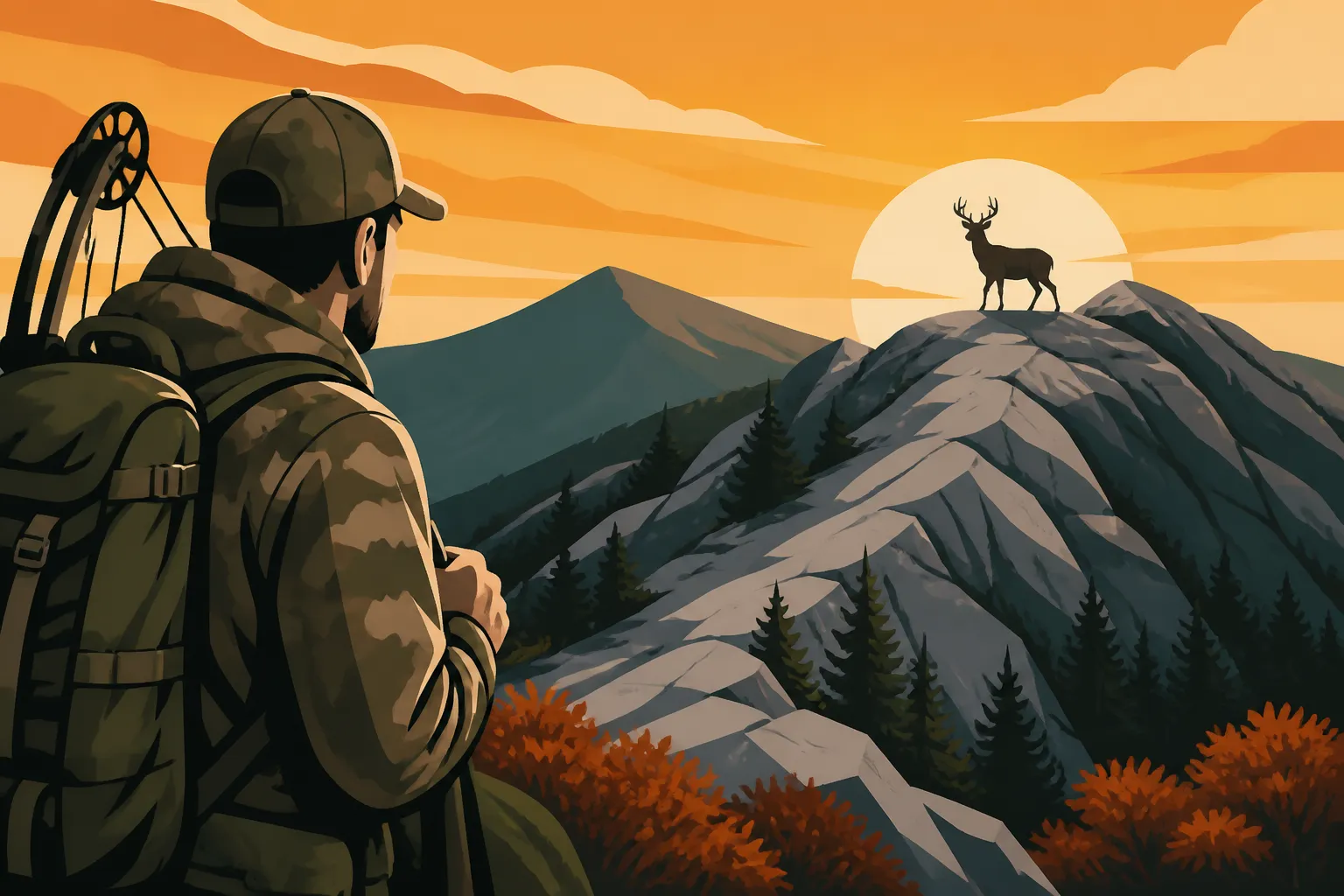
Imagine two distinct high points or peaks on a ridge line. A saddle is the lower section of that ridge that connects these two higher points, creating a dip or a "pass" that deer find much easier to traverse than climbing over the peaks themselves. Think of it like the low point between two knuckles on your hand. In New Hampshire, these aren't always gentle, rolling depressions. Our granite bedrock means these saddles can be quite abrupt, often rocky, and sometimes surprisingly narrow, especially in the White Mountains or the more rugged parts of the Monadnock Region.
Unlike saddles found in regions with softer soil, New Hampshire's granite saddles often feature more exposed rock, steeper pitches leading into them, and can sometimes be surprisingly open or, conversely, choked with thick evergreen growth. The transition from one elevation to another, even if subtle, creates a natural corridor. Deer, being creatures of efficiency and security, will almost always opt for the path of least resistance, and that path, more often than not, leads directly through a well-defined saddle. Identifying these specific geological formations is the first step to unlocking their hunting potential.
Why Deer Gravitate Towards These High-Ground Funnels
Deer are constantly moving between bedding areas, feeding grounds, and water sources, all while trying to remain hidden and safe from predators (that's us!). Granite ridge saddles provide an ideal solution for all these needs. Firstly, they offer a less strenuous route across elevated terrain. Instead of expending precious energy scaling a steep, rocky peak, deer can simply follow the contour of the saddle. This makes them natural travel corridors, akin to a highway through difficult terrain.
Secondly, these elevated funnels often provide a sense of security. From a saddle, deer can often get a good vantage point of the terrain below without exposing themselves completely on an open ridge top. The broken topography and varied vegetation common in these areas offer excellent cover for movement. Bucks, especially, will utilize saddles when cruising for does, scent checking, or simply traveling between distinct parts of their home range, knowing it's an efficient and relatively safe route. These spots become vital crossroads in their daily and seasonal movements, making them prime locations for hunters to intercept deer, particularly when considering Where New Hampshire Bucks Bed in Thick Cover and how they travel between these zones.
Pinpointing Granite Ridge Saddles on Your Map and in the Field
Finding these promising funnels isn't always as simple as spotting them from the truck. It requires a combination of strategic map work and diligent boots-on-the-ground scouting, especially when dealing with the nuanced terrain of New Hampshire.
Harnessing Topographic Maps and Digital Tools
Before you even step foot in the woods, your best friend for identifying saddles is a good topographic map or, even better, a modern digital mapping application. Look for contour lines that depict an hourglass shape – wider on the approaches and narrower at the lowest point of the dip. This "pinching" of contour lines between two higher elevations is a dead giveaway for a saddle. You want to see these lines crossing the ridge, indicating a dip rather than just a side hill.
Digital tools like GoHunt, onX Hunt, or BaseMap are absolute game-changers for this process. They allow you to overlay aerial imagery with topographic maps, giving you a bird's-eye view of the terrain while simultaneously showing elevation changes. You can zoom in, analyze terrain features, identify potential access routes, and even mark waypoints for saddles you want to check out. Pay close attention to subtle changes in elevation that might not be obvious on a paper map but become clear with the detailed contour lines and 3D rendering available through these apps. These platforms also help you verify property lines, which is crucial for Scouting New Hampshire Public Land Before Season to ensure you're hunting legally. When analyzing maps, particularly for more remote areas, Reading Aerial Photos for North Country Deer can reveal hidden trails and cover that might lead directly to a saddle.
Ground Scouting and Interpreting Deer Sign
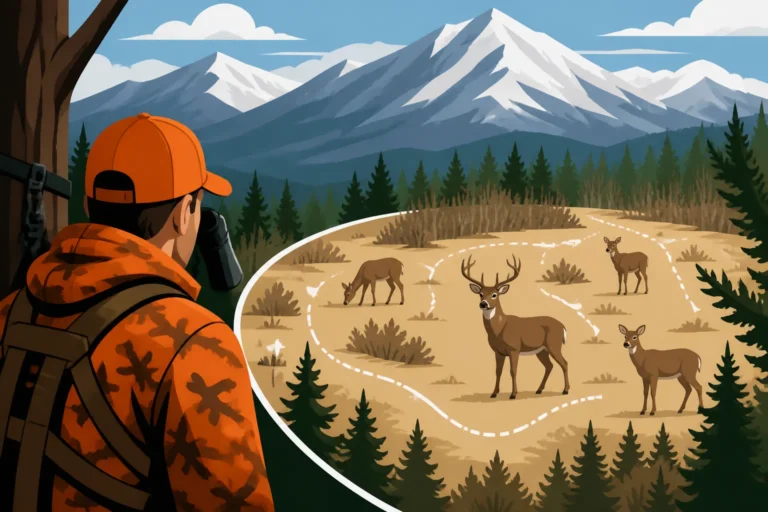
Once you've identified potential saddles on your map, it's time to hit the woods. Nothing beats ground scouting for confirming deer activity. When you reach a saddle, don't just walk through it; take your time. Look for distinct deer trails, especially those that appear "worn" and show consistent use over time. These aren't just faint paths; they're often beaten-down routes indicating regular travel.
Keep an eye out for fresh deer sign: tracks, droppings, rubs on saplings, and scrapes. Rubs indicate bucks are working their way through, marking territory, and scrapes serve as communication hubs, especially during the rut. The presence of multiple signs confirms the saddle isn't just a random crossing but an active travel corridor. Also, evaluate the cover around the saddle. Is it thick enough to offer security? Are there mature trees for a treestand? What are the prevailing wind patterns in that specific micro-terrain? You might find several potential saddles on a ridge, but ground-truthing will help you determine which ones are actively being used and which offer the best setup for hunting.
Understanding Deer Movement Through New Hampshire Saddles
Deer movement is rarely random, and nowhere is this more evident than in how they utilize natural terrain features like granite ridge saddles. Their patterns are driven by efficiency, safety, and instinct, all of which converge to make saddles high-traffic areas.
The "Path of Least Resistance" Principle in Action
Deer are incredibly efficient creatures. They don't waste energy unnecessarily, especially when navigating challenging terrain like New Hampshire's granite ridges. When faced with the choice of scaling a steep, rocky peak or slipping through a slightly lower, more gradual saddle, they will almost invariably choose the latter. This "path of least resistance" principle is the fundamental reason saddles are so valuable to hunters. They create natural bottlenecks where deer movement is concentrated.
Consider a scenario where a deer wants to move from a south-facing slope, often warmed by the sun and offering browse, to a cooler, north-facing bedding area or vice versa. Instead of enduring a tough climb and descent over the ridge's highest point, a saddle offers a smoother transition. This is particularly true in areas with heavy hunting pressure. As hunters push deer, they often retreat to thicker, more rugged terrain. Saddles become discreet highways, allowing them to move quickly and quietly through these challenging landscapes, making them critical pinch points to target. Understanding how Wind and Thermals in Steep Granite Terrain also influence these choices is vital, as deer will often travel to take advantage of favorable air currents.
When and How Deer Utilize These Funnels
Deer use saddles throughout the day, but certain times and conditions amplify their utility. Early mornings and late evenings are classic times for deer to move through saddles as they transition between bedding and feeding areas. A deer bedded on one side of a ridge might use a saddle to access a food source on the other side at dusk, or vice-versa at dawn.
During the rut, saddles become absolute hotspots. Bucks, driven by instinct, will constantly cruise these elevated corridors, scent-checking for does that might be moving through. A saddle allows a buck to efficiently cover ground and check multiple wind currents, making it an ideal place for them to scent-check for a receptive doe. Mature bucks, wary from years of evading hunters, often prefer these subtle high-ground crossings over more exposed low-lying trails. Also, weather fronts can heavily influence movement. After a cold front, deer often increase their activity, and saddles will see heightened traffic as they move to new feeding areas or adjust their bedding locations.
Strategic Setups for Hunting Granite Ridge Saddles
Finding a great saddle is only half the battle; knowing how to set up on it effectively is what truly seals the deal. New Hampshire's terrain demands a thoughtful, calculated approach to avoid being detected by the sharp senses of a whitetail.
Optimizing Stand Placement for Wind and Thermals
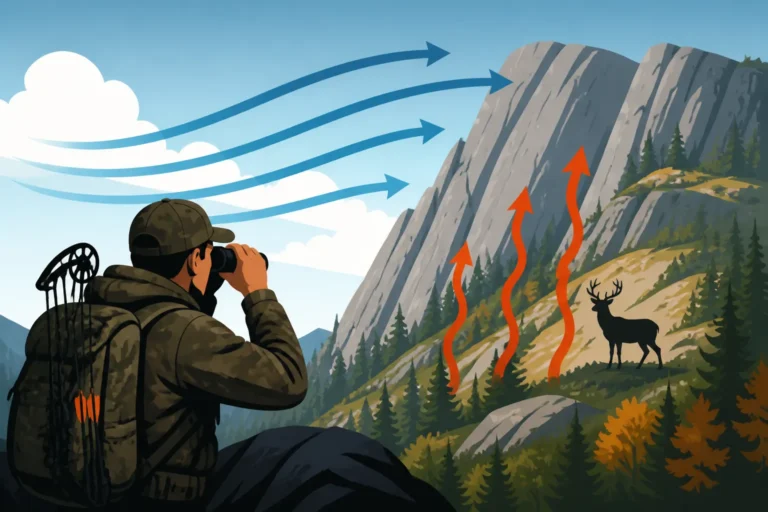
In saddle hunting, the wind is your absolute master. It dictates everything. Deer rely on their nose more than any other sense, so your scent must be out of their anticipated travel path. Before you even think about hanging a stand, spend time observing the wind and thermals at the saddle. In New Hampshire's hilly country, thermals can be tricky. In the morning, as the sun warms the earth, air currents tend to rise, carrying your scent uphill. In the evening, as the air cools, thermals fall, pulling your scent downhill.
Your stand placement needs to account for both the prevailing wind direction and the thermal currents for the time of day you plan to hunt. Ideally, you want to set up so that your scent blows away from where you expect deer to approach and travel through the saddle. This might mean setting up just off to the side of the saddle, slightly downwind, or on an opposing slope where the thermal draw works in your favor. Never compromise on wind. If the wind isn't right for your chosen spot, move or hunt another area. Sometimes, this might mean having a few different stand locations ready for varying wind directions. This consideration is paramount, and it's closely related to how you approach Hanging a Stand on a Granite Ridge to maximize your concealment and scent control.
Entry, Exit, and Minimizing Your Footprint
A perfect stand setup can be ruined by a poor entry or exit strategy. Deer are incredibly sensitive to disturbance, and blundering into your spot can spook every deer in the vicinity, potentially for days. Your entry and exit routes must be as silent and scent-free as possible, and critically, they should avoid known bedding areas or major travel corridors.
Plan your route using your digital mapping app, aiming to approach from a direction that keeps you downwind of the saddle, or at least crosswind, and away from where you anticipate deer will be. Use natural cover, such as thickets or ravines, to conceal your movement. Walk slowly, quietly, and consciously minimize the noise you make. The same careful approach applies to your exit. Don't rush out after dark, making a racket. If possible, wait a bit for things to settle, or plan an exit route that again keeps you out of the deer's primary activity zones. The goal is to leave no trace that you were there, ensuring the deer continue to use the saddle naturally.
Effective Hunting Tactics for Saddles Throughout the Season
Once you've found a productive saddle and nailed down your setup, it's time to consider the best tactics for engaging deer in this unique terrain. Whether you're a patient stand hunter or prefer to be on the move, saddles offer versatility.
Still-Hunting and Ambush Strategies
For many hunters, especially during the peak of the rut, sitting in a treestand overlooking a saddle is the quintessential ambush strategy. Once your stand is strategically placed to account for wind and thermals, it becomes a waiting game. Patience is key. Deer often move through saddles at a walking pace, sometimes pausing to browse or scent-check. Being ready for a shot at any moment is critical. Ensure your shooting lanes are clear and you have a good understanding of distances, especially given the varying terrain.
However, saddles also lend themselves well to still-hunting, especially in areas with good cover leading up to them. Still-Hunting White Mountain National Forest Timber means moving incredibly slowly, taking a few steps, then pausing for several minutes to scan for movement. Approach the saddle from a downwind direction, using the terrain and vegetation for concealment. This method allows you to cover more ground and potentially intercept deer that might be slightly off the main saddle path, or even to discover new travel routes. When still-hunting, always remember to blend in, break up your silhouette, and move with the stealth of a predator.
Leveraging Calls and Decoys in Saddle Terrain
Calling can be incredibly effective in saddles, especially during the pre-rut and rut phases. Rattling antlers can simulate two bucks fighting, often drawing in curious bucks looking for a challenge or an easy doe. Because saddles funnel deer, the sound carries well within the confined space, but also doesn't get lost as easily as it might in wide-open country. Similarly, grunting calls can pique a buck's interest, making him think another deer is in the area. When considering Rattling Volume in Thick Softwood Cover, remember that in the more open granite saddles, a slightly louder, more aggressive sequence might be appropriate, while in denser areas, subtle grunts could be more effective.
The challenging topography of granite country means strategically placing calls and listening intently. Use short, realistic sequences, and always be ready for a quick response. Sometimes, a curious buck will circle downwind to get a sniff, which is why your scent control is still paramount. Decoys, particularly a small doe decoy or a single buck decoy, can also be effective in saddles where visibility allows. A decoy can draw a buck’s attention away from your stand, providing a precious few seconds for you to get into position. Just remember to pack light and choose a decoy that's easy to deploy and retrieve, particularly when you're hiking into rugged terrain. If you're using Grunt Calls in Mature New Hampshire Hardwoods, consider how the sound might carry differently in a rockier, sparser saddle compared to a dense hardwood bottom.
| Season | Primary Deer Movement | Ideal Set-Up Strategy | Recommended Tactics |
|---|---|---|---|
| Early Season | Food-to-bed patterns, consistent | Overlooking primary travel trails | Ambush, quiet still-hunting |
| The Rut | Bucks cruising, scent-checking, chasing | Intercepting cross-ridge buck travel | Ambush, rattling, grunting |
| Late Season | Security bedding, secondary food | Near thick cover, secondary food sources | Ambush, slow still-hunting, thermal advantage |
Seasonal Adaptations for Saddle Hunting in New Hampshire
The beauty of hunting granite ridge saddles is their year-round relevance, but how deer use them changes with the seasons. Adapting your approach to these shifts is key to consistent success in New Hampshire.
Early Season Opportunities and Food Sources
In the early archery season, typically starting in mid-September in New Hampshire, deer are still in their summer patterns, largely driven by food. While acorns and other mast crops are huge attractants, saddles play a role in connecting different feeding areas. If you find a saddle that links a bedding thicket to an active apple orchard or a stand of oak trees dropping acorns, you've hit gold. During this time, deer movements tend to be more predictable, often following a routine between their chosen food source and their secure bedding areas.
Hunting these saddles early on means focusing on those early morning and late evening movements. Deer might be a bit more relaxed, but your scent control is still paramount as the foliage is dense and winds can be variable. Look for saddles with fresh browse, tracks, and droppings indicating consistent use. Understanding how Hunting After a Poor Acorn Year can impact deer movement will be crucial. If the mast crop is poor, deer might travel further or utilize different saddles to access alternative food sources like beech nuts or even certain agricultural fields if you're hunting near the edges of developed areas.
Rut Activity and Late Season Persistence
The rut, generally peaking in early to mid-November in New Hampshire, transforms saddles into major highways for bucks. This is when the "cruising" behavior intensifies. Bucks are covering ground, actively seeking does, and saddles provide the most efficient way to travel across their territory while scent-checking the wind. During this period, you might find bucks moving through saddles at any time of day, not just dawn and dusk. This is your prime window for aggressive tactics like rattling and grunting, as bucks are more prone to investigate. Being set up on a saddle during Hunting the Rut in Early-to-Mid November puts you in the absolute best position to intercept a buck looking for action.
As the season progresses into late fall and early winter, deer shift their focus back to survival: finding adequate food and heavy cover to escape the cold. Saddles still remain relevant, especially those that funnel deer toward winter food sources or between secure bedding areas and deer wintering yards. Deer movement might become more sporadic, often triggered by severe weather or sudden cold snaps. In the late season, patience is even more critical, and a warm, insulated setup is essential for those long, cold sits. Look for saddles that offer the shortest, most protected travel routes between these critical resources, as deer will conserve energy in brutal conditions.
Disclaimer
Hunting is an inherently dangerous activity. Always prioritize safety, adhere to all New Hampshire Fish and Game laws and regulations, and respect private property. The information provided in this guide is for educational purposes only and should not replace proper hunter education and personal judgment. Always know your target and what lies beyond it.