Rattling Volume in Thick Softwood Cover
Trying to call in a cagey New Hampshire buck in thick softwood cover can feel like a game of telephone where you're always losing the signal. You know there are deer tucked into those dense spruce and balsam fir stands, maybe even a bruiser you've been chasing, but how do you make your rattling antlers cut through all that vegetation? The truth is, shouting into a dense thicket with aggressive rattling isn't always the answer; sometimes, a more nuanced approach, mindful of how sound travels, is exactly what's needed to coax a curious buck out of his hiding spot. This guide will walk you through the art and science of adjusting your rattling volume in New Hampshire's notoriously thick softwood, helping you turn those challenging setups into successful encounters.
The Unique Challenge of Sound in Dense Softwood Cover
New Hampshire's landscape is blessed with vast expanses of softwood, from the towering white pines to the impenetrable spruce and fir thickets that dot our mountains and lowlands. While these areas are prime real estate for whitetail deer, offering crucial thermal cover and security, they present a significant acoustic challenge for hunters relying on calls like rattling. Understanding how sound behaves in these environments is the first step to mastering your calling technique.
How Softwood Absorbs and Muffles Sound
Unlike open hardwoods where sound can travel considerable distances, dense softwood acts like a giant sound sponge. The myriad needles, branches, and trunks absorb sound waves, muffling their reach and making them dissipate much faster. Imagine trying to talk to someone across a dense, snow-covered forest versus an open field; the snow, much like thick conifers, deadens the sound. This means that a rattling sequence that might pull a buck from half a mile away in Kansas prairie won't even register 100 yards away in a New Hampshire cedar swamp. The acoustic dampening effect is real, and it often leads hunters to rattle too aggressively, thinking they need more volume to penetrate the cover. However, this can often have the opposite effect, sounding unnatural and potentially alarming wary deer that are closer than you think.
Limited Visibility and Close-Range Encounters
The other side of the thick softwood coin is visibility, or rather, the lack thereof. In many of these areas, you'd be lucky to see more than 30 or 40 yards, sometimes even less. This means that any buck responding to your calls is likely to be approaching from very close quarters, or at least will be in visual range only briefly. When rattling, you're trying to replicate the sounds of two bucks fighting, a natural occurrence that attracts other bucks looking to challenge, assert dominance, or simply investigate. If your rattling sounds like a full-blown brawl happening right on top of a deer that's 50 yards away but can't see anything, it can easily spook them. They expect to see the fight, and when they don't, alarm bells go off. Therefore, the volume and intensity of your rattling need to be scaled down to fit the tight confines and limited sightlines, preparing you for a close-range encounter rather than a long-distance pull.
Adjusting Your Rattling Intensity for Optimal Results
Given the unique properties of softwood, blindly crashing antlers together is a recipe for frustration. The key is to be adaptable, starting subtle and escalating only if the situation warrants it. This often means breaking traditional rattling rules and embracing a more cautious approach tailored to the New Hampshire woods.
Starting Soft and Subtle
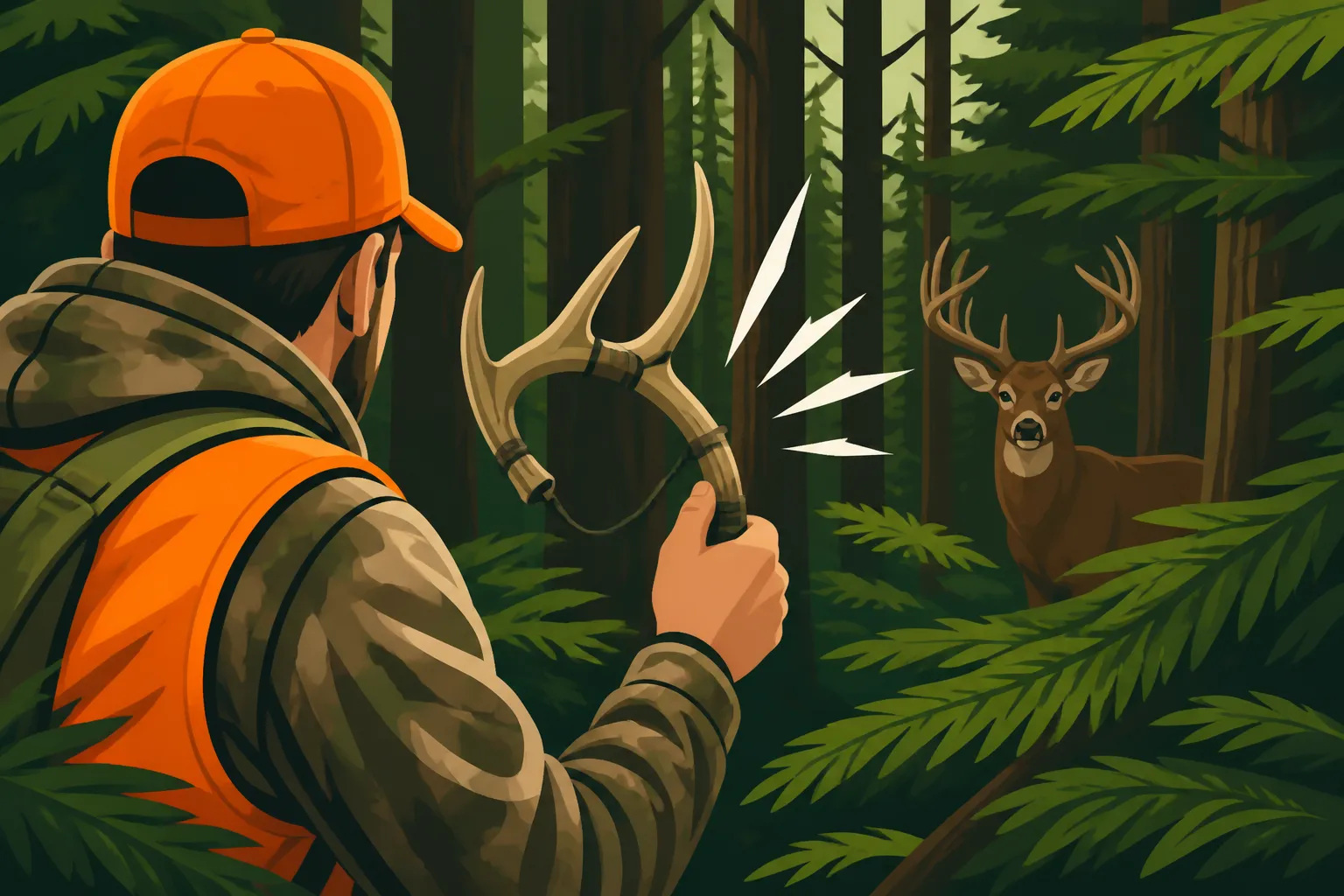
When you first settle into a stand or ground blind in a thick softwood area, resist the urge to immediately go full-throttle with your rattling. Start with a much softer, more tentative sequence. Think of it as light sparring or a brief pushing match between two smaller bucks, rather than a full-blown battle. Gently tickle the antlers together, maybe a few short clacks, followed by some light grinding. The idea is to create just enough sound to pique a nearby buck's interest without alarming him. This low-volume approach can be incredibly effective, especially when you're Hunting a Ridge-Top Saddle for Rutting Bucks or nestled into a dense thermal cover where deer feel secure.
If you don't hear a response after a few minutes, you can gradually increase the volume and duration of your next sequence. This incremental approach allows you to gauge how the sound is carrying and how receptive the deer might be without overdoing it from the start. Remember, a quiet deer is often a close deer, especially in thick stuff. You'll also want to pay attention to factors like Wind and Thermals in Steep Granite Terrain, as even a subtle breeze can carry or distort your sound, making it seem louder or quieter depending on the direction.
Escalating Volume and Aggression Judiciously
There are certainly times when a more aggressive rattling sequence is warranted, even in thick cover. This typically comes into play if you've tried softer approaches without success, or if you've already had a deer respond but it hung up just out of sight. When escalating, don't just bash the antlers together; try to mimic a realistic, intense fight. Incorporate loud crashes, vigorous grinding, and even some snapping of twigs or brush with your foot to simulate movement. However, do this with extreme caution and always be ready for a shot.
The goal isn't to make the loudest noise possible, but to make the most convincing loud noise. A sudden, jarring racket with no follow-up can sound artificial. Instead, try a series of crashes, followed by heavy grinding, then a pause, then another round. This tells a story of an evolving fight. It's also critical to incorporate vocalizations. Bucks often grunt and snort during a fight, so adding in some aggressive grunts, especially with a call like a Flextone Buck Rutter, can add another layer of realism. If you're wondering how to incorporate calls, our guide on Rattling and Grunting New Hampshire Bucks offers more insights into combining techniques. Always be mindful of your immediate surroundings; sometimes the buck is already watching you, just out of sight.
Reading Deer Reactions and Adapting Your Technique
The beauty of rattling is its interactive nature. You're not just broadcasting sound; you're having a conversation with the woods. The deer, through their subtle (or not-so-subtle) reactions, will tell you exactly what you need to do next.
Interpreting Subtle Responses
In thick softwood, deer often don't come crashing in. They might approach cautiously, circling downwind, or simply freezing to listen. Therefore, a huge part of your strategy must involve keen observation. After each rattling sequence, go completely silent and scan every possible approach. Look for flicking ears, a glimpse of an antler tine, or a shift in the brush. Sometimes, all you'll get is a subtle click of a twig or a soft hoof fall. These are gold. These tell you a deer is interested and likely heading your way.
If you hear a subtle response but don't see anything, it's often best to wait patiently. Give the deer time to work its way closer. A nervous deer might hang up 50-70 yards out, trying to pinpoint the source of the sound without exposing itself. If you immediately rattle again, you might confirm its suspicion that something isn't right or give away your exact location prematurely. Sometimes, silence is the most powerful call. Using a mapping app like GoHunt can help you anticipate likely approach routes and focus your scanning efforts on those areas. It's like having an extra set of eyes on the landscape, helping you prepare for a response even if you can't see far.
When to Hold Back, When to Intensify
The decision to hold back or intensify your rattling is crucial. If a deer appears and seems hesitant, often pausing and looking around nervously, continuing to rattle aggressively might push it over the edge and send it fleeing. In this scenario, backing off the volume or even going silent can sometimes convince the deer that the fight is over, making it feel safer to investigate the "aftermath." This is where a soft grunt or a doe bleat can sometimes seal the deal, signaling that the "winner" might be looking for a doe.
Conversely, if a buck responds strongly, perhaps grunting back or showing signs of aggression (ears back, hair bristled), but is still hung up, a short, sharp burst of aggressive rattling and grunting can sometimes be the final push it needs to commit. This simulates the fight flaring up again, potentially triggering its instinct to intervene. This nuanced decision-making comes with experience, but the general rule is: if a deer is approaching, let it come. If it stops or hangs up, try to interpret why and adjust accordingly. Don't be afraid to experiment, but always prioritize realistic sounds over sheer volume in close quarters.
Practical Tips for Rattling in New Hampshire's Thick Stuff
Effective rattling in New Hampshire's dense softwood isn't just about sound; it's about the entire setup and execution. Considering everything from your location to your gear can make a significant difference.
Choosing the Right Stand Location
Your stand or ground blind placement is paramount when rattling in thick cover. You want to set up in a location that offers you the best possible visibility into the densest parts of the cover, while also providing concealment and a clear shooting lane. Think about natural funnels, pinch points, or edges where softwood transitions to more open areas. These are spots where deer naturally travel and might be more likely to expose themselves.
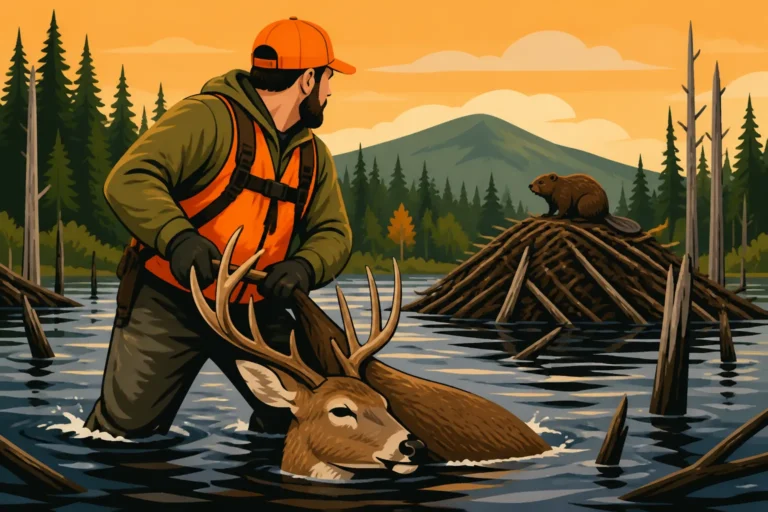
Consider setting up on the edge of a small clearing, a logging road, or a small beaver flowage. A good example might be Hunting a Beaver Flowage Edge, where the natural break in cover can help your sound carry just a little further and give you a visual advantage. Also, position yourself so the wind is in your favor, as deer will almost always try to circle downwind to scent-check the "fight." If you can anticipate their approach, you can set up for a shot before they get your wind. Using GoHunt's detailed maps can help you identify these micro-terrain features and plan your setup with precision, accounting for wind direction and likely deer movement.
| Rattling Technique | Volume | Ideal Scenario in Thick Softwood | Expected Deer Response |
|---|---|---|---|
| Soft Tickle | Low | First attempt, early season, high pressure | Cautious approach, subtle head turn |
| Light Sparring | Medium | No response to soft, during pre-rut | Increased curiosity, slow approach |
| Aggressive Brawl | High | Peak rut, buck hung up, no other response | Strong curiosity, aggressive approach (be ready!) |
| Intermittent Grind | Low/Medium | During a pause, after a subtle response | Pinpointing sound, cautious advance |
Mimicking Natural Fight Dynamics
Beyond just rattling antlers, think about the entire scene you're trying to create. A real deer fight isn't just clashing antlers. There's stomping, grunting, breaking brush, and periods of intense action followed by lulls. Try to incorporate these elements. Use real antlers or a high-quality rattling bag that can produce a variety of sounds, from light tickles to heavy crashes. Brands like Knight & Hale or Primos make excellent rattling calls that can give you this versatility.
After an aggressive sequence, don't be afraid to scrape the ground with your foot or snap a few small branches. This adds to the realism of a physical struggle. Follow up with some grunts or even a snort-wheeze if you're trying to challenge a dominant buck. Remember, the goal is to make a curious buck believe there's a real interaction happening in his backyard. If you’re really trying to replicate a realistic fight, consider our in-depth guide on New Hampshire's November Firearms Deer Season, which covers calling tactics specific to the intense rut period when bucks are most active.
Patience and Preparedness are Key
Finally, and perhaps most importantly, patience is your greatest ally when rattling in thick New Hampshire softwood. Bucks rarely come charging in on a string in these environments. They will often approach slowly, stop, listen, and try to pinpoint the source of the sound. This requires you to be absolutely still and ready for a shot at all times.
After each rattling sequence, put your antlers down, pick up your weapon, and scan intently. Give it at least 5-10 minutes of complete silence before considering another sequence. You might be surprised how often a buck shows up well after you thought nothing was going to happen. Being constantly vigilant and prepared for a close shot in limited visibility is critical. It might also be beneficial to check out New Hampshire Deer Population Estimate to get a sense of deer density in your specific WMU, which can inform how long you might need to wait for a response in certain areas. Remember, your objective is not just to make noise, but to draw in a wary animal for a shot, and that demands patience above all else.
Disclaimer
Hunting is a regulated activity. Always consult the most current New Hampshire Fish and Game Department regulations and laws before engaging in any hunting activities. Ensure you have the necessary licenses and permits and adhere to all safety guidelines. This guide is for informational purposes only and does not supersede official regulations.