Reading New Hampshire Mud for Fresh Deer Movement
Let's be honest, few things are as frustrating as walking through promising deer habitat, only to question if you're truly in an active area or just walking through old, cold sign. Especially here in New Hampshire, where the terrain can shift from granite ledges to swampy lowlands in a matter of yards, knowing how to interpret the ground beneath your feet can feel like a mystical art. This guide is all about demystifying that art, focusing specifically on how to read mud for clear, undeniable evidence of fresh deer movement, helping you pinpoint exactly where those elusive whitetails are traveling.
The Unsung Hero of Deer Scouting: Why Mud is Your Best Friend
Many hunters shy away from muddy conditions, seeing them as a nuisance that makes walking difficult and gear dirty. But I'm here to tell you that mud, particularly the soft, pliable variety you find in low spots, beaver flowages, and along old logging roads, is arguably one of the most valuable scouting tools Mother Nature provides. Unlike hard-packed earth, pine needles, or crunchy leaves that offer little to no impression, mud captures a detailed story of every animal that passes through. It's a natural canvas, waiting for you to interpret the masterpiece of deer sign.
Beyond Just Tracks: Mud as a Data Source
When we talk about "reading mud," it's not just about seeing a hoof print. Mud holds an incredible amount of information beyond the obvious. It can tell you the size of the deer, the direction it was traveling, and even roughly how fast it was moving. More importantly, the condition of the mud around the track offers critical clues about how recently the deer passed. Was it a dry crust that's now broken? Or is it still glistening wet from a track made just minutes ago? These seemingly small details make all the difference in determining whether you're looking at sign from yesterday or an hour ago. Learning to discern these nuances can dramatically increase your scouting efficiency and put you in the right place at the right time.
The New Hampshire Terrain Advantage
New Hampshire's diverse landscape, from the White Mountain National Forest to the southern farmlands, provides ample opportunities for mud-based scouting. We have countless beaver swamps, creek bottoms, seeps, and wetland edges that naturally retain moisture, creating perfect tracking conditions. Think about those low-lying areas after a good rain, or the perpetually damp banks of a slow-moving river. These aren't just obstacles; they are prime locations to identify critical travel corridors. You might find a well-worn deer trail crossing a muddy stretch, indicating a frequently used path between bedding and feeding areas. Understanding where these muddy pockets exist within your hunting parcel is the first step to unlocking their secrets. They can reveal patterns of movement that might be completely invisible on drier ground, especially during periods of drought or in areas with hard, rocky soil. It's truly a unique advantage that New Hampshire's varied terrain offers the diligent hunter.
Decoding Fresh Deer Tracks in the Muck
Distinguishing fresh tracks from old ones is the absolute cornerstone of effective mud-based scouting. If you can't tell if a track was made an hour ago or yesterday morning, you're essentially just looking at historical data, not real-time intelligence. This skill takes practice, but once you learn what to look for, it becomes second nature and an indispensable part of your scouting arsenal.
The Anatomy of a Hoof Print: What to Look For
When examining a deer track in mud, don't just glance at the shape. Get down low, even on your hands and knees if necessary, and truly inspect it. A fresh deer track will have sharp, crisp edges. Think about pressing your thumb into soft clay; the edges are clear and defined. If the track is older, those edges will start to slump, round off, or become less distinct as the mud dries and settles. Look closely at any displaced mud: a fresh track might have small clods of mud still clinging to the edges or pushed up slightly, retaining their shape. Pay attention to the depth – a deeper track often indicates a heavier deer or softer mud, but it’s the crispness of the impression that signals freshness. You're looking for signs that the mud was disturbed very recently, still holding its fresh form.
Another critical detail is water. If it's been raining, and you find a track with clear water still sitting in the bottom, that track is relatively fresh. If the water has already seeped away or evaporated, it's older. In very wet mud, a fresh track might even still be "glistening" from the moisture, a subtle shine that disappears as the surface begins to dry. Also, check for any debris. A fresh track might have a tiny bit of leaf litter or a twig pushed into the mud by the hoof itself, still sitting firmly in its new position. If you see something that looks like it's been sitting in the track for a while, perhaps even slightly caked with dry mud, it's a good indication of an older track.
Distinguishing Fresh from Old: The Tell-Tale Signs
Beyond the crispness of the edges, several other factors help you determine the age of a track. One of the biggest indicators is the texture and moisture of the exposed mud. If the mud inside the track is still wet, perhaps even shiny, and matches the moisture content of the surrounding undisturbed mud, it's incredibly fresh. As mud dries, it loses its sheen, starts to lighten in color, and may develop small cracks on its surface, especially around the edges. A crust might form on top of the track, even if the mud below is still damp. Breaking this crust indicates an older track.
Consider also the presence of insects or small debris. Fresh tracks won't have spiders spinning webs across them or leaves perfectly settled in their bottoms. If you see these, the track has been there for a while. Think about how long it would take for a spider to build a web across a two-inch gap – it's not going to happen in 15 minutes! Wind and rain also play a huge role. Heavy rain can wash out older tracks or fill them with water, making it harder to judge. However, after a hard rain, any new tracks will stand out in stark contrast, as they'll be perfectly formed in the now smoothed-out mud. This is often the best time to scout muddy areas, as all the "old noise" has been cleared away. This kind of real-time intelligence is invaluable, and resources like GoHunt can help you overlay weather patterns with potential deer activity to maximize your scouting efforts.
Interpreting the Mud's Narrative: More Than Just Footprints
Once you've confidently identified fresh deer tracks, your job isn't done. The real art lies in interpreting what those tracks tell you about the deer's behavior, its intentions, and its likely destination. This is where you move from merely observing to truly understanding the animal's movements.
Speed, Direction, and Intent: Reading the Stride
The stride of a deer in mud can reveal a lot about its state of mind. A deer that is walking calmly, perhaps browsing, will have an even, deliberate stride. The front and hind hooves will often register separately, or the hind foot might slightly overlap the front print. The toes of the hoof will point generally in the direction of travel. This "normal" walk indicates a relaxed deer, potentially feeding or heading to a bedding area without alarm.
However, if you see tracks that are widely spaced, perhaps with the hind foot landing well ahead of the front print (called "overstriding"), and the mud is thrown forward or to the sides, you're looking at a deer that was moving quickly – a trot or even a full run. The hooves might be splayed outwards, and the prints will be deeper, especially at the front edge where the hoof dug in. This usually means the deer was alarmed, spooked by something, or perhaps engaging in rutting behavior. If multiple tracks show this kind of hurried movement, it suggests an area of high pressure or a recent disturbance. Conversely, short, shuffling steps might indicate a deer that was very cautious, approaching something slowly, or even an injured animal. Understanding these subtle differences can help you determine if an area is being used as a quiet bedding zone or a hurried escape route.
Rubs, Scrapes, and Droppings: The Whole Picture
While tracks are paramount, mud often reveals other crucial signs alongside them. Look for fresh rubs on small trees near muddy trails, especially in late summer and fall. If you find a fresh rub with fresh tracks nearby, you know a buck is actively marking his territory right then. Similarly, fresh scrapes in mud, often identified by the pawed-out earth and a strong scent, are absolute gold. The mud here might be especially churned and wet, indicating very recent activity. Bucks frequently make scrapes in damp areas, and the mud preserves the evidence perfectly. You can learn more about Scrape Lines Along a Logging Road as these are often prime spots where deer leave behind these valuable clues.
Don't forget the droppings! Fresh deer droppings in mud will still be soft, moist, and dark. As they age, they dry out, become harder, lighter in color, and may even be covered with a slight film or mold. Finding fresh droppings right next to fresh tracks, especially combined with fresh rubs or scrapes, paints a compelling picture of current deer activity. This triangulation of sign in a muddy area is a major indicator that you're in a high-traffic zone. You can also look for other disturbances, such as where a deer might have paused to browse on a low bush, leaving a broken twig, or even where a bed might be pressed into slightly damp ground nearby, though these are less likely to persist in truly wet mud.
Advanced Mud Reading Strategies for New Hampshire Hunters
Becoming truly proficient at reading mud takes time and observation, but there are some advanced strategies that can elevate your game, particularly when applied to the unique characteristics of New Hampshire's hunting seasons and habitats.
Seasonal Shifts and Habitat Influences
The meaning of a muddy track can change with the seasons. In early fall, fresh tracks in a damp creek bottom might simply indicate deer moving to a water source or a feeding area. Come late October and early November, When the New Hampshire Rut Peaks, those same muddy tracks become even more critical. A large, solitary set of fresh buck tracks leading purposefully from a thicket towards an open field, or following a doe's tracks, is a red-hot sign of a buck on the prowl. In colder, late-season conditions, deer will often seek out Late-Season Food Sources for New Hampshire Whitetails in low, sheltered areas, which often happen to be muddy. Tracks around these food sources in December can pinpoint crucial feeding patterns when other signs are sparse.
Habitat also profoundly influences where you'll find the most telling mud sign. In the thick, coniferous swamps common in the North Country, deer trails can be incredibly subtle on dry ground. But when those trails cross a muddy seep or a small bog, suddenly the deer's movements become crystal clear. Similarly, along the edges of agricultural fields, which are often bordered by ditch lines or wet woods, tracks in the mud can show you exactly where deer are entering and exiting, helping you plan your ambush for Hunting a Standing Corn Field for Deer or Hunting a Green Field Planted for Deer. Understanding these seasonal and habitat-specific nuances is key to truly mastering mud-based scouting.
Leveraging Technology with Traditional Skills
While reading mud is a traditional, boots-on-the-ground skill, modern technology can complement it beautifully. Mapping applications like GoHunt, for example, allow you to overlay topography with satellite imagery, helping you identify low-lying areas, creek beds, and potential beaver flowages that are likely to be muddy and hold tracks. Before you even set foot in the woods, you can mark these potential "track traps" on your map. This greatly enhances your efficiency, ensuring you spend your time in the most promising areas. You can use these apps to analyze historical weather data to predict when certain areas might be most receptive to holding tracks after a rain.
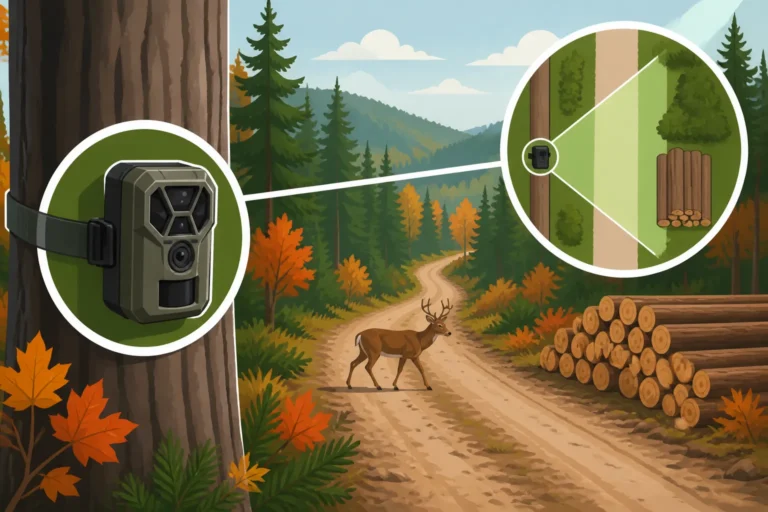
Furthermore, integrating trail cameras, especially cellular models, near known muddy crossings can provide immediate confirmation of deer activity. Imagine scouting a muddy funnel, finding fresh tracks, and then getting a real-time notification on your phone from a camera overlooking that very spot. This combination of traditional tracking acumen and modern technology is a powerful force multiplier. You might use the Scouting With the New Hampshire Fish and Game App to check WMU boundaries or public land access, then use GoHunt to zoom in on specific terrain features, and finally, get on the ground to put your mud-reading skills to the test. This blend of tools gives you the most comprehensive picture of deer movement possible. Don't forget, even when using technology, the ultimate verification comes from what you see and interpret on the forest floor.
Understanding Deer Movement Patterns Through Mud
Mud isn't just about individual tracks; it's about the patterns those tracks form over time. When you consistently find fresh tracks in the same muddy areas, you've identified a key travel corridor. This could be a route from a bedding area to a feeding area, a funnel between two woodlots, or a crossing point over a stream.
Identifying Key Travel Corridors
Deer are creatures of habit, and they will often use the path of least resistance or the most secure route between different parts of their habitat. Muddy areas, especially those on ridge-top saddles, along creek bottoms, or at the edge of beaver ponds, often serve as natural bottlenecks that concentrate deer movement. If you find multiple fresh tracks, indicating both does and bucks, consistently using a particular muddy strip, you've likely found a major travel corridor. Consider this a prime location for a treestand or ground blind setup. Observing how tracks enter and exit these areas can also reveal staging zones where deer might gather before moving into a field, or escape routes they use when pressured. Learning to identify these patterns will directly influence your Hanging a Stand on a Granite Ridge or Using a Ground Blind on Public Land.
The Impact of Weather and Pressure on Mud Tracks
Weather, particularly rain and snow, significantly impacts how long tracks remain visible and how deer use muddy areas. A heavy rain can wash out older tracks, leaving a clean slate for new ones to be easily identified. This makes the day after a rainstorm one of the best times to scout muddy areas. Conversely, a prolonged dry spell will reduce the number of areas suitable for tracking. Pressure from other hunters also plays a role. If you find fresh tracks indicating hurried movement or an abundance of tracks avoiding a particular area, it might suggest that area is seeing heavy hunting pressure. Deer will adjust their travel routes to avoid human disturbance, often pushing them into thicker, more secluded (and often muddier) cover. Paying attention to these subtle clues in the mud can help you find those overlooked pockets where deer feel safe.
Crafting Your Scouting Strategy Around Mud
Incorporating mud-based scouting into your overall hunting strategy can provide a significant advantage, particularly in areas where other sign might be scarce or difficult to read. It's about being observant and patient, letting the landscape tell you its story.
Best Times and Places to Look for Mud Sign
The absolute best times to scout for mud sign are after a rain event, when older tracks have been washed away and new ones are crisp and clear. Early morning, after a night of deer activity, is also prime. Focus your efforts on low-lying areas, creek bottoms, beaver pond edges, and wet logging roads. These are the places where mud is most likely to persist and offer the clearest impressions. River bottoms, especially along the Connecticut River, often have stretches of muddy banks that are heavily used by deer moving along the water's edge. Similarly, the edges of swamps and small clearings in the White Mountain region will often contain pockets of moist earth perfect for leaving behind a track. Don't overlook old logging landings or fire breaks that often have depressions that collect water and turn muddy.
Consider also where deer naturally funnel. A narrow strip of woods between a field and a swamp, or a low saddle connecting two higher ridges, are excellent places to check. Deer naturally gravitate to these areas, and if they're muddy, they'll leave a detailed account of their passage. Look for fresh tracks coming from bedding areas towards feeding sites, or along routes deer might use to access water sources. When you're Hunting a Beaver Flowage Edge, the muddy banks will be your best friend for identifying where deer are coming and going.
Integrating Mud Sign into Your Hunt Plan
Once you've identified consistent fresh mud sign, it's time to integrate that intelligence into your hunt plan. If you're seeing fresh tracks indicating heavy nocturnal movement between a bedding area and a feeding area, you might consider setting up a stand along that muddy corridor for an evening hunt. If the tracks show daytime movement in a specific thicket, that could be a prime still-hunting or ground blind location. Use the direction and pace of the tracks to predict where a deer might be heading and at what time of day. This is where apps like GoHunt can help you mark these locations on your map, allowing you to build a comprehensive plan that incorporates these crucial mud-based observations. By combining your knowledge of Reading New Hampshire Mud for Fresh Deer Movement with detailed mapping, you're not just hoping for a deer; you're actively hunting smarter, leveraging every piece of information the environment offers.
| Sign Element | What to Look For (Fresh) | What to Look For (Old) | Interpretation |
|---|---|---|---|
| Track Edges | Crisp, sharp, well-defined | Rounded, slumped, less distinct | Sharp = Recent, Rounded = Older |
| Mud Condition | Wet, shiny, matches surrounding moisture | Dry, crusty, cracked, lighter color | Wet = Very Recent, Dry = Older |
| Displaced Mud | Small clods still clinging, retaining shape | Clods dry, caked, or washed away | Fresh disturbance vs. settled over time |
| Water in Print | Clear water sitting in bottom (after rain) | Water seeped away or evaporated | Present water = Very recent, Absent water = Older |
| Debris | Leaves/twigs pressed into mud by hoof | Leaves/twigs settled in print, possibly dry | Fresh impact vs. natural accumulation |
| Overlapping Prints | Hind foot lands directly on or slightly ahead of front print (often) | Less consistent overlap, more distinct separation | Calm walk/trot vs. browsing/paused movement |
| Associated Sign | Soft, moist droppings; fresh rubs/scrapes nearby | Dry, hard droppings; old rubs/scrapes | Active area vs. historical activity |
Disclaimer
Hunting is an inherently dangerous activity. Always prioritize safety, understand and adhere to all New Hampshire Fish and Game laws and regulations, and respect private property. The information provided here is for educational purposes and should be combined with proper training and hands-on experience. Conditions in the field can change rapidly, and personal judgment is always required.