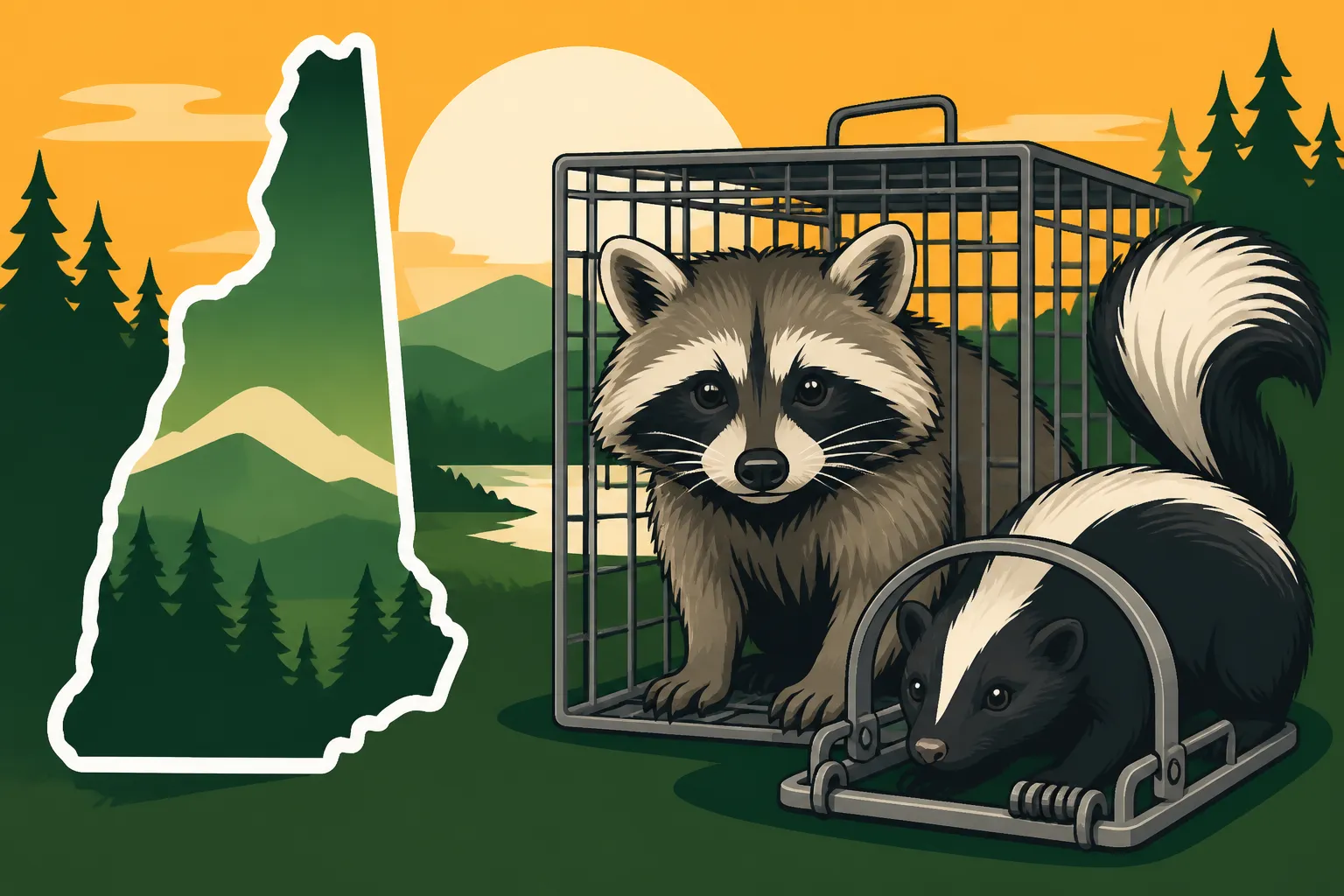
New Hampshire Raccoon and Skunk Trapping
There's nothing quite like the frustration of waking up to overturned trash cans, a decimated garden, or the tell-tale pungent aroma that signals an unwelcome visitor has made themselves at home a little too close to yours. Raccoons and skunks, as charming as they might seem from a distance, can become genuine nuisances when they decide your property offers the perfect buffet or den site. If you've reached your wit's end and are considering trapping, this guide is here to walk you through the specifics of New Hampshire raccoon and skunk trapping, offering practical advice and legal insights to help you manage these clever critters responsibly.
Understanding Raccoon and Skunk Behavior in New Hampshire
Before you even think about setting a trap, it's incredibly helpful to get into the mind of your target animal. Knowing their routines, what drives them, and where they prefer to spend their time can significantly increase your success and save you a lot of wasted effort. These aren't just generic furry critters; they have distinct habits that we can use to our advantage.
Raccoon Habits and Habitats
Raccoons are truly fascinating, intelligent creatures, known for their masked faces and dexterous paws. Here in New Hampshire, they thrive in a variety of environments, from the deep woods to suburban backyards, often preferring areas near water sources like rivers, streams, and even damp marshlands. They are opportunistic omnivores, meaning they'll eat just about anything – berries, nuts, insects, small rodents, bird eggs, and, notoriously, whatever delectable scraps they can pilfer from your garbage.
They are primarily nocturnal, meaning they do most of their foraging and traveling under the cover of darkness. This is a crucial detail for trappers, as you'll want to place and check your traps accordingly. During the day, they typically den in hollow trees, rock crevices, abandoned buildings, or even in chimneys and attics if they find an easy entry point. Keeping an eye out for these potential den sites, or obvious travel lanes near water or food sources, can give you a real edge in predicting their movements.
One of their less endearing habits, when they become a nuisance, is their incredible persistence and problem-solving abilities. A simple bungee cord won't deter a determined raccoon from getting into a trash can, and they can cause significant damage trying to gain access to sheds, garages, or even your home's crawl space. Understanding this drive is key to effective trapping, ensuring your methods are robust enough to work against their natural cleverness.
Skunk Habits and Habitats
Skunks, while equally common across New Hampshire, operate a little differently. They are generally crepuscular, meaning they are most active during dawn and dusk, though you might spot them foraging at night as well. Their diet is similar to raccoons – a broad range of insects, grubs, small rodents, eggs, and plant material, making your garden a prime target for their digging. They are often less bold than raccoons, sticking closer to cover.
When it comes to dens, skunks prefer underground burrows, often digging their own or taking over abandoned ones made by other animals like woodchucks. You'll find them under porches, sheds, woodpiles, or even in the foundations of buildings. They're not great climbers, unlike raccoons, so their access points tend to be at ground level. This difference in mobility dictates how you might approach trapping them versus their masked counterparts.
Of course, the most notable and feared aspect of skunks is their potent defensive spray. This oily, musky liquid is highly irritating and can travel quite a distance, making close encounters something to avoid. When approaching a potentially trapped skunk, extreme caution is warranted, and understanding how they give warning signals (foot stomping, tail raising) can help you avoid a truly malodorous situation. Their relatively poor eyesight also plays a role in how they perceive threats and navigate their world.
Nuisance Issues They Create
The reasons people consider trapping raccoons and skunks are usually quite personal and often infuriating. Raccoons are notorious for making a mess of trash cans, scattering garbage far and wide, and then doing it again the next night. Beyond the mess, they can cause structural damage by tearing shingles, soffits, or vents to access attics or crawl spaces, where they might then set up a den and even raise young. This can lead to insulation damage, unpleasant odors, and potential health risks.
Skunks, while generally less destructive to structures, are champions of lawn and garden destruction. Their relentless digging for grubs and insects can leave your yard looking like a minefield. The most obvious problem, of course, is the spray. Pets are frequent victims, leading to expensive and smelly baths, and a direct spray can cause temporary blindness and nausea in humans. They can also carry diseases like rabies and distemper, posing a health risk to both pets and people. Managing these issues is not just about convenience but also about protecting your property and family.
Legal Considerations for Trapping in New Hampshire
Trapping isn't something you can just jump into without knowing the rules, especially here in New Hampshire. Our state has specific regulations designed to ensure furbearer populations are managed sustainably and that trapping is done humanely and safely. Ignorance of the law is never an excuse, so taking the time to understand the legal framework is essential before you even think about setting a trap.
Licensing and Regulations for Furbearers
First and foremost, if you plan to trap furbearers in New Hampshire, you're going to need a license. This isn't optional. Our state's Fish and Game Department requires all individuals, with very few exceptions for specific nuisance wildlife situations on your own property, to possess a valid trapping license. This license signifies that you've met the educational requirements, often including a trapper education course, which covers ethical trapping practices, species identification, and legal responsibilities.
The trapping license isn't a free pass to trap anything, anywhere, anytime. It comes with a set of regulations that dictate everything from the types of traps you can use to how often you must check them. For example, specific trap sizes and styles might be prohibited in certain areas, or certain setback distances from homes or public trails might be enforced. It’s crucial to understand that trapping laws can be quite detailed, and what applies to a bobcat might not apply to a raccoon or skunk. Make sure you read the current New Hampshire hunting and trapping digest carefully. This is a situation where using resources like GoHunt's mapping features can be incredibly helpful for identifying public land boundaries and understanding general land use regulations before you step foot anywhere, although specific trapping regulations are best found directly from NH Fish & Game.
Season Dates and Bag Limits
Unlike some game species that have rigid, statewide season dates and strict bag limits, the regulations for furbearers like raccoons and skunks can be a bit more nuanced, especially when dealing with nuisance animals. While there are general furbearer seasons in New Hampshire, often stretching through the fall and winter, these are primarily for those looking to harvest furs. You'll find these detailed in the annual hunting and trapping digest published by New Hampshire Fish and Game. For a broad overview, you might want to review information on Trapping New Hampshire Furbearers.
However, if you're dealing with an immediate nuisance issue on your own property outside of these designated seasons, there are usually provisions that allow landowners to remove wildlife causing damage. This often involves specific types of traps (typically live traps) and may come with requirements for notifying Fish and Game. It's incredibly important to confirm these details for your specific situation. You can't just take matters into your own hands without understanding the proper legal channels, especially if you plan to dispatch the animal rather than relocate it. Always check the current regulations, as they can and do change.
Permissible Trapping Methods and Equipment
New Hampshire is particular about the types of traps you can use and how they are deployed. For raccoons and skunks, you're generally looking at two main categories: live traps (often called cage traps or box traps) and body-gripping traps (like Conibear-style traps) or foothold traps. Cable restraints are also an option for some furbearers, but their use is highly regulated regarding placement and situation.
Live traps are often the preferred method for nuisance animals, especially skunks, as they allow for relocation (if legal) or a more controlled dispatch without physical harm to the animal in the trap. These traps typically have a door that springs shut once the animal enters to get bait. Body-gripping traps are designed for a quick, humane kill and are usually placed in cubbies or water sets to target specific animals and reduce the chances of catching non-target species. Foothold traps are also used but require specific training for proper deployment and checking to ensure animal welfare.
It’s crucial to understand that there are legal size limits for many of these traps, and certain types might be entirely prohibited in specific situations or WMUs. For instance, large body-gripping traps might be restricted near residential areas or public trails. This is where your trapper education truly comes into play, ensuring you select the correct, legal equipment and deploy it in a manner that is both effective and compliant with state law. Always verify the maximum jaw spread or trap dimensions permitted for your target species and location.
Effective Trapping Techniques for Raccoons and Skunks
Once you understand the animals and the laws, it's time to talk tactics. Trapping isn't just about throwing a trap out and hoping for the best. It's a blend of patience, observation, and strategic placement, all designed to make your trap irresistible to your target and safe for other creatures.
Choosing the Right Trap
The choice between a live trap and a body-gripping trap (or foothold, if you're experienced) largely depends on your objective and comfort level, as well as the specific nuisance situation. For most homeowners dealing with a nuisance raccoon or skunk, a sturdy live trap is the go-to. These are essentially wire cages with a trip mechanism that closes a door once the animal enters. They are excellent because they allow you to capture the animal unharmed, which is essential if you intend to relocate it (again, check legality first) or simply want to avoid the mess of a direct kill on your property. For skunks, a large, solid-sided live trap can help contain some of the spray if they do decide to let loose.
For more experienced trappers, or for situations where a quick, humane dispatch is the goal and it's legal, body-gripping traps can be highly effective. These are often set in wooden boxes or cubbies, which are designed to funnel the animal into the trap and protect non-target species. The key is selecting the correct size. Too small, and you might injure the animal without dispatching it; too large, and you risk catching unintended wildlife. Understanding New Hampshire Crossbow Equipment Requirements or other specialized gear for hunting can give you a sense of how particular regulations can be for equipment, and trapping gear is no different. Always verify that your chosen trap is legal for the species and location you intend to trap.
Bait and Lure Strategies
This is where you truly tap into the animal's natural desires. Raccoons are highly attracted to sweet, strong-smelling foods. Marshmallows, canned cat food (especially fish-flavored), fruit, and even sweet cereals can work wonders. Many trappers also use commercial raccoon lures that mimic their natural food sources or territorial markers. Place the bait well inside the trap, often past the trip plate, to ensure the animal fully enters and triggers the mechanism. You can also dribble a trail of juice or syrup leading into the trap to entice them further.
Skunks are also omnivores but often show a stronger preference for insects and grubs. Fried chicken, peanut butter, or cat food can be highly effective. For skunks, some trappers also recommend using a small piece of bacon or a dead fish. The goal is a bait that is aromatic and appealing but not so enticing that they can grab it without entering the trap fully. For both animals, changing up your bait if you're not having success can make a difference. Sometimes, a subtle change is all it takes to pique their interest. Consider the time of year and what natural food sources are available; a hungry animal will be less picky.
Set Location and Safety
Where you place your trap is almost as important as the bait you use. For raccoons, look for high-traffic areas: along fence lines, near overturned trash cans, next to outbuildings they've been trying to enter, or along the edges of water sources. Observing their tracks in soft mud or snow, or noting where damage has occurred, can pinpoint active travel routes. This is where scouting the general area and understanding potential game trails can be very useful, similar to how you might scout for deer by Reading Aerial Photos for North Country Deer.
For skunks, focus on areas near potential den sites: under sheds, porches, or dense brush piles. They tend to stick to cover, so a trap placed out in the open field is less likely to be successful. Position the trap on a flat, stable surface so it doesn't wobble when an animal enters, which could spook them. Critically, always place traps where non-target animals (especially domestic pets) are unlikely to encounter them. If you’re trapping on public land, which generally falls under New Hampshire Wildlife Management Areas or other similar designations, ensure you are well away from hiking trails or popular dog walking spots. Daily checks are mandatory to ensure the welfare of any captured animal and to avoid unnecessary suffering or exposure to elements.
Handling Captured Animals and Post-Capture Management
The moment you see that trap door closed is when the real challenge often begins. Handling a live, captured animal, particularly a wild one, requires a calm demeanor, careful planning, and a strong commitment to safety – for yourself, for the animal, and for others.
Approaching a Trapped Raccoon or Skunk
This is not the time for bravado. Approach the trap slowly and quietly, especially if it's a skunk. Many trappers recommend covering the trap with a heavy blanket or tarp before getting too close to a skunk. This often calms the animal and can prevent them from spraying, as they primarily spray at what they can see as a threat. With a raccoon, you might still want a cover, as they can be quite agitated and aggressive when cornered. Never try to stick your fingers, or any part of your body, into the trap. Raccoons have sharp teeth and claws, and they will use them.
Safety gear is non-negotiable. Wear thick gloves, long sleeves, and possibly eye protection. Keep children and pets well away from the trapped animal. If you've caught a skunk, and it does spray, know that the odor can linger. Be prepared with a mixture of hydrogen peroxide, baking soda, and dish soap if a pet or person gets sprayed. Dealing with this calmly is paramount. Remember, these are wild animals acting on instinct, and your goal is to manage the situation safely and efficiently.
Relocation vs. Dispatch
This is a critical legal and ethical consideration in New Hampshire. Generally, relocating nuisance wildlife is not permitted without explicit permission from Fish and Game, and even then, it's often discouraged. Why? Because relocating an animal can spread disease to new areas, introduce competition for resources, or simply move the problem to someone else's property. The stress of relocation also significantly reduces the animal's chances of survival in an unfamiliar territory. For example, the state has strict New Hampshire's CWD Prevention Rules for deer, and similar principles apply to preventing disease spread in other wildlife.
Therefore, for most nuisance situations, if relocation is not an option, humane dispatch is often the legal and most ethical course of action. This is a serious responsibility and should be performed humanely and quickly. Methods vary, but a small-caliber firearm is often used by those who are proficient and comfortable with it. If you're not comfortable with dispatch, contacting a licensed wildlife control operator is your best option. They are trained and equipped to handle these situations legally and humanely. Never abandon a trapped animal.
Carcass Disposal and Fur Handling
If you've had to dispatch an animal, proper carcass disposal is crucial. You can't just throw it in the woods or leave it by the side of the road. Carcasses can spread disease and attract other scavengers, creating new problems. Burying the animal deeply (at least 2-3 feet) on your property, away from water sources, is generally a good option if permitted by local ordinances. Alternatively, some municipal transfer stations may accept animal carcasses, but you should always call ahead to confirm.
For trappers who are interested in the fur, raccoons and skunks both yield valuable pelts, especially when harvested during the colder months when their fur is prime. If you intend to harvest the fur, learning proper skinning and fleshing techniques is essential. This is part of the broader education covered in a trapper education course, and there are many resources available for learning these skills. The raw fur market fluctuates, but for those dedicated to the craft, it can be a rewarding aspect of furbearer management. Even if you're not interested in the fur, understanding the value of a furbearer and respecting the animal is part of being a responsible trapper.
| Feature | Raccoon Trapping Considerations | Skunk Trapping Considerations |
|---|---|---|
| Primary Activity | Nocturnal | Crepuscular (dawn/dusk), sometimes nocturnal |
| Preferred Habitat | Near water, varied terrain, suburban areas, hollow trees, attics | Ground burrows, under sheds/porches, dense cover |
| Bait Preference | Sweet, strong-smelling (marshmallows, cat food, fruit, syrup) | Aromatic (fried chicken, peanut butter, dead fish, grubs) |
| Trap Type | Sturdy live trap (cage), body-gripping traps in cubbies | Solid-sided live trap (to contain spray), body-gripping traps |
| Set Location | Travel routes, fence lines, garbage areas, building entry points | Near den sites, under structures, along cover |
| Handling | Can be aggressive, sharp claws/teeth, wear heavy gloves | Spray defense, approach slowly with cover (tarp/blanket) |
| Relocation | Generally not permitted by law without specific authorization | Generally not permitted by law without specific authorization |
| Nuisance Issues | Trash mess, structural damage, disease risk | Lawn/garden digging, spray risk, disease risk, pet interactions |
Disclaimer
This article is for general informational purposes only and does not constitute professional advice. Laws, prices and regulations vary by location and change over time. Consult a qualified professional for guidance on your specific situation.