New Hampshire Bear Harvest Numbers by Method
New Hampshire bear harvest statistics broken down by hunting methods including baiting, hounds, and still-hunting to manage population growth.
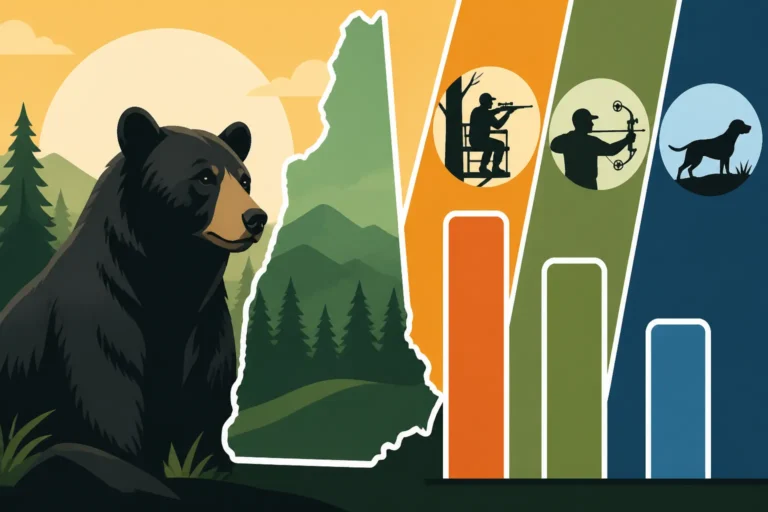
New Hampshire bear harvest statistics broken down by hunting methods including baiting, hounds, and still-hunting to manage population growth.
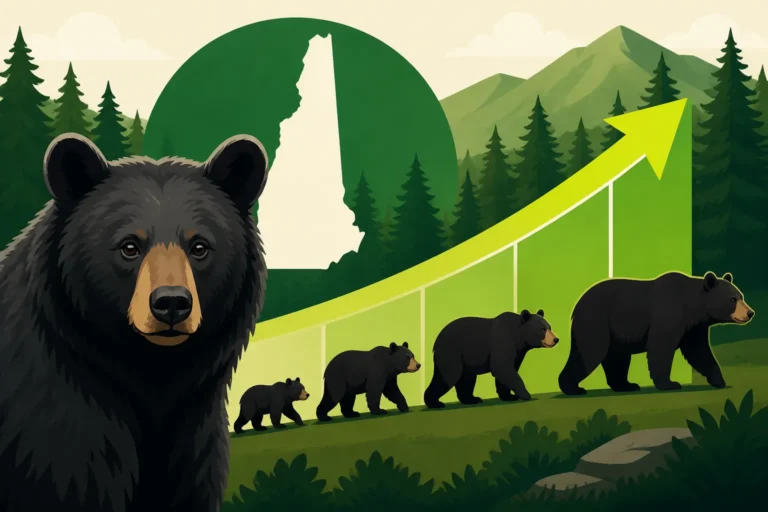
New Hampshire black bear population growth details the historical context, ecological factors, and wildlife management driving their success.

New Hampshire black bear population estimates, historical growth factors, and seasonal food sources explained by wildlife management data.
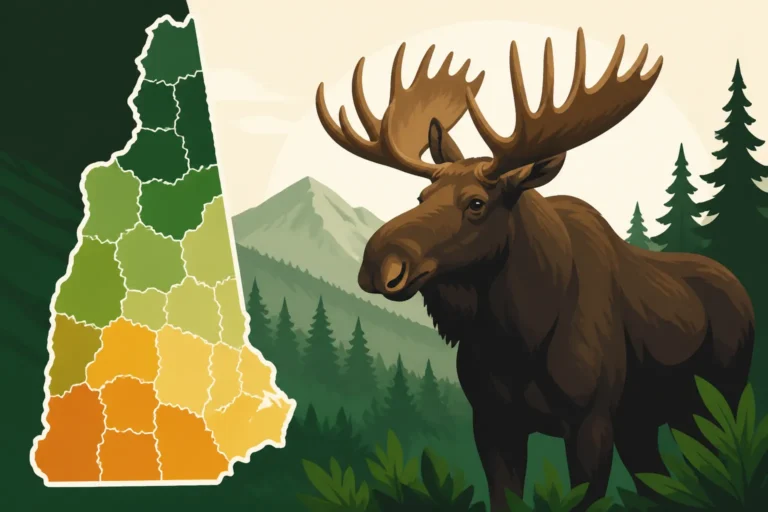
New Hampshire moose density by Wildlife Management Unit shows population numbers and regional habitat factors affecting local wildlife.
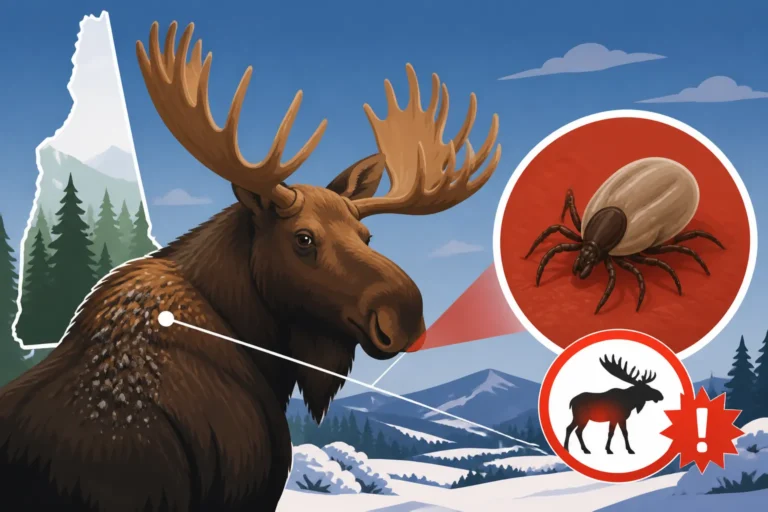
Winter tick infestations cause weakened moose, reduced reproduction, and widespread calf mortality across New Hampshire.
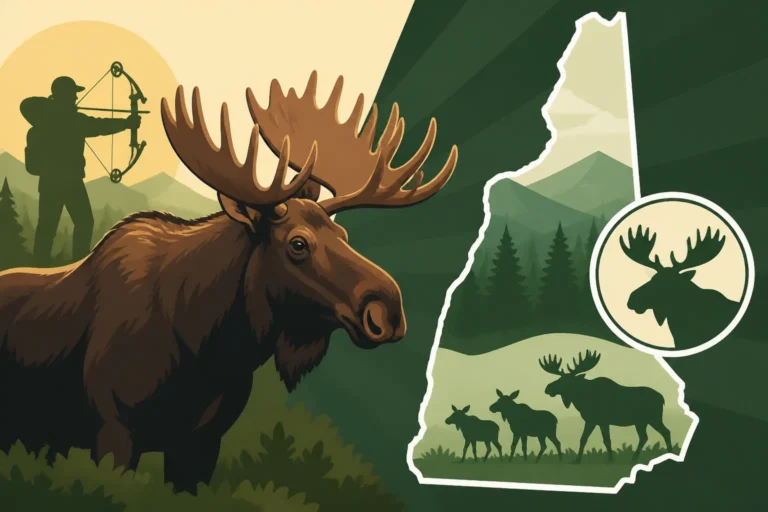
New Hampshire moose population estimates range from 3,000 to 4,000 animals, declining significantly from peak numbers of 7,000 to 8,000.
New Hampshire deer harvest records reveal population trends and regional data to improve hunting strategies and success rates.
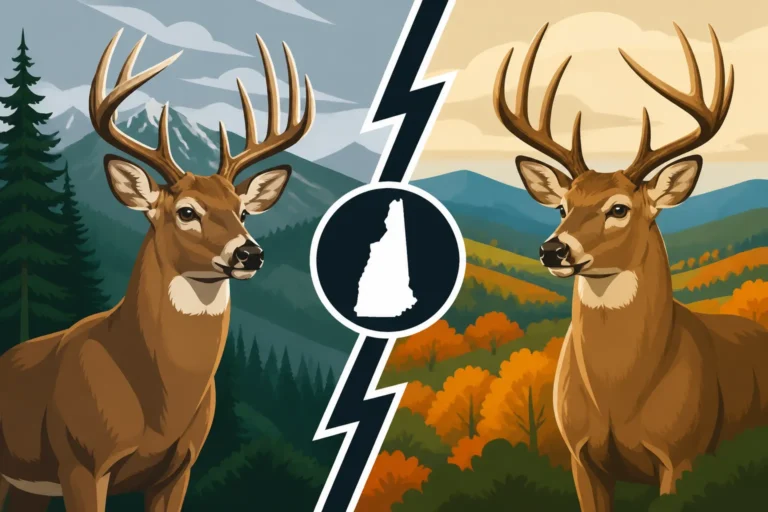
New Hampshire deer hunting differs between the rugged North Country and the populated south, impacting populations and harvest strategies.
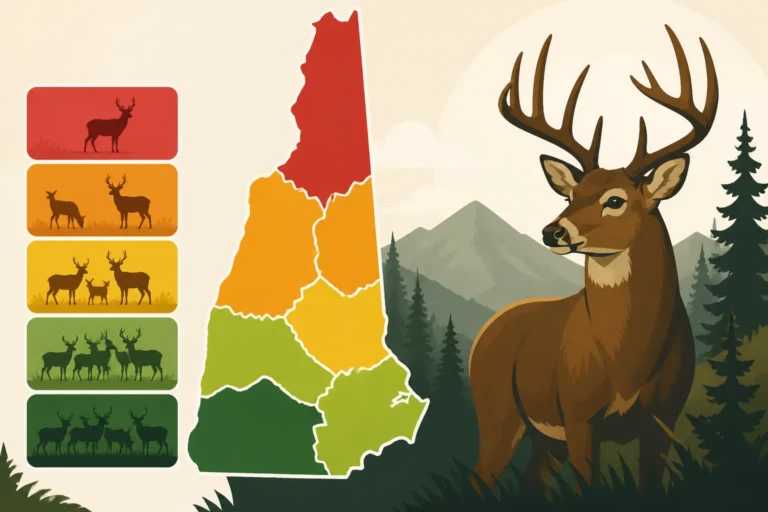
New Hampshire deer density variations across regions, influenced by habitat, winter severity, human population, and predators.
New Hampshire Fish and Game population estimates reveal whitetail herd numbers, management strategies, and harvest data science.