Which New Hampshire County Has the Most Public Land
For many of us who live and breathe New Hampshire hunting, finding reliable access is often the biggest hurdle. You might spend countless hours scouting, knocking on doors, or simply driving around hoping to spot a "Hunting Permitted" sign. It's a real frustration, especially when you're dreaming of open timber or a quiet marsh, only to hit private property lines. This guide is here to shed some light on the public land puzzle, specifically addressing which New Hampshire county holds the most accessible hunting ground, and how you can make the most of it.
Understanding New Hampshire's Public Hunting Land Landscape
When we talk about "public land" in New Hampshire, it's not a single, monolithic entity. It's a mosaic of different types of properties, each with its own rules, characteristics, and hunting opportunities. Understanding these distinctions is key to unlocking your hunting potential, and it's certainly crucial for appreciating why some counties offer more than others.
The Different Flavors of Public Land
Imagine you're looking at a map of our great state. You'll see patches of green and yellow, all signifying public access, but they aren't all the same. The biggest players include federal lands like the White Mountain National Forest, state-managed areas like Wildlife Management Areas (WMAs) and State Forests, and even smaller town-owned conservation lands. Each type contributes to the overall public land acreage, but they offer vastly different experiences.
For example, the Hunting New Hampshire's White Mountain National Forest offers vast, rugged, and often remote hunting experiences, requiring serious physical effort and navigation skills. You might be deep in the backcountry, miles from a paved road, which can be exhilarating but also challenging for game retrieval. These areas often have very liberal access rules, focusing more on ethical hunting and safety than on specific land-use restrictions.
Contrast that with a state-run New Hampshire Wildlife Management Areas. These areas are often smaller, more intensely managed for specific wildlife habitats, and might have more detailed regulations about what, when, and how you can hunt. They are usually more accessible, with dedicated parking areas, but also tend to see higher hunting pressure. Then there are New Hampshire State Forests and Reservations, which can vary widely, from easily accessible timberlands to more remote parcels, often managed for both timber production and recreation, including hunting. The sheer variety can be a lot to wrap your head around, making it tough to know where to start looking.
Why Knowing the Type of Land Matters
Knowing the type of public land you're heading into is more than just academic; it directly impacts your hunt plan. For instance, hunting deep within the White Mountain National Forest means you’re often dealing with significant elevation changes, dense softwood stands, and navigating without clear trails. It might require specialized gear, like a heavier pack for packing out meat, and definitely a reliable GPS or mapping app.
On the other hand, hunting a WMA near a populated area might mean setting up earlier to beat other hunters to a prime spot, or focusing on less obvious travel corridors that other hunters overlook. You might be dealing with smaller game plots, specific walk-in only sections, or even restrictions on motorized vehicles. Your strategy, your gear, and even your expectations need to align with the specific type of public land you're hunting. It's not just about finding "public land"; it's about finding the right kind of public land for your hunting style and target species.
Coos County: New Hampshire's Public Land King
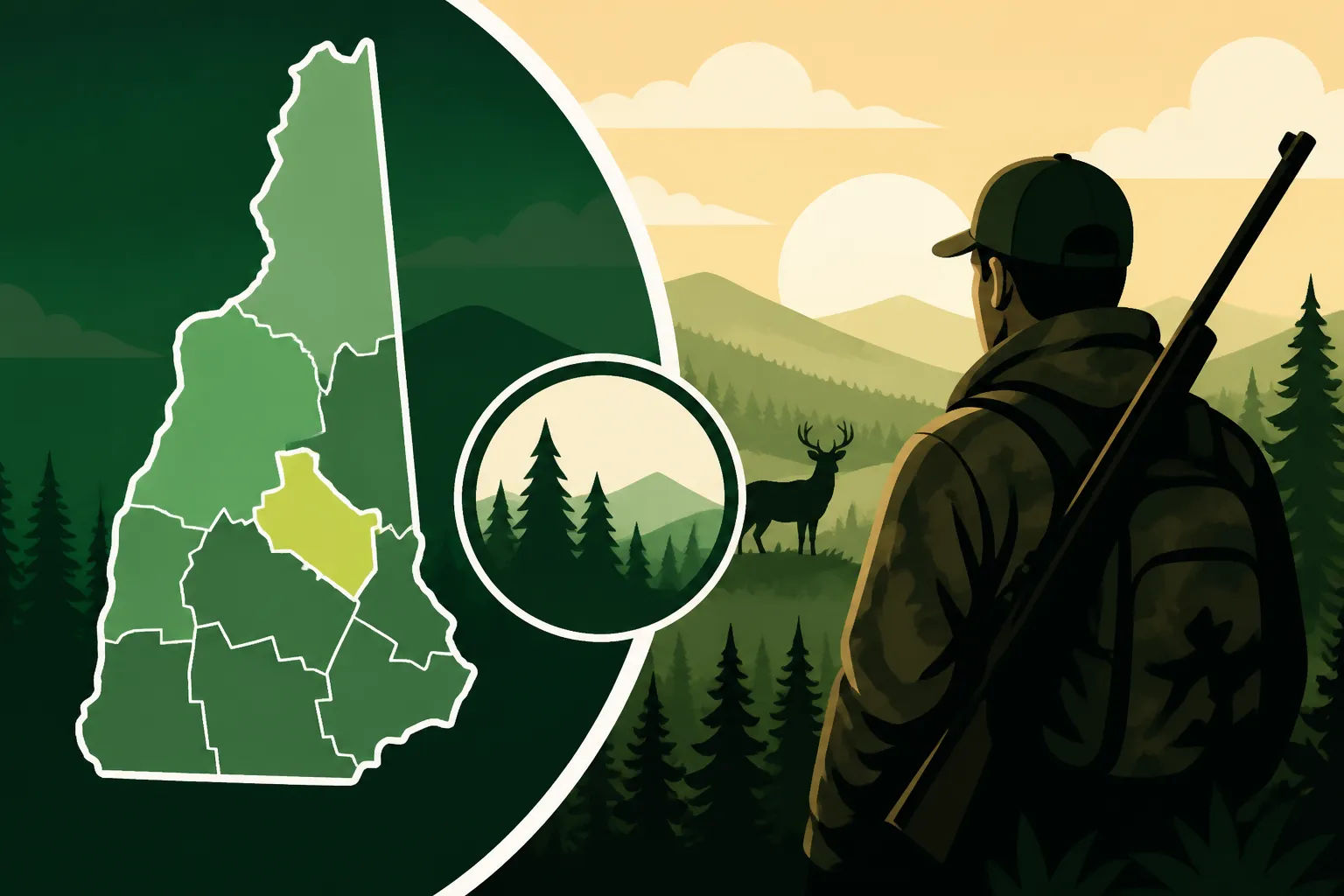
If you've ever looked at a map of New Hampshire and noticed the vast, sprawling green expanses in the northernmost reaches, you've likely seen the answer to our core question: Coos County is, without a doubt, the undisputed champion when it comes to public hunting land in the Granite State.
The Sheer Scale of Opportunity
Coos County is truly in a league of its own. It’s home to a significant portion of the White Mountain National Forest, as well as vast tracts of state-owned land, including some of our largest Wildlife Management Areas. This means hundreds of thousands of acres are open to public hunting, offering a level of remoteness and expansive terrain that’s simply not found anywhere else in New Hampshire. When you head north into Coos, you're not just looking for a small parcel; you're entering a landscape of endless possibilities.
The beauty of Coos County's public land isn't just its size; it's the character of the land itself. We're talking about rugged mountains, dense timber, remote bogs, and river drainages that stretch for miles. It's prime habitat for a variety of game, from moose and bear to deer and grouse. Hunting the North Country offers a truly immersive wilderness experience, where you might go all day without seeing another hunter, even during peak season. This vastness can be daunting, but for those willing to put in the effort, the rewards can be incredible. It's where the biggest adventures often happen.
What Makes Coos County So Unique for Hunters
Beyond just raw acreage, Coos County's public land provides diverse hunting challenges and experiences. The landscape shifts from the high, rocky peaks and steep ravines of the White Mountains to the more rolling timberlands and swampy lowlands around the Connecticut Lakes region. This variety means different hunting strategies come into play. You might be still-hunting old logging roads for deer one day, and calling for moose in a thick spruce bog the next.
The sheer remoteness of much of Coos County also means that game animals, while often sparse in certain areas, can be less pressured than in more accessible regions. This can lead to more natural animal behavior and a greater sense of true wilderness hunting. It also means you need to be self-sufficient and prepared for anything. This isn't hunting from the truck; this is often deep woods exploration, requiring good navigation skills, a well-stocked pack, and an understanding of the challenges of Packing Out a New Hampshire Moose or a big buck from miles in. It's a place where a reliable mapping app like onX Hunt becomes an invaluable tool, allowing you to easily see public land boundaries and topographical features even offline.
Maximizing Your Public Land Opportunities
Knowing which county has the most public land is a great starting point, but it's just that – a start. The real challenge, and the real fun, comes from learning how to effectively use and navigate these expansive public areas. It’s about leveraging technology, understanding game movement, and being prepared for the unique demands of New Hampshire’s diverse terrain.
Leveraging Mapping Technology
In today's world, a good map is no longer just paper; it’s a powerful tool in your pocket. Apps like onX Hunt have revolutionized how hunters approach public land, and they are especially crucial when you're delving into the vastness of Coos County. These apps allow you to:
- Identify Public vs. Private: Instantly see land ownership boundaries. No more guessing if that tempting patch of woods is legal to hunt.
- Topographical Understanding: Get a detailed view of elevation changes, drainages, and potential travel corridors. This is invaluable for Reading Aerial Photos for North Country Deer or finding hidden benches.
- Offline Capability: Crucial in areas with no cell service, which is common in much of northern New Hampshire. Download your maps before you go!
Before I head out, I spend hours poring over these maps, looking for subtle changes in terrain, water sources, and potential bedding areas. Even a seemingly small logging road that ends at a gate on private land could offer an excellent walk-in access point to untouched public ground. This kind of preparation, aided by tools like onX Hunt, can save you countless hours of unproductive scouting and keep you on the right side of property lines. Another fantastic resource for detailed land data and hunting intelligence is GoHunt, which can help you understand game concentrations and specific access points across different public land types.
Scouting and Adaptation for Success
Even with the best maps, boots on the ground scouting remains irreplaceable, especially on large public tracts. Game animals don't read maps; they react to pressure, food sources, and weather. Pre-season scouting allows you to:
- Locate Fresh Sign: Find rubs, scrapes, tracks, and bedding areas. This tells you exactly where the animals are spending their time.
- Understand Access Points: Identify parking areas, gated roads, and trails. Knowing where to start and where to avoid crowded spots is key. Hunting a Gated Logging Road Beyond the Public Lot can often lead you to less pressured areas.
- Observe Terrain in Person: Photos are great, but nothing beats seeing the lay of the land, the density of cover, and the subtle nuances of topography with your own eyes.
Public land hunting often means adapting your strategy on the fly. If your chosen spot is overrun with other hunters, having a backup plan or knowing how to Finding Ground Others Walk Past is crucial. This might mean walking an extra mile, climbing a steeper ridge, or pushing into thicker cover that others avoid. The most successful public land hunters are those who are flexible, persistent, and always learning from the landscape.
Beyond Coos: Other Notable Counties for Public Access
While Coos County undeniably wears the crown for sheer public acreage, it’s important to remember that New Hampshire offers hunting opportunities across the entire state. Other counties, while not as vast, still provide valuable public access, each with its own character and hunting potential. Sometimes, these smaller, more manageable public parcels can offer excellent hunting, especially if you're willing to put in the work to find those hidden gems.
Grafton County: A Close Second
Just south of Coos, Grafton County also boasts a substantial amount of public land, again largely due to the presence of the White Mountain National Forest, particularly its western and central portions. You’ll find similar rugged terrain, expansive timber, and remote feel, though perhaps a bit more fragmented by private holdings as you move south. Grafton County offers fantastic deer hunting, especially in its higher elevations and along major river systems.
Hunters in Grafton can experience the challenges and rewards of Still-Hunting White Mountain National Forest Timber, navigating steep slopes and dense cover. It's a county where you can truly immerse yourself in the wilderness, much like Coos, but often with a slightly shorter drive for those coming from central or southern New Hampshire. The key here, too, is diligent scouting and a good understanding of the specific public land boundaries using tools like onX Hunt.
Carroll County: Eastern White Mountains & Lake Region Access
Carroll County, on the eastern side of the White Mountain National Forest, also provides significant public hunting grounds. While perhaps not as vast as Coos or Grafton, its unique blend of mountainous terrain and proximity to the Lakes Region offers a different type of public land experience. Here, you might find yourself hunting a timbered ridge overlooking a lake, or navigating the foothills that lead into the Presidential Range.
The public land here can be a bit more broken up, often interspersed with private holdings, which makes accurate mapping even more critical. However, this also creates diverse edge habitat that can be very productive for deer and bear. You might find smaller state forest tracts or even town forests that offer quiet, overlooked opportunities. Being prepared for varying terrain, from flat lowlands to steep climbs, is essential for Hunting a Granite Ridge Saddle in this region.
A Quick Overview of Top Public Land Counties
To help you visualize, here's a brief comparison of some of New Hampshire's counties regarding their public land hunting opportunities:
| County | Primary Public Land Types | General Terrain | Common Game Species | Notes |
|---|---|---|---|---|
| Coos | White Mountain National Forest, Large WMAs | Rugged Mountains, Dense Timber, Remote Bogs | Moose, Bear, Deer, Grouse, Hare | Unmatched acreage, true wilderness, remote access. Ideal for ambitious, self-sufficient hunters. |
| Grafton | White Mountain National Forest, State Forests | Mountainous, River Valleys, Mixed Forests | Deer, Bear, Turkey, Grouse, Hare | Significant acreage, rugged, good blend of timber and river bottomland. |
| Carroll | White Mountain National Forest, State Forests | Mountains, Foothills, Lakes Region interfaces | Deer, Bear, Turkey, Grouse | Eastern slope WMNF, varied habitat, proximity to population centers means careful planning. |
| Merrimack | State Forests, WMAs, Conservation Lands | Rolling Hills, Mixed Forests, River Bottoms | Deer, Turkey, Small Game | More fragmented, but often good quality smaller parcels closer to central NH. High pressure. |
| Cheshire | State Forests (e.g., Pisgah), WMAs, Town Forests | Rolling Hills, Hardwood Forests, Agricultural fringe | Deer, Turkey, Small Game, Some Bear | Southern tier public lands, often very productive due to habitat diversity. |
While Coos County undeniably reigns supreme in sheer volume, don't overlook the potential in other areas. A smaller, well-scouted public parcel in a county like Cheshire or Merrimack, especially one with good food sources nearby, can often be more productive for deer and turkey than an aimless wander through vast, empty timber. It's all about research, scouting, and being willing to explore.
Disclaimer
This article is for general informational purposes only and does not constitute professional advice. Laws, prices and regulations vary by location and change over time. Consult a qualified professional for guidance on your specific situation.