Hunting White Mountain’s High-Elevation Basins
For those of us who hunt New Hampshire, the allure of the high country, specifically the remote, often overlooked high-elevation basins of the White Mountains, is undeniable. These aren't your typical field edges or hardwood flats; they are challenging, unforgiving places where the air is thin, the terrain is brutal, and the weather can turn on a dime. Yet, they hold a special kind of magic, often harboring mature deer that have learned to avoid pressure. This guide is for the intrepid hunter looking to unlock the secrets of these basins, understanding their unique demands and learning how to effectively hunt them for a truly rewarding experience.
Understanding White Mountain's High-Elevation Basins
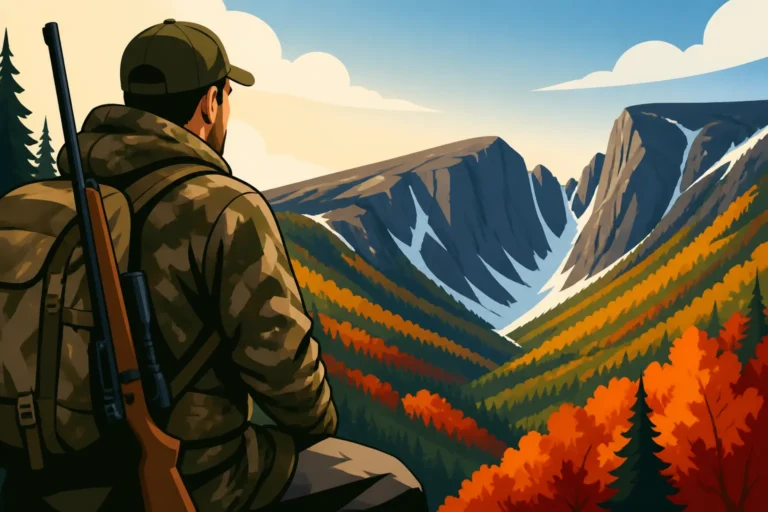
High-elevation basins in the White Mountains are essentially large, bowl-shaped depressions nestled high up in the mountains, often at or above 2,500 feet, sometimes much higher. They are carved out by ancient glaciers and erosion, forming natural sanctuaries bordered by steep ridgelines. These areas are far removed from roads and typical human disturbance, making them a refuge for wildlife, including the elusive white-tailed deer.
What Defines a High-Elevation Basin
These basins aren't just any old valleys; they possess distinct characteristics that make them unique hunting grounds. Think of areas like the Mahoosuc Range or sections deep within the Presidential-Dry River Wilderness. You'll find a mix of timber – primarily spruce, fir, and some hardy hardwoods clinging to the slopes – and often rocky outcrops, steep drainages, and even small, high-altitude wetlands or seeps. The vegetation is often thicker and more stunted than in lower elevations, providing dense cover. Snow can persist here much longer into the spring and arrive earlier in the fall, significantly impacting deer movement and forage availability. The sheer scale and remoteness of these basins mean that deer can live out their lives without ever encountering human scent, creating a different kind of challenge for the hunter. The journey in itself is part of the hunt, requiring significant physical and mental preparation.
Why Deer Utilize These Remote Sanctuaries
Deer choose to inhabit these high-elevation basins for a few key reasons, primarily centered around security and, at certain times of the year, food. During hunting season, especially as pressure builds in more accessible areas, these basins become natural hideouts. Bucks, particularly older, wiser ones, will retreat to these remote strongholds where they feel safe from the constant intrusion of hunters. The dense cover provides excellent bedding, and the complex terrain offers multiple escape routes.
While food sources might be less diverse than in lower, richer soils, these basins can still provide critical sustenance. During periods of abundant mast crops, certain oak or beech stands on basin slopes can be goldmines. Additionally, the prevalence of balsam fir and spruce offers thermal cover in deep snow, and browse like hobblebush, striped maple, and young conifer shoots are present. Deer are incredibly adaptable, and those living in these tough environments have evolved to thrive on what's available, constantly seeking out pockets of nutrition and shelter within the vastness. Understanding these patterns is key to Reading Aerial Photos for North Country Deer and anticipating where they might be feeding or bedding.
Scouting and Accessing These Remote Areas
Accessing and effectively scouting high-elevation basins is arguably the most challenging part of hunting them. It demands meticulous planning, physical fitness, and a deep understanding of mapping and terrain. You can't just drive up and start walking; these hunts require an expeditionary mindset.
The Role of Topographic Maps and Satellite Imagery
Before you ever set foot in the woods, your scouting begins at home with detailed maps. Topographic maps are your best friend here, revealing elevation changes, drainages, and potential travel corridors that might be invisible on flatter maps. Look for saddles between peaks, natural funnels created by converging drainages, and benchy terrain on steep slopes where deer might travel or bed. These features act like highways and rest stops for deer in otherwise impassable landscapes.
Satellite imagery, especially high-resolution views, is invaluable for identifying specific timber types, clearings, rocky areas, and even distinct bedding areas. Using tools like onX Hunt or GoHunt, you can layer topo maps with satellite views to get a comprehensive understanding of the landscape. Look for areas with a mix of dense cover and potential food sources. Identifying these from your couch saves you countless hours of walking in the wrong direction. Pin potential access points, promising ridge lines, and subtle features that might concentrate deer movement. Don't forget to consider how Wind and Thermals in Steep Granite Terrain will influence deer movement and your approach.
Physical Preparation and Navigation Challenges
Let's be real: hunting these basins is a grind. You're talking about sustained uphill climbs, navigating thick timber, and often traversing slippery, uneven ground with significant elevation changes. This isn't a casual stroll. You need to be in excellent physical condition, capable of carrying a heavy pack for hours, potentially over multiple days. Training with a weighted pack, hiking steep trails, and working on your stamina will pay dividends.
Navigation in these vast, untamed areas can be extremely difficult. Ridge lines can be confusing, drainages all look similar, and dense canopy can obscure natural landmarks. A reliable GPS unit or a robust mapping app on your phone (like onX Hunt, with downloaded offline maps) is absolutely non-negotiable. Always carry a compass and a paper map as a backup. Knowing how to use them is paramount. Imagine climbing out of a basin at dusk with a quartered deer; you'll be relying heavily on your navigation skills, especially if you're Blood Trailing After Dark in New Hampshire. It's not just about getting in, it's about getting out safely, especially with a heavy load.
Hunting Strategies for Success in the Basins
Hunting these high-elevation basins demands a distinct approach, different from hunting agricultural fields or suburban woodlots. The deer here are wilder, more attuned to their environment, and less forgiving of mistakes.
Still-Hunting and Patience in Thick Cover
The dense, often coniferous, cover found in high-elevation basins makes still-hunting an incredibly effective tactic. Rather than setting up a stand and waiting, you become the slow-moving predator, methodically slipping through the woods. This means taking one or two steps, then pausing for several minutes to scan, listen, and observe. Look for subtle movements, horizontal lines that don't belong, or the flick of an ear. The woods are noisy up high; use the wind to your advantage, moving slowly into it, allowing it to carry your scent away and bring you the scent of deer.
Patience is paramount. You might only cover a quarter-mile in an hour, but that's okay. The goal isn't to cover ground quickly, but to move silently and deliberately through prime habitat. Focus on areas where food sources might be present – patches of browse, old apple trees if you find any hardy enough to survive at this elevation, or even recent blowdowns that provide fresh sprouts. Remember, these deer are not used to human presence, so a careful, quiet approach is your best bet. A good strategy might involve slowly working a ridge line down into a basin in the early morning, letting the thermals drop your scent, then still-hunting back up as the thermals reverse.
Leveraging Thermals and Wind Patterns
Understanding wind and thermals is critical in any hunting scenario, but it becomes absolutely essential in steep, mountainous terrain. Thermals are air currents that move uphill as the air warms during the day and downhill as it cools in the evening. In a high-elevation basin, these can be incredibly strong and complex.
In the morning, as the sun begins to hit the slopes, thermals will rise, carrying your scent uphill. This means you want to approach from below your target area if possible, or position yourself so that rising air carries your scent over any deer. As evening approaches, the air cools, and thermals reverse, flowing downhill into the basin. At this time, you'd want to be above your target, letting your scent drop down and away from bedding deer. Always carry a wind checker – a small bottle of powder or thread – and use it constantly. The wind can swirl unpredictably in these bowls, so be prepared to adjust your approach or position. Knowing how to read these subtle shifts is a skill that comes with experience, but it's a difference-maker in the high country.
Glassing and Spot-and-Stalk Opportunities
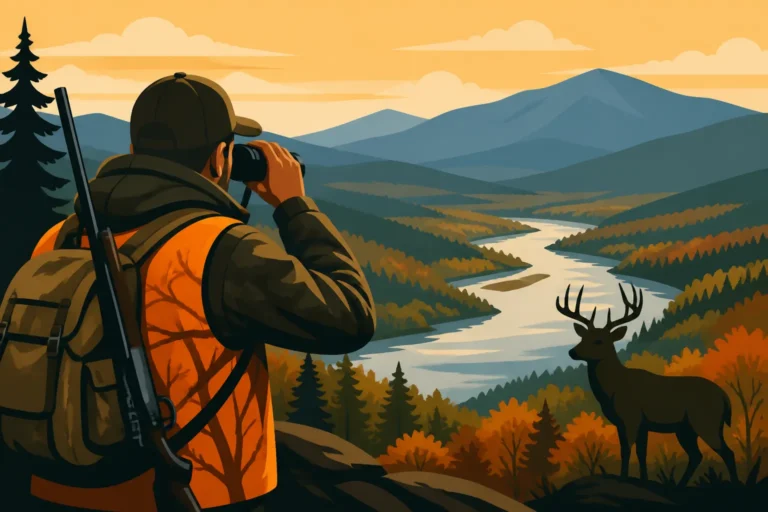
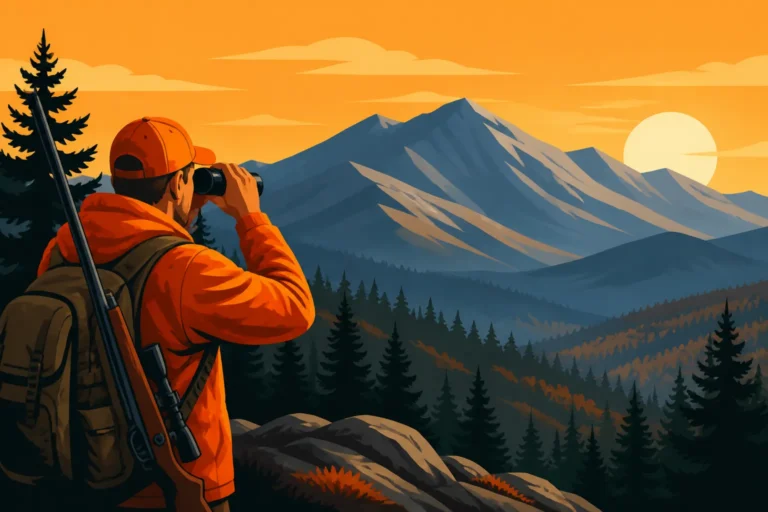
While often dense, basins can have small openings, old logging roads, or rocky slides that create opportunities for glassing. A high-quality pair of binoculars or even a compact spotting scope can be invaluable for picking apart distant slopes and patches of cover from an vantage point across the basin.
Find a good spot on an opposing ridge or higher up the basin slope, get comfortable, and meticulously glass every inch of the habitat. Look for movement, subtle shapes, or any sign of a deer. If you spot a deer, the spot-and-stalk comes into play. This is where your physical conditioning truly shines. Planning your approach to use available cover, stay downwind, and move silently requires immense discipline. You might have to navigate significant elevation changes, thick timber, and rocky terrain to close the distance. This is an active, exhilarating form of hunting that can be incredibly rewarding when it all comes together. Brands like GoHunt often emphasize similar spot-and-stalk tactics for western hunting, and many of those principles apply to the challenging terrain of the White Mountains. For this kind of precision, consider investing in Optics for New Hampshire's Timber Country.
Essential Gear for High-Country Hunting
Hunting high-elevation basins isn't just physically demanding; it requires specialized gear to ensure your safety, comfort, and success. Cutting corners on gear in this environment can lead to serious trouble.
Clothing and Layering Systems
The weather in the White Mountains is famously unpredictable, and at high elevations, it's even more so. You can experience all four seasons in a single day. A layering system is absolutely critical. Start with a moisture-wicking base layer to manage sweat, which can quickly turn into a hypothermia risk if you get chilled. Add an insulating mid-layer, like fleece or a puffy jacket, for warmth. Your outer layer should be waterproof and windproof, capable of shedding rain, snow, and biting winds.
Think about adaptability. You'll be working hard climbing, generating heat, but then sitting still, cooling rapidly. Zippers, vents, and easily removable layers are your friends. Avoid cotton at all costs; it holds moisture and loses its insulating properties when wet. Layering for New Hampshire's Cold Hunting Season is a fundamental skill that will keep you safe and comfortable when the temperatures plummet.
Footwear and Navigation Tools
Your feet are your most important assets in the high country. Invest in high-quality, waterproof, and supportive boots with excellent ankle support. The terrain is rocky, uneven, and often slippery, demanding footwear that can handle the abuse and protect your feet. Break them in well before your hunt to avoid painful blisters. Consider bringing along gaiters to keep snow, mud, and debris out of your boots. For more specifics, check out Boots for New Hampshire's White Mountain Granite Terrain.
As mentioned earlier, reliable navigation tools are non-negotiable. A robust GPS unit or a smartphone with a premium hunting app like onX Hunt, loaded with offline maps, is essential. Always carry a traditional compass and a physical map as a backup. Batteries die, electronics fail, and having redundant systems can literally save your life. Make sure you know how to use all your navigation tools before you head out. A Best GPS App for New Hampshire Public Land can transform your ability to move confidently through complex terrain.
Safety and Emergency Preparedness
Venturing into remote high-elevation basins means you are largely on your own. Emergency services can take hours, if not days, to reach you. Carrying a comprehensive first-aid kit is paramount, along with training on how to use it for common hunting injuries. A satellite communicator, like a Garmin inReach or a Zoleo, allows you to send emergency messages and your location even when you have no cell service, which will be the norm in these areas. Tell someone your exact hunting plan and your expected return time.
Bring extra food, water, and a way to purify water, such as a filter. A headlamp with extra batteries is crucial, as is a fire starter, an emergency shelter (like a space blanket or lightweight tarp), and a whistle. You might consider carrying bear spray, especially in areas with dense cover. Being prepared for the unexpected is not being paranoid; it's being responsible in a truly wild environment. These areas demand the utmost respect for their challenges.
Recommended High-Elevation Basin Hunting Gear
| Category | Item | Key Features | Why It's Essential in Basins |
|---|---|---|---|
| Clothing | Layering System | Moisture-wicking base, insulating mid, waterproof/windproof outer. Synthetic/wool. | Rapidly changing weather, managing sweat during exertion, staying warm during rests. |
| Footwear | High-Quality Waterproof Boots | Ankle support, aggressive tread, breathable membrane. | Steep, rocky, often wet terrain; prevents injury and discomfort. |
| Navigation | GPS Unit/Smartphone App (onX Hunt) | Offline map capability, topographic details, waypointing. Backup compass/map. | Dense cover and complex terrain make visual navigation difficult; vital for safety. |
| Optics | Binoculars (10×42 or 12×50) | Clear glass, good low-light performance. Spotting scope for long-range glassing. | Picking apart dense cover and distant slopes for deer sign or animals. |
| Pack | High-Volume Backpack with Frame | Comfortable, durable, capable of carrying heavy loads (meat, gear). | Essential for multi-day hunts and packing out deer quarters over rugged terrain. |
| Safety | Satellite Communicator | Two-way messaging, SOS function (e.g., Garmin inReach, Zoleo). | No cell service; lifeline in emergencies. |
| Shelter | Lightweight Tarp/Emergency Blanket | Compact, waterproof. | Protection from unexpected weather or an unplanned overnight stay. |
| Other | Headlamp, First-Aid Kit, Fire Starter | Reliable light, medical supplies, ability to make fire. | Safety essentials for unexpected situations or extended stays. |
Hunting White Mountain's high-elevation basins is not for the faint of heart, but it offers an unparalleled challenge and the chance to connect with New Hampshire's wildest deer in their most secluded strongholds. It demands respect, preparation, and a willingness to push your limits, but the rewards—a unique hunting experience and potentially a mature, hard-earned buck—are truly unmatched.
Disclaimer
This article is for general informational purposes only and does not constitute professional advice. Laws, prices and regulations vary by location and change over time. Consult a qualified professional for guidance on your specific situation.