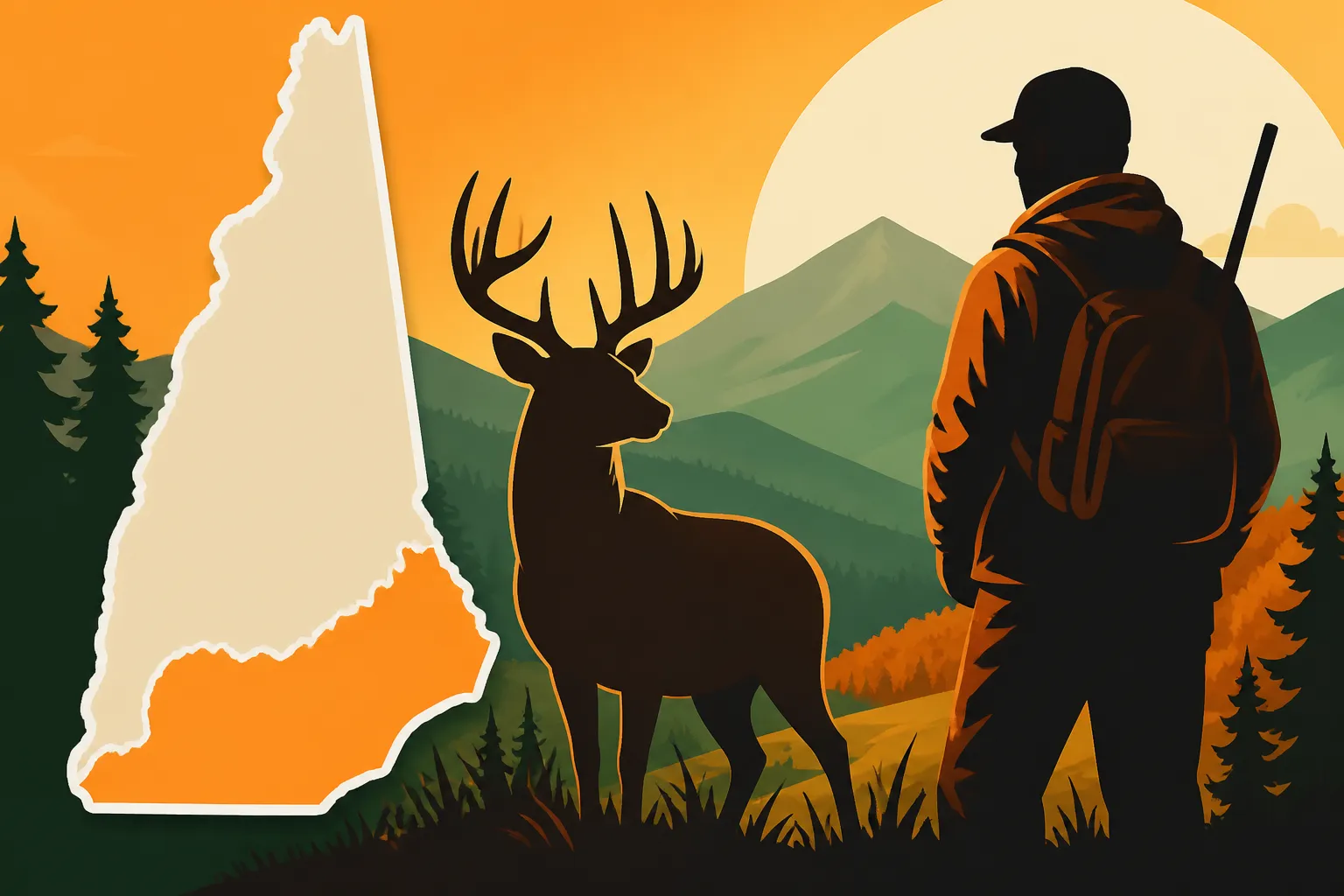
Hunting the WMU K Southern Tier
Hunting in New Hampshire's WMU K, often referred to as the Southern Tier, comes with its own unique set of challenges and triumphs. Unlike the vast, sprawling wilderness of the North Country, this region is a complex mosaic of dense suburban development, active agricultural lands, and smaller, often fragmented woodlots. Hunters here often grapple with finding consistent access, understanding intricate property boundaries, and adapting their strategies to deer and other game that are accustomed to living alongside human activity. This guide is designed to help you navigate the particularities of hunting WMU K, offering practical insights and tactics to increase your chances of success in this often-overlooked but productive area.
Understanding WMU K's Unique Landscape
WMU K represents a fascinating blend of environments, and truly understanding its character is the first step to hunting it successfully. It's not the monolithic forest you might find further north; instead, it's a dynamic, ever-changing landscape that requires a more nuanced approach from hunters.
The Geographic and Habitat Blend
Imagine a patchwork quilt, and you're getting close to picturing WMU K. This zone, generally encompassing parts of southern New Hampshire, is characterized by its close proximity to larger towns and cities. You'll find active farm fields—corn, hay, and soybeans—interspersed with mature hardwood and pine forests, often in relatively small blocks. Residential areas are constantly expanding, pushing into what were once quieter rural landscapes. Winding rivers and their associated floodplains, like portions of the Merrimack River watershed, cut through the region, creating natural corridors and unique habitat.
This blend means that game, particularly deer, often have incredibly diverse food sources. They might browse on agricultural crops at night, bed down in a thick softwood stand during the day, and use a small creek bottom as a travel corridor between two woodlots. The presence of human activity means deer are often more nocturnal and wary, and their patterns can be heavily influenced by noise, traffic, and residential lights. The smaller size of many forested tracts means deer often don't have to travel far to find everything they need, making their home ranges potentially tighter but also more complex to decipher. You're looking for those hidden pockets, the overlooked edges where they feel secure.
Common Game Species and Their Behaviors
While deer are undoubtedly the primary focus for many hunters in WMU K, the region supports a surprising diversity of other game. Understanding what's available and how these animals adapt to the southern tier's environment is crucial.
Deer: The Wary Whitetails of the South
New Hampshire's whitetail deer population in WMU K is robust, but these aren't the backcountry deer that might wander through large clear-cuts in the North Country. Here, deer are often highly pressured and intimately familiar with human presence. They quickly learn to associate human scent, vehicle noise, and even certain times of day with danger. You'll find them bedding in the thickest cover available, often surprisingly close to houses or roads, simply because that's where they feel safest from intrusion. Food sources are abundant, from suburban gardens and apple orchards to agricultural fields and mast crops in the woods. Their movement patterns are often dictated by finding the path of least resistance and greatest concealment between these food and bedding areas. The rut in WMU K can be intense, as bucks are driven to cover ground, often making them more visible, but still incredibly cautious. Knowing When the New Hampshire Rut Peaks is vital.
Turkey: Adapting to Fragmented Habitat
Wild turkeys have made an incredible comeback across New Hampshire, and WMU K is no exception. Both spring and fall seasons offer opportunities. In spring, gobblers will often roost in tall pines or hardwoods near open fields, using these areas for strutting and feeding before retreating to denser cover. Fall flocks, often consisting of hens and their poults, will work through woodlots and field edges, constantly on the move to find acorns, berries, and insects. Their adaptability to fragmented habitat means they can be found in surprising locations, often using small woodlots adjacent to suburban developments.
Small Game and Predators: A Constant Presence
Don't overlook the small game opportunities in WMU K. Squirrels thrive in the region's abundant oak and hickory stands, offering excellent early-season hunting. Rabbits can be found in brushy clearings, old field edges, and overgrown hedgerows. And, of course, coyotes are a year-round presence. These adaptable predators are very common in the southern tier, preying on deer, small mammals, and even domestic animals. They are incredibly opportunistic and can be called in from surprising distances, especially in the winter months when food is scarcer.
Navigating Access and Hunter Pressure
One of the biggest hurdles for hunters in WMU K is finding reliable access and contending with the higher hunter densities common in more populated areas. It requires diligence, a good attitude, and the right tools.
The Reality of Fragmented Public Lands
Forget about walking for miles into untouched wilderness on public land in WMU K. Large, contiguous tracts are a rarity. Instead, you'll be looking for smaller parcels: town forests, state forests, conservation lands, and occasionally larger state parks that allow hunting in designated areas. These parcels are often surrounded by private property, making access points and boundary lines critical to understand.
This fragmentation means that pressure on these public tracts can be significant, especially during peak seasons like the firearms opener. Hunters often concentrate on easily accessible spots, so finding success often involves walking further, exploring lesser-known corners, or adapting your schedule to hunt during off-peak times. Tools like onX Layers for New Hampshire Land Status or GoHunt mapping apps are absolutely indispensable here. They allow you to clearly identify public land boundaries, parcel ownership, and potential access points, helping you avoid accidental trespass and locate those hidden corners others might overlook. You'll spend a lot of time poring over maps, looking for those thin green lines that represent a sliver of public access.
The Art of Securing Private Land Permission
Given the prevalence of private land in WMU K, securing permission from landowners is often the most effective way to gain access to quality hunting ground and escape the pressure found on public parcels. This isn't always easy, but it’s a skill that can be developed over time.
It starts with respect and a genuine approach. Don't just show up with your rifle on opening day. Try to make contact well before the season, perhaps in late summer or early fall. Dress neatly, introduce yourself politely, and explain why you're seeking permission. Many landowners have concerns about safety, property damage, and simply not knowing who is on their land. Address these proactively: offer to share any game you harvest, provide your contact information, and assure them you will respect their property as if it were your own. Some landowners might be more receptive if you offer to help with chores around the property, or if they've had issues with deer damage to their crops or gardens.
Building a relationship with a landowner can be incredibly rewarding. It provides consistent access and often leads to invaluable insights into deer movement on their specific property. I've had success by offering to help with projects like clearing brush or repairing fences, which shows you're committed and trustworthy. Remember, a handshake deal is a privilege, not a right, so always follow through on your promises. You can find more specific tips in articles like Asking a New Hampshire Landowner for Permission and Knocking on Doors in New Hampshire Farm Country.
Strategic Hunting Tactics for WMU K
Hunting WMU K requires a tactical shift from traditional big woods strategies. It's about precision, patience, and often, small-scale movements.
Adapting Deer Hunting Strategies
When hunting deer in the Southern Tier, think small and deliberate. Because woodlots are often fragmented and pressured, deer tend to seek out the densest cover. This means focusing on areas with thick briars, downed timber, or even small swamps and creek bottoms that offer security.
Focus on Funnels and Edges: Deer in WMU K will use every available piece of cover to move between bedding and feeding areas. Look for natural funnels – narrow strips of woods between fields, creek bottoms that provide concealment, or even dense hedgerows. These constricted travel routes become prime ambush points. Similarly, edges where different habitats meet (e.g., forest edge next to a cornfield, or a swamp edge next to hardwoods) are always high-traffic zones. Articles like Hunting a Funnel Between Two Woodlots provide excellent insights that are highly applicable here.
Still-Hunting and Small Drives: With smaller parcels and wary deer, still-hunting—moving slowly and deliberately through cover, pausing frequently to observe—can be incredibly effective. You're covering ground, but doing so quietly and methodically, giving you a chance to spot deer before they spot you. If you have a small group of trustworthy hunting partners, carefully planned, small-scale deer drives can also push deer out of dense bedding areas on limited acreage. The key is knowing exactly where the deer are likely to be holed up and having clear escape routes.
Understanding Bedding Areas: Deer in WMU K will often bed in the thickest, nastiest cover they can find, sometimes surprisingly close to human activity if it provides enough visual and scent protection. This could be a dense stand of young pines, a thick briar patch, or a beaver flowage edge. Knowing Where New Hampshire Bucks Bed in Thick Cover will help you identify these spots. Deer are acutely sensitive to pressure, so approaching these areas requires a keen understanding of wind and thermals. Consider hunting the downwind side of these bedding areas, especially in the late morning or early afternoon when deer are settling in for the day, or in the very late afternoon as they begin to stir.
Maximizing Other Hunting Opportunities
While deer are often the main draw, WMU K offers fantastic opportunities for other game if you adjust your approach.
Turkey Tactics for Smaller Woodlots: Spring turkey hunting can be exhilarating. Identify potential roost trees near fields or clearings during pre-season scouting. At dawn, you might hear gobblers sounding off. Set up carefully, using the terrain to break up your silhouette, and start with subtle calls. If a bird is on the roost, be patient. Once he pitches down, he'll often be looking for a hen in the open. For fall turkeys, finding a flock is key. If you can break up a flock, setting up to call scattered birds back in can be a very effective strategy. More on this can be found in Calling a May Gobbler Off the Roost.
Small Game in Southern Tier Cover: Squirrels are abundant wherever there are mature hardwoods, especially oaks and hickories, which are common in WMU K. Hunt quietly, often just after first light, and look for movement in the canopy. For rabbits, focus on brush piles, overgrown fencerows, and thick transition zones. A slow walk with a shotgun can often jump a rabbit. Find more tips in Squirrel Hunting New Hampshire Hardwoods.
Coyote Calling on the Edges: Coyotes are a constant challenge and opportunity in WMU K. They thrive in these mixed environments. Target farm country edges, especially during winter months when natural prey is scarce. Early mornings or late evenings often yield the best results. Use distress calls mimicking rabbits or fawns, and be prepared for coyotes to approach cautiously, often circling downwind. Patience and good concealment are vital. Coyote Calling New Hampshire Farm Country offers great advice.
Essential Gear and Preparation for Southern Tier Hunting
The right gear and a solid preparation strategy can make all the difference when hunting the specific conditions of WMU K.
Smart Gear Choices for Mixed Terrain
While many gear choices are universal to hunting, some considerations are especially important for the Southern Tier.
Optics for Detailed Scouting: Given the smaller, more fragmented nature of hunting parcels, good optics are vital for scouting. A quality pair of binoculars will help you pick apart distant woodlots, identify potential funnels, and spot distant game sign without having to trespass. For longer-range scouting of large fields or power line cuts, a spotting scope can be invaluable. Even small tracts often have nuances that are only visible through glass.
Quiet Clothing for Close Encounters: Deer in WMU K are often on high alert due to human presence. Your clothing needs to be quiet and allow for stealthy movement, especially if you're still-hunting or trying to slip into a tight bedding area. Avoid noisy fabrics, and consider layering systems that can be shed or added as temperatures fluctuate during a morning or evening sit. Remember your Blaze Orange Layering Options for the firearms seasons, ensuring you meet visibility requirements while maintaining quiet movement.
Mapping Apps for Precision: I can't stress this enough: a reliable GPS mapping app is your best friend in WMU K. Products like onX Hunt or GoHunt provide detailed satellite imagery, property boundaries with landowner names, and topography maps. This allows you to identify public access, see if that small block of woods is actually public, plan entry and exit routes that avoid houses, and mark game sign. It's an absolute game-changer for hunting fragmented landscapes. Always download offline maps before you head out, as cell service can be spotty, even in the Southern Tier.
Pre-Season Scouting and In-Season Adaptability
Success in WMU K hinges heavily on diligent scouting and the ability to adapt to changing conditions.
Digital and Foot Scouting Combined: Start your scouting digitally. Use mapping apps to pore over aerial photos, identifying potential bottlenecks, bedding areas, food sources, and access points. Look for subtle terrain features like small ridges or draws that might not be obvious on a flatter map. Then, put boots on the ground. Walk those potential access points, confirm property lines, and look for fresh sign like rubs, scrapes, and tracks. This combination allows you to cover a lot of ground efficiently and then confirm your suspicions in person. Scouting New Hampshire Public Land Before Season is a great resource.
Reading Aerial Photos for Subtle Clues: Even if you're not in the North Country, Reading Aerial Photos for North Country Deer offers principles that apply universally. Look for changes in timber type, transition lines, areas of thicker canopy indicating denser cover, or subtle elevation changes that create natural travel routes. In WMU K, also pay close attention to residential encroachment and where fields meet woods. Those are your high-activity zones.
Flexibility is Key: Hunting the Southern Tier demands flexibility. What worked last week might not work today due to changing pressure, weather, or agricultural practices. Be prepared to move your stand or blind, adjust your calling strategy, or shift your target species if conditions aren't right. A quick check of recent deer sign, fresh tracks, or even local chatter can help you make informed decisions on the fly. Being able to adapt to what the deer are doing, rather than rigidly sticking to a plan, is the mark of a successful WMU K hunter.
| WMU K Hunting Aspect | Challenge | Solution | Key Tactic |
|---|---|---|---|
| Access | Fragmented public land, private ownership | Digital mapping (onX Hunt), landowner permission | Knock on doors, build relationships |
| Hunter Pressure | High density, wary game | Hunt smaller, overlooked spots; still-hunting, small drives | Scout hard, move quietly, avoid peak times |
| Habitat | Mixed agriculture, suburban, small woodlots | Focus on funnels, edges, thick cover; diverse food sources | Identify transition zones, creek bottoms |
| Game Behavior | Nocturnal, pressured deer; adaptable turkey | Hunt early/late, adapt to game patterns, subtle calling | Patience, scent control, observe from a distance |
| Scouting | Identifying productive, legal areas | Combine digital (GoHunt) and foot scouting | Confirm maps on ground, look for fresh sign |
| Gear | Stealth, navigation, visibility | Quiet layers, quality optics, GPS app, blaze orange | Layer for comfort, know your boundaries |
Disclaimer
This article is for general informational purposes only and does not constitute professional advice. Laws, prices and regulations vary by location and change over time. Consult a qualified professional for guidance on your specific situation.