Asking a New Hampshire Landowner for Permission
For many New Hampshire hunters, the thrill of the chase often bumps up against the reality of limited public access. You've spent countless hours scouting, found that perfect deer sign or heard turkeys gobbling just over a property line, only to realize it's private land. That feeling of hitting a wall, of knowing prime habitat is tantalizingly close but off-limits, is incredibly frustrating. This guide is here to walk you through the often-intimidating process of asking a New Hampshire landowner for permission to hunt, helping you navigate the etiquette, laws, and best practices to open up new opportunities.
Understanding New Hampshire's Landowner Culture and Law
It’s easy to feel like asking for permission is a chore, or worse, an imposition. But in New Hampshire, where private land makes up a significant portion of our hunting grounds, establishing a good relationship with landowners is absolutely crucial. Understanding their perspective and the legal framework is your first, most important step.
The Importance of Respect and Relationship Building
Let's be honest, we've all seen properties that look like no one uses them. Maybe it's a vast woodlot behind a house, or a sprawling field that seems to go untended. It’s tempting to think, "What's the harm in just slipping in?" But that mindset is a quick way to burn bridges, not just for yourself, but for every hunter who comes after you. New Hampshire landowners, much like folks anywhere, value their privacy, their peace, and their property. Whether they actively farm, just enjoy the quiet, or see their land as an investment, it's theirs.
Building a relationship isn't about getting a one-time pass; it's about fostering trust. Many landowners might have had bad experiences with hunters in the past – gates left open, trash left behind, or even property damage. Your goal is to prove you're different. You're not just asking for access; you're asking to be a good steward of their land, someone they can rely on and trust. Think of it as an investment in future hunting opportunities, not just for this season, but for years to come. That genuine respect for their property rights and their concerns is the foundation of any successful permission request.
New Hampshire's Trespass Laws
Before you even knock on a door, you need to know the rules of the game in New Hampshire. The state's trespass laws are pretty clear, and ignorance is definitely no excuse. Generally, in New Hampshire, you need permission to enter private land, whether it's posted or not. However, the legal weight changes when land is officially "posted."
If a property owner has clearly marked their land with "No Trespassing" signs or purple paint, you absolutely must have their explicit permission to enter, and ideally, that permission should be in writing. While verbal permission can sometimes suffice for unposted land, written permission is always the gold standard and offers protection for both you and the landowner. It removes any ambiguity. Imagine a scenario where a landowner gives you verbal permission, then forgets or has a change of heart, and suddenly you're facing a potential trespass charge. A simple, signed note or email agreement can save a lot of headaches. New Hampshire Posted Land Rules makes it very clear that those signs mean business, and you don't want to find yourself on the wrong side of that. For a deeper dive into the specifics, you'll want to review New Hampshire Trespass and Permission Law.
Dispelling Common Misconceptions
There are a few myths floating around that can quickly land you in hot water if you believe them. The biggest one is often, "If it's not posted, it's fair game." This is fundamentally incorrect and can lead to serious legal issues. In New Hampshire, all private land is considered private property, regardless of whether it has "No Trespassing" signs. The signs simply elevate the level of offense if you're caught trespassing. Always assume you need permission.
Another misconception is that if land looks "unused" or "abandoned," it's okay to hunt. Many landowners manage their forests for timber, wildlife, or simply future value, even if you don't see active human presence. That overgrown field might be critical deer bedding cover they're cultivating, or a woodlot might be slated for a future timber harvest. Respecting their ownership means understanding that their management choices, or lack thereof, are entirely their prerogative. Don't project your assumptions onto their property. Always ask.
Preparation is Key: Researching the Land and the Landowner
You wouldn't head into the woods without your hunting license and a plan, right? The same goes for asking for permission. A little homework goes a long, long way in demonstrating your seriousness and respect.
Identifying Potential Properties and Their Owners
The first step is figuring out where you want to hunt. This often involves some serious map recon. Start by looking at areas adjacent to public lands, like state forests or wildlife management areas, where deer and other game might transition between public and private parcels. Look for natural funnels, unpressured timber blocks, or agricultural fields that might attract game. Hunting Small Private Tracts in New Hampshire can also be incredibly fruitful if you know how to find them.
Once you’ve identified a promising parcel, it’s time to identify the owner. This is where modern technology really shines. Mapping applications like onX Hunt are invaluable. They offer property line overlays, showing you exactly where one parcel ends and another begins, and crucially, they often provide landowner names and sometimes even contact information right on the map. This saves you countless hours of guesswork. Alternatively, you can head to the town clerk's office, or often, the town's website, to look up tax maps and property records. These public records will list the owner's name and address.
Gathering Information Before You Approach
Before you even think about making contact, gather some intelligence. What does the property look like? Are there fields, dense woods, or a mix? Are there obvious signs of game, like tracks, rubs, or droppings, that you can observe from a public road? Reading Aerial Photos for North Country Deer can give you a fantastic overview of the terrain and potential pinch points, helping you articulate why you're interested in that specific piece of land.
Beyond the land itself, try to learn a little about the landowner. Are they farmers? Do they have livestock? Is their property well-maintained, suggesting they're particular about its appearance? Do they seem to be hunters themselves, perhaps with deer stands visible from a distance? Knowing these things can help you tailor your approach and address potential concerns they might have before they even voice them. For instance, if they have cattle, you'll want to emphasize your commitment to keeping gates closed and staying clear of livestock.
What to Prepare for the Conversation
Walking up to a landowner unprepared is a common mistake. You need to present yourself as a responsible, organized, and safe individual. Here’s a checklist of things to have ready:
- Your Hunter Education Card: This demonstrates you've been trained in safe hunting practices.
- Your Valid New Hampshire Hunting License and Tags: Proof that you are legally allowed to hunt.
- Proof of Insurance: While not always necessary, some hunters carry general liability insurance, which can offer an extra layer of reassurance to landowners, showing you're prepared for unforeseen circumstances.
- A Clear Request: Know exactly what you're asking for. Do you want to hunt deer, turkey, small game? With a bow, shotgun, or rifle? During specific seasons? Be precise. Don't just say, "Can I hunt your land?" Say, "I'm interested in bowhunting for deer during the archery season, specifically in the woodlot behind your cornfield."
- References (Optional but good): If you have other landowners who can vouch for your character and responsibility, have their contact information ready.
- A Gesture of Goodwill: This isn't a bribe, but a genuine offer. Perhaps you could offer to help with chores around their property, mend a fence, stack some firewood, or help clean up debris. Some hunters even offer a portion of their harvest if successful. This shows you're not just taking, but willing to give back.
This level of preparation shows serious intent and helps you answer any questions the landowner might have with confidence. It immediately sets you apart from the casual, less serious asker.
Making the Approach: How to Ask Respectfully
This is the moment of truth, and it can feel a bit nerve-wracking. Remember, a polite and well-timed approach is far more likely to yield a positive outcome than a rushed or demanding one.
Timing and Method of Contact
Timing is everything. Never approach a landowner when they look busy or stressed. If they're in the middle of baling hay, chasing a runaway dog, or dealing with a frantic child, it's not the time. Look for a moment when they seem relaxed, perhaps doing yard work, checking their mail, or just sitting on their porch. Weekday evenings or weekend afternoons during the off-season (late winter, spring, or summer) are often ideal. Asking right before opening day when they might be inundated with requests is a tougher sell.
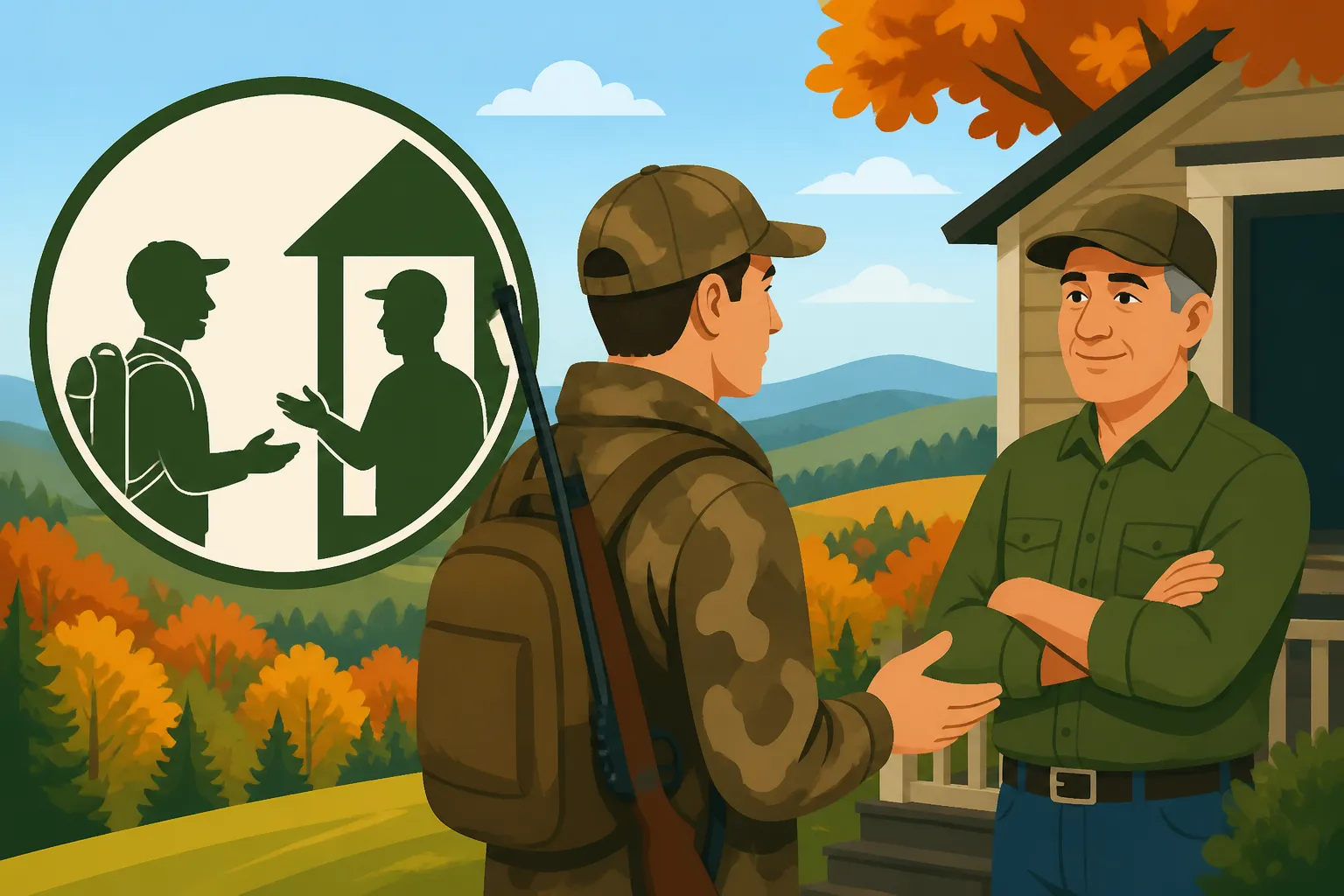
As for the method, in-person is almost always best. It allows them to see you, size you up, and gauge your sincerity. A face-to-face conversation builds far more trust than a phone call or a letter, though those can be acceptable alternatives if in-person isn't feasible. If you do go in person, ensure you're clean, presentable, and not wearing your full camo hunting gear – you want to look like a respectful neighbor, not someone ready to charge into their woods.
When you approach, stay at a respectful distance from their home, perhaps stopping at the driveway or the edge of their yard, and wait to be acknowledged. Don't just walk right up to their door.
Crafting Your Pitch
Once you have their attention, your words matter. Start with a polite greeting and introduce yourself clearly, stating your full name and where you're from. Then, clearly but concisely state your purpose.
"Good afternoon, Mr./Ms. [Last Name]. My name is [Your Name], and I live in [Your Town]. I'm an avid hunter, and I've noticed your beautiful property here. I'm wondering if you might ever allow responsible hunters to access your land for [specific game, e.g., archery deer hunting] during the season."
Then, quickly transition into addressing their potential concerns and highlighting your responsibility:
- Safety: "I'm a certified hunter, always prioritize safety, and would only hunt from a treestand or ground blind, always aware of houses and property lines." (You can internally link to Using a Ground Blind on Public Land if that was an option for them).
- Respect for Property: "I promise to treat your land with the utmost respect, leave no trash behind, close any gates I open, and stay clear of your home and outbuildings."
- Flexibility: "I'm happy to work around your schedule or any specific areas you'd prefer I avoid."
- Benefit to Them (if applicable): "Deer can be quite numerous around here, and I'm happy to help manage the population if that's a concern for you." Or, "I've heard coyotes around, and I'm also interested in predator control, if that's something you'd welcome."
Be prepared for questions and answer them honestly. Maintain eye contact, speak clearly, and be genuinely friendly. This isn't a negotiation; it's an appeal for a privilege.
What to Discuss and Agree Upon
If the landowner shows any willingness to consider your request, this is your opportunity to iron out the details. Don't leave anything to assumption. Here's a table of crucial points to cover:
| Topic of Discussion | Why It's Important |
|---|---|
| Specific Game & Weapon | Clarifies intent (e.g., deer only, bow only). Avoids misunderstandings about what you're actually hunting and how. |
| Season & Dates | Confirms when you'll be on their property. Some landowners might allow archery but not firearms, or restrict hunting to specific weeks. |
| Approved Hunting Areas | Crucial for safety and boundary respect. Have a map (like a screenshot from GoHunt or onX Hunt) ready to mark boundaries, no-go zones (e.g., near house, livestock pens). |
| Access Routes & Parking | Defines how you get in and out and where you park. Prevents blocking driveways or disturbing neighbors. |
| Gates & Fences | Absolutely critical if livestock are present. Always confirm if gates should be closed, even if they look unused. |
| Harvest Reporting | What do they want to know if you're successful? Do they want to see the deer? Do they want a portion of the meat? |
| Retrieving Wounded Game | Discuss the scenario of a wounded animal crossing property lines. You need a clear understanding of how to handle this, as trailing without permission is still trespassing. |
| Guests/Companions | Can you bring a friend, or is it strictly for you? This avoids future awkward conversations. |
| Written Permission | Always ask for something in writing, even a simple signed note. Do You Need Written Permission in New Hampshire? emphasizes this best practice for clarity and protection. |
| Contact Information | Exchange phone numbers so you can call if there are questions, you're going to be on the property, or if you're successful. |
This detailed discussion demonstrates your thoroughness and commitment to responsible hunting. Remember to thank them for their time and consideration, regardless of the outcome.
Maintaining the Relationship: The Key to Long-Term Access
Getting permission once is a great achievement. Keeping it for future seasons, and potentially expanding it, requires ongoing effort and demonstrating unwavering integrity.
Following Through on Your Promises
This is non-negotiable. Every single promise you made during your initial conversation must be kept. If you said you'd only hunt with a bow, never bring a firearm. If you agreed to stay out of a certain field, do not set foot in it. If you agreed to close gates, close every single one, every time.
Your actions speak volumes. Landowners are constantly assessing your trustworthiness. Leaving trash, driving off a marked path, or generally disrespecting their property will guarantee that your permission is revoked, and likely never granted again to another hunter. Think of yourself as an ambassador for all hunters. One person's poor behavior can ruin it for everyone. Every time you are on their property, act as if they are watching you, even if they aren't. Your reputation is on the line.
Showing Continued Gratitude and Offering Help
Don't let your interaction end with the hunting season. A sincere thank-you note or a small gesture of appreciation after the season goes a long way. This could be a gift card to a local store, a basket of baked goods, or, if you're successful, a portion of the processed game meat.
Beyond gifts, continue to offer help throughout the year. If you notice a fallen tree blocking a path, offer to clear it. If they have a specific project, like stacking firewood or clearing brush, offer your time. You might even find opportunities to suggest habitat improvements that benefit both the game and their property, similar to Habitat Work on New Hampshire Wildlife Management Areas. Regular, friendly check-ins, even just a wave when you drive by, can strengthen the bond. This continuous relationship building transforms a transactional permission into a partnership.
When Permission is Denied (and how to handle it)
Sometimes, despite your best efforts, the answer will be "no." This can be disheartening, especially if you had your heart set on a particular piece of land. However, how you handle a denial is just as important as how you make the request.
First, graciously accept the "no." Smile, thank them for their time and consideration, and wish them well. Do not argue, plead, or try to convince them. "I understand completely. Thank you so much for your time, and I really appreciate you hearing me out. Have a great day!" This professional and respectful response leaves a positive impression, even in denial.
There are countless reasons why a landowner might say no. They might hunt it themselves, have other friends or family members who hunt, be genuinely concerned about safety, or simply want their privacy undisturbed. It’s their land, and it's their right to refuse. Don't take it personally.
Sometimes, a polite "no" today could turn into a "yes" next year, especially if you continue to be a respectful presence in the community. You never know when circumstances might change, or if your respectful demeanor leaves enough of an impression that they reconsider down the line. Keep exploring other options, and never let one "no" discourage you from asking elsewhere.
Disclaimer
This article is for general informational purposes only and does not constitute professional advice. Laws, prices and regulations vary by location and change over time. Consult a qualified professional for guidance on your specific situation.